Wayground logo

Free Printable Worksheets

Font size

S
M
L
XL
Worksheets

Parts of Experiments 2020

Total questions: 27

Worksheet time: 1hrs 21mins
Name
Class
Date
1.
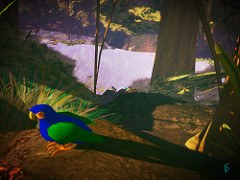
Which of the following is a quantitative observation?
a)
The bird is very colorful.
b)
The bird has 4 different colors on him.
c)
The bird has many, many feathers.
d)
It is a bird. 
2.
This variable in an experiment is the one being deliberately changed by the scientist. 
a)
dependent variable
b)
independent variable
c)
data
d)
control group
3.
Things that stay the same throughout the whole experiment are called
a)
controls
b)
dependent variables
c)
independent variables
d)
constants
4.

What step does every scientific experiment begin with?

a)

hypothesis

b)

investigation/observations

c)

experiment

d)

conclusion

5.
Testing a hypothesis often involves a(n):
a)
answer
b)
experiment
c)
problem
d)
safety check
6.
An experiment is conducted to test how different cleats change an athletes running speed.  Six different types of cleats are tested and the 100m run time is recorded.  What is the independent variable?
a)
The type of cleat
b)
The run time
c)
The 100 meters
d)
The athlete
7.
How many variables can be tested in a controlled experiment?
a)
one
b)
two
c)
three
d)
as many as possible
8.
A student wants to test the effects of different types of exercise on heart rate.  What is the dependent variable?
a)
heart rate
b)
type of exercise
c)
amount of exercise
d)
time of day exercise occurs
9.
An experiment is conducted to test which kind of cat food a cat likes best.  The amount of food the cat eats is recorded and four different type of food are tested. What is the dependent variable?
a)
The cat food
b)
The cat
c)
The amount of food the cat eats.
d)
The bowl the cat ate out of.
10.

Johnny wants to know how different types of colored light affect plant growth? What is the IV?

a)

types of plant growth

b)

types of colored lights

c)

plant growth on colored lights

d)

plant growth

11.
This group does NOT get the change to the independent variable.  This is the group that is not actually experimented on and is used as a comparison to "normal". 
a)
experimental group
b)
control group
c)
data
d)
variables
12.
This variable in an experiment is the one being deliberately changed by the scientist. Think of it as the cause of change in the experiment.
a)
dependent variable
b)
independent variable
c)
data
d)
control group
13.
This part of the experiment serves as a basis of comparison; the one variable being tested has been omitted. 
a)
experimental group
b)
control group
c)
data
d)
variables
14.
The variable that affects the dependent variable is called the _________ variable.
a)
dependent
b)
optional
c)
independent
d)
scientific
15.
Observations made during an experiment are called:
a)
data
b)
problems
c)
conclusions
d)
questions
16.

The one factor that a scientist changes during an experiment.

a)

Controlled Variable

b)

Dependent Variable

c)

Independent Variable

17.

The variable that is measured.

a)

Controlled Variable

b)

Dependent Variable

c)

Independent Variable

18.

In a controlled experiment, how many independent variables can be tested at a time?

a)

one

b)

none

c)

two or more

d)

how ever many makes sense.

19.

Why is it important to have only one independent variable and to control the other variables when performing science experiments?

a)

So you can tell which factor is causing the change in the experiment.

b)

It does not matter, you can have as many independent variables as you want.

20.

Ben makes five paper helicopters with different wing lengths. He drops them the same way from a height of two meters for five trials each. He records the amount of time it takes for each helicopter to fall to the ground.

What is the independent variable?

a)

Dropping the same way

b)

Wing Length

c)

Amount of time it takes the helicopter to hit the floor

d)

Dropping from the same height

21.
An experiment is performed on plants to see how different liquids affect plant growth. Each plant in the experiment is given a different liquid; water, apple juice, or milk.  In this investigation, the independent variable is ...
a)
The type of plant
b)
The amount of sunlight
c)
The type of music
d)
The type of liquid
22.
Mrs. Ahlers set up an experiment to see how the mass of a ball affects the distance it rolls off a ramp. What is the dependent variable?
a)
Distance traveled by the ball
b)
Height of the ramp
c)
Mass of the ball
d)
Where the experiment took place.
23.

Cindy wanted to find out how the amount of sunlight affects the growth of plants. She placed two tomato plants in 10 inch pots with potting soil and watered them ¼ cup each day. One plant was placed under a cardboard box and one was placed in the sunlight. She measured the growth of the plant each week for three weeks.

What are two controlled variables? (Select 2)

a)

Using the same type of plant

b)

Each plant was placed in a 10 inch pot

c)

The growth of the plant

d)

One plant is in the sunlight and the other is under a box
24.
Research Question: Does the type of gasoline put in a car effect how fast the car can drive? What is the independent variable?
a)
Type of gasoline
b)
which car the gas is put into
c)
how fast the car can drive
d)
how much gas is put into the car
25.
This variable is the actual data collected during the experiment. 
a)
independent variable
b)
dependent variable
c)
control group
d)
data group
26.
The yard is wet so it must have rained last night is an example of a (an)
a)
constant
b)
control
c)
inference
d)
quantitative data
27.
Jane Goodall recorded 40 chimps living in a community, this is ____ data.
a)
quantitative
b)
qualitative
c)
observation
d)
field study