wayground logo

Free Printable Worksheets

NEW

Font size

S
M
L
XL
Worksheets

Chapters 10.5-12

Total questions: 65

Worksheet time: 48mins

Name
Class
Date
1.

What 78% of the atmosphere is _______?

a)

nitrogen

b)

oxygen

c)

carbon dioxide

d)

water vapor

2.

Layer of gases surrounding the Earth and retained by the Earth's gravity

a)

geosphere

b)

atmosphere

c)

hydrosphere

d)

biosphere

3.

Solid Earth that includes the continental and oceanic crust as well as the various layers of the Earth's Interior.

a)

Atmosphere

b)

Geophere

c)

Hydrosphere

d)

Biosphere

4.

includes all water on Earth

a)

Atmosphere

b)

Geophere

c)

Hydrosphere

d)

Biosphere

5.

Zone of Earth that includes all living organisms

a)

Atmosphere

b)

Geophere

c)

Hydrosphere

d)

Biosphere

6.
When we discuss greenhouse gases what is the main one we discuss?
a)
Methane (CH4)
b)
Carbon Dioxide (CO2)
c)
Nitrous oxide (N2O)
d)
Flourinated gases
7.
The main human activity that releases greenhouse gases is...
a)
using bottled water
b)
burning fossil fuels
c)
texting on cellphones
d)
eating meat
8.

Once consumed, they cannot be created again.

a)

Fossil fuels

b)

greenhouse gases

9.

fuels such as oil, has, and coal

a)

fossil fuels

b)

greenhouse gases

10.

The highest recorded temperature for Austin, Texas is 112 degrees fahrenheit.

a)

Weather

b)

Climate

11.

The average yearly rainfall in Hawaii is 78 inches.

a)

Weather

b)

Climate

12.

Every year when timmy goes to Colorado for Christmas, there is plenty of snow for skiing.

a)

Weather

b)

Climate

13.

Yesterday was the hottest day of the year.

a)

Weather

b)

Climate

14.

In a tropical rainforest it is very humid and rains almost every day.

a)

Weather

b)

Climate

15.

how things happen or get used over and over again

a)

cycle

b)

flows

16.

how matter and every move from place to place

a)

cycle

b)

flows

17.

a statement about principles or patterns in nature

a)

law of matter

b)

scientific law

c)

law of earth sciences

18.
Matter can not be created nor destroyed: it can only be
a)
Destroyed a little bit
b)
Invisible
c)
Transformed, changed
d)
None of the above
19.
What is the Law of Conservation of mass?
a)
Mass is created in a chemical reaction
b)
Mass is created in a physical change
c)
New chemicals formed from a chemical reaction have a larger overall mass than the original reactants
d)
Mass is never created or destroyed
20.

What is energy?

a)

moving energy

b)

stored energy

c)

renewable energy

d)

The ability to do work.

21.

What is potential energy?

a)

moving energy

b)

stored energy

c)

renewable energy

d)

non renewable energy

22.

What is kinetic energy?

a)

moving energy

b)

potential energy

c)

stored energy

d)

renewable energy

23.

What kind of change occurs if matter changes in amount, size, or shape?

a)

substance change

b)

chemical change

c)

physical change

d)

elemental change

24.
Ice melting
a)
Chemical Change
b)
Physical Change
25.
Water freezing
a)
Chemical Change
b)
Physical Change
26.
Glass bottle that is shattered
a)
Chemical Change
b)
Physical Change
27.
a)
Physical Change
b)
Chemical Change
28.
a)
Physical Change
b)
Chemical Change
29.
a)
Physical Change
b)
Chemical Change
30.
 Ryan rubs two sticks together quickly. When he stops rubbing the sticks, he notices that they are warm to touch where he rubbed them. Which type of energy has been produced?
a)
sound energy
b)
electrical energy
c)
light energy
d)
heat energy
31.

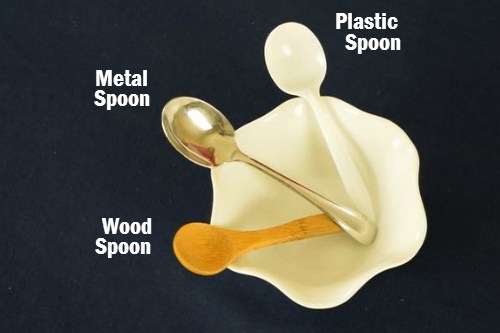
Which material will heat travel through the fastest?

a)

Plastic

b)

Wood

c)

Metal

32.

What is Conduction?

a)

When heat is passed from particle to particle through an object.

b)

When particles get heated, expand, and become less dense.

c)

When heat transfers by waves through empty space.
33.

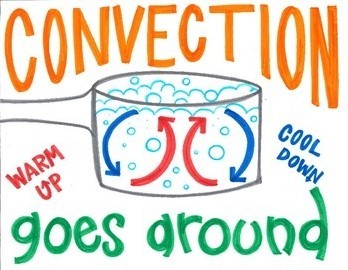
What is Convection?

a)

When heat is passed from particle to particle through an object.

b)

When particles get heated, expand, and become less dense.

c)

When heat transfers by waves through empty space.

34.

What is Radiation?

a)

When heat is passed from particle to particle through an object.

b)

When particles get heated, expand, and become less dense.

c)

When heat transfers by waves through empty space.

35.

Which of the following is an example of heat transfer by Convection?

a)

Burning your fingers on a hot iron.

b)

Heat from a heater warming up your whole house

c)

Standing by a campfire and feeling the heat.

d)

All of the above.

36.

Which of the following is an example of heat transfer by Radiation?

a)

Burning your fingers on a hot iron.

b)

Heat from a heater warming up your whole house

c)

Standing by a campfire and feeling the heat.

d)

All of the above.

37.
If differences in air pressure produce winds, what can you conclude about temperature and air pressure based on the figure?
a)
As warm air rises, it creates an area of lower pressure, and cooler air flows in as wind
b)
Warm air is denser than cold air is, creating an area of high pressure the produces wind.
c)
Winds flow from areas of low pressure to areas high pressure when temperature is warmer
d)
Air pressure decreases at night because temperature is lower, producing land and sea breezes
38.
Energy for convection on the Earth comes from...
a)
The sun
b)
The moon
c)
Solar winds
d)
The ocean
39.
In convection, COOL air
a)
Rises
b)
Sinks
40.
In convection, WARM air
a)
Rises
b)
Sinks
41.
A particle that carries a negative electric charge is called a(n) ______.
a)
neutron
b)
atom
c)
proton
d)
electron
42.

What charge is the proton?

a)

positive

b)

no charge (neutral)

c)

negative

d)

Senaida-charged

43.

What charge is the electron?

a)

Logan-charged

b)

negative

c)

positive

d)

no charge (neutral)

44.

What charge is the neutron?

a)

no charge (neutral)

b)

positive

c)

negative

d)

Katlyn-charged

45.

When electricity flows- a current is moving

a)

static electricity

b)

parallel circuit

c)

current-electricity

d)

dishcharge

46.

Made up of parts that work together to allow electricity to flow

a)

resistor

b)

cell

c)

circuit

d)

terminal

47.
Ms Jo Jo rubbed two balloons with a piece of wool. What will happen when the balloons are brought near each other?
a)
The balloons will repel each other.
b)
The balloons will attract each other.
c)
The balloons will become positively (+) charged.
d)
The balloons will pop.
48.

A form of energy radiated by the sun and stars

a)

light

b)

dark

c)

light year

d)

photons

49.

________ produces enormous amounts of solar energy.

a)

light

b)

nuclear fusion

c)

radiation

50.
Light bounces when it is 
a)
reflected
b)
absorbed
c)
refracted
51.
Light bends when it is 
a)
refracted
b)
reflected
c)
absorbed
52.
_____?______ materials do not allow light waves to pass through.
a)
Opaque
b)
Transparent
c)
Translucent
53.
_____?_____ materials allow some light to partially pass through, but not in a straight path.
a)
Opaque
b)
Transparent
c)
Translucent
54.
_____?_____ materials allow light waves to pass through easily.
a)
Opaque
b)
Transparent
c)
Translucent
55.
What are electromagnetic waves?
a)
sound waves
b)
electric & magnetic fields (energy) that travel through empty space very quickly
c)
Someone's name
d)
things like longitudinal waves
56.

Form of energy that is produced by objects moving back and forth or vibrating

a)

light

b)

sound

c)

color

57.

Highness or lowness of a sound

a)

anplitude

b)

intensity

c)

pitch

d)

quality

58.

Humans produce sound by using the _________.

a)

larynx

b)

pharnyx

c)

voice muscle

d)

trachea

59.
Magnetism is generated by moving
a)
protons.
b)
electrons.
c)
neutrons.
d)
elements.
60.
What do the lines around this magnet represent?
a)
North Pole
b)
South Pole
c)
Magnetic Declination
d)
Magnetic Field
61.
If you place the North pole of a magnet next to the South pole of another magnet, they will:
a)
Attract
b)
Repel
c)
Do nothing
d)
Shatter
62.

What is the measurement?

a)

36 ml

b)

40 ml

c)

38 ml

d)

37 ml

63.

What is the measurement?

a)

96 ml

b)

99 ml

c)

94 ml

d)

89 ml

64.

How do I look at a graduated cylinder to get an accurate reading of the amount?

a)

Look eye level to the liquid

b)

Look from above the liquid

c)

Look below the liquid

d)

Look through the top of the cylinder

65.

What is volume?

a)

How warm or cold a liquid is

b)

The amount of space a liquid takes up

c)

How dense a liquid is

d)

The amount of air trapped inside a liquid