
 Worksheets
REVISION
Total questions: 70
Worksheet time: 36mins

What is the name of measuring device in the figure shown?
1-Voltmeter
2-Ammeter
3-Ohmmeter
4-Multimeter

What is the name of measuring device in the figure shown?
1-Voltmeter
2-Ammeter
3-Ohmmeter
4-Multimeter

What is the type of the measuring device in the figure shown?
1- Analogue Voltmeter
2- Digital Voltmeter
3- Analogue Multimeter
4- Digital Multimeter
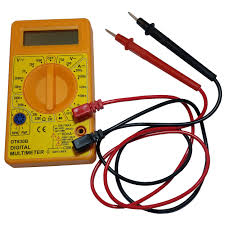
Identify this tool
Digital multimeter
Digital therometer
Digital pedometer
Digital weight scale
What type of multimeter has a needle gauge?
analog multimeter
digital multimeter
electrical multimeter
mechanical dual multimeter
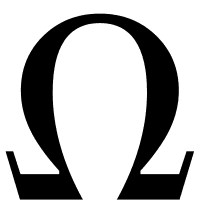
What do you call that symbol?
resistance
current
microfarad
ohm
What is a multimeter?
a tool used to estimate distance current travels
a tool used to find a correct locaton
a tool used to measure electricity
a tool used to measure electronics
What physical quantity does ammeter measures?
Voltage
Current
Resistance
Power
A digital multimeter is used to measure _____. (Select all that apply)
voltage
current
blood pressure
resistance
2. It is a device for making and breaking the connection In an electric circuit.
circuit breaker
fuse
switch
terminal
1. It is used as a source of power.
battery
conductor
diode
circuit breaker
The unit of electrical power is ...
the watt
el watio
the wat
el vatio
. Which is the symbol of standard unit of electricity supplied to the consumer, which is equal to 1 kilowatt acting for 1 hour?
kWh
mAh
Mbp
Hz

What kind of circuit is this?
A series circuit
A parallel circuit.

What kind of circuit is this?
A series circuit
A parallel circuit.

What kind of circuit is this?
A series circuit
A parallel circuit.
When soldering what should you do first?
Heat the wire you're planning to solder
Melt the solder onto the iron
Coil your wires or probes around eachother at the point to be soldered
Pre-heat the solder so it's melts easier.

What does this symbol represent?
Capacitor
Battery
Solenoid
Buzzer
The electrical symbol for Light Emitting Diode (LED) is...


1. Desoldering Tool
(a)

2. Soldering Iron
(a)

4. Long Nose pliers
(a)

What is in the picture?
Capacitor
Resistor
Diode
Inductor

What is in the picture?
Capacitor
Resistor
Diode
Inductor

What is in the picture?
Fuse
Switch
Integrated Circuit
Light Emitting Diodes (LED)

The function of this component is to:
store electrical charge
create various kinds of time delays in a circuit
act as a variable resistor
indicate the presence of current
What is the uses of multimeter
to measure Voltage, Current , Resistance & continuity
to measure Voltage , Current & frequency
to troubleshoot the fault in circuit
to measure power, frequency and voltage

Which of the following is not a function of test equipment in given figure?
used for testing and fault-finding a variety of electronic circuits
to display waveforms on some form of display.
used to troubleshoot the electronic components
Your partner has been working on your group’s circuit and has le the wo you begin working on the circuit, what should you do to ensure that the c and prevent yourself from getting a shock?
Disconnect the power source.
Measure the circuit with an ohmmeter for resistance.
Check the circuit with a continuity tester.
Use a voltmeter to measure voltage at the power source.
You used a tool and it inadvertently became damaged. What should be the next action for you to take?
Continue using the tool as long as it still somewhat works.
Label the tool that is broken and inform the instructor.
Throw the tool away.
Put the tool away and find another tool to use.
Which of the following is appropriate for working in an electronics workspace?
Wearing multiple rings on your fingers.
Wearing an oversized, baggy hoodie sweatshirt.
Clothing that is not loose and no jewelry.
Dragging your feet on the carpet and shocking your friends.
Which of the following is the appropriate scenario for wearing safety glasses in anelectronics classroom?
Safety glasses or goggles should be worn to prevent eye injuries from chemicals that splash.
Safety glasses or goggles should be worn when using tools that may cause objects to be thrown.
Safety glasses or goggles should be used when soldering components.
All of the above.
What are the types of injury that are most common in an electronics classroom?
Electrical shock.
Minor burn from active electrical components or a soldering iron.
Puncture from a wire.
All of the above.
Why should the students not rush? Why should students take their time when working in an electronics classroom?
Taking your time allows you to double check your connections and reduce the need for troubleshooting later.
Taking your time allows you to create your circuits more neatly. This allows you to pick up where you left off last time more easily.
Taking your time allows you to double check all part numbers and values. A common error.
All of the above.
You notice that the cord of your soldering iron is frayed and possibly broken. What should be done next?
If the cord works, continue to use the soldering iron.
Label the broken section and notify the instructor.
Put the soldering iron back and pick one without a frayed cord.
Throw the soldering iron away.


During reverse biased, the rectifiers' diodes ____.
block reverse voltage with zero current flow
block reverse voltage with a small current flow
conduct current with a small voltage drop
conduct current with zero voltage drop

the figure shown is for
PCB (printed circuit Board)
Bread Board
Strip Board

the figure shown is for
transformer
Resistor
Capacitor
Resistor
the symbol of transformer is


the picture is for
full wave rectifier bridge
half wave rectifier
switching circuit
What will happen, if we connect capacitor to DC Supply.
It allows DC
It blocks DC
t rectifies
None of these
Hint: Diode is unidirectional and uncontrolled device. In rectifier circuit, diode use as a switch to convert ac to dc for rectification purpose.
What is the function of a power supply?
converts AC to DC
converts DC to AC
convert current to voltage
convert water to light
In the power supply, which components do the conversion of AC to DC?
Filter
Transformer
Rectifier
Voltage Regulator
What is the common component of a filter circuit?
diode and resistor
IC regulator and capacitor
resistor and capacitor

Why is electrical wiring usually made from copper?
Because copper is shiny
Because copper conducts electricity
Because copper is not magnetic
Because copper insulates electricity
Describe a series circuit.
a circuit that has multiple branches
a circuit that has one path
a circuit that dead ends after a light bulb
What is a parallel circuit?
a continuous loop
a circuit with one path
a circuit with multiple branches for each individual appliance or light
Bare copper wires attach to __________________ terminals.
Brass
Green
Positive
Silver
What is a GFCI?
A type of circuit breaker
A type of switch
A type of outlet
A type of wire
What does GFCI stand for?
Ground Fault Circuit Interrupter
Ground Fuse Current Interrupter
Which of the following protects the wires between the service panel and the receptacle?
Circuit Breaker
GFCI
What do we call the "hot" wires on a 3-way switch?
Transistors
Transitioners
Travelers
Intermediates
A safety device that breaks the circuit when is overloaded by melting a fusible link is called a ____________.
Circuit Breaker
Fuse
GFCI

It is a good idea to not plug too many things into one outlet, since there is a risk of overloading the circuit at that outlet.
true
false

It is generally okay to use electrical devices around water if you use a good quality extension cord.
true
false
Select the correct statements about the earth wire in a plug.
It is brown
It is blue
It has green and yellow stripes
It is at 0 V.
It is at 230 V.

What type of convenient outlet is shown in the picture?
Flush type, duplex
Flush type, triplex
Surface type, duplex
Surface type, triplex
what is ohms law?
Coulomb
Electrical pressure
The force known as voltage that pushes electrons through an electrical circuit
Unit of measure describing the resistant's of the flow of electrical current
what is the resistance formula
Rt=R1+R2+R3
R1=Rt+R2+R3
R3=R1+Rt+R2
R2=Rt+R1+R3
Always lock out and tag out all involved circuits and machines.
A. True
B. False
Which of the following are electrical hazards? (Select all that apply.)
A. Exposed electrical parts or bad insulation
B. Overhead power lines
C. Overloaded circuits
D. Wet conditions
It increases voltage and reduces current.
step-up transformer
switchboard
exposed conductors
transformer
It is located at the point where the mains power cable arrives on site.
step-up transformer
stepped down transformer
exposed conductors
transformer
Switching off or part of an electrical network so that current cannot flow through it.
step-up transformer
stepped down transformer
isolating
transformer

