wayground logo

Free Printable Worksheets

NEW

Font size

S
M
L
XL
Worksheets

Unit 2- Tissues

Total questions: 40

Worksheet time: 24mins

Name
Class
Date
1.
Identify this tissue
a)
cardiac muscle tissue
b)
skeletal muscle tissue
c)
smooth muscle tissue
d)
epithelial tissue
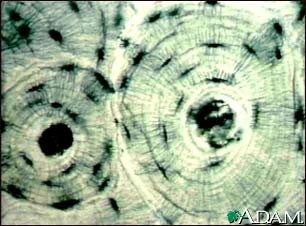
2.
Identify this tissue
a)
adipose connective tissue
b)
areolar connective tissue
c)
Blood Connective Tissue
d)
Osseous Connective Tissue (BONE)
3.
Identify this Tissue
a)
Pseudostratified Ciliated Columnar Epithelium
b)
Simple Squamous Epithelium
c)
Simple Columnar Epithelium
d)
Simple Cuboidal Epithelium
4.
Identify this Tissue
a)
Pseudostratified Ciliated Columnar Epithelium
b)
Simple Squamous Epithelium
c)
Simple Columnar Epithelium
d)
Simple Cuboidal Epithelium
5.
Identify this Tissue
a)
Stratified Squamous Epithelium
b)
Simple Squamous Epithelium
c)
Simple Columnar Epithelium
d)
Simple Cuboidal Epithelium
6.
This is not one of the 4 major categories of tissues
a)
Epithelial
b)
Connective 
c)
Skeletal 
d)
Nervous 
7.
True or False:  Because of its involuntary nature, cardiac muscle tissue can be found in more places than just the heart
a)
False
b)
True 
8.
Which type of muscle cells are voluntary? 
a)
Skeletal
b)
Cardiac
c)
Medial 
d)
Smooth 
9.
Which of the following is NOT an arrangement type of epithelial tissue?
a)
Striated
b)
Stratified
c)
Pseudo-stratified 
d)
Simple 
10.
Tissues work together to make the following.
a)
cells
b)
organs
c)
organ systems
d)
organism
11.
The levels of organization in an organism go in which order: from smallest to largest.
a)
Cell, Tissue, Organ System, Organ
b)
Cell, Organ, Tissue, Organ System
c)
Organ System, Organ, Tissue, Cell
d)
Cell, Tissue, Organ, Organ System
12.
Cartilage is a form of _____ tissue.
a)
epithelial 
b)
connective
c)
osseous
d)
muscle
13.
Transmit electrical pulses from the brain to muscles throughout the body
a)
Epithelial
b)
Connective
c)
Muscle
d)
Nerve
14.
Aids in body movement and functions of body parts
a)
Epithelial
b)
Connective
c)
Muscle
d)
Nerve
15.
This tissue type is commonly called fat
a)
Adipose Tissue
b)
Areolar Tissue
c)
Reticular Tissue
d)
Osseous Tissue
16.
Tendons and Ligaments are examples of which type of tissue?
a)
Dense Connective
b)
Loose Connective
c)
Hyaline Cartilage
d)
Osseous Tissue
17.
Which type of tissue  contains extra-cellular matrix including collagen, elastic, and reticular tissues?
a)
Epithelial Tissue
b)
Connective Tissue
c)
Muscle Tissue
d)
Nervous Tissue
18.
Which type of tissue  include examples such as glial cells, oligodendrocytes and neurons?
a)
Epithelial Tissue
b)
Connective Tissue
c)
Muscle Tissue
d)
Nervous Tissue
19.
A group of cells that work together to form the same function is called?
a)
Tissues
b)
Organs
c)
Organ Systems
d)
Organisms
20.
Epithelial Tissues are named based on what?
a)
Number of Layers and shape of cells
b)
Number of Layers and striations
c)
shape of cells and striations
d)
function only
21.
Glands that secrete their substance into ducts that empty to the surface of the body are called:
a)
exocrine glands
b)
endocrine glands
c)
hormonal glands
d)
indocrine glands
22.
The type of epithelial tissue that is present in ONLY the urinary tract and has the unique property of its ability to stretch and return back to its original shape is called:
a)
simple squamous epithelium
b)
stratified cuboidal epithelium
c)
transitional epithelium
d)
simple cuboidal epithelium
23.
The type of epithelial tissue that is present in ONLY the urinary tract and has the unique property of its ability to stretch and return back to its original shape is called:
a)
simple squamous epithelium
b)
stratified cuboidal epithelium
c)
transitional epithelium
d)
simple cuboidal epithelium
24.
What is special about endocrine glands?
a)
they have ducts
b)
they send their product outside the body
c)
they secrete hormones directly into the blood stream
25.
What is histology the study of?
a)
Cells
b)
Tissue
c)
Anatomy
d)
Disease
26.
This type of cartilage forms a cushion like disk between the vertebrae.
a)
Fibrocartilage
b)
Elastic cartilage
c)
Hyaline cartilage
d)
Simple Squamous
27.
This type of cartilage is highly resistant to wear and found at the ends of bones?
a)
Hyaline
b)
Fibrocartilage
c)
Elastic 
d)
Adipose
28.
The pituitary gland puts growth hormone into the blood. What type of gland is it?
a)
Endocrine Gland
b)
Exocrine Gland
29.
This region of epithelium that is attached to the basement membrane. 
a)
apical
b)
basal
30.

The combination of fibers and ground substance in supporting connective tissues is known as __________.

a)

endoderm

b)

mesoderm

c)

extracellular matrix

d)

exocrine

31.
a)

smooth muscle

b)

bone

c)

nerve

d)

blood

32.
What is the function of epithelial cells?
a)
Act as barriers between the external environment, or between organs and fluidfilled cavities
b)
Provide movement by pulling on bones
c)
Provide secretions which help to digest food
d)
Act as the messaging pathway between different areas of the body
33.
The muscle tissue shown is called ______.
a)
Skeletal
b)
Cardiac
c)
Smooth
34.

There are _____ types of muscle tissue.

a)

1

b)

2

c)

3

d)

4

35.

What type of muscle tissue is this?

a)

cardiac

b)

skeletal

c)

smooth

36.
What is the function of epithelial cells?
a)
Act as barriers between the external environment, or between organs and fluidfilled cavities
b)
Provide movement by pulling on bones
c)
Provide secretions which help to digest food
d)
Act as the messaging pathway between different areas of the body
37.

What is the difference between exocrine and endocrine functions?

a)

Exocrine cells secrete fluids to the outside of the body; endocrine cells secrete fluids into the inside of the body

b)

They are synonymous

c)

Exocrine cells secrete fluids into ducts; endocrine cells secrete fluids into the blood stream

d)

Exocrine cells secrete clear fluids; endocrine cells secrete opaque fluids

38.
What type of muscle tissue is VOLUNTARILY controlled
a)
Skeletal Only
b)
Skeletal and Cardiac
c)
Smooth and Cardiac
d)
Cardiac Only
39.

Immature connective tissue cells

a)

Blast cells

b)

Cyte cells

c)

Immune cells

40.

Mature connective tissue cells

a)

Blast cells

b)

Cyte cells

c)

Immune cells