
Font size
 Worksheets
Vectors
Total questions: 46
Worksheet time: 38mins
A vector is a ray with both ____________ and _____________.
Wings and halos
Space and time
Direction and magnitude
Radicals and exponents
A car travels 90 meters due north in 15 seconds. Then the car turns around and travels 40 meters due south. What is the magnitude and direction of the car's resultant displacement?
40 meters, South
50 meters, South
50 meters, North
40 meters, North
A deer running 15 meters per second due west

100 N 230 N
<------ --------->
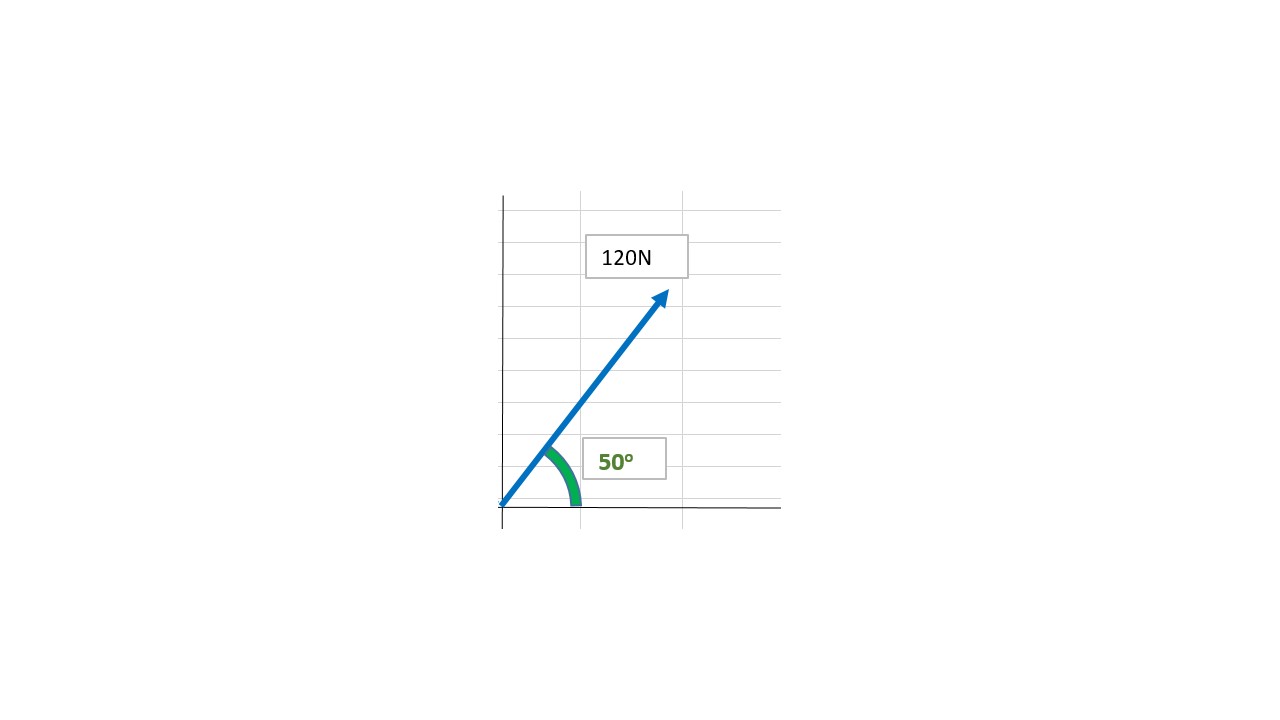
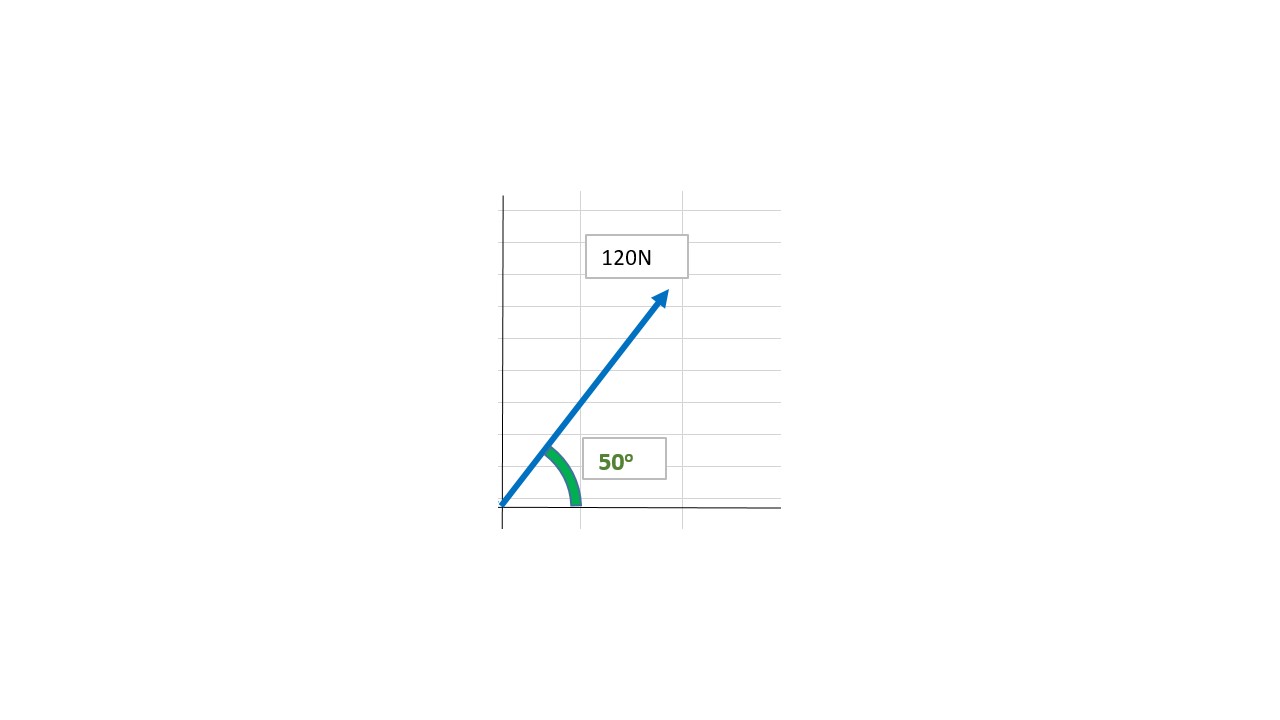

A vector has...
two components (x and y)
one component (y)
one component (x)
length and degrees
In order to find the x-component of a vector with magnitute 7 m and angle 30° we will use the formula...
cos (30)
sin(30)
7*sin(30)
7*cos(30)
In order to find the y-component of a vector with magnitute 7 m and angle 30° we will use the formula...
cos (30)
sin(30)
7*sin(30)
7*cos(30)

The following vector (5 N, 290°) will be drawn on the _____ quadrant
first
second
third
fourth
The physical quantities having only magnitude but no direction are said to be .................. quantities
Scalar
vector
Tensor
Unit
In vector diagrams, vector arrows must be joined head-to-tail.
True
False
Resultant angles are always measured _________ from the horizontal.
clockwise
counterclockwise
What is this Equation: a2+b2=c2
Standard Vector Form
Resultant Vector
Pythagorean Theorem
Equation of a Circle
Which one of these does not show an example of the head to tail method of vector addition?


How do you determine the horizontal component of a 30 N vector at 110 degrees from the positive x-axis?
30 sin 110
30 cos 110
110 sin 30
110 cos 30

A cat walks 3 meters west toward a laser, then jumps 5 meters due south of the laser when it sees a string. What is the total distance the cat has traveled (to the nearest tenth)?
3.0m
5.0m
8.0m
5.8m

A boat is traveling at 50 m/s in a river flowing at 15 m/s in the exact same direction. What is the resultant velocity of the boat?
65 m/s
35 m/s
52 m/s
It cannot be determined
Tony walks 3 m and then 4 m. Which of these can not be his displacement?
7 m if they are in the same direction
1 m if they are in opposite directions
5 m if they are perpendicular directions
8 m if they are in the same direction

Which is the best description for the 2 vectors pictured?
AB represents 20 m Southeast and CD represents 10 m Northwest
AB represents 10 m Southeast and CD represents 20 m Northwest
AB represents 10 m Northwest and CD represents 20 m Southeast
AB represents 20 m Northwest and CD represents 10 m Southeast
Symbol for horizontal velocity
Vx
dx
Vy
dy


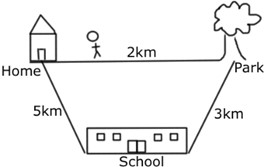

Vertical 123.4
Vertical -403.6
Vertical 403.6
Vertical -403.6
When adding two vectors graphically, a+b=c. Does b+a produce the same resultant vector c?
Yes, two vectors added together always produce the same resultant vector
No, because order matters
Yes, but c will be pointing in the opposite direction
No, because you can't add two vectors
When subtracting two vectors, a-b=c. Does b-a produce the same resultant vector c?
Yes, two vectors subtracted together always produce the same resultant vector
No, because order matters
Yes, but c will be pointing in the opposite direction
No, because you can't subtract two vectors

What is the resultant of these two vectors?
+17 m
+3 m
-17 m
-3 m

Which of the following describes the vector above?
45 cm
45 cm at 30 degrees North of East
45 cm at 30 degrees East of North
45 cm North East


The resultant direction is 40o North of East. What is the equilibrant direction?
220o
220o North of East
40o South of West
40o East of North
The order in which vectors is added will effect the end result.
True
False

Vector A is directed northward and vector B is directed eastward. Which of the following vector addition diagrams best represent the addition of vectors A and B and the subsequent resultant?
A
B
C
D
E
What is the relationship between the equilibrant and the resultant vector?
The equilibrant has the same magnitude and direction as the resultant vector.
True
False

