wayground logo

Free Printable Worksheets

Font size

S
M
L
XL
Worksheets

Forces

Total questions: 49

Worksheet time: 38mins

Name
Class
Date
1.
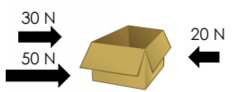
What is the net force?
a)
20 N 
b)
0 N 
c)
400 N 
d)
40 N 
2.

What is the unit to MEASURE force?

a)

Kilogram

b)

Meter

c)

Pounds

d)

Newton

3.

A ____________ is a push or a pull on an object.

a)

friction

b)

force

c)

magnet

d)

gravity

4.
What is the net force?
a)
10 N
b)
0 N
c)
25 N
d)
1 N
5.
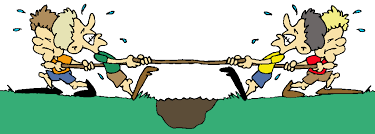
If these teams are pulling with the same amount of force what will happen?
a)
The boy in blue will win.
b)
They will not move at all.
c)
The boy in red will win.
d)
Both will fall down.
6.
What will cause an object to move?
a)
Applied forces
b)
Balanced forces
c)
Unbalanced forces
7.
When forces are _________ the object DOES NOT move.
a)
unbalanced
b)
balanced
c)
heavy
d)
light
8.
When forces are ___________ the object will move.
a)
unbalanced
b)
balanced
c)
light
d)
gravity
9.
Calculate the Net Force. 
a)
60N, Left 
b)
40N, Right 
c)
0N
d)
60N, Right
10.
Calculate the Net Force. 
a)
40N, Left
b)
40N, Right
c)
0N, Balanced
d)
75N, Right
11.
You and your dad are moving the couch from one side to another. Your dad pushes with a force of 35 N to the right and you push with a force of 25 N right. What is the net force on the couch?
a)
60 N right
b)
10 N left
c)
60 n right
d)
50 N left
12.
What is the net force?
a)
400 N Up
b)
400 N Down
c)
- 400 N Down
d)
800 N Down
13.
What is the net force?
a)
5000 N right
b)
4000 N right
c)
40 N left
d)
4000 N left
14.
Which one is balanced?
a)
top
b)
bottom
c)
both
15.
Friction is a force that acts in a(n) ___________ direction relative to a moving object.
a)
similar
b)
opposite
c)
parallel
d)
perpendicular
16.
The wheels on a moving skateboard most likely experience ____________.
a)
Rolling Friction
b)
Sliding Friction
c)
Fluid Friction
d)
Static Friction
17.
These swimmers are most likely experiencing _________.
a)
Rolling Friction
b)
Sliding Friction
c)
Fluid Friction
d)
Static Friction
18.
As the child moves down the slide, they mostly experience the effect of ___________.
a)
Rolling Friction
b)
Sliding Friction
c)
Fluid Friction
d)
Static Friction
19.
What type of friction acts on an object that is not yet moving?
a)
Static
b)
Dynamic
c)
kinetic
d)
Rolling
20.
Which of the following will not change in different gravitational fields?
a)
weight
b)
force
c)
mass
d)
pounds
21.
What is the rate at which Earth's gravity accelerates objects in free fall?
a)
9.8 m/s2
b)
3.14159 km/hr/s
c)
13.7 m/s2
d)
42 km/h/s
22.
To calculate net force, when forces are acting in the same direction, the forces are ...
a)
added 
b)
subtracted 
c)
mutiplied 
d)
divided 
23.
To calculate net force, when forces are acting in opposite directions, the forces are ...
a)
added 
b)
subtracted 
c)
multiplied 
d)
divided 
24.

The main reason a baseball comes down when a boy tosses it up into the air is —

a)

magnetism is pulling the ball down

b)

the boy cannot see to catch it

c)

gravity is pulling down on the ball

d)

gravity pushes the ball in the air

25.
How do you lower the friction force?
a)
By a smooth surface
b)
By a rough surface
c)
By not pushing hard
d)
By pushing down
26.

If you kick a soccer ball, it goes up to a certain distance and stops. This happens due to

a)

gravity

b)

magnetism

c)

friction

d)

weight

27.

On which surface would a ball move slowly?

a)

carpet

b)

marble floor

c)

wooden floor

d)

I don't know

28.

Rough surfaces have

a)

more friction

b)

less friction

c)

same level of friction

d)

I don't know

29.
Without gravity we would________. 
a)
Float away
b)
Stay in the ground
c)
Nothing would happen.
d)
I don't know
30.
The force that pulls objects towards each other.
a)
gravity
b)
friction
c)
mass
d)
weight
31.

P represents

a)

mass

b)

power

c)

momentum

d)

force

32.

m/s is a unit for

a)

mass

b)

force

c)

acceleration

d)

velocity

33.

kg is a unit that represents

a)

force

b)

velocity

c)

mass

d)

momentum

34.

kg *m/s are units for

a)

force

b)

momentum

c)

mass

d)

acceleration

35.

Law of Inertia

a)

Newton's 1st law

b)

Newton's 2nd law

c)

Newton's 3rd law

d)

Law of conservation of momentum

36.

For every action, there is an equal and opposite reaction

a)

Newton's 1st law

b)

Newton's 2nd law

c)

Newton's 3rd law

d)

Law of conservation of momentum

37.

F=ma

a)

Newton's 1st law

b)

Newton's 2nd law

c)

Newton's 3rd law

d)

Law of conservation of momentum

38.

This example can be applied to which law?

a)

Newton's 1st law

b)

Newton's 2nd law

c)

Newton's 3rd law

d)

Law of conservation of momentum

39.

When there is an INCREASE in MASS of an object you will have a DECREASE in ______________.

a)

friction

b)

acceleration

c)

force

d)

gravity

40.

A jellyfish swims through the water by pulling in water and then pushing the water back out in the opposite direction. This is an example of which law of motion?

a)

1st Law

b)

2nd Law

c)

3rd Law

41.

Billy pushes his little brother on a sled through the snow. He then tries to push his father on the the same sled. He noticed that it was much harder to push his father. Which law is this an example of?

a)

1st Law

b)

2nd Law

c)

3rd Law

42.

Ted is playing with a yoyo outside. When he pushes the yoyo downward it returns back to him with the same force. Which law is this an example of?

a)

1st Law

b)

2nd Law

c)

3rd Law

43.

Beth's bike remains stopped at the intersection until she begins pedaling again. Which law is this an example of?

a)

1st Law

b)

2nd Law

c)

3rd Law

44.
A magician pulls a tablecloth out from under dishes and glasses on a table without disturbing them.
a)
Newton's 1st Law
b)
Newton's 2nd Law
c)
Newton's 3rd Law
d)
None of them
45.
Pushing a child on a swing is easier than pushing an adult on the same swing, because the adult has more inertia.
a)
Newton's 1st Law
b)
Newton's 2nd Law
c)
Newton's 3rd Law
d)
None of them
46.
The swimmer moves her hand down and to the left and her body goes forward to the right.
a)
Newton's 1st Law
b)
Newton's 2nd Law
c)
Newton's 3rd Law
47.

An object with a mass of 2.0kg accelerates 2.0m/s2 when an unknown force is applied to it. What is the amount of the force?

a)

1N

b)

4N

c)

4m/s

d)

4F

48.

An object accelerates 2.0m/s2 when a force of 12N is applied to it. What is the mass of the object?

a)

24kg

b)

6m/s

c)

6kg

d)

24m/s

49.

An object with a mass of 2.0kg has a force of 4.0N applied to it. What is the resulting acceleration of the object?

a)

8m/s

b)

2m/s

c)

8m/s2

d)

2m/s2