
 Worksheets
Enlightenment French Revolution
Total questions: 76
Worksheet time: 2hrs 52mins
What was Montesquieu's influence on the U.S. Constitution?
public elections
branches of government
the Bill of Rights
representatives
Which of the following attempted social reforms?
the philosophes
scholars
enlightened despots
Absolutism
Which of the following occurred after the salons spread enlightenment ideas?
The scientific method develops.
The heliocentric theory develops
The scientific method begins to affect society.
The colonists denounce taxation without representation.
The person most responsible for the accomplishments of the Congress of Vienna was
Czar Alexander I of Russia.
Emperor Francis I of Austria.
King Frederick William III of Prussia.
Prince Klemens von Metternich of Austria.
What was the result of the Battle of Waterloo?
It was a decisive military victory for Britain and Prussia
Napoleon was exiled to St. Helena
The French army collapsed
All of the above

What cause of the French Revolution is represented by this image?
Weak leadership of the monarchy
Unequal social class system
Economic crisis
Inspiration from the Enlightenment

Which event is associated with this image?
Reign of Terror
Meeting of the Estates General
Rise of Napoleon
Storming of the Bastille
Who came to power in France at the end of the French Revolution?
Napoleon
Louis XIV
Robespierre
Louis XVI

This person claimed it was possible to build a "republic of virtue" He also lead the Reign of Terror
Napoleon
Louis XVI
Marie Antoinette
Maximilien Robespierre


The above painting depicts the coronation of Napoleon as emperor of the First French Empire in 1804. Why is it significant that Napoleon crowned himself as emperor?
He was the first of his line
It was a symbolic gesture to show he owed his power to only himself and not the pope
Because of the Concordat of 1801, the clergy refused to partcipate
Because the Senate had named him "Emperor of the French" rather than "Emperor of France"

Why did the Congress of Vienna redraw the map of Europe?
To gain more territory
To divide territory based on national cultures
To avoid angering Russia
To contain French ambition (expansion)
Estate
About what portion of France's population belonged to the Third Estate? Approximately.
2 percent
50 percent
75 percent
90 percent
Who were the bourgeoisie?
The middle class professionals
The 1st Estate
The peasant farmers
The nobles

Which events was the officially started the French Revolution?
Storming of the Bastille
Tennis Court Oath
Spanish Invasion
Shooting at Lexington and Concord
The document that increased the rights of all French citizens
Declaration of the Rights of Man and the Citizen
Declaration of Independence
Tennis Court Oath
Constitution
When a government prints more money what does it cause
hyperinflation
inflation
counterfeit
larceny
Why did the Louis XVI and family get caught when they tried to escape France?
they got lost
King was recognized from his picture on the coin
Their car go a flat tire
Marie refused to go

Which is the idea that God had chosen a ruler?
Divine inheritance
'Cause for
Divine right
Divine privilege

What was the weapon that was associated with the fear that spread during the Reign of Terror?
Flamethrower
Spear
Guillotine
Gallows
Thousands of people were accused of disloyalty to the revolution and guillotined for their crimes during...
the Reign of Napoleon
the Reign of Louis XVI
the Reign of Benevolence
the Reign of Terror
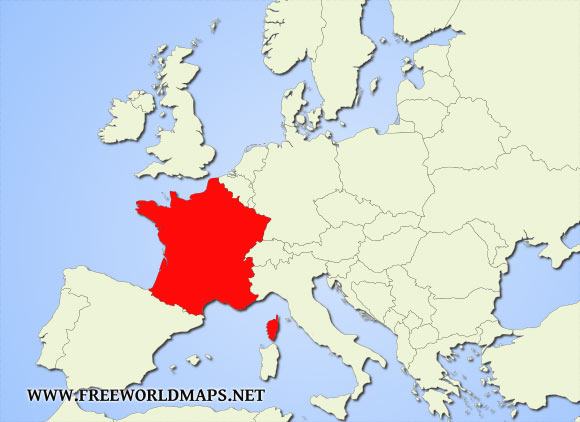
What country is highlighted on this map?
England
France
Germany
Canada
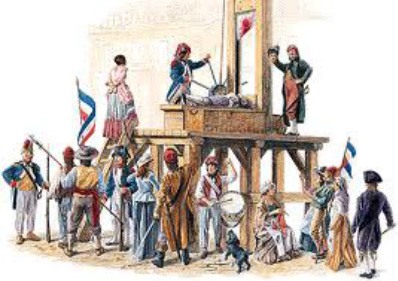
T/F: Only members of the clergy & nobility were killed during the Reign of Terror.
TRUE
FALSE
Which radical group seized power during the chaos of the Revolution?
Girondons
Jacobins
ZANU
Versailles
Who was the leader of the Jacobins?
Max Payne
Maximillien Bourbon
Mad Max
Maximillien Robespierre
True or False: Robespierre was the final victim of the violence he had created.
True
False
Which famous General seized power in 1795, crowned himself Emperor and brought the Revolution to an end?
Napoleon Dynamite
Napoleon Bonaparte
Charles deGaulle
Charlemagne
Was Napoleon born in France?
Yes
No
Napoleon submitted a plebiscite to the people to gain support
his invasion of Britain
for the creation of the French Empire under him at emperor
for the Concordat of 1801
for the Continental System
Information that is used to convince of you of a certain point of view is known as
Propaganda
Meritocracy
Enlightenment
Lies

[p5] Why was Napoleon, the world's greatest general, unable to conquer Britain?
Britain's navy defeated Napoleon's fleet at Trafalgar, making a sea-borne invasion impossible.
Britain received money & weapons from the United States.
The British were simply too smart to be defeated by Napoleon.
A British spy named James Bond destroyed the French invasion force at Trafalgar.
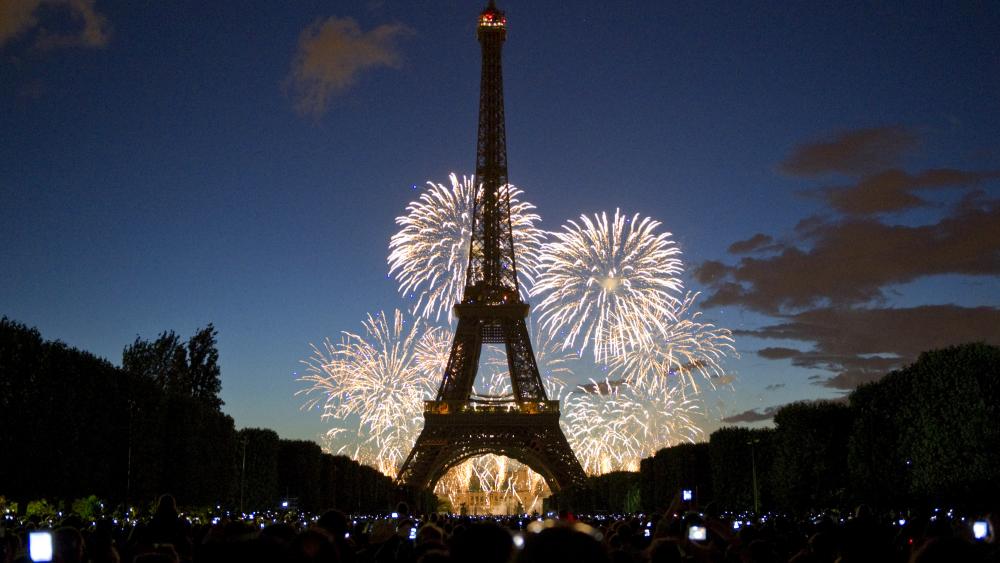

What event restored monarchies and the balance of power to Europe after the Napoleonic Wars?
Congress of Vienna
Parliament
League of Nations
Estates General
One goal of the Congress of Vienna was to
establish a new balance of power in Europe
protect Europe from Ottoman advances
end abuses within the Catholic Church
redraw the boundaries of Africa
One goal of the Congress of Vienna was the -
restoration of Napoleon
execution of Napoleon
restoration of monarchies
abolishment of monarchies
By the late 18th century, slaves made up ____% of the population of Saint-Domingue (Haiti).
90%
80%
70%
60%
descendants of Portuguese or Spanish settlers born in the colonies
mestizos
peninsulares
creoles
caudillos
mulattos
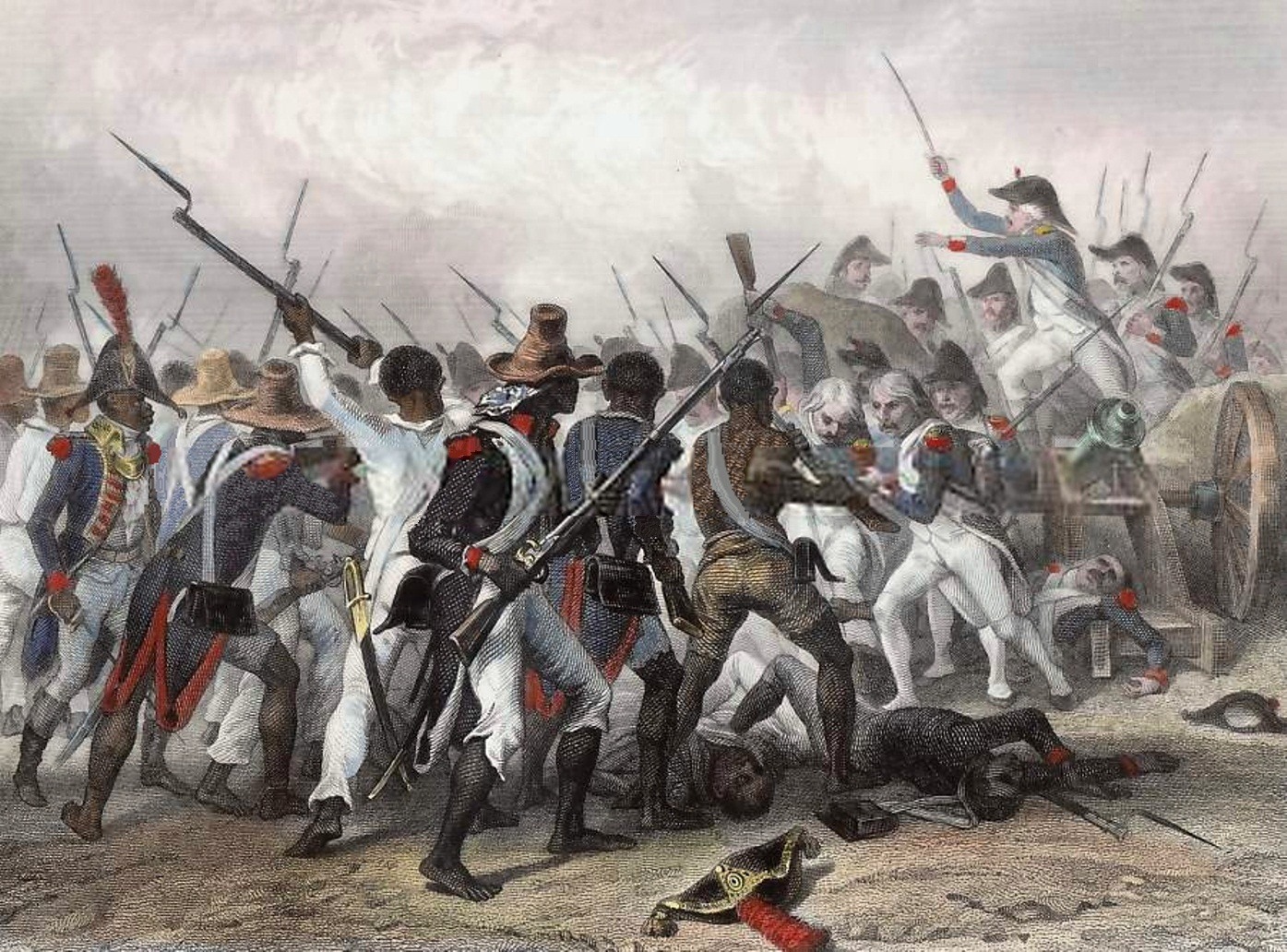
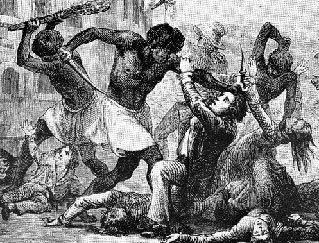
Why did the Haitian Revolution start?
The revolution started because of slaves wanting social equality and freedom.
The Haitian Revolution was influenced by the French Revolution
All of the above
The Haitian Revolution was influenced by the American Revolution


What do these pie charts reveal about the causes of the French Revolution?
all the estates were taxed equally
the upper classes paid the most taxes
the poorest classes paid all the taxes
the third estate was the wealthiest
Why was it difficult for Haiti to have a stable economy after independence?
Haiti did not have crops that other countries wanted.
They were a republic and could not make effectively and easily decisions.
Former slaves did not want to work on the plantations they had just left.
Everybody left Haiti after the revolution.
Who were the Gens de Couleur?
White Plantation Owners
Free Black Citizens
African Slaves
Americans
France pulled off one of the greatest heists ever. It left Haiti perpetually impoverished and other countries helped. What did they do?
they salted all the fields so no crops would grow.
They forced the Haitian government to pay 10 times the amount the United States had paid for the Louisiana territory to compensate the French colonists for their lost revenues from slavery.
In contract law, indemnity is a contractual obligation of one party to compensate the loss incurred to the other party due to the acts of the Indemnitor or any other party. The duty to indemnify is usually, but not always, coextensive with the contractual duty to "hold harmless" or "save harmless"
When someone who persistently puts forth a false narrative which leads another person to doubt their own perceptions to the extent that they become disoriented and distressed.
Which of these statements is most likely to be made by a proponent of natural law and natural rights?
God grants monarchs the authority to rule and the duty to give people their rights.
People are irrational, so science is useless in figuring out human behavior.
History teaches that individual freedom is an impossible goal.
Government does not grant rights; it protects them.

“General Famine and General Winter, rather than Russian bullets, have conquered the Grand Army.”—French general Michel Ney
What was an immediate result of the event described in the above quotation?
Napoleon surrendered and was sent into exile.
The French monarchy was restored to power.
Napoleon abdicated his throne
Napoleon established the Continental System.
Under Napoleon’s rule, women lost many of the rights they had gained during the Revolution.
True
False
What is the social contract theory?
People should give up some freedoms so that as a group, everyone is cared for
People should abstain from following any system of Government
All men were born equal with natural rights: life, liberty, property
Government should not be controlled by religion

