wayground logo

Free Printable Worksheets

NEW

Font size

S
M
L
XL
Worksheets

1st Six Weeks Test Review

Total questions: 43

Worksheet time: 40mins

Name
Class
Date
1.

The rusting of an iron nail is a chemical change

a)

True

b)

False

2.

A cool, shiny metal is added to water in a beaker and rapid bubbling occurs. This is a ________________ change.

a)

Chemical

b)

Physical

3.

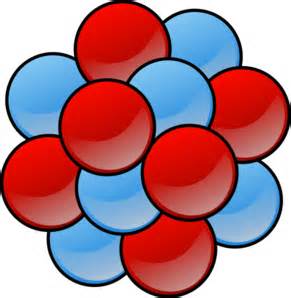
The positively charged particle in the nucleus of an atom is called the --

a)

neutron

b)

electron

c)

lepton

d)

proton

4.

Elements in group 17 or 7A will have __ valence electrons.

a)

1

b)

2

c)

3

d)

7

5.

The amount of space that an object takes up, also known as capacity, is called

a)

mass

b)

volume

c)

density

d)

weight

6.

Pure substances composed of one type of atom are known as

a)

compounds

b)

mixtures

c)

solutions

d)

elements

7.

The smallest building block of matter is called

a)

an element

b)

a compound

c)

an atom

d)

a solution

8.

Which of the following would be a physical property?

a)

reactivity

b)

flammability

c)

shape

9.

Which of the following is a chemical change?

a)

sharpening a pencil

b)

cracking an egg

c)

getting a haircut

d)

burning fireworks

10.

What is evidence that a chemical change has taken place?

a)

bubbles or fizz

b)

release of an odor

c)

change in temperature

d)

all of the above

11.
What should you do if you break glass in the lab?
a)
Tell the teacher.
b)
Sweep up the glass.
c)
Pick up the glass with your hands.
d)
Ignore it; the teacher will clean it up when she sees it later.
12.

I will immediately notify the instructor only about major accidents.

a)

True

b)

False

13.
Long hair in the laboratory should always be
a)
Pulled back
b)
Always neatly groomed
c)
Cut short
d)
Held away from the table with one hand
14.
What form of matter has a definite shape?
a)
Solid
b)
Liquid
c)
Gas
d)
Square
15.
This state of matter does not have a definite size or shape.
a)
Gas
b)
Liquid
c)
Solid
d)
Milk
16.
Name the three states of matter:
a)
crystalline, amorphous, solid
b)
solid, liquid, gas
c)
energy, matter, mass
d)
solid, fluid, liquid
17.
The amount of matter something contains. 
a)
volume
b)
mass
c)
density
d)
measurement 
18.

Q4: Observable characteristics such as texture, color, size, and mass are known as...

a)

combinations

b)

states of matter

c)

physical properties

d)

scientific tools

19.
Something that takes up space and has mass.
a)
volume
b)
matter
c)
mass
d)
density
20.
John Dalton stated:
a)
elements are made of atoms
b)
atoms of a given element are identical
c)
atoms cannot be subdivided, created, nor destroyed
d)
all of the above
21.
The scientist responsible for "discovering" the nucleus is:
a)
Bohr
b)
Rutherford
c)
Schroedinger
d)
Einstein
22.
What does the nucleus of an atom contain?
a)
Electrons and neutrons
b)
Protons and neutrons
c)
Neutrinos and positrons
d)
DNA and RN
23.
He developed the planetary model of the atom.
a)
Rutherford
b)
Bohr
c)
Chadwick
d)
Dalton
24.
What did Thomson discover?
a)
electron
b)
proton
c)
neutron
d)
electron cloud
25.

Subatomic particles with a negative charge

a)

Electrons

b)

Neutrons

c)

Protons

d)

Quarks

26.
Subatomic particles with a positive charge
a)
neutrons
b)
atomic mass
c)
protons
d)
isotopes
27.
Subatomic particles that are neutral in charge
a)
Neutrons
b)
Protons
c)
Nucleus 
d)
Electrons
28.
Where electrons are likely to be found as they travel around the nucleus
a)
Nucleus
b)
Electron Cloud
c)
Within a Proton
d)
Within a Neutron
29.
The mass of this particle is so small that it is not counted.
a)
proton
b)
electron
c)
neutron
d)
quark
30.
The overall charge of all atoms (not ions)
a)
positive
b)
negative
c)
neutral
d)
sometimes positive and sometimes negative
31.

Look at this picture of Argon off the periodic table. Which of the following is true for this element?

a)

18 protons

b)

40 protons

c)

22 protons

d)

21.9 protons

32.

Look at this picture of Argon off the periodic table. Which of the following is true for this element when it is neutral?

a)

18 electrons

b)

40 electrons

c)

22 electrons

d)

21.9 electrons

33.
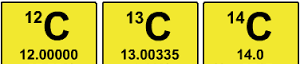
What do these isotopes of carbon all have in common?
a)
neutrons & mass number
b)
atomic number and neutrons
c)
atomic number and electrons
d)
protons, atomic number, and mass number
34.
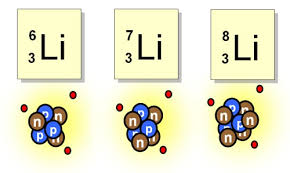
How many neutrons does the isotope of lithium have?
a)
8
b)
3
c)
4
d)
5
35.
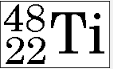
How many protons does this isotope of titanium have?
a)
48
b)
22
c)
26
d)
70
36.
In a correctly written symbol what would be located in the "A" position?
a)
number of neutrons
b)
atomic number
c)
number of electrons 
d)
mass number
37.
which atom has  4 neutrons?
a)
Li-6
b)
Li-7
c)
Li-8
d)
they have the same # of neutrons
38.
Isotopes are atoms of the same element with different #’s of __________ & therefore different __________.
a)
n0 ;  atomic #’s
b)
p+ ; atomic #’s
c)
e- ; atomic masses
d)
n0 ; atomic masses
39.
If X is the symbol for an element, which of the following two symbols represent    isotopes of the same element?     I. 7735X  II. 7733X  III. 8137X  IV. 8135 X
a)
I and II
b)
III and IV
c)
I and IV
d)
I and III
40.
24.1% of all the isotopes of a an element have a mass of 75.23 amu, 48.7% have a mass of 74.61 amu, and 27.2% have a mass of 75.20 amu.
What is the average mass of this element?

a)
74.92 amu
b)
24.97 amu
c)
75.01 amu
d)
74.51 amu
41.
Calcium has three different isotopes. One has a mass of 35.00 amu; another has a mass of 41.00 amu; and another has a mass of 40.00 amu. Which isotope is the most abundant of the three?
a)
40.00 amu
b)
41.00 amu
c)
35.00 amu
d)
impossible to tell
42.
An element with 4.35% have a mass of 49.9461 amu, 83.79% have amass of 51.9405 amu, 9.50% have a mass of 52.9407 amu, and 2.36% have a mass of 53.9389amu.
a)
51.99 amu
b)
52.19 amu
c)
53.45 amu
d)
17.33 amu
43.
An element has two naturally occurring isotopes. One is 10.013 amu and is 19.9% abundant. The other is 11.01 amu and is 80.1% abundant. What is the average atomic mass? What element is it?
a)
9.012, Beryllium
b)
12.011, Carbon
c)
6.941, Lithium
d)
10.812, Boron