wayground logo

Free Printable Worksheets

Font size

S
M
L
XL
Worksheets

8.5 ABC 2021

Total questions: 60

Worksheet time: 2hrs 20mins

Name
Class
Date
1.
What is the difference between the number of electrons in an atom of oxygen (O) and the number of electrons in an atom of sodium(Na)? 
a)
3
b)
5
c)
9
d)
12
2.
Nuetrons are a subatomic particle found in the ___________ part of an atom and have this kind of charge, ___________ (N.C.).
a)
Electron Cloud, Positive
b)
Nucleus, Nuetral
c)
 Nucleus, Positive
d)
Proton, Negitive
3.
An atom has a mass number of 36 and an atomic number of 16, how many neutrons does the atom have?
a)
36
b)
20
c)
16
d)
6
4.
Using your periodic table, what element is in the third period and group 5 (15)?
a)
Fe
b)
P
c)
Al
d)
B
5.
Which two groups on the Periodic Table are the MOST reactive?
a)
Group 1 and Group 7 (17)
b)
Group 2 and Group 16
c)
Group 13 and Group 15
d)
Group 17 and Group 18
6.
The Atomic Mass is equal to the total number of.....
a)
protons + electrons
b)
electrons + neutrons
c)
protons + neutrons
7.
Elements in the same __________ will have similar chemical properties.
a)
Group
b)
Period
8.
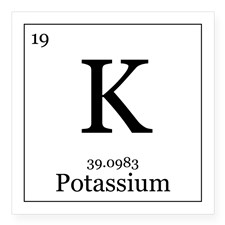
How many electrons does potassium K contain? (click to see image)
a)
19
b)
39
c)
20
d)
40
9.

What does the Valence electrons tell you?

a)

the total number of electrons

b)

the chemical reactivity of the atom

c)

the identity of an atom

d)

where it is located in the periodic table.

10.

What subatomic particle determines the identity of an atom.

a)

Electrons

b)

atomic mass

c)

atomic number

d)

neutrons

11.
The atomic number tells you what?
a)
number of electrons
b)
number of protons
c)
number of neutrons
d)
both electrons and protons in an atom.
12.

Which group of the periodic table is composed of inert (not reactive) gases?

a)

Group 5

b)

Group 17

c)

Group 15

d)

Group18

13.
Elements which are shiny, conduct electricity and heat are called
a)
metal
b)
nonmetal
c)
metalloid
d)
nonexistent
14.

Which element is not a metal?

a)

sr

b)

Re

c)

Al

d)

B

15.
a)
2
b)
3
c)
5
16.
a)
2
b)
6
c)
10
d)
16
17.
Which group does this atom belong?
a)
Group 1
b)
Group 2
c)
Group 4
d)
Group 18
18.
How many valence electrons and energy levels does this atom have?
a)
6 VE and 2 EL
b)
4 VE and 1 EL
c)
4 VE and 2 EL
d)
2 VE and 1 EL
19.
Which pair of elements have similar chemical properties?
a)
H and He
b)
Na and Cs
c)
Na and Mg
d)
Mg and Al
20.
What does MAN mean?
a)
Mass = Atomic Mass + Neutron
b)
Mass - Atomic # = Neutron
c)
Mass = Atom = Neutron
21.
Which particle identifies/names an atom?
a)
Neutron
b)
electron
c)
Proton
d)
Nucleus
22.
 2. A table with information about four elements is provided. Which element contains 22 protons?
A. Sodium
B. Calcium

C. Titanium

D. Magnesium 
a)
A. Sodium 
b)
B. Calcium 
c)
C. Titanium 
d)
D. Magnesium 
23.
 3. The reactivity of an element is most greatly influenced by which of the following?
a)
A. Number of valence electrons
b)
B. Melting point
c)
C. Numbers of protons
d)
D. Atomic mass
24.

The three subatomic particles that make up atoms are -

a)

A. neutrons, protons and ions.

b)

B. neutrons, electrons and protons

c)

C. protons, ions and electrons.

d)

electrons, neutrons and ions.

25.

An element can be identified by its unique number of -

a)

A. ions

b)

B. electrons

c)

C. protons

d)

D. neutrons

26.

The reactivity of an atom is determined by -

a)

A. its number of valence electrons.

b)

B. the radius of the atom's nucleus.

c)

C. its atomic mass of the element.

d)

D. the orbital path of its electrons.

27.

Copper's atomic number is 29. This means that copper has -

a)

A. 29 protons in its nucleus.

b)

B. 29 atoms in every molecule.

c)

C. a boiling point of 29° Celsius.

d)

D. an atomic radius of 29 micrometers.

28.

The table provides information on four different elements. Which element has six protons in its nucleus?

a)

A. Boron

b)

B. Carbon

c)

C. Nitrogen

d)

D. Oxygen

29.

Most of the atom is made up of ........

a)

the nucleus

b)

its mass

c)

empty space

d)

protons

30.

What two subatomic particles make up most of the mass of an atom?

a)

Protons and electrons

b)

Protons and neutrons

c)

Electrons and neutrons

d)

Neutrons and neutrons

31.

How do you find the mass of an atom?

a)

guess + brains

b)

Protons + Electrons

c)

Protons +Neutrons

d)

Electrons + Neutrons

32.

Where would you locate the Valence Electrons?

a)

Inside the nucleus

b)

Inside the electron

c)

on the other most energy level

d)

on the outer most energy level

33.

An atom of Zinc has an atomic # of 30 and a mass number of 65.39. How many protons, electrons, and neutrons are found in a neutral atom

a)

30 protons, 30 electrons, 30 neutrons

b)

30 protons, 30 electrons, 65 neutrons

c)

30 protons, 30 electrons, 35 neutrons

d)

35 protons, 30 electrons, 30 neutrons

34.
The positive particles of an atom are 
a)
electrons 
b)
positrons 
c)
neutrons 
d)
protons 
35.
What is the atomic number for an element with three protons?
a)
2
b)
1
c)
3
d)
6
36.
What does the 1.00794 stand for?
a)
Hydrogen
b)
atomic number
c)
atomic mass
d)
atomic explosion
37.
What is the atomic mass of "F"
a)
9
b)
18
c)
17
d)
19
38.
What is the number of protons that the element in this image contain?
a)
14
b)
7
c)
15
d)
18
39.
An atoms overall charge is 
a)
positive 
b)
depends on its mood 
c)
neutral 
d)
negative 
40.
The particles that are found in the nucleus of an atom are
a)
neutrons and electrons
b)
electrons only
c)
protons and neutrons
d)
protons and electrons
41.
What particle uniquely identifies an element?
a)
Number of Valence Electrons
b)
Number of Protons
c)
Number of Electrons
d)
Atomic Mass
42.
What is the atomic symbol for sodium?
a)
Na
b)
So
c)
NaCl
d)
S
43.
Most of the mass in an atom is concentrated in the...
a)
electrons
b)
nucleus
c)
protons
d)
empty space
44.
How many neutron are in the atom "K"?
a)
7
b)
2
c)
39
d)
20
45.
What are the 3 particles that make-up the atom?
a)
protons, neutrons, and isotopes
b)
neutrons, isotopes, and electrons
c)
positives, negatives, and electrons
d)
protons, neutrons, and electrons
46.
The particles that are found in the nucleus of an atom are
a)
neutrons and electrons
b)
electrons only
c)
protons and neutrons
d)
protons and electrons
47.
What is the element symbol for boron? 
a)
B
b)
Bo
c)
Bn
d)
W
48.
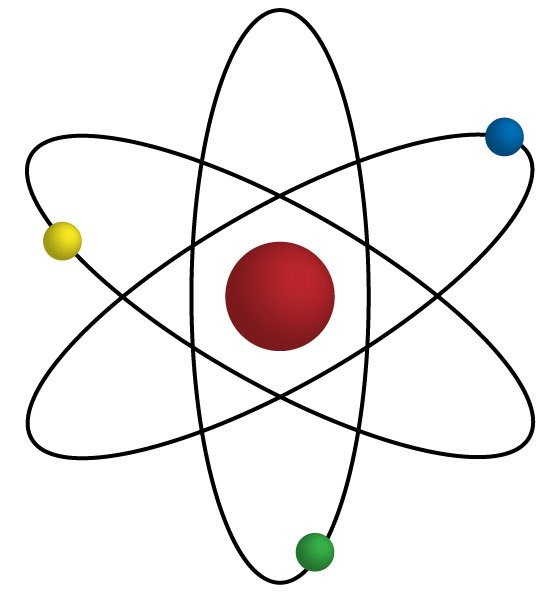
What element is this model showing?
a)
Lithium
b)
Boron
c)
Carbon
d)
Neon
49.
What is the atomic mass of "F"
a)
9
b)
18
c)
17
d)
19
50.
How are elements ordered on the Periodic Table?
a)
Alphabetical Order
b)
By their color.
c)
By their atomic mass.
d)
By their atomic number.
51.

The atomic number of an element is the number of _______ it has.

a)

protons

b)

neutrons

c)

electrons

d)

protons and neutrons

52.
Which of these is a property of metals?
a)
It's malleable
b)
It can't conduct electricity
c)
They are used in food
d)
It's very brittle
53.
Which of these grouping of elements could have the characteristic of brittle?
a)
Metal
b)
Nonmetal
54.
Which of the following is a good conductor of heat?
a)
Metal
b)
Nonmetal
c)
Metalloid
55.
Silicon is a semiconductor and has properties of both metals and nonmetals. What type of element is Silicon? 
a)
Metal
b)
Nonmetal
c)
Metalloid
d)
Pretty
56.
Which elements are found on the left to middle of The Periodic Table? 
a)
Metals
b)
Nonmetals
c)
Metalloids
d)
Candles
57.
Which element is a metalloid?
a)
Titanium
b)
Selenium
c)
Potassium
d)
Polonium
58.
One property of a nonmetals is that it is a good conductor of electricity?
a)
true
b)
false
59.
All of the following would classify an element as a metal except?
a)
Dull
b)
Luster
c)
Malleable
d)
Hard
60.
Non-metals are good conductors of heat and electricity. 
a)
TRUE
b)
FALSE