Wayground logo

Free Printable Worksheets

Font size

S
M
L
XL
Worksheets

Unit 1 Chap 2 Practice test - All About Matter

Total questions: 102

Worksheet time: 2hrs 38mins

Name
Class
Date
1.

Substances in a mixture

a)

maintain their own properties

b)

chemcially combine

c)

form new properites

d)

can be destroyed

2.

Solids and Liquids are similar because they

a)

each have their own volume

b)

each have their own shape

c)

can both be deformed easily

d)

each have quickly moving particles

3.

The following is a physical property

a)

the flammibility of a piece of paper

b)

the volume of a rock

c)

the effect of oxygen on iron

d)

the ability of silver to tarnish

4.

Compounds are formed when

a)

elements mix together

b)

two or more elements are chemically bond

c)

a solute and a solvent combine

d)

deposition occurs

5.

Changes of state

a)

change the identity of a substance

b)

change the appearance of a substance

c)

change the mass of a substance

d)

change the chemical make up of a substance

6.

An example of a homegenous mixture is

a)

lemonade

b)

milk

c)

concrete

d)

a snowglobe

7.

The particles in a colliod settle out.

a)

True

b)

False

8.

In which states are the molecules able to move about freely with no fixed volume?

a)

solid

b)

gas

c)

liquid

d)

plasma

9.

Which of the following has a no definite shape and no definite volume?

a)

solid

b)

liquid

c)

gas

10.
Physical Change
a)
Grinding coffee beans
b)
Baking Cookies
c)
Exploding fireworks
11.
What describes both gases and liquids?
a)
Their volumes stay the same in any container
b)
Their shapes stay the same in any container
c)
Their shapes change when they are in different container
12.
What state of matter are the molecules tightly packed together in?
a)
Solid
b)
Liquid
c)
Gas
13.
Which is an example of a chemical change?
a)
Burning a scented candle
b)
Cutting an apple into slices
c)
Melting a stick of butter to pour over popcorn
14.

What is this?

a)

element, pure substance

b)

compound, pure substance

c)

mixture

d)

compound, mixture

15.
A description of objects that can be measured and observed.
a)
gas
b)
mustangs
c)
physical properties
d)
melting point
16.
Cutting an orange is a physical change.
a)
True
b)
False
17.
An example of a physical property is 
a)
flammability
b)
acidic
c)
color
d)
ability to rust
18.
Changing the way matter looks without changing it into NEW matter is a:
a)
Chemical change
b)
Physical change
c)
Energy change
d)
BOTH a chemical and a physical change
19.
Which of the following could be a characteristic that changes in matter during a PHYSICAL CHANGE?
a)
Size
b)
State
c)
Texture
d)
All of the above
20.
Chopping wood is an example of a:
a)
Physical change
b)
Chemical change
21.
Water freezing to ice is an example of a:
a)
Physical change
b)
Chemical change
22.
Burning wood to ash is an example of a:
a)
Physical change
b)
Chemical change
23.
Smashing a piece of candy into smaller pieces is an example of a:
a)
Physical change
b)
Chemical change
24.
A physical change does not need energy to occur.
a)
True
b)
False
25.
A pure substance containing only one kind of atom.
a)
element
b)
mixture
c)
compound
26.
Can only be separated by chemical means.
a)
element
b)
mixture
c)
compound
27.
This picture represents which of the following?
a)
element
b)
compound
c)
mixture
28.
This picture represents which of the following?
a)
element
b)
compound
c)
mixture
29.
The ability of a substance to be pounded or rolled into thin sheets
a)
State
b)
Ductility
c)
Malleability
d)
Thermal Conductivity
30.
The ability of a substance to be pulled into wires
a)
Malleability
b)
Flexibility
c)
State
d)
Ductility
31.
Physical or Chemical?  Water is nonflammable
a)
Physical
b)
Chemical
c)
Neither
32.
Physical or Chemical Property? If copper comes in contact with water, it will turn green.
a)
Physical
b)
Chemical
c)
Neither
33.
Physical or Chemical Property?  The temperature of boiling water is 100 degrees Celsius.
a)
Physical
b)
Chemical
c)
Neither
34.
Physical or Chemical Property?  The solid form of water is ice.
a)
Physical
b)
Chemical
c)
Neither
35.
Define a Chemical Property
a)
A property which depends on the objects size or matter.
b)
A property of matter not involving in its manifestation a chemical change
c)
A property or behavior of a substance which undergoes a chemical change or reaction.
d)
A property which makes the object smell or taste different.
36.
Boiling point,melting point, and density are some of an element's
a)
pure properties
b)
physical properties
c)
chemical properties
37.
A mixture that appears to be evenly mixed throughout:
a)
an atom
b)
a compound
c)
a homogeneous mixture
d)
a heterogeneous mixture
38.
 mixture that does NOT appear to be evenly mixed throughout:
a)
an atom
b)
a compound
c)
a homogeneous mixture
d)
a heterogeneous mixture
39.
Which of these is an example of a chemical property?
a)
density
b)
melting point
c)
ductility
d)
flammability
40.
Can a mixture be separated? 
a)
No
b)
Yes
c)
Only sometimes
41.
An example of a physical change would be a change in...
a)
Color
b)
Shape
c)
Size
d)
All of the above 
42.
Something made up of two or more substances is called a 
a)
mixture
b)
element
c)
compound
d)
natural
43.
A pure substance made up of only one type of atom e.g. oxygen or carbon
a)
element
b)
emulsion
c)
pure substance
d)
compound
44.
A substance that is made up of two or more different types of atoms bonded together e.g. water
a)
compound
b)
solvent
c)
element
d)
solution
45.
Something that dissolves very easily in water 
a)
soluble
b)
solid
c)
saturated
d)
solvent
46.
when you have something that does not dissolve it is referred to as being
a)
insoluble
b)
a rock
c)
a solid
d)
a nail
47.
Any liquid that dissolves another substance or substances 
a)
solvent
b)
solute
c)
solution
d)
substance
48.
A ________ is something that dissolves in a liquid (solvent)
a)
solute
b)
salt
c)
sugar
d)
solution
49.

If a material's composition varies from region to region, it can be classified as _______________

a)

homogeneous

b)

heterogeneous

50.

In a mixture, components lose their properties to form a new substance.

a)

True

b)

False

51.

A liquid mixture in which particles can be seen and easily separated by settling or filtration is a ____________

a)

solution

b)

suspension

c)

solvent

d)

solute

52.

Type of mixture that has the SAME COMPOSITION in every part.

a)

Homogenous

b)

Heterogeneous

53.

Type of mixture that DOESN'T HAVE the same composition in every part.

a)

Homogeneous

b)

Heterogeneous

54.

_________ are the substances that are produced in a chemical reaction.

a)

Reactants

b)

Producer

c)

Reaction

d)

Product

55.

________ are the starting substances in a chemical equation.

a)

Reactants

b)

Producer

c)

Reaction

d)

Products

56.

The law of conservation of mass states that ________

a)

the total mass of reactants is more than the total mass of products

b)

the mass of a chemical reaction is not constant

c)

the mass of a chemical reaction remains constant

d)

the total mass of reactants is less than the total mass of products

57.

Solve for the unknown mass: 6.1 g + ? g = 9.1 g

a)

15.2

b)

3 g

c)

15.2 g

d)

3

58.

According to the law of conservation of mass, how much zinc was present in the zinc carbonate?

a)

256 g

b)

88 g

c)

104 g

d)

40 g

59.
How many elements does PbNO3 have?
a)
2
b)
3
c)
4
d)
5
60.
What is the reactant in the following equation?
2NaHCO3  -> Na2CO3  +  CO2  + H2O
a)
NaHCO3
b)
Na2CO3
c)
CO2
d)
H2O
61.
In a reaction A + B ----> AB,  reactant A has 4g and product  AB has 10g. How many grams does reactant B should have? 
a)
4g
b)
5g
c)
6g
d)
14g
62.
If a reaction produces 18 grams, and one of its reactants had 10 grams, how much did the other reactant had?
a)
28 grams
b)
18 grams
c)
10 grams
d)
8 grams
63.
Which of these is NOT a chemical reaction?
a)
Two liquids mix to give a new color
b)
Two gases react to make a liquid
c)
A liquid and a solid mix to make a gas
d)
Melting gold coins 
64.
Which of these is a chemical reaction?
a)
Boiling water
b)
Melting aluminum
c)
Crushing a piece of chalk
d)
Cooking an egg
65.
In the reaction AB-----> A + B reactant AB has 12g and product B has 5g. How many grams should product A have?
a)
17g
b)
2g
c)
7g
d)
None of the above
66.
In a synthesis reaction one reactant has a masss of 6g and the second reactant has 12g. How much mass should the product of this reaction have?
a)
18g
b)
12g
c)
6g
d)
None of the above
67.
Which of these is NOT a chemical reaction?
a)
A metal has rust
b)
An egg has been cooked
c)
A white powder is dissolved in water
d)
When a white and clear liquid are mixed a pink color appears
68.
When CaCO3 is heated, it forms CaO and CO2. Which of these statements best describes the mass of the products if 100 g of CaCO3 is heated?
a)
The difference in the products’ masses is equal to the mass of the CaCO3
b)
The sum of the products’ masses is less than the mass of the CaCO3
c)
The mass of each product is equal to the mass of the CaCO3
d)
The sum of the products’ masses equals the mass of the CaCO3
69.
24 g of magnesium reacts with 38 g of fluorine to produce _____ g magnesium fluoride
a)
62 
b)
38
c)
24
d)
14
70.
The atomic number tells you what?
a)
number of electrons
b)
number of protons
c)
number of neutrons
d)
both electrons and protons in an atom.
71.
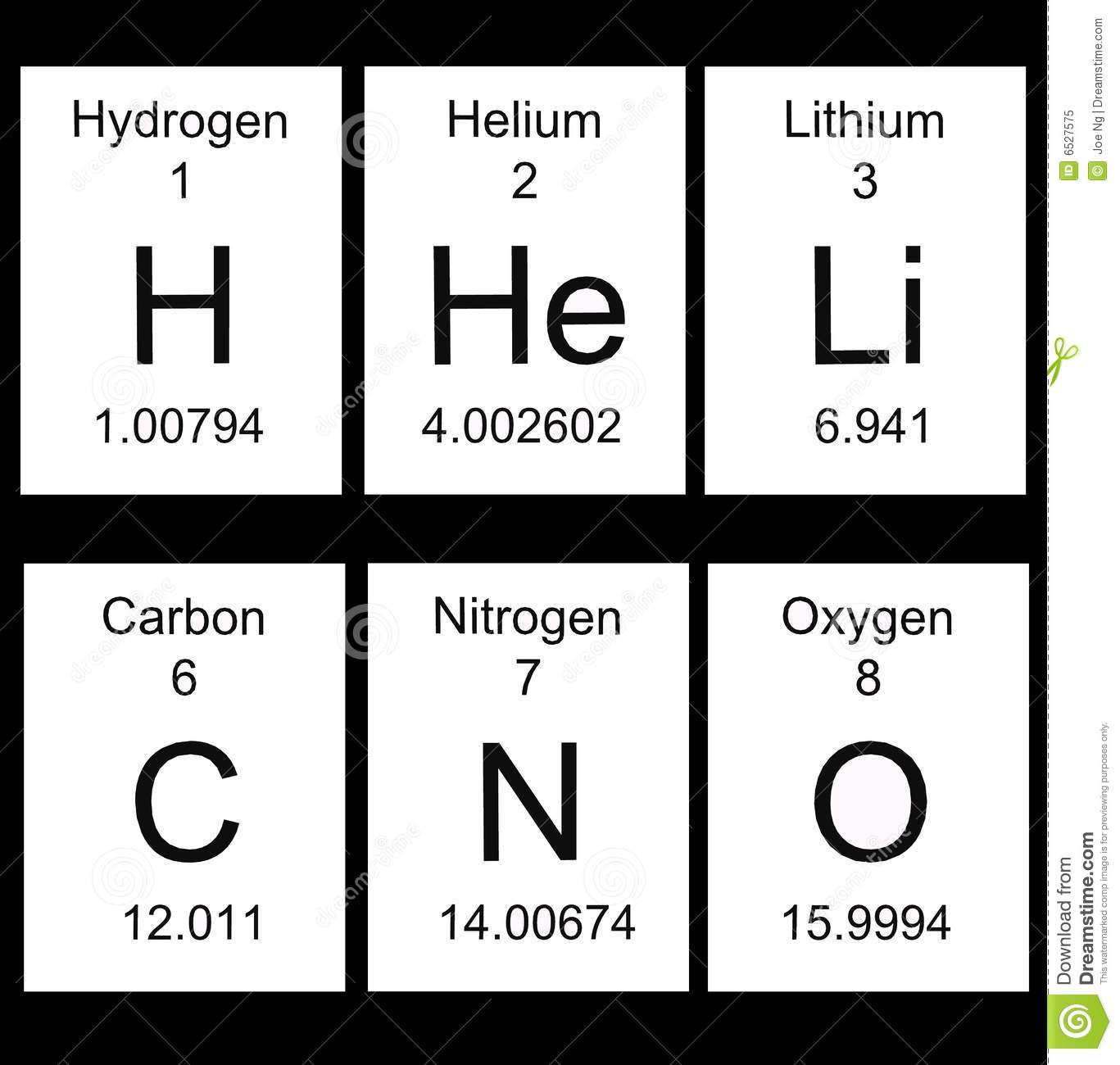
What does the 1.00794 stand for?
a)
Hydrogen
b)
atomic number
c)
atomic mass
d)
atomic explosion
72.
What is the chemical symbol for Lithium?
a)
H
b)
He
c)
Li
d)
N
73.
Each element is, usually, given one or two letters known as a chemical symbol.
a)
True
b)
False
74.
Most of the elements on the periodic table are classified as "metal".
a)
True
b)
False
75.
Are there any compounds on the periodic table 
a)
yes there are many 
b)
no because only elements are on the periodic table
c)
I think they are?
76.
Is salt (NaCI) a compound or a element
a)
Compound
b)
element
77.
which one can be found on the periodic table
a)
Compound 
b)
Element
78.
What cannot be broken down into other substances?
a)
Compound
b)
Mixture
c)
Solids
d)
Element
79.
Which of the following is not a compound?
a)
HCl
b)
Cl
c)
NaCl
d)
CO2
80.
Water is an example of:
a)
compound
b)
element
c)
solution
81.
A combination of substances that are not chemically combined is called a(n)____________. 
a)
mixture
b)
compound
c)
physical
82.
This picture represents which of the following?
a)
element
b)
compound
c)
mixture
83.
Which of the following represents an element?
a)
H2O
b)
H2
c)
NaCl
d)
CaCO3
84.
Glucose (C6H12O6) is an example of a...
a)
Element
b)
Compound
c)
Mixture
85.
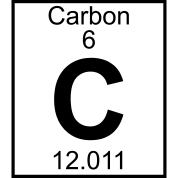
What does the 6 represent?
a)
atomic mass
b)
atomic number
c)
element name
d)
chemical symbol 
86.
What does the C represent?
a)
atomic mass
b)
atomic number
c)
element name
d)
chemical symbol 
87.

What are the rows in the periodic table called?

a)

Families

b)

Groups

c)

Periods

d)

Orbitals

88.
How many different elements are in this chemical formula: C2H2ClK3
a)
6
b)
8
c)
2
d)
4
89.
What is the chemical symbol for Titanium
a)
Ti
b)
TI
c)
Tm
d)
Sn
90.
Classify the picture with the correct label.
a)
Element
b)
Compound
c)
Mixture of Elements
d)
Mixture of Compounds
91.
Classify the picture with the correct label.
a)
Element
b)
Compound
c)
Mixture of Elements and Compounds
d)
Mixture of Elements
92.
Classify the picture with the correct label.
a)
Compounds
b)
Mixture of Elements
c)
Mixture of Compounds
d)
Mixture of Elements & Compounds
93.
Classify the picture with the correct label.
a)
Element
b)
Compound
c)
Mixture of Compounds
d)
Mixture of Elements
94.
Classify the picture with the correct label.
a)
Compound
b)
Mixture of Compounds
c)
Mixture of Elements & Compounds
d)
Mixture of Elements
95.
Classify the picture with the correct label.
a)
Element
b)
Compound
c)
Mixture of Elements & Compounds
d)
Mixture of Elements
96.
Classify the picture with the correct label.
a)
Mixture of Elements
b)
Mixture of Elements & Compounds
c)
Mixture of Compounds
d)
Compounds
97.
Classify the picture with the correct label.
a)
Mixture of Elements
b)
Mixture of Elements & Compounds
c)
Mixture of Compounds
d)
Compounds
98.
What is H2SO4 
 made up of?
a)
2 hydrogen, 1 sulfur, 4 oxygen
b)
1 hydrogen, 2 sulfur, 4 oxygen
c)
2 hydrogen & 4 sodium
d)
1 hydrogen & 6 sodium
99.
Water is an example of:
a)
compound
b)
element
c)
solution
100.
Milk is a ________
a)
compound 
b)
mixture 
c)
element 
101.
Carbon Dioxide is a ______ 
a)
compound 
b)
element 
c)
mixtures 
d)
Battle of Bunker Hill 
102.
Which of the following is an element?
a)
Sugar in water
b)
Gold
c)
Salt (NaCl)