wayground logo

Free Printable Worksheets

NEW

Font size

S
M
L
XL
Worksheets

Nat. Sci. Unit 2: Chem

Total questions: 55

Worksheet time: 2hrs 18mins

Name
Class
Date
1.

The nucleus of an atom contains which subatomic particles?

a)

protons and electrons

b)

protons and neutrons

c)

electrons and neutrons

d)

protons, electrons, and neutrons

2.

Typically in an atom, which two subatomic particles are equal in number?

a)

protons and neutrons

b)

all subatomic particles are equal in number

c)

neutrons and electrons

d)

protons and electrons

3.
Particles in an atom that are neutral and have no charge are 
a)
negatrons 
b)
electrons 
c)
neutrons 
d)
protons 
4.

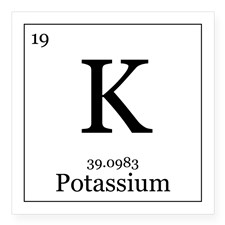
How many neutron are in the atom "K"?

a)

29

b)

19

c)

58

d)

20

5.
The atomic number is equal to _.
a)
the number of protons and electrons
b)
the number of neutrons only
c)
the total number of protons and neutrons
d)
the number of protons neutrons and electrons
6.
Adding or subtracting neutrons (charge = 0, mass = 1) makes the element change into an...
a)
ion
b)
mixture
c)
isotope
d)
neutral atom
7.
The atomic mass is equal to _.
a)
the number of protons only
b)
the number of neutrons only
c)
the total number of protons and neutrons
d)
the number of protons, neutrons, and electrons.
8.
An atom becomes _________ when it gains electrons.
a)
Positive
b)
Negative
c)
Neutral
d)
Invinsible
9.
An atom that has gained or lost electrons is called ...
a)
a winner
b)
an isotope
c)
an ion
d)
a loser
10.

When an atom loses an electron, it becomes a

a)

positive ion

b)

negative ion

c)

neutral ion

d)

neutral atom

11.

Atoms are made up of what?

a)

molecules

b)

compounds

c)

elements

d)

subatomic particles

12.
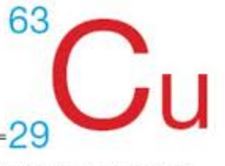
How many electrons does a Copper atom have?
a)
63
b)
29
c)
92
d)
34
13.
How many neutrons does a Hydrogen atom have?
a)
1
b)
2
c)
3
d)
0
14.
How many electrons does an atom of Krypton have?
a)
36
b)
83.80
c)
47.80
d)
119.80
15.
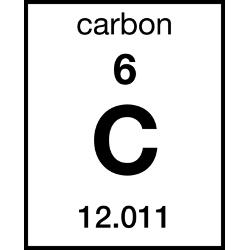
What does the 6 represent above the C
a)
Symbol 
b)
Name 
c)
Mass Number 
d)
Atomic Number 
16.
Which of the subatomic particles is the lightest
a)
all have the same mass
b)
protons 
c)
neutrons 
d)
electrons
17.
Which of the subatomic particles is the heaviest?
a)
electrons 
b)
protons 
c)
neutrons 
d)
protons and neutrons have equal mass
18.
What is the atomic number for an element with three protons?
a)
2
b)
1
c)
3
d)
6
19.
Vertical (up and down) columns in the periodic table are called _________ of elements and have similar properties. 
a)
groups
b)
periods
20.
One physical characteristic of metals is...
a)
Luster (shine)
b)
Weight
c)
All are gases. 
21.
_________are not good conductors of heat or electricity.
a)
Metals
b)
Metalloids
c)
Nonmetals
22.
The horizontal (left to right) rows on the periodic table are known as
a)
periods.
b)
atoms.
c)
groups or families.
d)
valence electrons.
23.
 Groups contain the same amount of ___________________ electrons, and periods contain the same number of ____________________shell.
a)
 atom/ electron
b)
valence/electron
c)
electron /valence
d)
protons/neutrons  
24.
Elements in the same________ often have similar chemical and physical properties.
a)
period
b)
group
25.
In which region would the nonmentals be found?
a)
1
b)
4
c)
3
d)
5
26.
The blue elements are called 
a)
metals
b)
nonmetals
c)
metalloids
d)
noble gases
27.
The elements along the staircase are called 
a)
metals
b)
nonmetals
c)
metalloids
d)
noble gases
28.

What are the elements in group 1 (the far left) of the periodic table called?

a)

Alkali metals

b)

Alkaline earth metals

c)

Halogens

d)

Noble gases

29.

What are the elements in group 2 of the periodic table called?

a)

Alkali metals

b)

Alkaline earth metals

c)

Halogens

d)

Noble gases

30.

What are the elements in group 18 (the far right) of the periodic table called?

a)

Alkali metals

b)

Alkaline earth metals

c)

Halogens

d)

Noble gases

31.

What are the elements in group 17 of the periodic table called?

a)

Alkali metals

b)

Alkaline earth metals

c)

Halogens

d)

Noble gases

32.

What are the elements in groups 3-12 of the periodic table called?

a)

Transition metals

b)

Non-metals

c)

Metalloids

d)

Metals

33.

The number of electron shells an atom has is equal to the element's:

a)

Period number

b)

Group number

c)

Valence number

d)

Atomic number

34.

The number of valence electrons an element has is equal to its:

a)

Period number

b)

Group number

c)

Valence number

d)

Atomic number

35.

The model of an atom that shows electrons in circular orbits around the nucleus is called the:

a)

Bohr Model

b)

Lewis Dot Structure

c)

Rutherford Model

d)

Thomson Model

36.
All matter is made of
a)
atoms
b)
cells
37.
How many carbon atoms (C) are in a COmolecule?
a)
1
b)
2
c)
3
d)
0
38.
How many Oxygen atoms (O) are in a  molecule  of CO2
a)
1
b)
2
c)
3
d)
0
39.
How many Hydrogen atoms (H) are in a molecule of H2O?
a)
1
b)
2
c)
3
d)
0
40.
How many oxygens atoms ( O )atoms in a molecule of H2O?
a)
1
b)
2
c)
3
d)
0
41.
The small number to the right of an elemental symbol  ( H2) is called?
a)
 a subscript 
b)
a coefficient 
c)
a variable 
d)
a divisor 
42.
A mixture that can be easily be separated into his different parts ( think fruit salad)
a)
heterogeneous mixtures
b)
homogeneous mixtures 
43.
A mixture that is mixed so well that it would be impossible to separate out its different parts ( think milkshake)
a)
heterogeneous mixture 
b)
homogeneous mixture 
44.
A series of numbers and letters that are used to represent a molecule
a)
physcial property 
b)
chemical property 
c)
chemical formula 
d)
atom
45.
How many elements are in C6H12O6?
a)
1
b)
2
c)
3
d)
4
46.
Element or compound?
H2O
a)
element
b)
compound
47.
The red numbers in the image below represent ________
a)
subscripts
b)
coefficients
c)
I don't know, and don't want to try
d)
None of the answers are correct
48.
The blue numbers in the image below represent ________
a)
I don't know, and don't want to try
b)
coefficients
c)
subscripts
d)
none of the answers are correct
49.
In this image, the symbols to the right of the arrow (in black) are called the_______.
a)
Products
b)
Reactants
c)
Subscripts
d)
Coefficients
50.
Na + MgF2 -->  NaF + Mg
What are the reactants?
a)
Na + MgF2
b)
Na
c)
NaF + Mg
d)
NaF
51.
NH3 ---> N2 + H2
What are the products?
a)
N2 + H2
b)
N2
c)
H2
d)
NH3
52.

What is the subscript in this formula? 3N2ONe

a)

3

b)

2

c)

1

d)

5

53.

Is this equation balanced?

2H2O yields H2 + 2O2

a)

Yes

b)

No

54.

Is this equation balanced?

C + 2H2 yields CH4

a)

No

b)

Yes

55.

Is this equation balanced?

CH4 + O2 yields CO2 + 2H2O

a)

yes

b)

no