wayground logo

Free Printable Worksheets

NEW

Font size

S
M
L
XL
Worksheets

Unit 1 Review

Total questions: 55

Worksheet time: 44mins
Name
Class
Date
1.
What is the correct order of the moon phases?
a)
new, full, 1st quarter, 3rd quarter
b)
new moon, 1st quarter, full moon, 3rd quarter
c)
1st quarter, 3rd quarter, new moon, full moon
d)
new, 1st quarter, 3rd quarter, full
2.
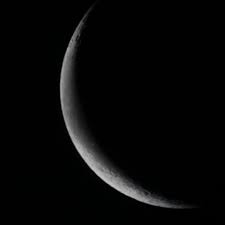
Name the moon phase
a)
waning crescent
b)
waxing crescent
c)
waning gibbous
d)
waxing gibbous
3.
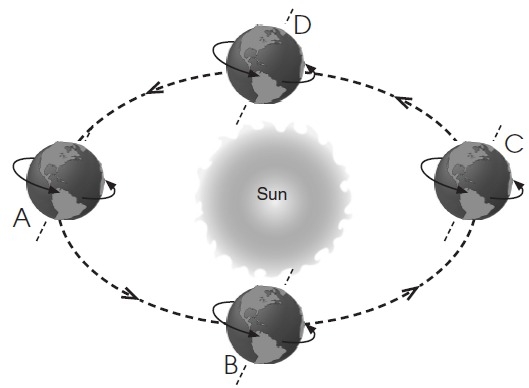
Which season is taking place in the Northern Hemisphere in Position 3?
a)
Winter
b)
Spring
c)
Summer
d)
Fall
4.

What season is letter A in the Northern Hemisphere?

a)

Winter

b)

Summer

c)

Spring

d)

Fall

5.
What causes the moon's phases
a)
Where you are standing on Earth
b)
the amt of sunlight reflected onto the moon from the sun
c)
The tilt of Earth
d)
how fast the moon is moving
6.
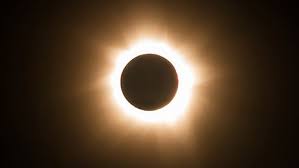
What type of eclipse is this?
a)
Solar eclipse
b)
Lunar eclipse
7.
What season is it in the northern hemisphere?
a)
It is summer.
b)
It is spring.
c)
It is winter.
d)
It is fall.
8.
What moon phase comes after a Full Moon and before a Last Quarter?
a)
Full Moon
b)
Waxing Crescent
c)
Waning Gibbous
d)
New Moon
9.
Which of the following best describes the tilt of the earth when it is summer in the southern hemisphere?
a)
The northern hemisphere is tilted toward the sun
b)
The northern hemisphere is tilted away from the sun
c)
The norther hemisphere is tilted neither toward or away from the sun
d)
Why are you talking about the northern hemisphere when you asked about the southern hemisphere?
10.
What moon phase comes before a Full Moon?
a)
Waxing Crescent
b)
Waning Crescent
c)
Waxing Gibbous
d)
Waning Gibbous
11.
What type of tides would this arrangement of earth-moon-sun create?
a)
neap tide
b)
spring tide
c)
new moon tide
d)
full moon tide
12.
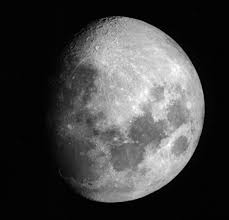
What phase is this?
a)
Full Moon
b)
New Moon
c)
Waxing Gibbous Moon
d)
Waning Gibbous Moon
13.
What type of eclipse occurs when the moon blocks the sun's light and cast a shadow on earth?
a)
solar
b)
lunar
14.

What moon phase would this be?

a)

new moon

b)

full moon

c)

waxing crescent

d)

waxing gibbous

15.
What type of eclipse is this?
a)
Solar Eclipse
b)
Lunar Eclipse
16.
Which of the following best describes equinoxes?
a)
The earth is tilted neither toward or away from the sun
b)
The norther hemisphere is tilted toward the sun
c)
The northern hemisphere is tilted away from the sun
d)
The southern hemisphere is tilted toward the sun
17.
What would seasons be like if Earth's axis were straight up and down?
a)
Seasons would be the same.
b)
Seasons would be more extreme.
c)
There would be no seasons.
18.
The Moon orbits Earth in a ________________ direction
a)
clockwise
b)
counterclockwise
c)
upwards
d)
downwards
19.
Define Waxing
a)
Moon is increasing and light part appears to be growing
b)
Completely illuminated
c)
dark side is facing earth
d)
Moon is decreasing and light part appears to be shrinking
20.
In which moon phase, can the moon not be seen at all?
a)
Waning crescent
b)
Full moon
c)
Waxing gibbous
d)
New moon
21.

Wha type of tide would this arrangement of earth-moon-sun create?

a)

full moon tide

b)

new moon tide

c)

neap tide

d)

spring tide

22.
What causes tides?
a)
gravity
b)
wind
c)
spring
d)
neap
23.

What is the correct order of the seasons?

a)

spring, summer, winter, fall

b)

summer, fall, winter, spring

c)

fall, spring, summer, winter

d)

winter, fall, summer, spring

24.

True or false: The Northern and Southern Hemispheres can have summer at the same time.

a)

True

b)

False

25.
Our planet Earth revolves around the sun, making one complete orbit every _____
a)
30 days
b)
65 days
c)
365 days
d)
653 days
26.
Which term is used to describe light that is hitting a region straight on?
a)
direct sunlight
b)
straight sunlight
c)
blunt sunlight
d)
open sunlight
27.
In December, the northern hemisphere is tilted away from the sun, which leads to ____
a)
cooler temperatures and shorter days
b)
warmer temperatures and shorter days
c)
cooler temperatures and longer days
d)
warmer temperatures and longer days
28.

Earth rotates on its axis once approximately every-

a)

month

b)

24 hours

c)

year

d)

12 hours

29.
The spinning of an object on its axis is called______
a)
orbit
b)
rotation
c)
revolution
d)
tide
30.
What are the reasons for the seasons?
a)
Earth's tilt and rotation.
b)
Earth's rotation and revolution.
c)
Earth's tilt and revolution.
d)
Earth's tilt and resolution
31.
When the Northern Hemisphere of Earth is Leaning away from the Sun, What season is the Southern Hemisphere experiencing?
a)
Summer
b)
Winter
c)
Spring
d)
Fall
32.
Why is it warmer in the summer?
a)
Closer to the sun
b)
More direct light from Earth's tilt
c)
Stronger light from the sun
d)
Earth spins slower
33.
The term equinox means....
a)
equal amount of day light and equal amount of night
b)
Equal amount of winter and summer
c)
Equal amounts of hot dogs for everyone
d)
The longest day of the year
34.

Which one shows more light?

a)

crescent moon

b)

gibbous moon

c)

1st quarter moon

35.

What imaginary line is drawn around the earth’s center?

a)

equator

b)

axis

c)

prime meridian

36.

Earth’s axis is tilted.

a)

false

b)

true

37.

How do the seasons happen?

a)

Earth's distance away from the sun

b)

Earth's distance towards the sun

c)

Earth's tilted axis

38.
Define Quarter Moon
a)
None of moon visible
b)
Less than Half the moon is visible
c)
More than half of moon is visible
d)
Half of the moon is visible
39.
Name this moon phase
a)
Waxing Gibbous
b)
Waxing Crescent
c)
Waning Crescent
d)
Waning Gibbous
40.
Name this moon phase
a)
waning crescent
b)
waxing crescent
c)
waning gibbous
d)
waxing gibbous
41.
Name the phase of the moon for letter a
a)
First Quarter
b)
Last Quarter
c)
Waxing Gibbous
d)
Waning Gibbous
42.
What is illuminating the Moon?
a)
Nuclear Fusion
b)
Sunlight
c)
Mirrors
d)
Flood Lights
43.
Name the phase of the moon for letter f
a)
Waning Gibbous
b)
Waxing Gibbous
c)
Waning Crescent
d)
Waxing Crescent
44.
How many phases does the moon go through?
a)
4
b)
8
c)
10
d)
16
45.
If the last full moon was on April 4th, when can you expect to see the next full moon? 
a)
April 29th
b)
July 4th
c)
May 4th
d)
September 12th
46.
Differences in the moon's and sun's pull on different sides of the Earth cause _________.
a)
gravity
b)
lunar phases
c)
tides
d)
dabbing
47.
What do we call a tide that has a large range?
a)
gravity
b)
wind
c)
spring
d)
neap
48.
The diagram below shows the alignment of the sun, the moon, and Earth. In which locations are neap tides taking place?
a)
1 and 2
b)
1 and 3
c)
2 and 4
d)
3 and 4
49.
A lunar eclipse only happens during a ________ moon.
a)
New
b)
Cresent
c)
Gibbous
d)
Full
50.
During a solar eclipse...
a)
The sun is blocked by the moon
b)
The Earth is blocked moon
c)
The moon is blocked by the sun
d)
You are blocked
51.

A lunar eclipse occurs when:

a)

The sun passes between the earth and the moon.

b)

The sun passes between the earth and the moon.

c)

The moon passes through the earth's shadow.

d)

The sun passes through the moon's shadow.

52.
The line up for a solar eclipse is: 
a)
Sun-Earth-Moon
b)
Earth-Sun-Moon
c)
Sun-Moon-Earth
d)
Earth-Moon-Mars
53.

What factor limits the number of eclipses per year?

a)

Distance between the moon and the earth

b)

Tilt of the moon's orbit around the earth

c)

Distance between the earth and the sun

d)

Tilt of the earth's axis of rotation

54.
What is the longest day of the year?
a)
winter solstice
b)
summer solstice
c)
fall equinox
d)
spring equinox
55.
When are the equinoxes?
a)
June & December
b)
July & January
c)
April & October
d)
March & September