
 Worksheets
Unit 1 Review General Chemistry
Total questions: 116
Worksheet time: 1hrs 15mins
Properties that change based on the amount of the substance is
Extrinsic Properties
Intrinsic Properties
Chemical Properties
Real Properties
Properties that do not change based on the amount of the substance is
Extrinsic Properties
Intrinsic Properties
Associative Properties
Real Properties
Which of the following is not an example of matter?
sunlight
desk
water
pencil
Conductivity is a
Intrinsic property
Chemical property
Extrinsic property
Fake property
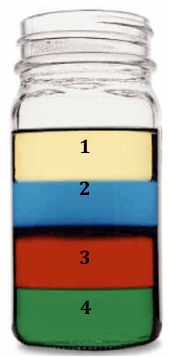
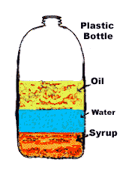
This is an example of an intrinsic physical property of matter.
density
mass
weight
volume
Identify the extrinsic property listed below.
length
taste
density
boiling point

Examine the graphic provided. Which container identifies a liquid?
Container A
Container B
Container C
Volume
Intrinsic
Extrinsic
Mass
Intrinsic
Extrinsic
Freezing Point
Intrinsic
Extrinsic
Boiling Point
Intrinsic
Extrinsic
The smallest particle of any particular type of element
Compound
Atom
Chemical
Element


The atomic mass of an element is the ___.
average of the mass number and the atomic number for the element
weighted average of the masses of the isotopes of the element
total mass of the isotopes of the element
total number of subatomic particles in the nucleus
Which of these is an element?
Salt (NaCl)
Water (H20)
Oxygen (O)
Carbon Dioxide (CO2)
Which of these is a compound?
Aluminium (Al)
Carbon Dioxide (CO2)
Nitrogen (N)
Sand
Which of these is a mixture?
Laundry Detergent
Salt (NaCl)
Oxygen (O)
Fluorine (Fl)
Air is:
An element
A compound
A mixture
None of these
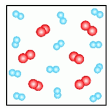
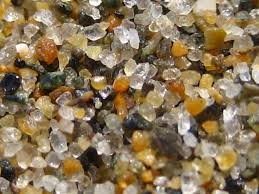
If a material's composition varies from region to region, it can be classified as _______________
homogeneous
heterogeneous
What is often called the universal solvent?
sodium chloride
oxygen
sodium
water


Material of density of 762 kg/m3 occupies a container volume of 99 cm3. What is its mass?
Hint: density = mass/volume
75438 kg
7.70 kg
0.13 kg
6858 kg
If 96.5 grams of gold has a volume of 5 cm3 , what is the density of gold?
Hint: density = mass/volume
482.5 g/cm3
19.3 g/cm3
0.05 g/cm3
101.5 g/cm3
A piece of tin has a mass of 16.52 g and a volume of 2.26 cm3. What is the density of tin?
Hint: density = mass/volume
7.3 g/cm3
37.3 g/cm3
7.3 cm3/g
37.3 cm3/g

When sugar dissolves in water a ______________ change occurs.
Physical change
Chemical Change
Which of the following is evidence of a physical change?
New substance
Shape Change
Light produced
Gas released.
A teacher is demonstrating physical and chemical changes to her class. Which action should they use to demonstrate a chemical change?
Cutting a piece of paper with scissors.
Folding a piece of paper into an airplane.
Ripping a piece of paper with their hands.
Burning a piece of paper with a match.

Properties that describe how a substance looks, feels, or its state of matter, etc. are __________________.
Chemical properties
Physical properties


Why does the image best represent an example of a physical change?
The pencil can no longer be used.
The pencil is a different size.
The materials making up the pencil did not change.
The materials making up the pencil are different.
What is the definition of chemical change?
any change that results in the formation of one (or more) new chemical substance(s).
changing of only the appearance of the object
matter cannot be created or destroyed, only change form
changes affecting the form of a chemical substance, but not its chemical composition.
Think this through: Can the same substance undergo both a physical and a chemical change at the same time.
Yes
No
Reactivity (bubbling, fizzing) is a --- property.
Chemical
Physical
Ductility, the ability to be stretched into thin wires, is a --- property.
Chemical
Physical
Combustion or exploding, is a --- property.
Chemical
Physical
Bubbles produced as in the yeast and peroxide demonstration is an example of a --- property.
Chemical
Physical
Mrs. Mertz compares three different solutions based on the way they look to help her identify an unknown solution. What data does she need to include in her results?
chemical reactivity
color
mass
flammability
A student hands you the following procedure to follow, "1. Record the mass of the beaker by placing the empty beaker on the scale. 2. Keeping the beaker on the scale, add 2 g of salt. 3. Remove the beaker with salt from the scale and add water."
What important information did the student forget in their procedure?
How much water to include
Telling me how to turn on the scale
Telling me to tare out the scale
Nothing, the procedures are great as is
You are writing procedures for an experiment to determine density of some solutions. Which of the following procedures do you need to include to accomplish this task?
Record the mass of all glassware
Record the volume of each solution
Record the color of each solution
Dissolve solids in tap water
When mixing solutions why is it best to use distilled water instead of tap water
distilled water is more sciencey
distilled water is more clear so you can see color of solid better
distilled water has minerals in it that help solids dissolve
distilled water does not have minerals in it that could throw off your results
What is the suitable technique for a mixture of iron filings and sand?
filtering
magnetic separation
decanting

Sulphur is not soluble in water. If, accidentally, some sulphur drops into a glass of water. Which separation technique would you use to separate it from the water?
by decanting
by filtering
by crystallization
by sieving
Which of the following statements tells us that a sample of liquid is pure water?
It is colourless.
It leaves no residue when filtered.
It boils at 100oC.
It is odourless.
To separate a mixture of salt and water what separation method is used?
Filtration
Distillation
Chromatography
Evaporation to dryness
Water and alcohol are easily separated by distillation (boiling and collecting the vapor) because of their
different densities
different boiling points
different colours
different melting points
Which property indicates that a solid is pure?
It burns completely in oxygen, leaving no residue.
It has a fixed melting point.
It has a fixed volume.
It is soluble in water.
Which is the most suitable laboratory apparatus used to measure 78ml of distilled water?
beaker
graduated cylinder
gas syringe
pipette

What is the unknown?
salt solution
baking soda solution
sugar solution
none of the above
What properties help you determine the unknown substance?
color
deinsity
pH
water soluble
reacts with water
What properties are physical properties (completely or partially)
color
density
pH
water soluble
reacts with water
What properties are chemical properties (completely or partially)
color
density
pH
water soluble
reacts with water
Why is solubility considered to be both a chemical and physical property
The reaction is only sometimes reversible, depending on if a liquid or a solid was dissolved
A new compound isn't formed, but in salts the water gets between the ions to break them apart so they aren't in compound anymore
A new compound is formed, but the physical appearance of the solution does not change from regular water
False, solubility is always a physical property.
Matter that has a definite shape and volume.
solid
gas
liquid
plasma

Matter with no definite shape or volume.
solid
gas
liquid
plasma

Matter that has definite volume and no definite shape.
solid
gas
liquid
plasma
A change from one phase of matter to another phase of matter is what kind of change?
physical
property
chemical
none of the above

Matter that fills the container is in what state of matter?
solid
gas
liquid
plasma
Matter in which the particles are free to move in all directions.
solid
gas
liquid
plasma
Matter in which the particles slide past each other is?
solid
gas
liquid
plasma

Most matter does this when heated.
expands
solidifies
contracts
does not change
When the temperature of a substance is lowered, its particles
vibrate more quickly
stop vibrating completely
escape the attractive forces of the other particles
vibrate more slowly
Basic state of matter with the least amount of energy.
solid
liquid
gas
Basic state of matter with an intermediate (medium) amount of energy.
solid
liquid
gas
Basic state of matter with the greatest amount of energy.
solid
liquid
gas


Which diagram depicts the arrangement of particles in a solid?


The particles are far apart and move quickly in all directions. What state of matter am I?I
solid
liquid
gas
none

The particles are close together and vibrate in place with little movement. What state of matter am I?I
solid
liquid
gas
none

The particles slide past one another and move around more than the particles of a solid. What state of matter am I?I
solid
liquid
gas
none
Observable event/phenomenon/property. Can be used as evidence
Fact
Hypothesis
Theory
Law
An educated guess, relatively easy to disprove
Fact
Hypothesis
Theory
Law
Based on a bunch of related and supported hypotheses. Explains how a related set of events/phenonmena occur or behave. Explains how something in the universe works. Cannot predict.
Fact
Hypothesis
Theory
Law
Based on a bunch of related and supported hypotheses. Predicts how a related set of events/phenonmena occur or behave. Often expressed as equations. Cannot explain.
Fact
Hypothesis
Theory
Law
Equally strong and robust. Can be adjusted and changed with new information, but the longer they are around the harder they are to fully disprove.
Fact
Hypothesis
Theory
Law

