wayground logo

Free Printable Worksheets

NEW

Font size

S
M
L
XL
Worksheets

AC 2020 Block Test 1

Total questions: 55

Worksheet time: 47mins

Name
Class
Date
1.

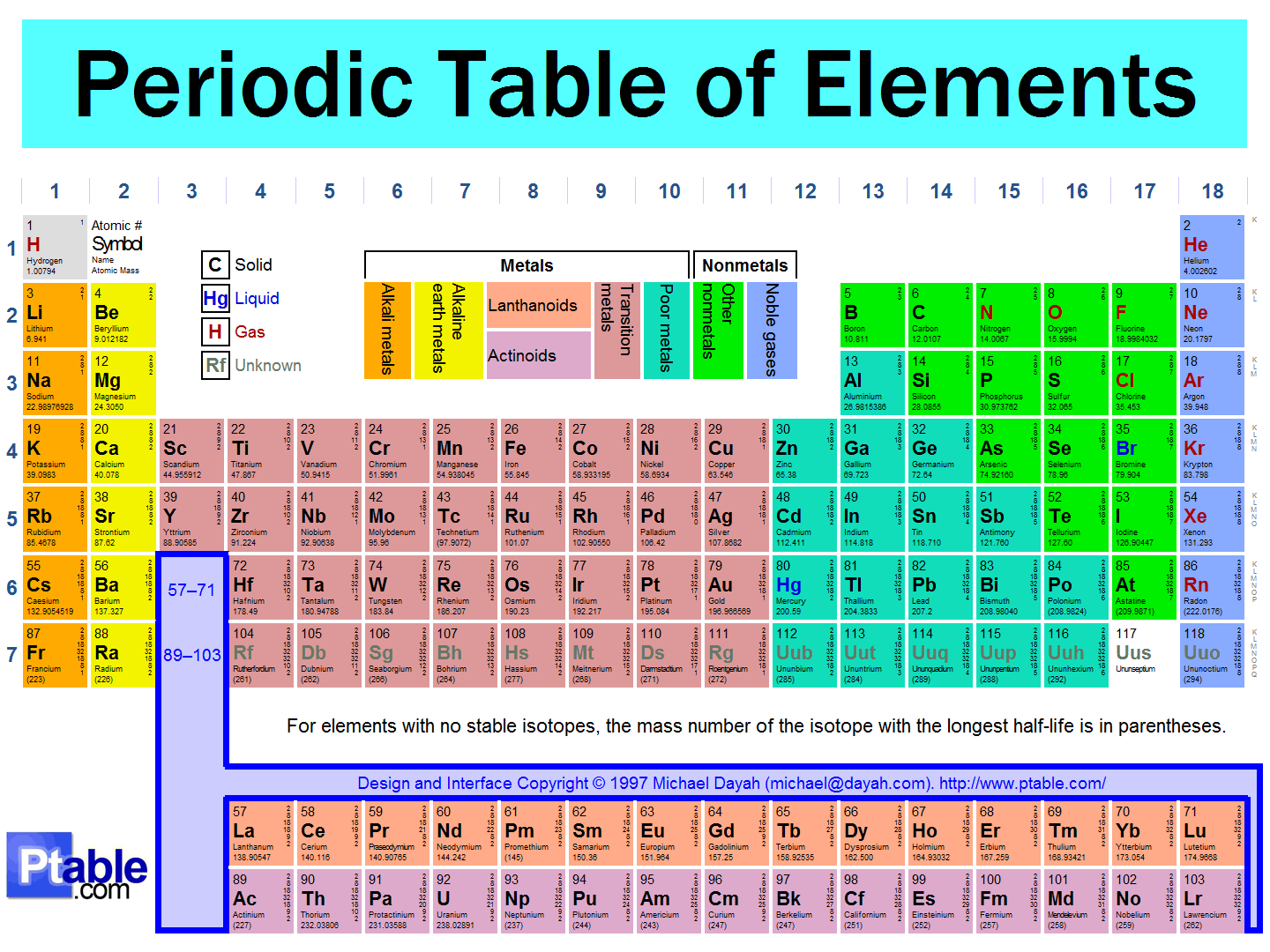
The vertical (up and down) columns in the Periodic Table are called

a)

groups

b)

towers

c)

periods

d)

atomic numbers

2.
The Modern Periodic Table of Elements is arranged by
a)
atomic mass
b)
atomic number
c)
valence electrons
d)
number of isotopes
3.
Sodium (Na) is found in period 
a)
3
b)
2
c)
4
d)
1
4.
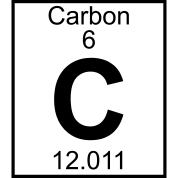
What does the 6 represent?
a)
atomic mass
b)
atomic number
c)
element name
d)
chemical symbol 
5.
What does 12.011 represent?
a)
atomic mass
b)
atomic number
c)
element name
d)
chemical symbol 
6.
What does the C represent?
a)
atomic mass
b)
atomic number
c)
element name
d)
chemical symbol 
7.
These are found on the Periodic Table.
a)
Compounds
b)
Elements
c)
Mixtures
8.

The horizontal (side to side) rows in the Periodic Table are called

a)

groups

b)

families

c)

periods

d)

atomic numbers

9.
GOLD
a)
Al
b)
Ag
c)
Ar
d)
Au
10.
CHLORINE
a)
C
b)
Ca
c)
Cl
d)
Cu
11.
CALCIUM
a)
C
b)
Ca
c)
Cu
d)
Cl
12.
COPPER
a)
C
b)
Ca
c)
Cu
d)
Cl
13.
SULFUR
a)
Su
b)
S
c)
Sf
d)
Si
14.
SILVER
a)
Au
b)
Ag
c)
Al
d)
Ar
15.
SILICON
a)
S
b)
Si
c)
Su
d)
Sc
16.
SODIUM
a)
S
b)
So
c)
N
d)
Na
17.
POTASSIUM
a)
P
b)
Ka
c)
K
d)
Pt
18.
How many different elements are in this chemical formula: C2H2ClK3
a)
6
b)
8
c)
2
d)
4
19.
Which of the following atomic symbols for bromine is written correctly?
a)
bR
b)
BR
c)
Br
d)
br
20.
What is krypton?
a)
element
b)
compound
c)
mixture
21.
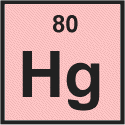
What is the chemical symbol for mercury?
a)
Hg
b)
Mc
c)
My
d)
C
22.
a)
Element
b)
Compound
23.

What is a collection of atoms of one type that cannot be broken down into simpler substances by ordinary chemical or physical means

a)

element

b)

subatomic particle

c)

electron

d)

matter

24.

What is an arrangement of the elements according to their atomic numbers so that elements with similar properties are in the same column and properties repeat from row to row

a)

Periodic Table of Elements

b)

Atomic Theory

c)

Isotopes

d)

Subatomic Particles

25.

What are one or two letters that represent the name of an element

a)

element name

b)

element symbols

c)

atomic number

d)

atomic mass

26.

What is a unique number for each element that equals the number of protons in an atom of that element

a)

element name

b)

element symbol

c)

atomic number

d)

atomic mass

27.

What is the mass of an atom, calculated by adding the number of protons and neutrons in the nucleus of the atom?

a)

element name

b)

element symbol

c)

atomic number

d)

atomic mass

28.

What is a grouping of elements based on similar properties, arranged by columns in the periodic table; also known as a group?

a)

family

b)

period

c)

row

d)

isotope

29.

What is a row on the Periodic Table of Elements?

a)

family

b)

period

c)

row

d)

isotope

30.

What are valence electrons?

a)

Any of an atom's electrons

b)

Electrons located on the first energy level

c)

Electrons not attached to any atom

d)

electrons located on the outer energy level

31.

What period is Lead (Pb) in?

a)

6

b)

4

c)

Metals

d)

4A

32.

What group or family is lead in?

a)

6

b)

4

c)

Metal

d)

4A

33.

What category is silicon (Si) a part of?

a)

Metal

b)

Nonmetal

c)

Metalloid

d)

Halogens

34.

How many electrons does Barium (Ba) have?

a)

13

b)

2

c)

71

d)

56

35.

How many neutrons does Bromine (Br) have?

a)

35

b)

80

c)

45

d)

7

36.

What period contains the element Plutonium (Pu)?

a)

8

b)

6

c)

7

d)

Plutonium doesn't exist

37.

How many electrons does a Radon (Rn) ION have?

a)

86

b)

8

c)

33

d)

Radon does not form an ion

38.

What group or family is Mercury (Hg) in?

a)

2B

b)

2A

c)

Metals

d)

Alkali metals

39.

What is group name of the most reactive metals?

a)

Noble gases

b)

Halogens

c)

Alkali metals

d)

Alkaline earth metals

40.

Why are halogens so reactive?

a)

They want to get rid of their only valance electron

b)

They only need one more electron

c)

They are non reactive, they have a full shell

41.
The atomic number tells you what?
a)
number of electrons
b)
number of protons
c)
number of neutrons
d)
both electrons and protons in an atom.
42.
Elements which are shiny, conduct electricity and heat are called
a)
metal
b)
nonmetal
c)
metalloid
d)
nonexistent
43.
Which is an alkali metal?
a)
Magnesium
b)
Iron
c)
Sodium
d)
Europium
44.
How many protons are in this element?
a)
79
b)
196
c)
117
d)
Cannot be determined
45.
How many electrons does potassium K contain? (click to see image)
a)
19
b)
39
c)
20
d)
40
46.
What is the name of this element?
a)
Helium
b)
Rubidium
c)
Hydrogen
d)
Mercury
47.
Which one of these is not a noble gas?
a)
Helium
b)
Radon
c)
Iodine
d)
Krypton
48.
What is the atomic number of Rubidium?
a)
37
b)
44
c)
45
d)
86
49.
Which one of these is the symbol for lead?
a)
Rb
b)
Pb
c)
Li
d)
Au
50.
What family is Sodium a part of?
a)
Transition Metals
b)
Halogens
c)
Alkali Metals
d)
Alkaline Earth Metals
51.
What family is silver a part of?
a)
Transition Metals
b)
Noble Gases
c)
Alkali Metals
d)
Alkaline Earth Metals
52.
What family is Cadmium a part of?
a)
Noble Gases
b)
Metalloids
c)
Transition Metals
d)
Actinoids
53.
Silicon is a 
a)
Metal
b)
Nonmetal
c)
Metalloid
d)
Halogen
54.
__________ would have some characteristics of metals and some characteristics of nonmetals.
a)
Gold
b)
Sodium
c)
Arsenic
d)
Bismuth
55.
Which element that starts with a B is an Alkaline Earth Metal?
a)
Barium
b)
Boron
c)
Bread
d)
Bromine