
 Worksheets
Unit 2: The Periodic Table & Electrons
Total questions: 50
Worksheet time: 1hrs 4mins

Who is credited with creating the periodic table of elements?
Marie Curie
Niels Bohr
Enrico Fermi
Dmitri Mendeleev

The vertical (up and down) columns in the Periodic Table are called (a) .
The Modern Periodic Table of Elements is arranged by
atomic mass
atomic number
number of neutrons
number of isotopes
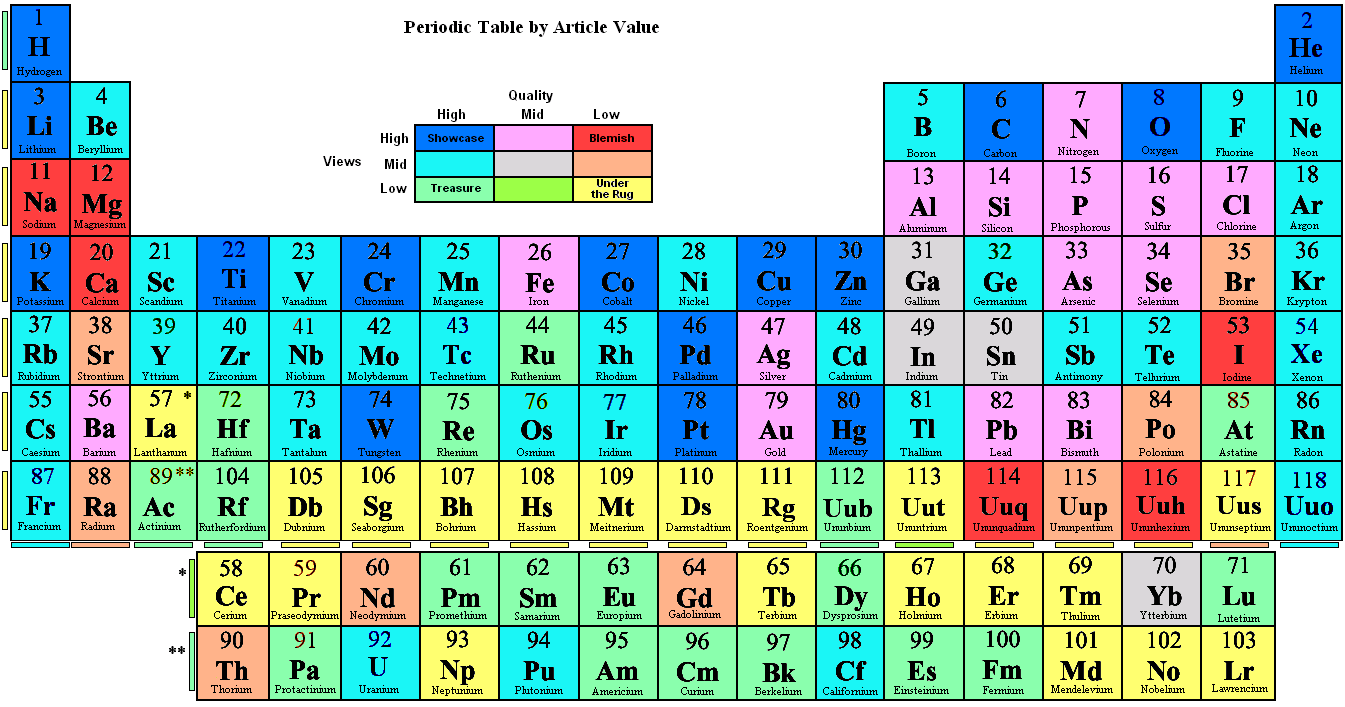
Sodium (Na) is found in period (a) .
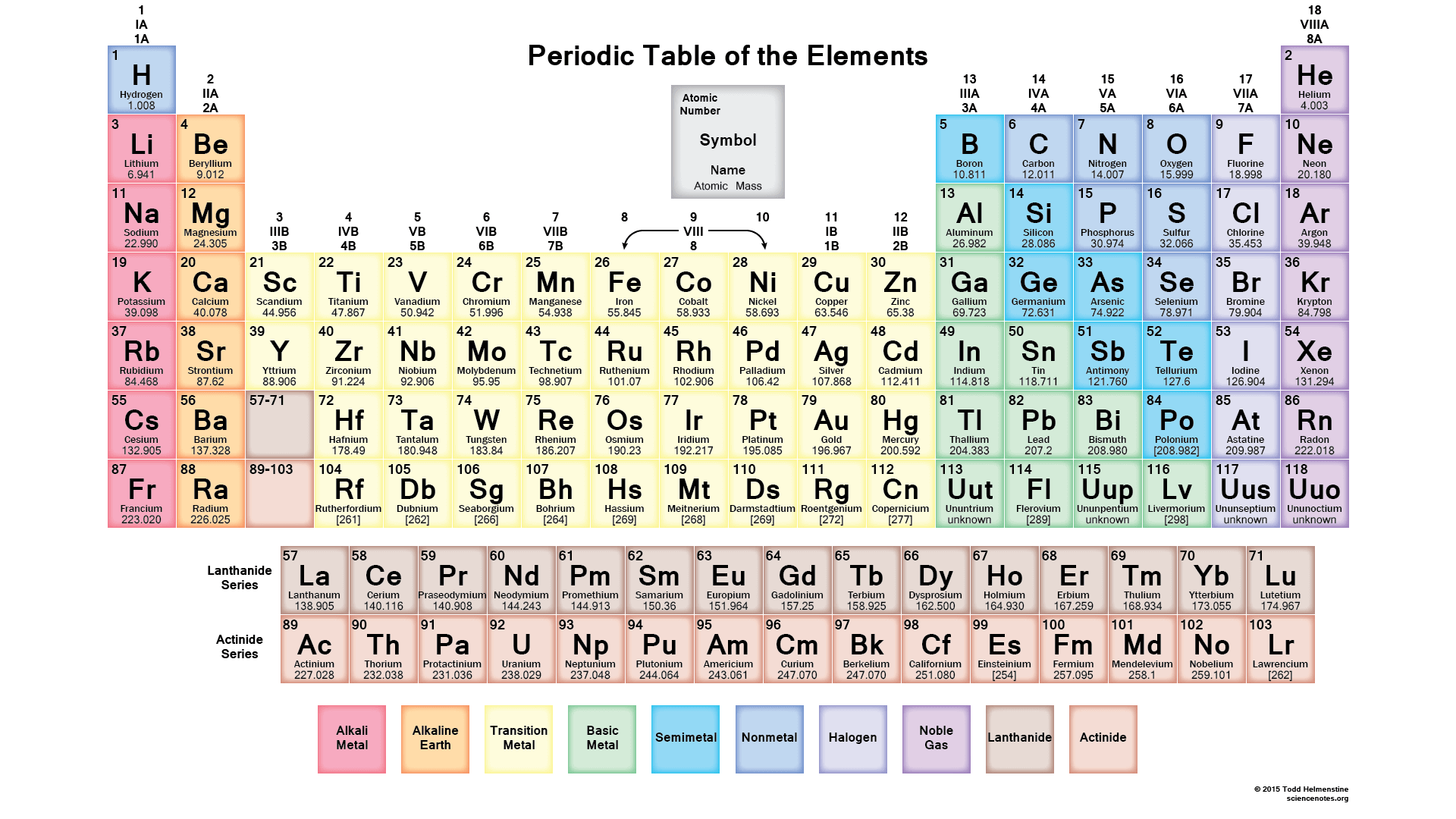
Sodium (Na) is found in group (a) .
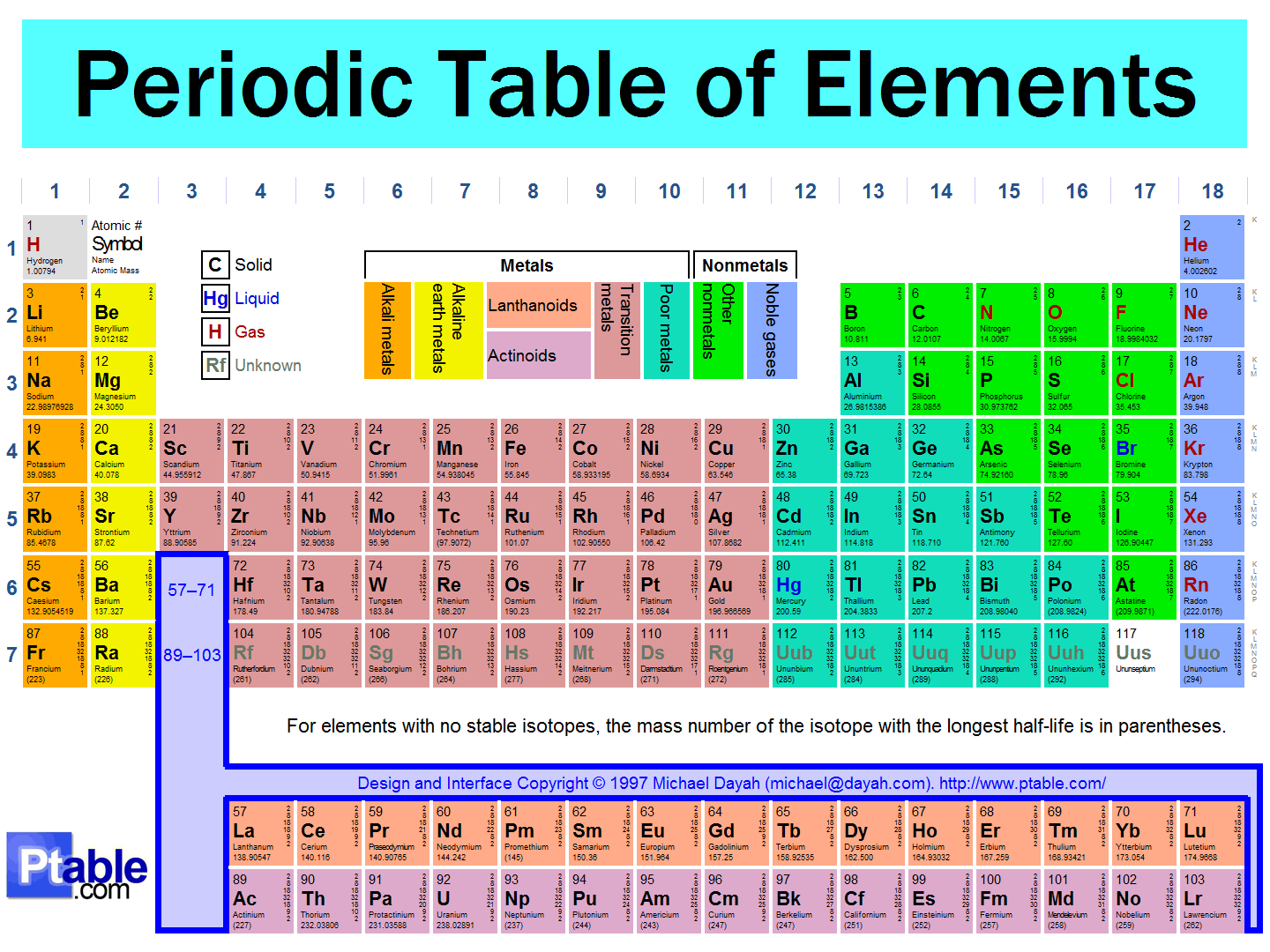
The horizontal (side to side) rows in the Periodic Table are called (a) .

What is the name of group 1 on the periodic table?
alkali metals
alkaline earth metals
noble gases
halogens

What is the name of group 2 on the periodic table?
alkali metals
alkaline earth metals
noble gases
transition metals

Group 18 is also know as the _____ _____.
(a)

Groups 3-12 on the periodic table are known as the _____ _____.
(a)

What is the name of group 17 on the periodic table?
transition metals
metalloids
halogens
alkali metals
Which one of these elements will have a larger atomic radius than Zinc?
Which of these elements will have a lower ionization energy than Scandium (Sc)?
As you move down a group on the periodic table atoms get bigger. This is because ____________.
The atoms have more mass.
The atoms have more protons.
The atoms have more energy levels
The atoms have more neutrons
As you move left to right across the periodic table atoms tend to get smaller because, ______________.
the atoms have more mass.
the atoms have less mass
the atoms have more protons.
the atoms have less electrons.
Which periodic group has the smallest atomic radius?

What atom has this electron configuration? 1s22s22p63s23p64s23d10
(a)

Which electron configuration represents oxygen (O)?
1s22s22p63s2 3p64s23d104p5
1s22s22p4
1s22s22p6
1s22s22p63s23p64s23d1

The first energy level can hold _ electrons.
(a)
The electron configuration of an atom is 1s22s22p6. The total number of electrons in the atom is _.
(a)
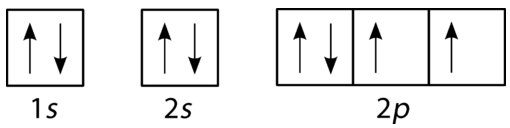
This orbital diagram represents:
(a)

This orbital diagram represents the element (a) (name or symbol).


How many electrons can a 'd' sublevel hold?
14
10
2
6
How many electrons can the 's' sublevel hold?
How many electrons can the 'p' sublevel hold?
Which rule/principle states that an electron should be placed in the lowest energy orbital that can receive it?
Bohr rule
Which rule/principle states that all orbitals of equal energy are occupied by one electron before any single orbital is occupied by a second electron.
Bohr rule
Which rule/principle states that no two electrons in the same atom can have the same spin (arrows facing the same direction).
Aufbau principle
Pauli exclusion principle
Hund’s rule
Bohr rule
What is the abbreviated noble gas configuration for Sulfur?
[Ar] 3p4
[He] 3s2 3p4
[Ne] 3s2 3p4
[Na] 3s2 3p4

This could be the dot diagram of _____.
Mg
Cl
C
O
What are valence electrons?
The total number of electrons in an atom
The number of electrons in the outermost shell
The number of electrons in the second shell
The number of protons in the outermost shell

This could be the dot diagram of _____.

This could be the dot diagram of an element with the atomic number
8
31
19
36
A (a) is a subatomic particle with a neutral charge.
A _ is a subatomic particle with a positive charge.
(a)

This atom has _ valence electrons.
(a)

The atomic number of this element is _.
(a)
The 2nd energy level for any Bohr Model can hold a maximum of (a) electrons?

The mass number of this atom of Chlorine is_.
(a)

If an atom of Fluorine has 10 neutrons, which of the following is FALSE?
The mass number is 19.
There are 10 total electrons.
There are 7 valence electrons.
There are 9 protons.

_____ _____ simplify the Bohr Model by showing only the outer valence electrons.
(a)
Write the electron configuration for Chlorine (Cl). Use the following format: 1s2 2s2 2p6 3s2 etc.
(a)
Of the three kinds of elements, which is the least conductive?
metal
metalloid
non-metal
An (a) is a subatomic particle with a negative charge.

