
 Worksheets
AP Biology Cell Unit
Total questions: 59
Worksheet time: 59mins

This egg has shrunk, what type of solution was it placed in?
hypotonic solution
hypertonic solution
isotonic solution

Which type of biological macromolecule is the main component of the plasma membrane?
carbohydrate
lipid
protein
nucleic acid

This image is an example of a phospholipid. Which part of a phospholipid is HYDROPHOBIC?
the phosphate "head"
the lipid "tails"

Where can carbohydrates be found when part of a plasma membrane?
On the outside of the membrane
On the inside of the membrane
Embedded part of the way into the membrane
Embedded the whole way through the membrane
All of the above
Where can PROTEINS be found when part of a plasma membrane?
On the outside of the membrane
On the inside of the membrane
Embedded part of the way into the membrane
Embedded the whole way through the membrane
All of the above
What is the function of cholesterol in a plasma membrane?
To make the membrane flexible
To control the consistency of the phospholipid bilayer during temperature changes.
To attract water molecules
To allow nutrients and other essential molecules into the cell
What does "hydrophobic" mean?
water loving, associates with water
water fearing, does not associate with water
a world war II submarine
an example would be solutes like sugar or salt
What does "hydrophilic" mean?
water loving, associates with water
water fearing, does not associate with water
a world war II submarine
an example would be solutes like oil or fat
If a cells Ψp = 3 bars and its Ψs = -4.5 bars, what is the resulting Ψ ?
-7.5
7.5
-1.5
1.5
A cell with a water potential of -1.5 bars is placed in a beaker of sugar water with Ψs = -4.0 bars. In which direction will the net flow of water be?
Out of the cell
Into the cell
Both into and out of the cell
Neither into nor out of the cell
A cell with a water potential of -1.5 bars is placed in a beaker of sugar water with Ψs = 1.5 bars. In which direction will the net flow of water be?
Into the cell
Out of the cell
No net flow of water

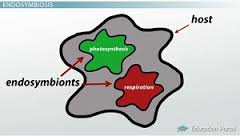
The theory of Endosymbiosis explains
The origin of eukaryotes
How bacteria live
How species develop
Why cells rely on one another
____________ & _________________ are organelles that definitely arose from endosymbiosis.
Nucleus and cell membrane
Chloroplast and mitochondria
Mitochondria and nucleus
Cell wall and chloroplast


Uses glucose and oxygen to produce ATP
chloroplast
mitochondria
ribosomes
Golgi apparatus
Site of protein synthesis.
Golgi apparatus
ribosomes
mitochondria
nucleolus
Processes and packages proteins for cellular export
Golgi apparatus
Rough Endoplasmic reticulum
ribosomes
Smooth endoplasmic reticulum
Site of photosynthesis
mitochondria
central vacuole
ribosomes
chloroplast
Maintains shape, acts as tracks for organelles to move, etc.
plasmodesmata
cytoskeleton
cytosol
Endoplasmic reticulum
Digests and recycles food and organelles
lysosomes
vesicles
Rough ER
mitochondria
Sac that stores materials
vacuoles
lysosomes
peroxisomes
ribosomes
Site of cellular respiration.
chloroplast
mitochondria
Golgi apparatus
nucleus
Interconnected highway containing ribosomes that aids in protein production and modification
Rough ER
Smooth ER
Golgi apparatus
mitochondria


Small cells that have large surface area to volume ratios, are very efficient.
True
False

How would the cell in the image below be classified?
Gram + Cocci
Gram + Bacillus
Gram - Cocci
Gram - Bacillus

This bacterium is considered
A gram + spirllium
A gram + bacillus
A gram - bacillus
A gram - cocci
Gram - bacterial infections are more difficult to treat with antibiotics.
True
False

