wayground logo

Free Printable Worksheets

Font size

S
M
L
XL
Worksheets

APES Fall Final Review part 2

Total questions: 48

Worksheet time: 24mins

Name
Class
Date
1.

Which factor below is least likely to affect birth and fertility rates today?

a)

number of people 60 or older

b)

cost of raising and educating children

c)

religious beliefs

d)

educational and employment opportunities for women

e)

average age at marriage

2.

Which of the following pairs of indicators best reflects the availability of health care in a country?

a)

Crude death rate and growth rate

b)

Crude death rate and crude birth rate

c)

Growth rate and life expectancy

d)

Infant mortality rate and life expectancy

e)

Infant mortality rate and crude death rate

3.

Which of the following statements about total fertility rate is correct

a)

TFR is equal to the crude birth rate minus the crude death rate.

b)

TFR is the average number of children each woman must have to replace the current population.

c)

TFR is generally higher in developed countries than in developing countries

d)

TFR is equal to the growth rate of a country

e)

TFR is the average number of children each woman will give birth to during her childbearing years.

4.

Even if a country reduces its birth rate and maintains replacement-level fertility, its population will still continue to grow for several decades because of

a)

lower death rates

b)

increased income.

c)

population momentum

d)

better health care.

e)

increased life expectancy.

5.

Which of the following countries best exemplifies phase 4 of a demographic transition?

a)

Argentina

b)

China

c)

India

d)

Mexico

e)

Japan

6.

Using the rule of 70, a population growing at 10% would double in

a)

7 years

b)

10 years

c)

17 years

d)

15 years

e)

not enough information to tell

7.

Populations whose age structure diagrams are narrower at the bottom than at the top have

a)

high death rates

b)

the same proportion of individuals in each age group

c)

a declining population

d)

a high growth rate

e)

all of the above

8.
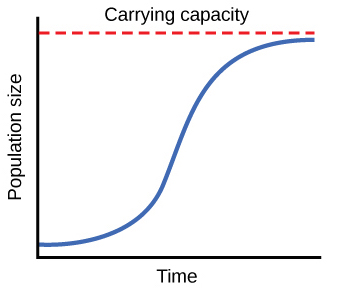
What does the graph represent?
a)
Emigration
b)
Exponential growth
c)
Immigration
d)
Logistic Growth
9.
Which limiting factor is independent of the number of individuals in a population?
a)
competition
b)
parasitism/disease
c)
stress
d)
natural disasters
10.

What point on the graph represents the carrying capacity?

a)

A

b)

B

c)

C

d)

D

11.
Which factor is a density-dependent limiting factor on the population of a species?
a)
seasonal variation
b)
natural disasters
c)
unusual weather
d)
predation
12.
To measure population density, you must divide the number of individuals living in a defined space by the
a)
area of the space
b)
birth and death rates
c)
carrying capacity
d)
height of the space
13.
Nesting birds often space themselves evenly from other nests. This pattern is called
a)
clumped dispersion.
b)
uniform dispersion.
c)
random dispersion
d)
scatter dispersion
14.
__________ growth shows growth of a population under environmental constraints (carrying capacity-K) that sets a maximum population size 
a)
logistic
b)
exponential
c)
niche
d)
uniform
15.
________ grow slowly over time, cares for its young over a long period of time and is usually near the carrying capacity of its ecosystem.
a)
K-strategists
b)
R-strategists
c)
Uniform strategists
d)
environmentalists
16.

Two male Giraffes are fighting over the last green leaf of a tree that is dying.

a)

Intraspecific Competition

b)

Mutualsim

c)

Predation

d)

Commensalism

e)

Interspecific Competition

17.
An r-selected species characteristically has
a)
a type I survivorship curve
b)
few offspring
c)
a population near carrying capacity
d)
a fast population growth rate
18.

Identify two main contributors for the dramatic increase in the world population over the last century.

a)

increased access to birth control

b)

development of modern medicine

c)

increased immigration

d)

introduction of the Industrial Revolution

19.

According to the graph, what can have the greatest impact on reducing global TFR?

a)

increasing access to healthcare

b)

increasing access to immigration

c)

women empowerment

20.
What is the carrying capacity of the following graph?
a)
1000
b)
8000
c)
800
d)
600
21.
All of the land that drains into a particular body of water is called a(n):
a)
watershed
b)
bedrock
c)
island
d)
aquifer
22.
This is the side of the mountain that is often drier and warmer.
a)
Leeward Side
b)
Wet Lapse Rate
c)
Windward Side
d)
Wild Side
23.
What is "upwelling"?
a)
when wind near a shore pushes surface water away, nutrient rich cold water rises from the depths
b)
water rises from springs at the bottom of lakes
c)
it is when cold water sinks in the Norwegian Sea
d)
It is when the Coriolis effect makes currents go around in a circle
24.
One consequence of El Nino is _______ and increased rainfall in South America..
a)
flooding
b)
stronger Tradewinds
c)
strong winter storms
d)
drought
25.

The surface of the earth, otherwise known as the ______, is broken into seven major pieces and sits atop a liquid layer called the _______

a)

lithosphere, asthenosphere

b)

astenosphere, mantle

c)

crust, litosphere

d)

asthenosphere, lithosphere

26.
The San Andrea's Fault in California is which type of boundary?
a)
Convergent
b)
Divergent
c)
Subductive Zone
d)
Transform
27.
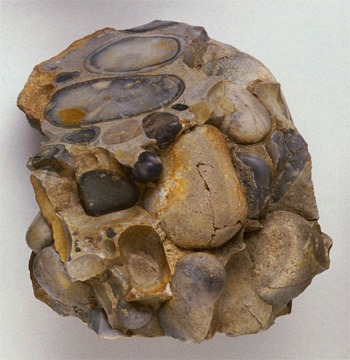
This rock was formed by smaller pieces of rock that settled at the bottom of a lake millions of years ago. What type of rock is this?
a)
Sedimentary
b)
Igneous
c)
Metamorphic
28.
The layer of soil which the topsoil is found.
a)
Horizon A
b)
Horizon B
c)
Horizon C
d)
Horizon D or R
29.
Most of the freshwater around the world is used for the following purpose.
a)
industry
b)
residential
c)
agriculture
d)
recreation
30.
Sea surface temperature changes great than .5oC for greater than 5 months across the centeral ropical Pacific OCean are known as
a)
the arctic effect
b)
the get stream 
c)
a typhoon
d)
El Nino-Southern Oscillation 
31.
Which is the correct order of the convection cells starting from the equator?
a)
polar, ferrell, hadley
b)
ferrell, hadley, polar
c)
polar, hadley, ferrell
d)
hadley, ferrell, polar
32.

The type of plate boundary where two plates come together is a .....

a)

Convergent Boundary

b)

Divergent Boundary

c)

Transform Boundary

d)

Plate Boundary

33.

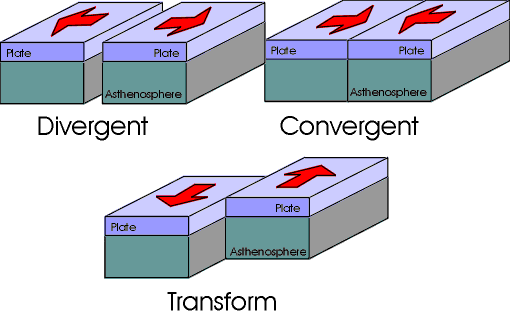
What type of event will occur at this boundary?

a)

Earthquake

b)

Volcano Eruption

c)

Tornado

d)

Mountain Building

34.

A divergent boundary occurs when plates ....

a)

Pull apart

b)

Come together

c)

Slide past each other

d)

subducting

35.

Mountains are created when....

a)

Two continental plates collide

b)

Two oceanic plates pull apart

c)

An Oceanic plate subducts under a Continental Plate

d)

Two continental plates pull apart

36.

The process by which the ocean floor sinks beneath a deep-ocean trench and back into the mantle is known as _______

a)

convection.

b)

continental drift.

c)

subduction.

d)

conduction.

37.

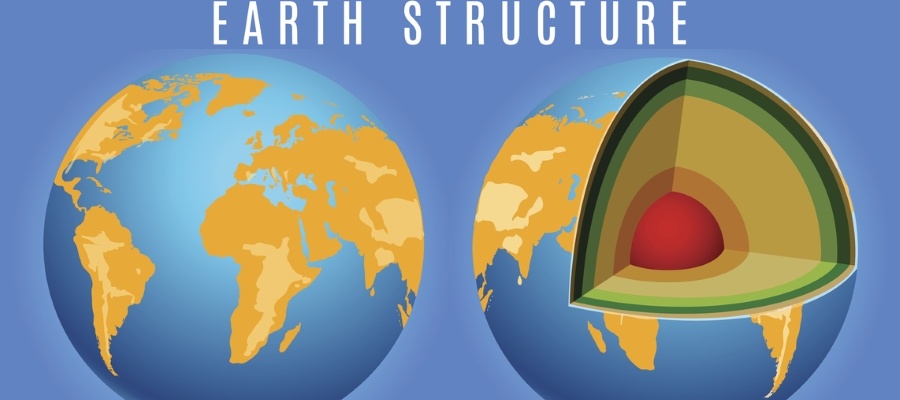
What is the correct order (starting from the surface) of Earth’s layers?

a)

crust, outer core, inner core, mantle

b)

mantle, outer core, inner core, crust

c)

crust, mantle, outer core, inner core

d)

outer core, inner core, crust, mantle
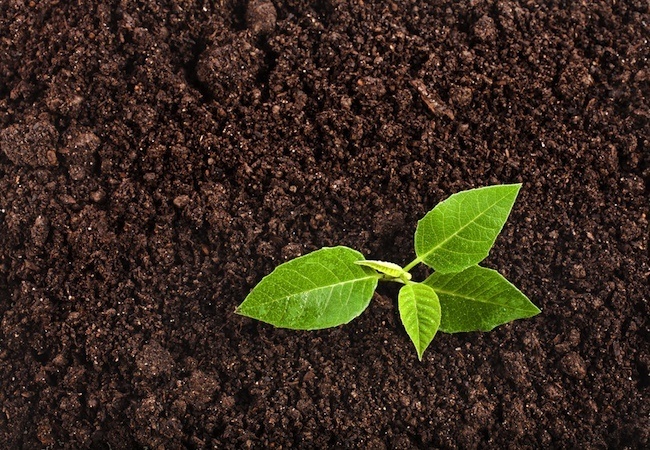
38.
The process when rocks break into smaller pieces due to exposure to natural elements is called
a)
erosion
b)
weathering
c)
sediments
39.
Which of the following is NOT one of the three types of soil?
a)
clay
b)
sand
c)
silt
d)
mud
40.
Which of the following is the correct order of soil particles in order of increasing particle size?
a)
clay-sand-silt
b)
sand-clay-silt
c)
silt-clay-sand
d)
clay-silt-sand
41.
Soil sample that is 60% clay, 30% silt, and 10% sand has which texture? 
a)
clay
b)
clay loam
c)
sandy loam
d)
silt 
42.

The movement of the tectonic plates is caused by

a)

the rotation of the Earth.

b)

convection currents in the Asthenosphere

c)

the gravity of the iron-nickel core.

d)

the Moho discontinuity.

43.
Surface currents are a result of
a)
Global Wind Patterns
b)
Earth's Rotation
c)
Density
d)
All of the above
44.
Deep Ocean currents are a result of
a)
Global Wind Patterns
b)
Earth's Rotation
c)
Density
d)
All of the above
45.
Due to the Coriolis Effect, water in the northern hemisphere moves
a)
clockwise
b)
counter clockwise
c)
both
d)
neither
46.
The sun's rays are least direct
a)
near the poles
b)
near the equator
c)
at high altitudes
d)
far from the ocean
47.

In which layer of the atmosphere does ozone help block UV radiation from striking the Earth?

a)

troposphere

b)

mesosphere

c)

stratosphere

d)

thermosphere

48.

In which layer of the atmosphere do all the pressure, wind, and precipitation changes occur?

a)

Outer space

b)

stratosphere

c)

troposphere

d)

mesosphere