wayground logo

Free Printable Worksheets

Font size

S
M
L
XL
Worksheets

Homeostasis

Total questions: 53

Worksheet time: 51mins

Name
Class
Date
1.
Homeostasis
a)
allows for a wildly fluctuating internal environment
b)
is impossible in vertebrates
c)
is the maintenance of a relatively stable internal environment and often incorporates a form of feedback regulation
d)
is the maintenance of a relatively stable external environment and often incorporates a form of feedback regulation
2.
When you get cut, your skin cells release hormones that signal platelets to come and stop the bleeding. Platelets then release more hormones that signal even more platelets to help stop bleeding. The hormone signals continue until the cut is closed.
a)
Positive Feedback Response
b)
Negative Feedback Loop 
3.

The group of organisms that use the process of homeostasis includes

a)

mammals, only

b)

animals, only

c)

plants and animals

d)

all living things

4.
Negative Feedback Loops:
a)
amplify processes
b)
prevent small changes from getting larger
c)
are initiated during childbirth
d)
are found only in plants
5.

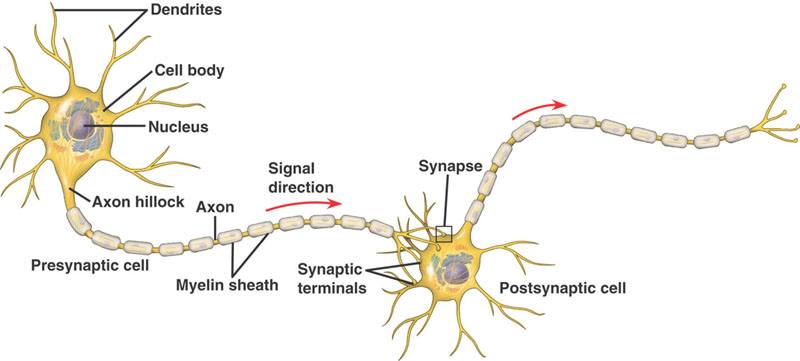
........are branches that extend from the neuron's body and are connected to the neighbouring neurons.

a)

Dendrites

b)

Axon terminals

c)

synapse

6.

What is labeled #1

a)

Synapse

b)

Neurotransmitter

c)

Synaptic Vesicle

d)

Motor End Plate

7.

What is labeled #2?

a)

Synaptic Vesicles

b)

Calcium Channel

c)

Motor End Plate

d)

Synapse

8.

What is labeled #5?

a)

Motor End Plate

b)

Axon

c)

Synapse

d)

Neurotransmitter

9.
Which ions are involved in the electrical nerve impulse?
a)
Iodine and Sodium
b)
Potassium and Sodium
c)
Iron and Sodium
d)
Calcium and Iodine
10.
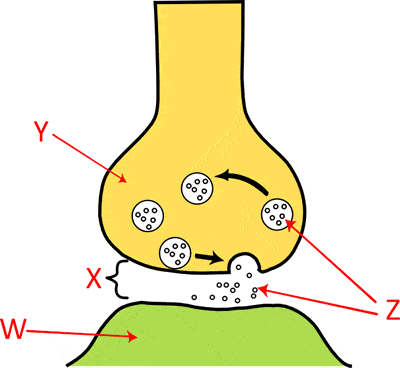
W
a)
Axon Terminal Button
b)
Neurotransmitters
c)
Dendrite
d)
Synapse
11.

calcium is responsible for

a)

signaling the release of the neurotransmitter

b)

signaling Na to be released into the membrane

c)

signaling the release of K out of the membrane

d)

serving as the neurotransmitter

12.

when does the stimuli cause an action potential?

a)

when it reaches threshold

b)

just below the threshold

c)

just above threshold

13.

Which process(es) is(are) involved in establishing the resting potential?

a)

diffusion

b)

facilitated diffusion

c)

active transport

d)

osmosis

14.
What is the normal resting potential of a neuron cell membrane?
a)
+40mV
b)
-30mV
c)
+55mV
d)
-70mV
15.
At which point on the diagram does depolarisation of the axon occur? 
a)
A
b)
B
c)
C
d)
D
16.
When a neuron is resting, the inside of the axon has a ____________ charge.
a)
positive
b)
negative
17.
What is the insulating membrane that surrounds parts of the axon that helps to protect & propagate action potential?
a)
Axon
b)
Dendrites
c)
Node of Ranvier
d)
Myelin Sheath
18.
What number(s) on the graph represents the Resting Potential?
a)
1 and 2
b)
1 and 5
c)
2 and 3
d)
3 and 4
19.

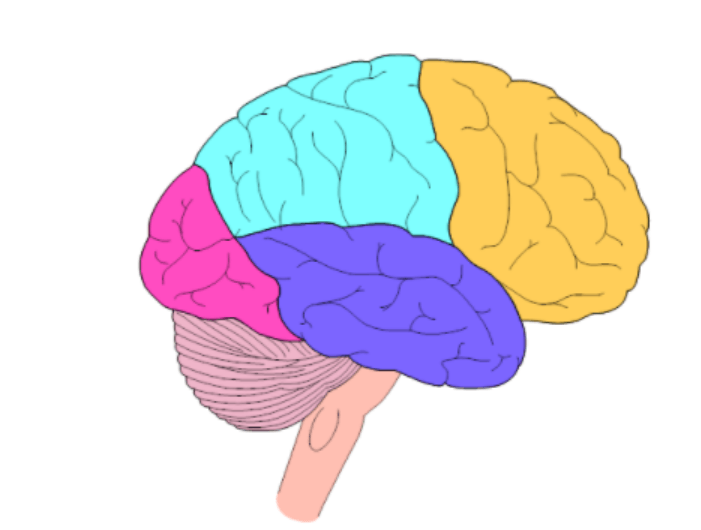
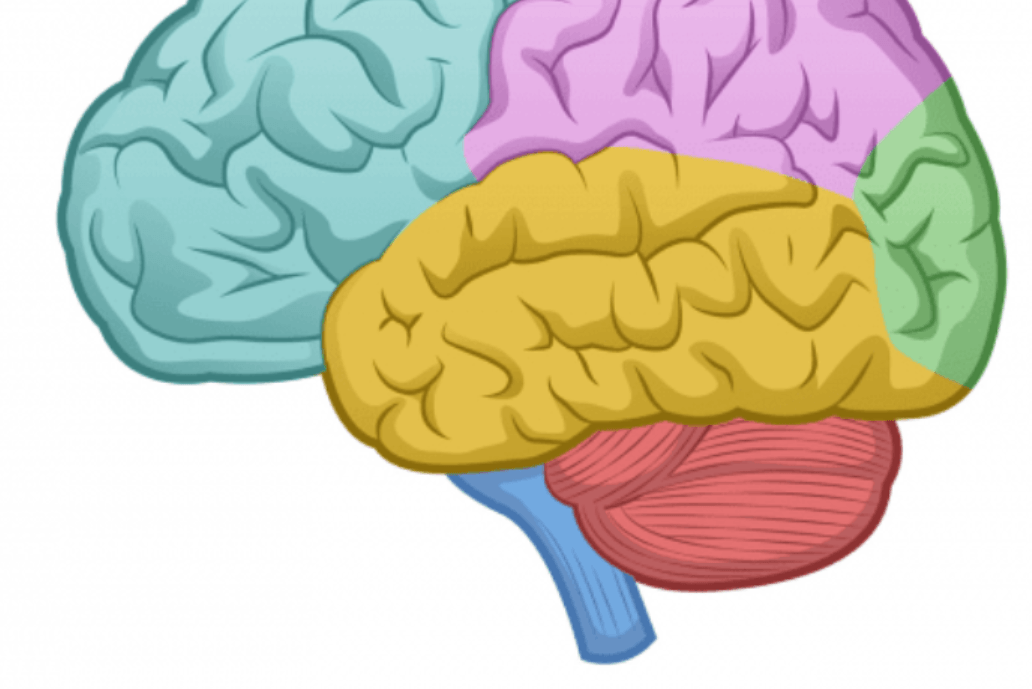
What lobe is orange in this picture?

a)

Frontal

b)

Parietal

c)

Temporal

d)

Occipital

20.

What lobe is bright pink in this picture?

a)

Frontal

b)

Parietal

c)

Temporal

d)

Occipital

21.

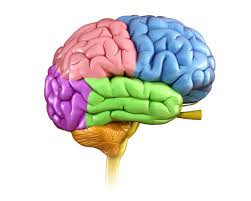
What lobe is green in this picture?

a)

Frontal

b)

Parietal

c)

Temporal

d)

Occipital

22.

What lobe is pink in this picture?

a)

Frontal

b)

Parietal

c)

Temporal

d)

Occipital

23.

What structure is red in this picture?

a)

Cerebrum

b)

Cerebellum

c)

Brain Stem

24.

What structure is grey in this picture?

a)

Cerebrum

b)

Cerebellum

c)

Brain Stem

25.

What does the yellow lobe do?

a)

Processes your hearing

b)

Processes your vision

c)

Contains your personality

d)

Processes your sense of touch

26.

What does the green lobe do?

a)

Processes your hearing

b)

Processes your vision

c)

Contains your personality

d)

Processes your sense of touch

27.

What does the pink lobe do?

a)

Processes your hearing

b)

Processes your vision

c)

Contains your personality

d)

Processes your sense of touch

28.

Which part of the brain controls your blood pressure and heart rate?

a)

brain stem

b)

occipital lobe

c)

cerebellum

d)

frontal lobe

29.

Which part of the brain controls your balance and coordination?

a)

brain stem

b)

occipital lobe

c)

cerebellum

d)

frontal lobe

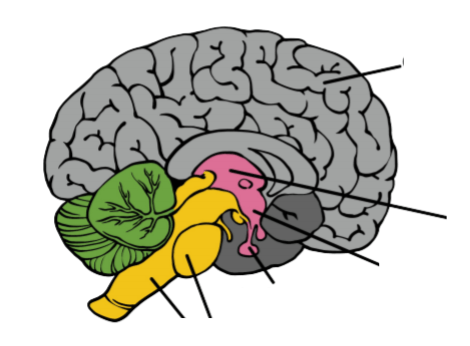
30.
Connects the left and right hemispheres of the brain
a)
Cerebellum
b)
Hypothalamus
c)
Medulla  Oblongata
d)
Corpus Callosum
31.
Thinking, problem solving, "executive functioning," happen here. 
a)
cerebellum
b)
cerebrum
c)
amygdala
d)
hypothalamus
32.
Responsible for heart rate, body temperature, and blood pressure
a)
medulla olongata
b)
hypothalamus
c)
thalamus
d)
pons
33.
a)
Frontal Lobe
b)
Brain Stem
c)
Cerebellum
d)
Occipital Lobe
34.
Damage to the cerebellum would most affect the career of
a)
an architect
b)
a teacher
c)
an athlete
d)
a librarian
35.
T3
a)
Thymus
b)
Thyroid
c)
Parathyroids
d)
Testes
36.
Growth Hormone
a)
Posterior Pituitary
b)
Pineal
c)
Anterior Pituitary
d)
Thymus
37.

Which gland secretes insulin?

a)

Anterior pituitary

b)

Posterior pituitary

c)

Pancreas

d)

Thyroid

38.

Which gland secretes adrenaline?

a)

Adrenal cortex

b)

Adrenal medulla

c)

Anterior pituitary

d)

Posterior pituitary

39.

Which hormone regulates sleep and wake cycles?

a)

Adrenaline

b)

Calcitonin

c)

Estrogen

d)

Melatonin

40.
The hormones of the ___ play a role in regulating metabolism.
a)
thymus gland
b)
parathyroid gland
c)
thyroid gland
d)
pineal gland
41.
Which of the following gland does NOT belong to the endocrine system?
a)
pituitary
b)
testes
c)
salivary
d)
thyroid
42.

Structure C is known as the...

a)

PCT

b)

Bowman's capsule

c)

Glomerulus

d)

DCT

43.

Where is the Loop of Henle?

a)

F

b)

G

c)

D

d)

E

44.
Blood flows into the kidney along the:
a)
Renal Venule
b)
Renal Artery
c)
Glomerulus
d)
Hepatic Artery
45.

The three stages of urine production are _______, ______________, and ___________.

a)

filtration, reabsorption, and secretion

b)

filtration, urine secretion, and leukocytosis

c)

reabsorption, discretion, and secretion

46.

Urine is carried from the kidneys to the bladder by two thin tubes called:

a)

Ureters

b)

Tubulars

c)

Capillaries

d)

Urinary Tract

47.

During which process along the nephron is some of the water returned to the blood?

a)

Filtration

b)

Reabsorption

c)

Secretion

48.

During the journey along the nephron, most of the water, glucose, and vitamins are:

a)

stored in the bladder

b)

excreted through the ureters

c)

reabsorbed back into the blood

d)

concentrated in the urine

49.

What is number 2?

a)

Kidney

b)

Ureters

c)

Bladder

d)

Urethra

50.

The correct order for the parts of the nephron are....

a)

Proximal convoluted tubule, loop of henle, Bowman's capsule

b)

Bowman's capsule, proximal convoluted tubule, loop of henle

c)

Loop of Henle, bowman's capsule, proximal convoluted tubule

51.
What is diffusion?
a)
when molecules move 
b)
when molecules move from a high concentration to a low.
c)
no movement 
d)
molecules move everywhere
52.

Which of the following letters shows the proximal convoluted tubule?

a)

A

b)

D

c)

E

d)

H

53.

A major waste product excreted in urine

a)

urea

b)

urologist

c)

carbon dioxide

d)

polyuria