
 Worksheets
Unit 4 Review
Total questions: 56
Worksheet time: 1hrs 10mins

A biology teacher gives each pair of students in her class a group of 30 newly sprouted bean plants. She tells the class to design and carry out an experiment with these plants. After one month, the students compile the data shown below.
Based on this experiment, what can the students infer?
Group 1 plants received 12 hours of light per day
Group 1 plants grew taller than the plants in Group 3.
Group 1 plants had more leaves than Group 2, 3, 4, or 5 plants
Group 1 and Group 5 plants show that light impacts plant growth.
One approach to reducing world hunger is to increase the yield of crops per acre of land. At the same time, many consumers are interested in organic foods to support a healthier life style. Organic fertilizers that are classified as high-efficiency products can increase crop yield and protect the environment. As an individual organic farmer considers her options, which statement is both scientifically valid and unbiased.
A spokesperson for company X states that the company's fertilizer will produce 30% more fruit than other fertilizer brands.
A neighboring farmer claims that he makes his own organic fertilizer that results in trees producing 60% more fruit than other fertilizers on the market.
A researcher with an organic fertilizer company says the company's new product results in trees that produce 45% more fruit in a shorter period of time than without the product.
A nonprofit research company performed repeated investigations on different organic fertilizers and determined that fruit trees fertilized with brand Z grew 25% more than other brands


What is a polar molecule. This means that is has a negative charge on one end and a positive charge on the other. This polarity allows it to have many special properties. Observe the graph below. Which property of water does it demonstrate?
Water's cohesive and adhesive behavior
Water's ability to moderate temperatures
Water expands when it freezes
Water is a universal solvent
Which of the following macromolecule is correctly matched to it's structure and function?


Amylase is a type of enzyme that breaks down the starches and carbohydrates you eat and turns the into sugar.
Which line represents the reaction when amylase is present?
The dotted line
The solid line
Both lines
There is not enough information to determine.
In the human digestive system, the enzyme trypsin acts on proteins. The optimal temperature for the enzyme is approximately 40°C. Which of the following graphs show how the activity of the enzyme most likely relates to the temperature of the reaction environment.


1. During DNA replication two identical DNA molecules are produced from one original molecule. Which statement below explains why the newly formed molecules are identical to the original?
The nitrogen base adenine can only pair with guanine and phosphate groups.
The nitrogen base adenine can only pair with cytosine and thiamine.
Each strand of the original molecule serves as a template for the two new stands, and new nucleotides are added to the template according to the pairing rule.
The original DNA molecule breaks down into nucleotides that are reassembled by DNA polymerase into two new molecules.
When a cell divides, identical copies of its DNA are passed along to each new daughter cell. The copying of DNA during cell division is called DNA replication. Which if the following is not a step in the replication process
The strands of DNA separate from one another.
Enzymes check and bond the new DNA molecules.
New bases attach to each of the two separated strands.
Old bases reattach to one another and new bases attach.
The current cell theory resulted from the work of many scientists. Today there is more evidence to support the cell theory. Which of the following does not support the cell theory?
The cells of strawberry plants contain cell walls made of cellulose, while the cells of mushrooms have cell walls made of chitin.
After isolating just a few bacteria on a nutrient rich agar plate overnight, millions of bacteria in colonies can be observed.
Cells can be observed with a microscope in all humans, roundworms, mice, and pine trees.
Specialized structures called organelles rely on each other to complete the tasks of the cell.

Several university students visiting the Center for Disease Control are observing the three-dimensional structure of bacteria cells to help improve their understanding of its impact on the human body. The bacteria viewed from the microscope is in the diagram below.
What kind of microscope has the depth of field to view bacteria by producing a three-dimensional image?
Compound microscope
Dissecting microscope
Scanning electron microscope
Transmission electron microscope

Which of the following properly compares and contrasts prokaryotic and eukaryotic cells?
Prokaryotic cells contain membrane bound organelles and eukaryotic cells do not contain membrane bound organelles.
Eukaryotic cells have ribosomes in the cytoplasm and on the rough endoplasmic reticulum; prokaryotic cells only have ribosomes in the cytoplasm.
Eukaryotic cells are unicellular and prokaryotic cells can be both unicellular and multicellular
Prokaryotic cells store DNA in the nucleus and eukaryotic cells store DNA in the cytoplasm

View the chart. Which of the following options is correct?
Cell A is a plant cell. Cell B is an animal cell.
Cell A is an animal cell. Cell B is a plant cell.
Both Cell A and Cell B are plant cells
Both Cell A and Cell B are animal cells

The following chart contains information about the structure and function of cells.
Which of the following correctly completes the chart in order from 1-4?
Mitochondria, Ribosome, Plant and Animal Cell, Endoplasmic Reticulum
Chloroplast, Ribosome, Plant and Animal, Cell Endoplasmic Reticulum
Mitochondria, Ribosome, Animal Cell, Endoplasmic Reticulum
Chloroplast, Ribosome, Plant Cell, Endoplasmic Reticulum

Which of the following best explains the type of transport that is taking place in this photo?
The is an example of active transport. Since the water is diffusing from a high concentration to a low concentration energy is required; therefore the cell will swell.
The is an example of active transport. Since the water is diffusing from a high concentration to a low concentration energy is not required; therefore the cell will shrink.
This is an example of osmosis. The water will diffuse from a low concentration to a high concentration; therefore, water will move out of the cell causing it to shrink.
The is an example of osmosis. The water will diffuse from a high concentration to a low concentration; therefore, water will move into the cell causing it to swell.
Plant cells have mitochondria, which use glucose to produce ATP. Where does the glucose originate?
diffusion, which transports the glucose from the digestive tract
fermentation, which occurs in the absence of oxygen
exocytosis, which transports the glucose into cells
photosynthesis, which occurs in chloroplasts
In addition to sunlight, oxygen, plants require the absorption of water to carryout out photosynthesis. The water is absorbed from the roots but occurs in the leaves of a plant. The transport of water occurs in a specialized structure within the stem. What structure is responsible for this vital transport?
Guard cell
Phloem
Stomata
Xylem

Which of the following provides the best explains why Plant A did not grow any tomatoes?
During cellular respiration, water gets absorbed by the leaves and travels through the stem to the roots. Since Plant A did not receive any water, it cannot undergo cellular respiration.
During photosynthesis, water gets absorbed by the leaves and travels through the stem to the roots. Since Plant A did not receive any water, it cannot undergo photosynthesis.
During cellular respiration, water gets absorbed by the roots and travels through the stem to the leaves. Since Plant A did not receive any water, it cannot undergo cellular respiration.
During photosynthesis, water gets absorbed by the roots and travels through the stem to the leaves. Since Plant A did not receive any water, it cannot undergo photosynthesis.

This picture demonstrates the cell cycle of a cell that undergoes asexual reproduction.
If there are 24 chromosomes in the cell during G1, how many chromosomes will be present after cytokinesis?
How many chromosomes will be present during G2?
After cytokinesis: 24
During G2: 48
After cytokinesis: 12
During G2: 24
After cytokinesis: 24
During G2: 24
After cytokinesis: 48
During G2: 24
Cancer is a disease that can affect many organs in the body. Cancerous tumors are formed because of an error in the cell cycle. What error occurs during the cell cycle that results in the formation of a cancerous tumor?
The cell does not grow.
The cell does not fully divide.
Cells copy too many chromosomes.
Cell division and cell death are uncontrolled.
Name the phase: the paired homologous chromosomes separate and sister chromatids remain attached.
Anaphase 1
Anaphase 2
Metaphase 1
Metaphase 2
Meiosis results in 4 sex cells that are genetically unique. There are several processes that contribute the to the unique DNA of each cell. The first process is called independent assortment. The Principle of Independent Assortment describes how different genes independently separate from one another when reproductive cells develop. The other process is called crossing over. Which of the following accurately describes crossing over?
The DNA does not replicate correctly, and it causes a mutation.
The spindle fibers get caught up around the chromosomes and keep them from dividing properly
The exchange of genetic information (genes) between segments of homologous chromosomes.
The homologous chromosomes switch places with one another in metaphase 1
What is a difference between mitosis and meiosis?
Mitosis involves separating the chromosomes, while meiosis involves only the cytoplasm of the cell.
Mitosis occurs in all the cells in animals and plants, while meiosis occurs only in bacteria.
In mitosis, one cell divides into two cells, while in meiosis two cells combine to make one cell.
In mitosis, the products are identical to the parent cell, while in meiosis the products are different from the parent cell.

Which of the following correctly describes the process being illustrated?
Mitosis because the daughter cells genetically unique.
Mitosis because the daughter cells are identical.
Meiosis because it results in diploid cells.
Meiosis because it results in haploid cells.

A fertilized egg undergoes several stages before it is successfully implanted. The diagram shows these stages as the fertilized egg travels through the female reproductive system.
In which of the following structures of the female human reproductive system is the blastocyst implanted during normal human development?
ovary
uterus
vagina
amniotic sac

This is a diagram of the male reproductive system.
Which structure is represented by the letter D?
scrotum
testes
prostate gland
epididymis
This is a diagram of the male reproductive system.
Which structure is the prostate?
A
E
F
B

This image shows the female reproductive system.
In which structure does fertilization occur?
ovary
cervix
vagina
fallopian tube
Which of the following pairs of male and female reproductive structures are most alike in their function?
prostate gland and vagina
vas deferens and ovaries
testes and ovaries
seminal vesicle and oviduct
Which of the following is true of fetal development in the first trimester of a pregnancy?
The fetus is mostly a cluster of cells without form during the first trimester.
It takes the full first trimester for the fetus to develop its hair and body fat.
The major body structures develop in their basic form during the first trimester.
The fetus depends on the mother's blood flowing through the umbilical cord only in the first trimester.
Which of the following describes part of a baby's development in the second trimester of pregnancy?
The fetus turns into a head-down position in the uterus.
The fetus develops fat under the skin and practices breathing movements.
The fetus is in the embryonic stage, and the amniotic sac forms.
The fetus grows soft hair called lanugo over its skin and can swallow and hiccup
Some farmers currently grow genetically engineered crops. What is an argument against the use of this technology?
It increases crop production.
It produces insect-resistant plants
It often results in crops that do not taste good.
Its long term effects on humans are still being investigated
There are two new superior varieties of rice, one produced by selective breeding and the other by biotechnology. Nerica combines the hardiness and weed resistance of rare African rice varieties with the productivity and faster maturity of common Asian varieties. Another type allows plants to survive drought, low temperatures, salty soils, and other stresses better than the standard rice varieties.
Why is the production of new varieties of food crops necessary?
Technology for producing fresh water for agriculture has improved.
Burning fossil fuels has decreased agricultural areas
Essential food crops are becoming extinct.
World population continues to increase.
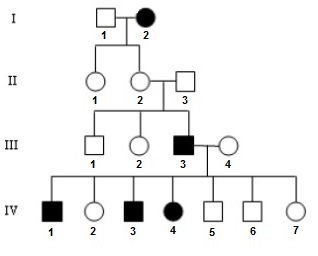

This law describes how each member of a homologous pair is pulled randomly to one side or another in anaphase I
Law of Segregation
Law of Independent Assortment
Law of Gravity
Law of Mathematical Order
This law describes how each homologous pair separates independently of any other pairs during Anaphase I of meiosis
Law of Segregation
Law of Independent Assortment
Law of Gravity
Law of Mathematical Order
What are the blood types of the possible children that a woman (type O) and man (type AB) can have?
O and AB
O and A
O and B
A and B
Where does TRANSCRIPTION occur?
Nucleus
Ribosome
Cytoplasm
Mitochondria
TRANSCRIBE this DNA sequence: TACGTTACT
AUGCAAUGA
ATGCAATGA
AUGGATUGA
TACGTTACT
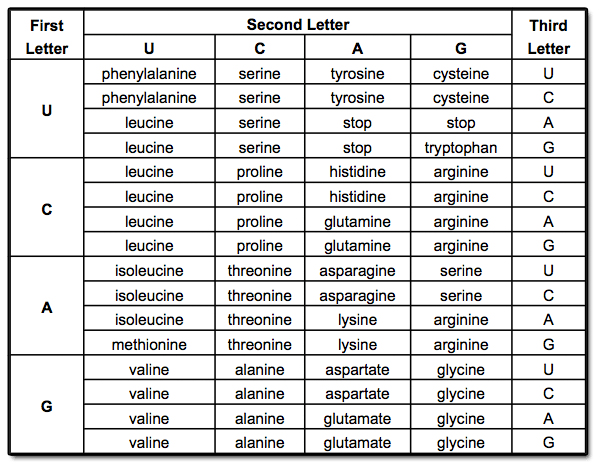
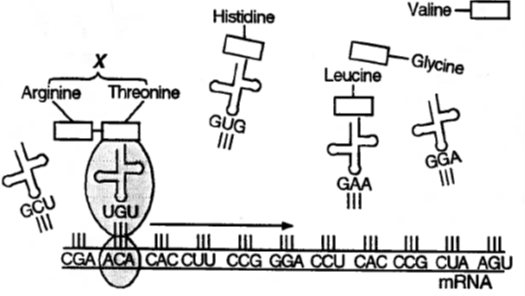

Ribosomes are tiny “factories” where vital processes take place. Which of the following is not a process or action of ribosomes?
assemble amino acids
translate DNA into RNA
mRNA decoded into a protein
attach to mRNA in the cytoplasm
There are 64 possible mRNA codons that make up the genetic code. Which of the following is true about the genetic code?
Codons can only be three amino acids long.
Each amino acid is linked to only one codon
Each codon is linked to only one amino acid.
Codons can be one, two, or three bases long.

What mutation has occurred here?
T-G-A-C-C-A
T-G-A-G-C-A
Substitution
Deletion
Insertion
Frameshift
What mutation occurred?
Original: ATC CAT
Mutation: ATC GCAT
deletion
insertion
silent
transverse

DNA molecule segment is : TTA-CGC-AAG
The mutated DNA segment is TTC-GCA-AG. This is an example of ___ mutation.
Substitution
Deletion
Insertion
Inversion

