wayground logo

Free Printable Worksheets

NEW

Font size

S
M
L
XL
Worksheets

Cell Transport

Total questions: 35

Worksheet time: 28mins

Name
Class
Date
1.
Cells need to bring in molecules to carry out cellular processes. Often, this requires moving the molecules across the cell membrane against the concentration gradient. How do these molecules get into the cell?
a)
passive transport by diffusion
b)
active transport using ATP 
c)
passive transport by osmosis
d)
 osmosis
2.
A person with swollen gums rinses his mouth with warm salt water, and the swelling decreases. Which of the following has occurred?
a)
The swollen gums have absorbed the saltwater solution.
b)
The saltwater solution lowers the temperature of the water in the gums.
c)
The salt in the solution has moved against the concentration gradient.
d)
The water in the gums has moved out due to the high concentration of salt in the solution. 
3.
The cell membrane of the red blood cell will allow water, oxygen, and carbon dioxide to pass through. Because other substances are blocked from entering, this membrane is called
a)
perforated
b)
semi-permeable
c)
non-conducive
d)
permeable
4.
 Look at the diagram of a cross-section of a cell membrane below. The cell membrane controls movement of materials into and out of the cell. The following particles are moving from high concentration to low concentration and are using a carrier protein. How would you describe this type of movement across the membrane? 
a)
simple osmosis
b)
active transport
c)
simple diffusion
d)
facilitated diffusion
5.
Look at the cross section of a cell membrane of a eukaryotic cell. H+ ions are being pumped from a low concentration to a high concentration. How do you describe this type of transport across the cell membrane?
a)
active transport
b)
passive transport
c)
facilitated diffusion
d)
co-transport
6.
 In pure water, a red blood cell from an animal will swell and burst, but a leaf cell from a plant will not. Which structure in the leaf cell is responsible for this difference?
a)
cell membrane
b)
cell wall
c)
 mitochondrion
d)
nucleus
7.
The diagram below represents a cell and some molecules in its environment. Which molecule would require the use of energy in order to be brought into the cell?
a)
1
b)
2
c)
3
d)
4
8.
Which activity can occur without the use of energy?
a)
contraction of muscle tissue
b)
protein synthesis in a cell
c)
active transport of minerals
d)
movement of water across a membrane
9.
The diffusion of water across a selectively permeable membrane is called 
a)
active transport
b)
facilitated diffusion
c)
osmosis
d)
phagocytosis
10.
During diffusion molecules tend to move 
a)
   up the concentration gradient
b)
 from an area of lower concentration to an area of higher concentration
c)
 in a direction that doesn’t depend on concentration
d)
 down the concentration gradient
11.
All living things want to remain in...
a)
chaos
b)
homeostasis
c)
limbo
d)
plasmolysis
12.
Why will a plant die if you water it with a salt water?
a)
hypotonic solution
b)
hypertonic solution
c)
isotonic solution
d)
silly solution
13.
Water has diffused ___________ of this cell.
a)
into 
b)
in and out of
c)
out of
14.
If the sodium concentration inside a cell is greater than outside the cell, how can a cell take in more sodium?
a)
osmosis
b)
diffusion
c)
active transport
d)
passive transport
15.
The amount of particles in a given space.
a)
diffusion
b)
concentration
c)
permeable
d)
active transport
16.
When the concentration of particles inside of a cell is the same as the concentration of particles outside of the cell. 
a)
active transport
b)
concentration
c)
diffusion
d)
equilibrium
17.
The movement of molecules from an area of high concentration to an area of low concentration.
a)
Osmosis
b)
Respiration
c)
Diffusion
d)
Active Transport
18.
Cells use energy to move materials across a membrane (low to high concentration).
a)
Active transport
b)
Passive transport
c)
Diffusion
d)
Osmosis
19.
Cells transport material across a cell membrane without using energy (high to low concentration)
a)
Passive transport
b)
Concentration
c)
Endocytosis
d)
Active Transport
20.
Cell membrane surrounds a particle and encloses it (for large particles)
a)
Endocytosis
b)
Exocytosis
c)
Permeable
d)
In high concentration
21.
Particles are removed from a cell (pushed out).
a)
Endocytosis
b)
Exocytosis
c)
Permeable
d)
In high concentration
22.

What are the two types of cell transport?

a)

Passive and Active

b)

Active and Facilitated

c)

Passive and Facilitated

d)

None of the above

23.

What macromolecule is embedded into the lipid bilayer and helps to transport molecules?

a)

Carbohydrate

b)

Lipid

c)

Protein

d)

Nucleic Acid

24.

Which describes a hypotonic environment?

a)

Too much water in the cell will cause the cell to burst - the percentage of water is higher outside the cell than inside the cell

b)

Too little water in the cell will cause the cell to shrink - the percentage of water is lower outside the cell than inside the cell

c)

Concentrations of water are equal inside and outside the cell

25.

Which describes a hypertonic environment?

a)

Too much water in the cell will cause the cell to burst - the percentage of water is higher outside the cell than inside the cell

b)

Too little water in the cell will cause the cell to shrink - the percentage of water is lower outside the cell than inside the cell

c)

Concentrations of water are equal inside and outside the cell

26.

Which describes an isotonic environment?

a)

Too much water in the cell will cause the cell to burst - the percentage of water is higher outside the cell than inside the cell

b)

Too little water in the cell will cause the cell to shrink - the percentage of water is lower outside the cell than inside the cell

c)

Concentrations of water are equal inside and outside the cell

27.

When the number of water molecules outside of the cell is greater than inside the cell, which will most likely occur?

a)

Molecules of water will NOT MOVE either way.

b)

Molecules of water will move OUT of the cell.

c)

Molecules of water will move INTO the cell.

d)

Molecules of water will EVAPORATE.

28.

A cell that is unable to import substances required to process chemical energy is most likely a result of a malfunctioning of the ____________________.

a)

cell membrane

b)

golgi body

c)

endoplasmic reticulum

d)

nuclear envelope

29.

Cell membranes are described as selectively permeable.

Four students were asked to explain what this means. Which one is correct?

a)

Student 1: Cell membranes prevent all materials from entering the cell.

b)

Student 2: Cell membranes only provide structural support for the cell.

c)

Student 3: Cell membranes regulate which substances can enter and exit the cell.

d)

Student 4: Cell membranes allow water and water-soluble substances to enter the cell.

30.
Which way will the water molecules move during osmosis?
a)
Out of the cell, so the cell shrinks.
b)
Out of the cell, so the cell swells.
c)
Into the cell, so the cell shrinks.
d)
Into the cell, so the cell swells.
31.
What does “high concentration area” mean?
a)
Spread out
b)
Tightly packed together
c)
Uncrowded
d)
Spacious
32.
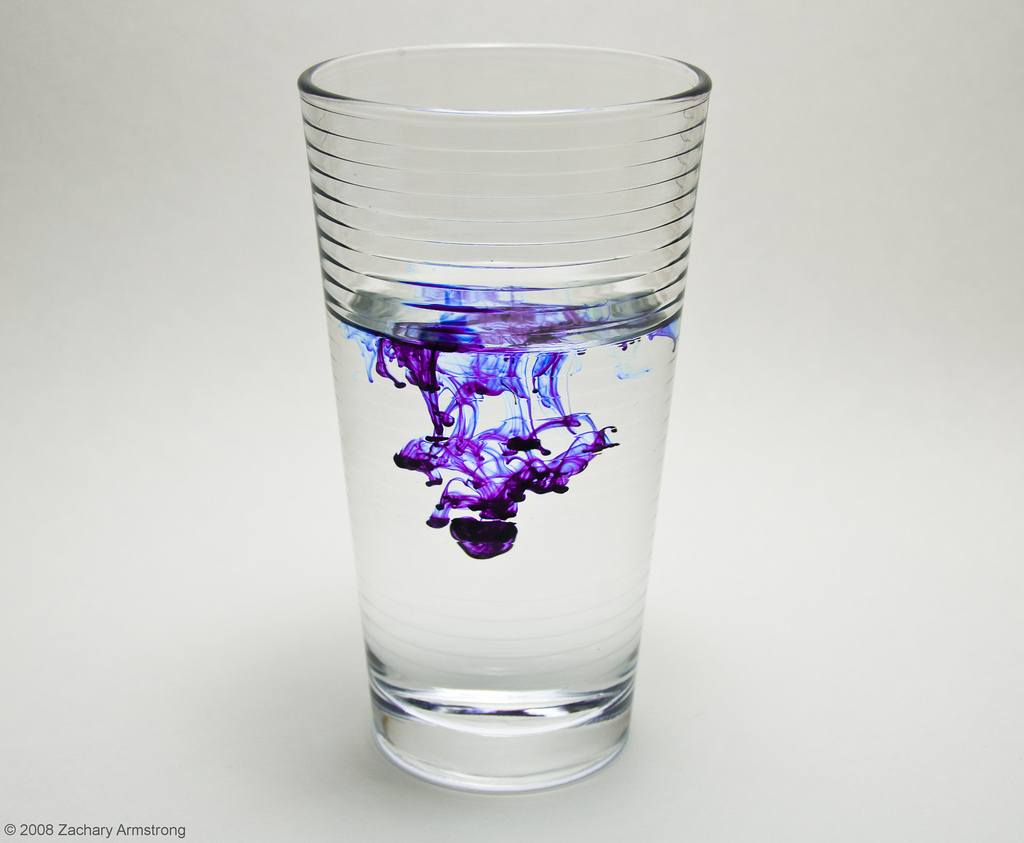
Where is there a low concentration of dye?
a)
at the bottom of cup
b)
in the color
c)
at the top of cup 
d)
no concentration gradient
33.
Which cell is placed into a hypotonic environment? 
a)
A
b)
B
c)
C
d)
D
34.
The cell below is in a _________ solution.
a)
Hypotonic
b)
Hypertonic
c)
Isotonic
35.
The cell below is in a _____________ solution.
a)
Hypertonic
b)
Hypotonic
c)
Isotonic