
 Worksheets
Geometry midterm review
Total questions: 92
Worksheet time: 3hrs 36mins
Which illustration shows the correct construction of an angle bisector?


Which geometric principle is used to justify the construction?
A line perpendicular to one of two parallel lines is perpendicular to the other.
Two lines are perpendicular if they intersect to form congruent adjacent angles.
When two lines are intersected by a transversal and alternate interior angles are congruent, the lines are parallel.
When two lines are intersected by a transversal and the corresponding angles are congruent, the lines are parallel.
In △ABC, m∠A = 3x + 1, m∠B = 4x - 17, and m∠C = 5x - 20. Which type of triangle is △ABC?
Right
Scalene
Isosceles
Equilateral

Natalie is playing with the pinwheel like the one shown in the picture above. Which degree of rotation would carry the pinwheel onto itself?
5°
125°
216°
225°


As shown in the diagram below, CD is a median of △ABC.
Which statement is always true?
AD ≅ DB
AC ≅ AD
∠ACD ≅ ∠CDB
∠BCD ≅ ∠ACD
Which transformation does not produce an image that is congruent to the original?
A dilation of scale factor 1 centered at (2,4)
A dilation of scale factor ½ centered at the origin
A reflection over y = 4x
A rotation of 270 degrees followed by a translation down 2

Tina wants to sew a piece of fabric into a scarf in the shape of an isosceles triangle, as shown in the accompanying diagram.
What are the values of x and y?
x = 42 and y = 96
x = 69 and y = 69
x = 90 and y = 48
x = 96 and y = 42

Given: △ABD, BC is the perpendicular bisector of AD
Which statement cannot always be proven?
AC ≅ DC
BC ≅ CD
∠ACB ≅ ∠DCB
△ABC ≅ △DBC


Converse of the statement: If p, then q.
If p, then q.
If q, then p.
If ~ (not) p, then ~ (not) q.
If ~ (not) q, then ~ (not) p.
Inverse of the statement: If p, then q.
If p, then q.
If q, then p.
If ~ (not) p, then ~ (not) q.
If ~ (not) q, then ~ (not) p.
Contrapositive of the statement: If p, then q.
If p, then q.
If q, then p.
If ~ (not) p, then ~ (not) q.
If ~ (not) q, then ~ (not) p.
Two lines that do not intersect and are not parallel
Perpendicular lines
Transversals
Skew lines
Parallel lines
Lines that passes through two lines in the same plane at two distinct points
Perpendicular lines
Transversals
Skew lines
Parallel lines
How can you determine the distance between two points?
Use the midpoint formula
Graph the points and use the Pythagorean Theorem
Both 1 & 2
None of the above
What is the midpoint formula?
(2x1+x2,2y1+y2)
d=(x1−x2)2+(y1−y2)2
y−y1=m(x−x2)
m=x2−x1y2−y1
What is the distance formula?
(2x1+x2,2y1+y2)
d=(x1−x2)2+(y1−y2)2
y−y1=m(x−x2)
m=x2−x1y2−y1
Term for a polygon whose vertex angles are congruent
equilateral
convex
regular
equiangular
Term for a polygon whose sides measurements are congruent
equilateral
convex
regular
equiangular
A line segment joining a vertex to the midpoint of the opposite side
altitude
median
angle bisector
perpendicular bisector

What is the midpoint between (3, -1) and (7, -5)?
(5, -2)
(10, -6)
(5, -3)
(2, -2)

How do you know lines are parallel?
Slopes are opposite reciprocals of each other
Slopes are the same
The slope of perpendicular lines are:
equal
negative
negative reciprocals


PQ = 6x – 7 and QR = 5x + 1.
Find the length of PR.

Find the distance between (-4, 5) and (7, 18) after a translation three units right and two units up.
15.96
16.08
16.23
17.03
Which transformation is not a rigid motion?
Translation 2 units left.
Rotation 90 degrees counter clockwise.
Reflection over the y-axis.
Dilation with a scale factor of 1/2.


y = -1/3x - 5
y = 1/3x + 2
Write equation of a line in point slope form that passes through (3,8) and has a slope of 5?
y-8=5(x-3)
y=5x+8
y-3=5(x-8)
y-y1= m(x-x1)
Write an equation in point slope form of equation of line
point (7,10) and has a slope of -2?
y-10 = -2(x+7)
y-10 = -2(x-7)
y+10 = -2(x+10)
y -10 = -2x+2
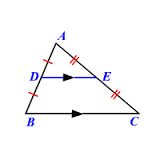
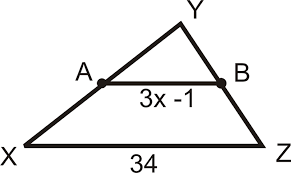


If 9=x, then x=9


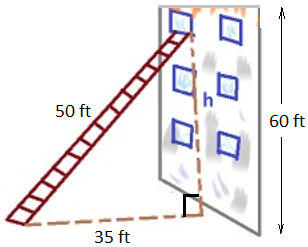
3, 5, 8
15, 12, 9


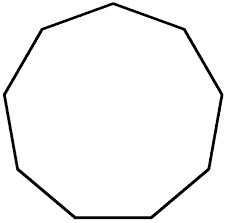
geometry means
earth measure
brain injury
measure across
side measure

