wayground logo

Free Printable Worksheets

NEW

Font size

S
M
L
XL
Worksheets

Weather Chapter 2 Review

Total questions: 75

Worksheet time: 57mins

Name
Class
Date
1.

Where do MARITIME air masses form?

a)

Over water

b)

Over land

2.

Where do MARITIME air masses form?

a)

Over water

b)

Over land

3.

Where do CONTINENTAL air masses form?

a)

Over water

b)

Over land

4.

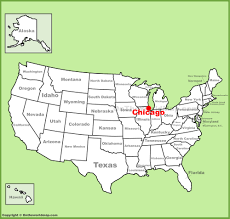
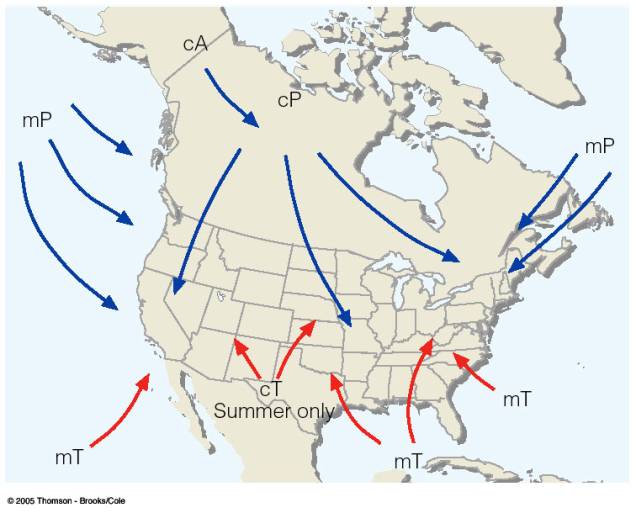
What type of air mass is found over CHICAGO?

a)

Maritime Polar

b)

Maritime Tropical

c)

Continental Polar

d)

Continental Tropical

5.

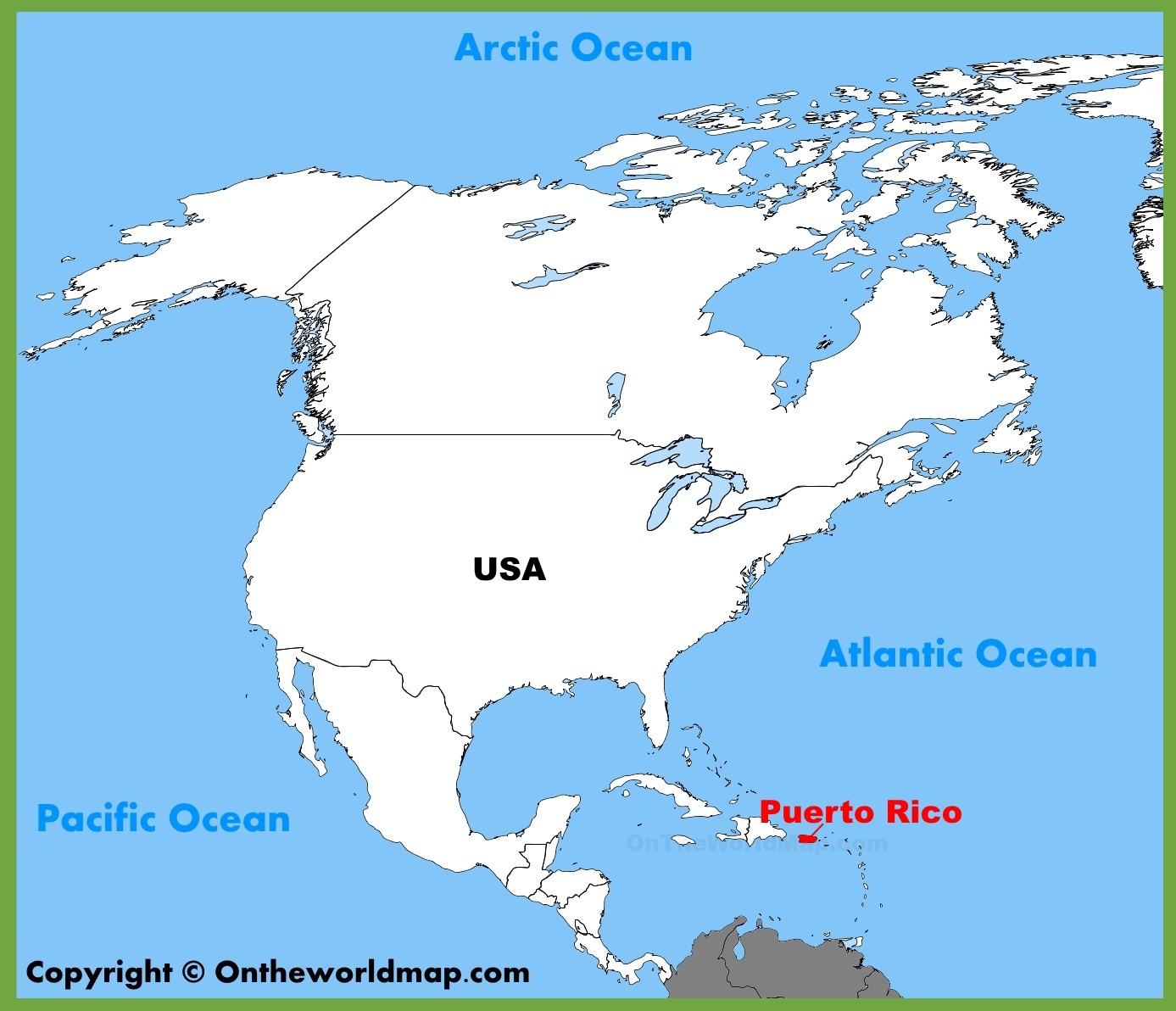
What type of air mass is found over PUERTO RICO?

a)

Maritime Polar

b)

Maritime Tropical

c)

Continental Polar

d)

Continental Tropical

6.

Which type of air mass is HOT and DRY?

a)

Maritime Polar

b)

Maritime Tropical

c)

Continental Polar

d)

Continental Tropical

7.

Which type of air mass is HOT and HUMID?

a)

Maritime Polar

b)

Maritime Tropical

c)

Continental Polar

d)

Continental Tropical

8.

Which type of air mass is COLD and HUMID?

a)

Maritime Polar

b)

Maritime Tropical

c)

Continental Polar

d)

Continental Tropical

9.

Which type of air mass is COLD and DRY?

a)

Maritime Polar

b)

Maritime Tropical

c)

Continental Polar

d)

Continental Tropical

10.
How do we name air masses?
a)
Water and temperature
b)
Air pressure
c)
Humidity and temperature
d)
Cold and warm
11.
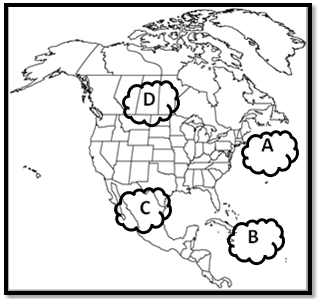
Which type of air would you find at air mass A?
a)
cold, dry
b)
warm, humid
c)
warm, dry
d)
cold, humid
12.
Which abbreviation of an air mass can be identified as dry and hot?
a)
cP
b)
mP
c)
cT
d)
mT
13.
Air travels
a)
from high pressure to low pressure
b)
from low pressure to high pressue
14.

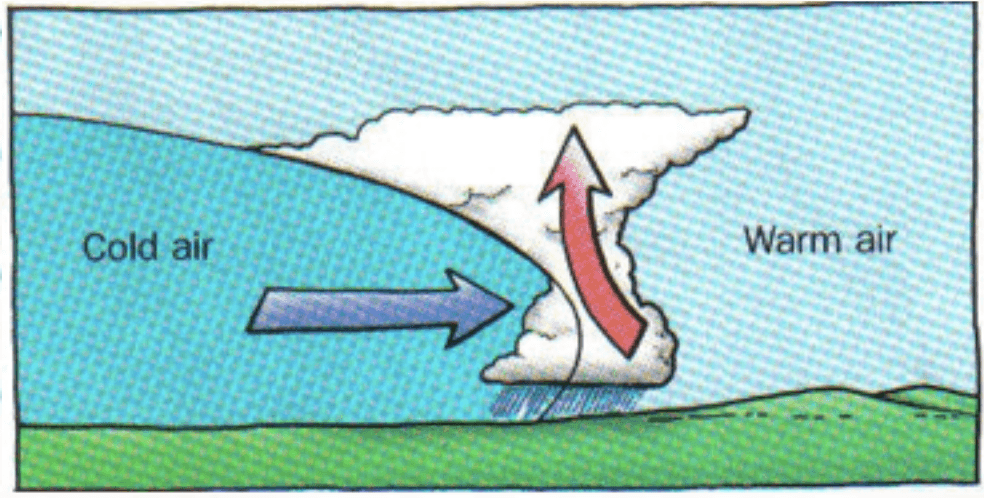
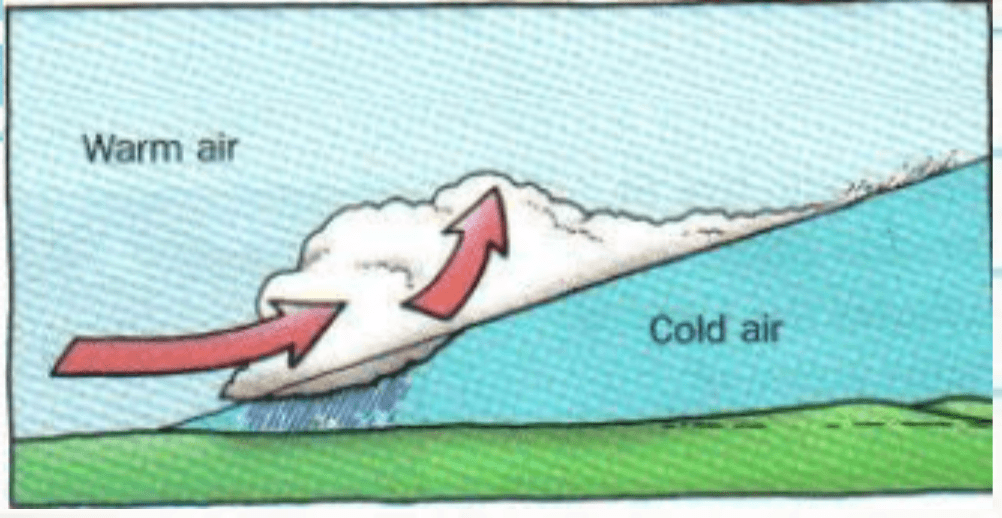
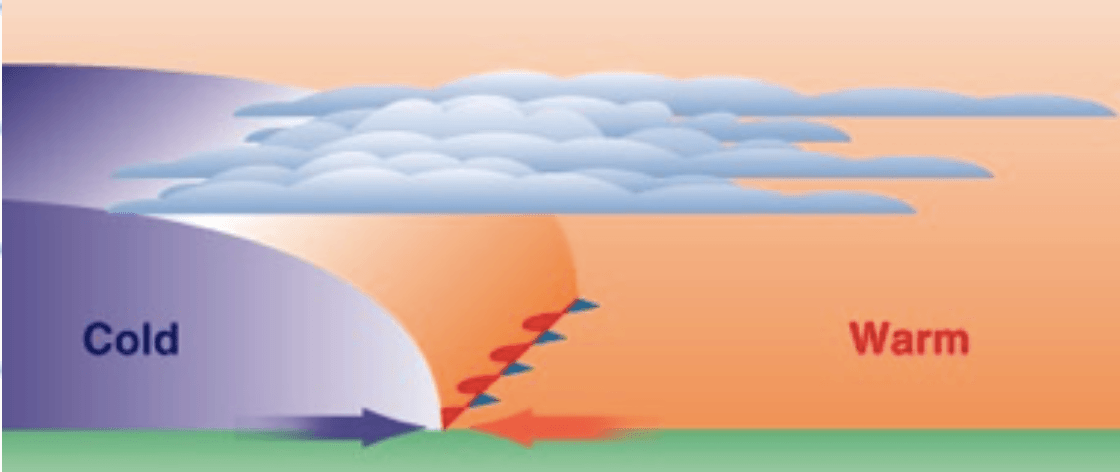
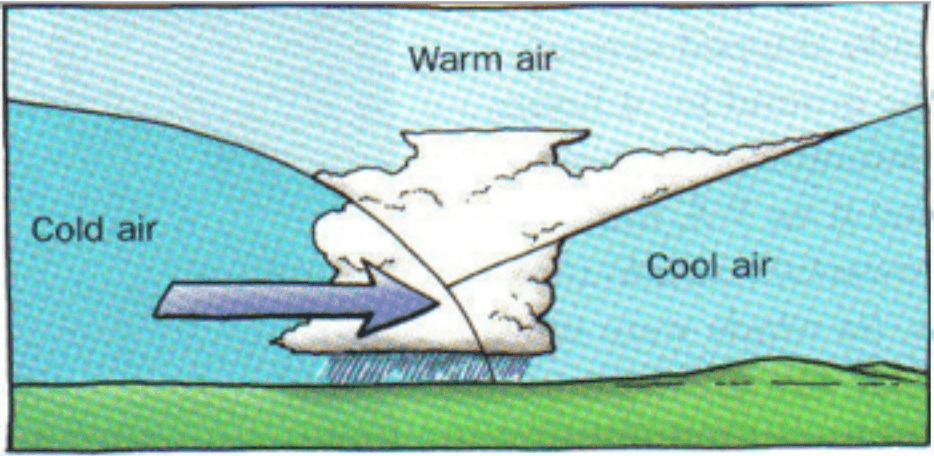
Name that front.

a)

Cold Front

b)

Warm Front

c)

Stationary Front

d)

Occluded Front

15.

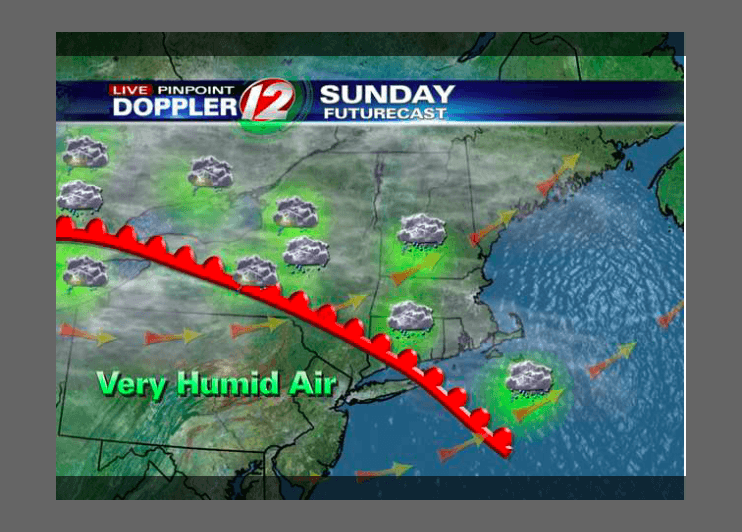
Name that front.

a)

Cold Front

b)

Warm Front

c)

Stationary Front

d)

Occluded Front

16.

Name that front.

a)

Cold Front

b)

Warm Front

c)

Stationary Front

d)

Occluded Front

17.

Name that front.

a)

Cold Front

b)

Warm Front

c)

Stationary Front

d)

Occluded Front

18.

Name that symbol.

a)

Cold Front

b)

Warm Front

c)

Stationary Front

d)

Occluded Front

19.

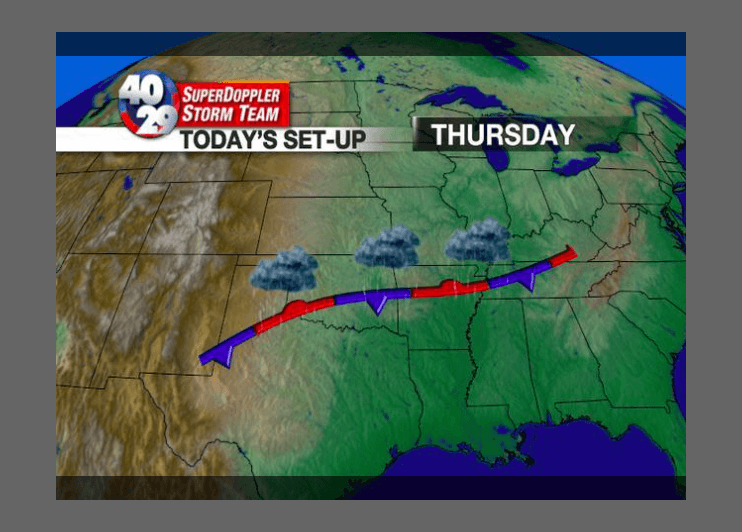
Name that symbol.

a)

Cold Front

b)

Warm Front

c)

Stationary Front

d)

Occluded Front

20.

Name that symbol.

a)

Cold Front

b)

Warm Front

c)

Stationary Front

d)

Occluded Front

21.

Name that symbol.

a)

Cold Front

b)

Warm Front

c)

Stationary Front

d)

Occluded Front

22.

Brings some clouds and gentle rains.

a)

Cold Front

b)

Warm Front

c)

Stationary Front

d)

Occluded Front

23.

Foggy.

a)

Cold Front

b)

Warm Front

c)

Stationary Front

d)

Occluded Front

24.

Temperature drops quickly. Strong winds, heavy precipitation.

a)

Cold Front

b)

Warm Front

c)

Stationary Front

d)

Occluded Front

25.

Cold dense air slides underneath warm air. The warm air is forced up, cools, and condenses.

a)

Cold Front

b)

Warm Front

c)

Stationary Front

d)

Occluded Front

26.
A front is
a)
where warm air is cooling at earth's surface
b)
a line where hot and cold air are separating
c)
a line where two different air masses meet
d)
where cold air is rising and forming rain clouds
27.
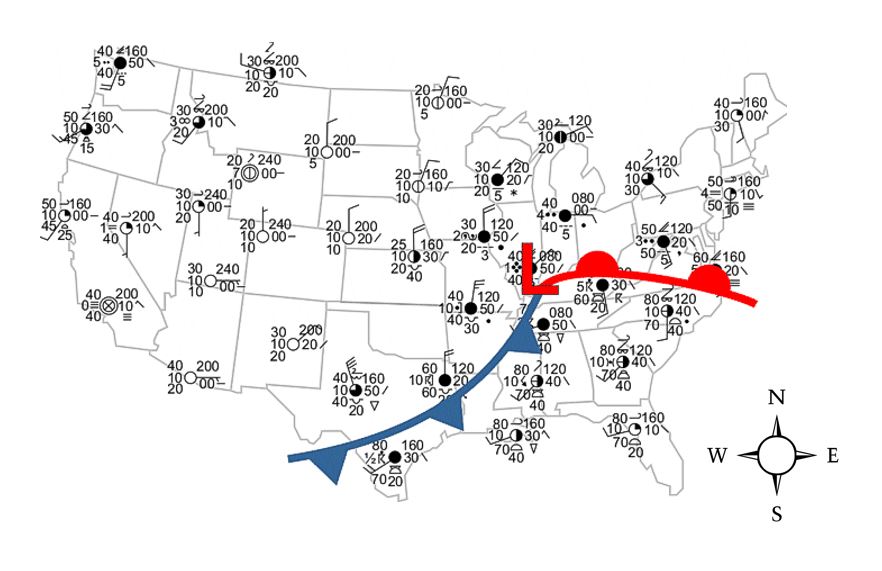
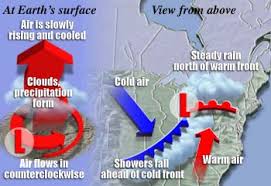
What does this symbol on a weather map indicate? 
a)
High pressure system
b)
Low pressure system
c)
Cold Front
d)
Warm Front
28.
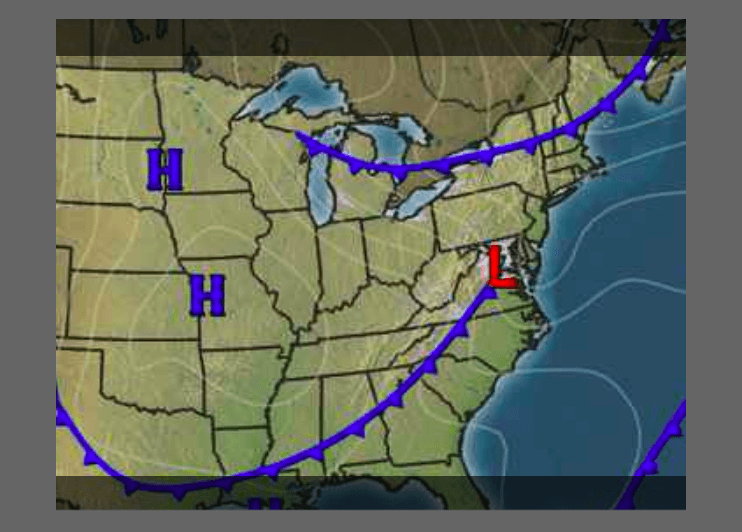
What does this symbol on a weather map indicate? 
a)
High pressure system
b)
Low pressure system
c)
Cold front
d)
Warm front
29.
This type of front results in the same weather for several days.
a)
warm
b)
cold
c)
stationary
d)
occluded
30.
This type of front can bring thunderstorms.
a)
cold
b)
warm
c)
stationary
d)
occluded
31.
What direction is the warm front moving on the map? 
a)
North
b)
South
c)
East
d)
West
32.
What direction is the cold front moving on the map? 
a)
Southwest
b)
Northwest
c)
Southeast
d)
Northeast
33.
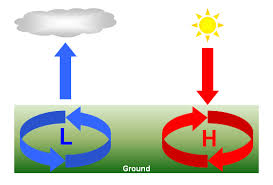
Which system results in rainy or stormy weather?
a)
high pressure
b)
low pressure
c)
hurricane
d)
weather system
34.
Which system results in drier, fairer weather?
a)
high pressure
b)
low pressure
c)
hurricane
d)
weather system
35.
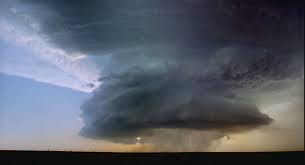
Thunderstorm clouds are called - 
a)
Cirrus
b)
Stratus
c)
Cumulus
d)
Cumulonimbus
36.
The most thunderstorms per year occur in which state?
a)
Montana
b)
Florida
c)
Texas
d)
Virginia
37.
When lightening heats the air around it, and the air expands quickly, what does this cause?
a)
Thunder
b)
Wind
c)
Precipitation
d)
Evaporation
38.
Which of the following is NOT a possible outcome of lightning?
a)
injury
b)
electricity
c)
death
d)
burns
39.
What happens during the cumulus stage of a thunderstorm?
a)
The storm begins to break up
b)
The storm creates lightning thunder and heavy rain
c)
The cool air rises and stratus clouds build
d)
The warm air rises and cumulus clouds build
40.
What happens during the mature stage of a thunderstorm?
a)
The storm begins to break up
b)
The storm creates lightning thunder and heavy rain
c)
The cool air rises and stratus clouds build
d)
The warm air rises and cumulus clouds build
41.
What happens during the dissipating stage of a thunderstorm?
a)
The storm begins to break up
b)
The storm creates lightning thunder and heavy rain
c)
The cool air rises and stratus clouds build
d)
The warm air rises and cumulus clouds build
42.

Can tornadoes also occur during a severe thunderstorm?

a)

Yes

b)

No

43.

what kind of air makes cumulonimbus clouds

a)

Hot, humid air

b)

Cold, humid air

c)

Hot, dry air

d)

Cold, dry air

44.

What is a tornado?

a)

A fast spinning column of air that reaches from the clouds to the ground

b)

A thunderstorm that never touches the ground

c)

A bolt of lightning that reaches from the clouds to the ground

d)

A low hanging cloud that does not spin

45.

What combinations of air cause tornadoes to form?

a)

Hot

b)

Cold/dry and warm/wet

c)

Cold/wet and warm/dry

d)

Cold

46.

What is the first step in the birth of a tornado?

a)

dark sky

b)

thunderstorm

c)

high wind

d)

rain

47.
Collectively, the states of Texas, Oklahoma, Kansas and Nebraska, where tornadoes occur often, are all called
a)
Tornado towns
b)
Storm centers
c)
Tornado Alley
d)
Cyclone counties
48.
Where do tornadoes start?
a)
Over the ocean near the equator
b)
In the clouds that create blizzards
c)
In the clouds of severe thunderstorms
d)
Any time that it rains
49.
Tornadoes are measured using which type of scale?
a)
Richter scale
b)
Bathroom scale
c)
Fujita Scale
d)
Mercator Scale
50.
What happens in Tornado Alley to create so many tornadoes?
a)
The rate of condensation is higher than the rate of precipitation
b)
Warm air from Canada meets cold air from Virginia
c)
Cold, dry air from Canada meets warm dry air from Gulf of Mexico
d)
Warm air in Texas clashes with even warmer air in Texas
51.

What is the most powerful part of a hurricane?

a)

Eye

b)

Eye Wall

c)

Storm surge

d)

Edge

52.

What is the calmest part of a hurricane?

a)

Eye

b)

Eye Wall

c)

Storm surge

d)

Edge

53.

What is the highest category hurricane?

a)

3

b)

5

c)

6

d)

7

54.

Why does a hurricane slow down when it hits land?

a)

The wind stops it

b)

It stops raining

c)

It loses its energy source

d)

The air is different

55.

Where do hurricanes happen?

a)

The South Pacific

b)

The Indian Ocean

c)

The Antarctic

d)

The Atlantic Ocean

56.

What temperature does ocean water need to be for a hurricane to form?

a)

70 degrees

b)

80 degrees

c)

90 degrees

d)

75 degrees

57.

The name of the system that causes the winds to spin in a hurricane

a)

The Coriolis Effect

b)

The Corleone Affect

c)

The Circular Wind Phenomenon

d)

The East-West Effect

58.

How do you protect yourself in a hurricane?

a)

Close all doors and windows

b)

Use sand bags for barriers

c)

Have plenty of food and water

d)

All of the above

59.
What do the wind speeds need to reach for a storm to be classified as a hurricane?
a)
23 - 39 mph
b)
40 - 73 mph
c)
74 mph
d)
600 mph
60.
What fuels a hurricane's strength?
a)
Wind
b)
Sunlight
c)
Warm Water
d)
Cold Water
61.
When is Hurricane Season in the Atlantic Ocean?
a)
December 1st - July 4th
b)
March 21st - October 3rd
c)
May 15th - September 1st
d)
June 1st - November 30th
62.
In what direction do hurricanes rotate in the Northern Hemisphere?
a)
Clockwise
b)
Counterclockwise
c)
Up
d)
Down
63.
Most of the damage from hurricanes happens because of - 
a)
Storm surge (flooding)
b)
wind
c)
hail
d)
lightning
64.
The pressure inside a hurricane is _______.
a)
High
b)
Low
65.

The major difference between a tropical storm and a hurricane is __________.

a)

rainfall amounts

b)

wind speed

c)

air temperature

66.

What is another name for a hurricane below the Equator (in the Indian Ocean)?

a)

hurricane

b)

Typhoon

c)

cyclone

67.

What is the name of a cyclone in the western Pacific?

a)

Hurricane

b)

Typhoon

c)

Cyclone

68.

Where does the air move in a CYCLONE?

a)

Upwards

b)

Downwards

69.

Where does the air move in an ANTICYCLONE?

a)

Upwards

b)

Downwards

70.

What type of weather does a CYCLONE bring?

a)

Clear and calm

b)

Stormy

71.

What type of weather does an ANTICYCLONE bring?

a)

Clear and calm

b)

Stormy

72.

Does a CYCLONE have low or high pressure?

a)

Low

b)

High

73.

Does an ANTICYCLONE have low or high pressure?

a)

Low

b)

High

74.

Air always moves from a _______ region to a ______region.

a)

low-pressure, high-pressure

b)

high-pressure, low-temperature

c)

low-pressure, high-temperature

d)

high-pressure, low-pressure

75.
Winds are named for the direction they are blowing from?
a)
True
b)
False