
Font size
 Worksheets
PS 2024 S8P1 Matter
Total questions: 75
Worksheet time: 1hrs 21mins
(Select both correct answers)
A sample of only one type of atom would be
an element
a compound
a homogenous mixture
a heterogenous mixture
a pure substance
(Select both correct answers)
A sample of two or more different atoms chemically combined would be
an element
a compound
a homogenous mixture
a heterogenous mixture
a pure substance
(Select both correct answers)
A sample of two or more different atoms physically combined could be
an element
a compound
a homogenous mixture
a heterogenous mixture
a pure substance

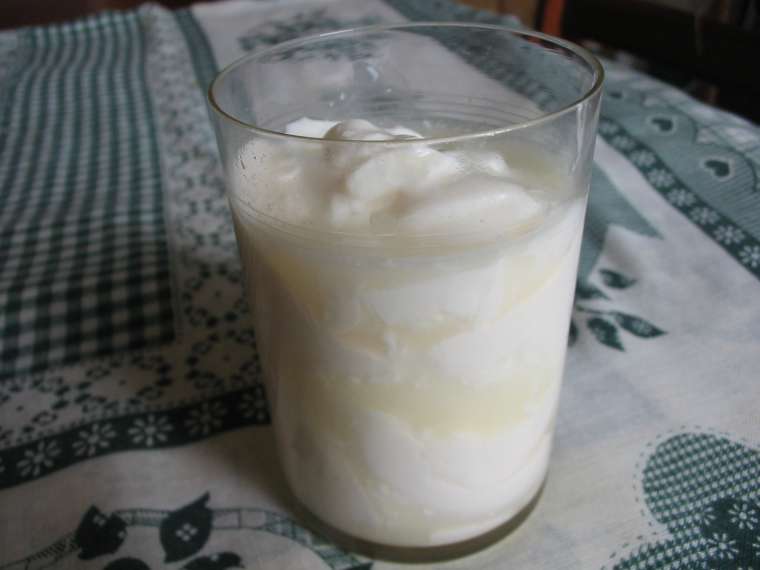
This is an example of
a pure substance
a heterogenous mixture
a homogenous mixture
an element
(Select both correct answers)
Sweet tea is an example of
a heterogenous mixture
a homogenous mixture
a solvent
a solution

Which boxes contain Pure substances?
Only box C
Boxes C, F and I
Boxes A, D and I
Boxes A, C, D and I
Boxes B, E, G, H
Which boxes contain heterogenous mixtures?
Only box C
Boxes C, F and I
Boxes A, D and I
Boxes A, C, D and I
Boxes B, E, G, H
Which boxes contain only one kind of element?
Only box C
Boxes C, F and I
Boxes A, D and I
Boxes A, C, D and I
Boxes B, E, G, H
Which boxes contain compounds?
Only box C
Boxes C, F and I
Boxes A, D and I
Boxes A, C, D and I
Boxes B, E, G, H
Which boxes contain any molecules?
Only box C
Boxes C, F and I
Boxes A, D and I
Boxes A, C, D and I
Boxes B, E, G, H
People are sitting in class, taking notes. Compared to the motion of particles, this motion would be most like
solids
liquids
gases
Teens are playing soccer in the park, running all over the soccer field. Compared to the motion of particles, this motion would be most like
solids
liquids
gases
Some friends are walking slowly through the mall, window shopping. Compared to the motion of particles, this motion would be most like
solids
liquids
gases
Which list of characteristics BEST describes SOLIDS?
Particles are far apart and randomly placed, moving very quickly.
Particles are close together, randomly placed and move or flow around each other.
Particles are close together in an ordered pattern, and vibrate in place.
Particles are far apart, flow past each other and vibrate in place.
Which list of characteristics BEST describes LIQUIDS?
Particles are far apart and randomly placed, moving very quickly.
Particles are close together, randomly placed and move or flow around each other.
Particles are close together in an ordered pattern, and vibrate in place.
Particles are far apart, flow past each other and vibrate in place.
Which list of characteristics BEST describes GASES?
Particles are far apart and randomly placed, moving very quickly.
Particles are close together, randomly placed and move or flow around each other.
Particles are close together in an ordered pattern, and vibrate in place.
Particles are far apart, flow past each other and vibrate in place.

The diagrams show the three phases of matter. Which description is correct?
B is a solid
C is a liquid
A is a plasma
B is a liquid
Which list below contains ONLY physical properties of matter?
Melting Point, color, reactivity
Density, Boiling Point, Malleability
Reactivity, flammability, pH
Heat of combustion, luster, color
Which list below contains ONLY chemical properties of matter?
Melting Point, color, reactivity
Density, Boiling Point, Malleability
Reactivity, flammability, pH
Heat of combustion, luster, color
On a sunny day, water from a puddle is no longer visible by the end of the afternoon. What does this demonstrate?
a chemical change
a natural change
a material change
a physical change
Mrs. Rejmer leaves her Freezie frozen drink on the counter. An hour later, it is all liquid. What does this demonstrate?
a chemical change
a natural change
a material change
a physical change
Iron nails are left outside for few weeks and begin to rust. What does this demonstrate?
a chemical change
a natural change
a material change
a physical change
Amanda places three drops of red food coloring in her icing to have pink icing on her daughter's birthday cake. What does this demonstrate?
a chemical change
a natural change
a material change
a physical change
Before she can put icing on her cake, she needs to bake it! Baking a cake demonstrates
a chemical change
a natural change
a material change
a physical change
What is a common characteristic between all elements in group 1?
They are all solids.
They are all gases.
They are all nonmetals.
They all have 1 valence electron.
They are all not reactive.
What is a common characteristic between all elements in group 2?
They are all solids.
They are all gases.
They are all metals.
They all have 1 valence electron.
They are all not reactive.
What is a common characteristic between all elements in group 18?
They are all solids.
They are all gases.
They are all metals.
They all have 1 valence electron.
They are all reactive.
Which subatomic particle has no charge?
Proton
Neutron
Electron
Which subatomic particle has a negative charge?
Proton
Neutron
Electron
Which subatomic particle has a positive charge?
Proton
Neutron
Electron
Aluminum-28 has 13 protons.
How many electrons does a neutral atom have?
13
15
27
28
Aluminum-28 has 13 protons.
What is the atomic mass of Aluminum 28?
13
15
27
28
48.6 grams of Magnesium was reacted with 32.0 grams of Oxygen. How many grams of Magnesium Oxide were produced?
16.6 g
32 g
48.6 g
80.6 g
Mrs. Rejmer was using 100 g of reactants in an experiment. If the experiment was conducted in a closed system, what would be the mass of the products?
less than 100 g because of gases escaping
100 g exactly because reactants and products have the same mass
more than 100g because mass is gained in reactions
less than 100 g because of the formation of a precipitate.
Particles move quickest in:
Solid
Liquid
Gas
Volume
What state of matter has a definite volume but no definite shape?
Solid
Liquid
Gas
Plasma
What is the state of matter characterized by having neither a definite shape nor a definite volume?
Solid
Liquid
Gas
Plasma
Which of the following is NOT a physical property?
Boiling point
Flammability
Density
Melting point
What happens to the temperature of a substance during a phase change?
It increases
It decreases
It remains constant
It first increases, then decreases
A student inflates a balloon with helium then places it in the freezer. The student should expect
the balloon's volume to increase
the balloon's volume to decrease
the balloon's moles to increase
the balloon's moles to decrease
When a solid is heated the molecules
go slower
speed up
stop
Zachary has a helium-filled Hello Kitty balloon in his warm house. He takes this balloon outside into the cold, November night to watch a meteor shower. What will happen to the balloon?
it will burst
it will get larger
it will get smaller
it will stay the same size


The picture shows an example of a ______________ change.
chemical
physical
condensation
evaporation


Which of these are parts of the atom?
Protons, ProAthletes, Neutrons
Neutrons, Protons, Electrons
Mitochondria, Electrons, Protons
Oxygen
Which of these has a negative charge?
Proton
Neutron
Electron
Oatmeal
Which charge does a proton have?
Neutral
Negative
No charge- battery is dead
Positive
Neutrons have a ____________ charge.
Neutral, or no charge
Positive
Negative
Neutron? I don't know what that is!
True or false: Atoms make up everything around you.
True
False

Letter A is showing
Neutrons
Electrons
Protons
Nucleus
What subatomic particle is found in the electron cloud?
Neutrons
Electrons
Protons
none
Which subatomic particles make up the mass of an atom?
protons only
protons and neutrons
protons, neutrons and electrons
protons and electrons
Which subatomic particle has No charge?
Protons
Ions
Electrons
Neutrons

The negatively charged particles in an atom
Proton
Electron
Neutron
Electron Cloud

The region inside an atom where electrons are likely to be found
Proton
Atom
Electron Cloud
Neutron

Atomic Mass equals the combined number of
Protons and Electrons
Electrons and Neutrons
Protons and Neutrons

