wayground logo

Free Printable Worksheets

NEW

Font size

S
M
L
XL
Worksheets

Respiratory System

Total questions: 70

Worksheet time: 48mins
Name
Class
Date
1.
What is the main function of the respiratory system?
a)
to provide oxygen and remove carbon dioxide from the body
b)
to bring oxygen to the body
c)
to break down food and absorb nutrients
d)
to remove oxygen from the body and deliver carbon dioxide
2.
What are the main organs of gas exchange in the respiratory system?
a)
diapragm
b)
lungs
c)
trachea
d)
bronchi
3.
When you breathe, your lungs take in ___ and remove ___. 
a)
air/oxygen
b)
oxygen/carbon dioxide 
c)
carbon dioxide/waste 
d)
waste/air 
4.
What is the function of the bronchi?
a)
Transport air from nose to lungs
b)
Transport air from trachea to lungs
c)
Transport air from lungs to alveoli
d)
Transport air from alveoli to blood
5.
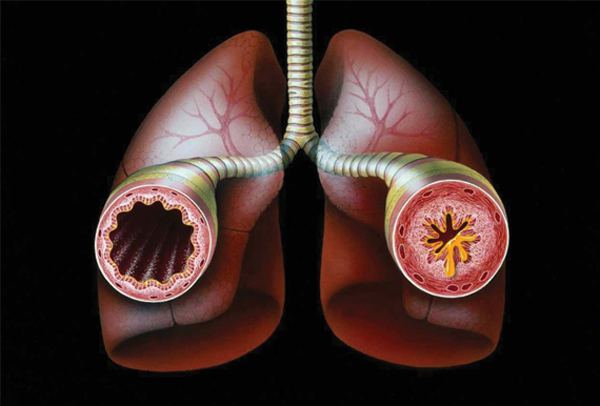
A disorder of the lungs called ____ causes the bronchi to become restricted (get smaller) so air can't get to the lungs.
a)
asthma 
b)
cold
c)
influenza 
d)
bronchitis 
6.
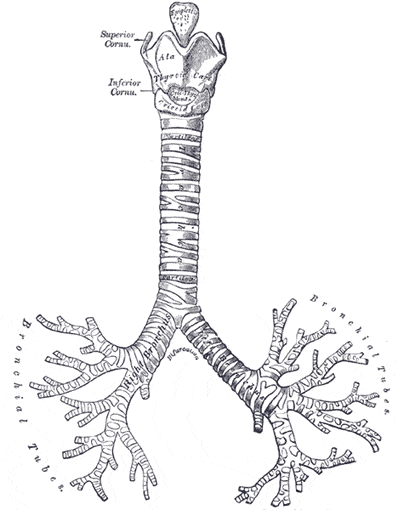
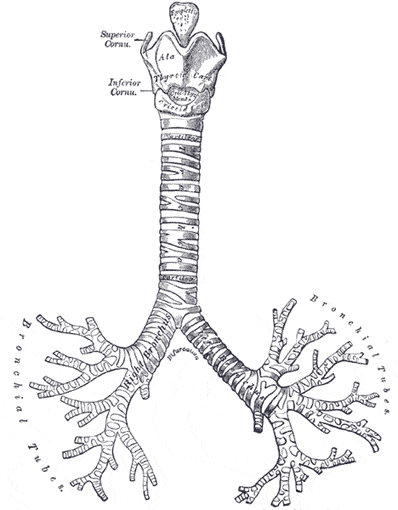
The two main branches from the trachea (one to each lung)
a)
bronchi
b)
alveoli
c)
capillaries
d)
bronchioles
7.
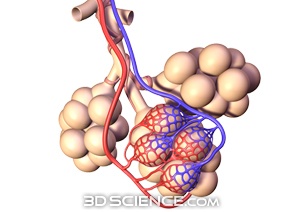
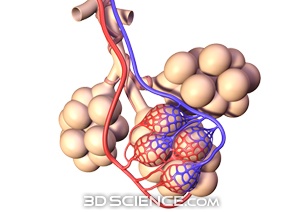
The air sacs that are covered with capillaries where gas exchange takes place
a)
bronchi
b)
lungs
c)
oxygen
d)
alveoli
8.
Within the lungs, the exchange of oxygen and carbon dioxide occurs between the ___ and the capillaries. 
a)
trachea 
b)
bronchi 
c)
alveoli
d)
diaphragm
9.
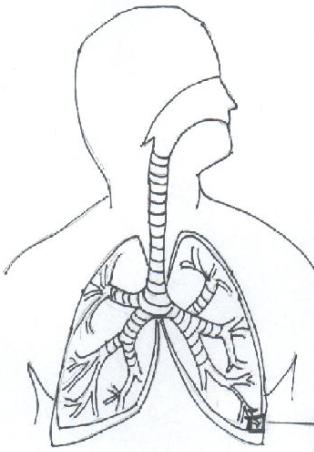
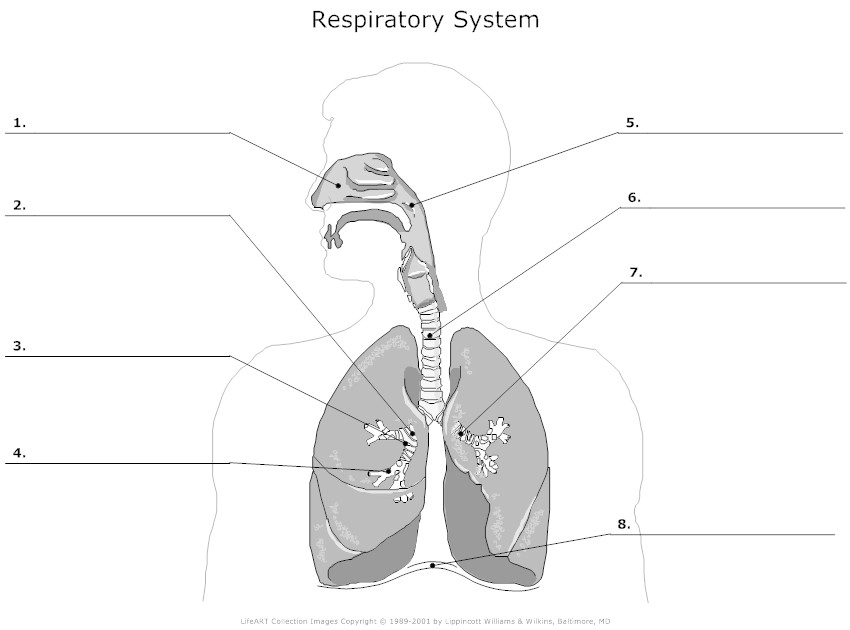
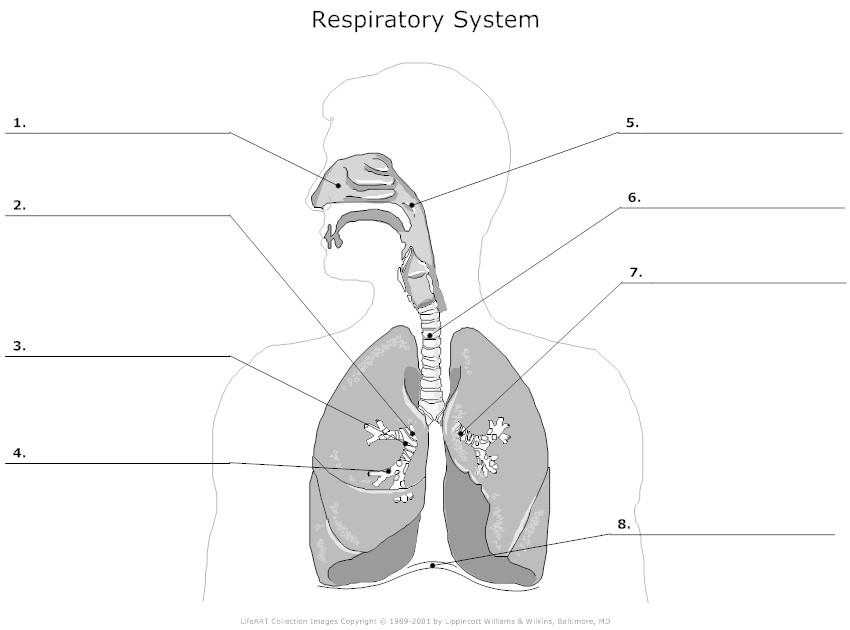
Name the organ label # 6. 
a)
alveoli 
b)
bronchi 
c)
trachea 
d)
lungs 
10.
What is tube that is also known as your wind pipe?
a)
esophogus
b)
bronchi
c)
trachea
d)
alveoli
11.
Name the structure labeled 8 
a)
lungs 
b)
trachea 
c)
diaphragm 
d)
alveoli 
12.
The passageway that is shared by both the digestive and respiratory system is the....
a)
larynx
b)
pharynx
c)
trachea
d)
nose
13.
Flap of skin that covers the opening to the windpipe during swallowing
a)
Stomach
b)
Trachea
c)
Pancreas
d)
Epiglottis
14.
The Pharynx is the muscle that moves the lungs
a)
True
b)
False
15.
The windpipe is also known as which organ?
a)
Lung
b)
Trachea
c)
Alveoli
d)
Nose
16.
When the diaphragm contracts and moves down, the lungs are...
a)
expanding with air
b)
shrinking - pushing air out
17.
When the diapragm relaxes and moves back up, the lungs are...
a)
expanding with air
b)
shrinking - pushing air out
18.
Tiny air sacs in the lungs that are the site of gas exchange between the lungs and blood.
a)
alveoli​
b)
relax
c)
diaphragm​
d)
nose
19.

The beginning point of the respiratory system where air is taken into the body.

a)

lung

b)

diaphragm​

c)

nasal cavity

d)

trachea​

20.
Given the following structures:
1. larynx
2. nasal cavity
3. pharynx
4. trachea
Which of the following is the correct order that air would flow during inhalation. 
a)
1,2,3,4
b)
2,3,1,4
c)
2,1,3,4
d)
4,2,3,1 
21.
The trachea...
a)
extends from the nasal cavity to the bronchi
b)
is lined with cilia
c)
lies posterior to the esophagus
d)
is the passageway for food into the stomach
22.
When the diaphragm relaxes...
a)
the volume of the thoracic cavity increases and the pressure decreases, causing air to rush into the lungs.
b)
the volume of the thoracic cavity decreases and the pressure increases causing air to rush out of the lungs. 
23.
When the diaphragm contracts...
a)
the volume of the thoracic cavity increases and the pressure decreases, causing air to rush into the lungs.
b)
the volume of the thoracic cavity decreases and the pressure increases causing air to rush out of the lungs. 
24.
a flap of tissue that closes when we eat so food doesn't not go down the trachea
a)
larynx
b)
pharynx
c)
trachea
d)
epiglottis
25.
What does the Larynx hold ?
a)
The larynx holds the whole respitory system. 
b)
The larynx holds the trachea. 
c)
The larynx holds the vocal chords. 
d)
The larynx hold the wind pipe. 
26.
What does a spasm of the diaphragm cause?
a)
cough
b)
sneeze
c)
hiccup
d)
yawn
27.
After air moves through the pharynx it continues downward. The _____, or windpipe, directs the air into 2 separate branches or tubes.
a)
mucus
b)
trachea
c)
larynx
d)
epiglottis
28.

The tubes that go from the trachea into the lungs

a)

alveoli

b)

diaphragm

c)

epiglottis

d)

bronchi

29.

cleans, moistens, and warms the air

a)

trachea

b)

larynx

c)

nasal cavity

d)

windpipe

30.
Tiny tubes that branch off of bronchi
a)
capillaries
b)
alveoli
c)
bronchioles
d)
pluera
31.
Which is NOT a function of the Respiratory System?
a)
it warms the air
b)
it exchanges O2 and CO2
c)
It pumps blood to the organs
d)
it creates sound through the larynx
32.
When you exercise, your heart beats faster to...
a)
spread oxygen throughout your body more quickly.
b)
make you feel excited.
c)
let you know you're working hard.
d)
inflate your lungs
33.
Name the two body parts that work together to force air IN and OUT of the body:
a)
Lungs and trachea
b)
Rib cage and diaphragm
c)
Rib cage and nasal passage
d)
Diaphragm and nasal passage
34.

What is the function of the "Alveoli"

a)

It's a name for a muscle

b)

It's is a name for the blood in the center of your body

c)

They are air sacks where oxygen and carbon dioxide exchange takes place

d)

produce sound

35.

Flap of tissue that covers the opening to the windpipe during swallowing

a)

Pharynx

b)

Trachea

c)

Epiglottis

36.

Breathing out; exhalation of breath.

a)

Inspiration

b)

Expiration

37.

Which part of the Respiratory System plays a major role in speech?

a)

nose

b)

pharynx

c)

larynx

d)

trachea

38.

The drawing in of breath; inhalation.

a)

Inspiration

b)

Expiration

39.
The two main branches from the trachea (one to each lung)
a)
bronchi
b)
alveoli
c)
capillaries
d)
bronchioles
40.
What is an other word for windpipe?
a)
Larynx
b)
Trachea
c)
Oesophagus
d)
Diaphragm
41.

Emphysema

a)

an allergic reaction that causes your breathing passages to swell shut.

b)

forms tumors

c)

Lung disease in which the alveoli lose their ability to stretch

d)

Produces excess mucus in your breathing passages causing you to cough

42.

The organ system that provides the body with oxygen and rid the body of carbon dioxide.

a)

Circulatory System

b)

Trachea

c)

digestive system

d)

Respiratory System

43.
Disease in which tissue of the lungs is destroyed by the growth of a tumor.
a)
Allergies
b)
Emphysema
c)
Asthma
d)
Lung Cancer
44.
What are the lungs getting rid of when you exhale?
a)
Air
b)
Oxygen
c)
Carbon Dioxide
d)
Nitrogen
45.
Where are your vocal cords located?
a)
Nose
b)
Lungs
c)
Larynx
d)
Alveoli
46.

Asthma

a)

Lung disorder in which bronchial tubes contact quickly causing shortness in breath

b)

causes tumors to form

c)

blood vessel that carries blood away from the heart, has thick elastic walls

d)

building block of protein

47.
What surrounds the alveoli?
a)
oxygen
b)
carbon dioxide
c)
capillaries
d)
bronchioles
48.

When a person smokes, it can lead to this disease that causes tumors to form.

a)

lung cancer

b)

emphysema

c)

asthsma

d)

chronic bronchitis

49.
Clusters of tiny air sacs that allow the exchange of oxygen and carbon dioxide
a)
Pharynx
b)
Diaphragm
c)
Alveoli
d)
Lungs
50.
Two short tubes that carry air into the lungs
a)
Trachea
b)
Bronchioles
c)
Lungs
d)
Bronchi
51.
Muscular structure that helps to expand and contract the lungs, forcing air in and out
a)
Pharynx
b)
Nasal cavity
c)
Alveoli
d)
Diaphragm
52.
Smaller tubes within the lungs
a)
Bronchioles
b)
Bronchi
c)
Lungs
d)
Alveoli
53.
This is a tube-like pasage used for food, liquid, and air
a)
Larynx
b)
Trachea
c)
Pharynx
d)
Lungs
54.
Passage way that moistens the air and has hairs to trap dust and particles
a)
Nasal cavity
b)
Bronchi
c)
Mouth cavity
d)
Larynx
55.
What is the function of the respiratory system
a)
Take in O2 only
b)
Remove CO2 only
c)
Take in O2 ad remove CO2
d)
Make sugar
56.
This is the airway that has two pairs of vocal chords attached to it
a)
Lungs
b)
Diaphragm
c)
Pharynx
d)
Larynx
57.
During respiration, oxygen diffuses from the _______________ to the _____________.
a)
capillaries / alveoli
b)
alveoli / capillaries
c)
cells / capillaries
58.
When inhaling, the diaphragm muscle contracts causing the volume of the chest cavity to _____________, which causes pressure in the lungs to ________________, and air to move _______. 
a)
 increase / decrease / in
b)
increase / increase / in
c)
decrease / increase / out
d)
decrease / decrease / out
59.
When exhaling, the diaphragm muscle relaxes causing the volume of the chest cavity to _____________, which causes pressure in the lungs to ________________, and air to move _______. 
a)
 increase / decrease / in
b)
increase / increase / in
c)
decrease / increase / out
d)
decrease / decrease / out
60.
What is the organ "x"
a)
Heart
b)
Lungs
c)
Diaphragm
d)
Trachea
61.
Name the structure labeled 8 
a)
lungs 
b)
trachea 
c)
diaphragm 
d)
alveoli 
62.
 _____ involves the use of lungs to inhale and exhale; ____ involves using oxygen and glucose to make energy for the cell.
a)
Breathing; cellular respiration
b)
Cellular respiration; breathing
c)
Breathing; photosynthesis
d)
Respiration; cellular breathing
63.
How does the respiratory system exchange gases between the lungs and the environment? 
a)
CO2 is inhaled from the environment and O2 is exhaled by the lungs
b)
O2 is inhaled from the environment and CO2 is exhaled by the lungs 
c)
CO2 is inhaled from the environment and CO2 is exhaled by the lungs 
d)
O2 is inhaled from the environment and O2 is exhaled by the lungs 
64.
Airway that connects the larynx to the bronchi
a)
pharynx
b)
nasal cavity
c)
secondary bronchi
d)
trachea
65.
Capillaries deliver O2 to - 
a)
the lungs
b)
the kidneys
c)
body cells
d)
the lungs
66.
#3 is pointing to -
a)
larynx
b)
pharynx
c)
trachea
d)
bronchi
67.
#5 is pointing to -
a)
trachea
b)
bronchi
c)
alveoli
d)
pharynx
68.
#7 is pointing to the -
a)
larynx
b)
pharynx
c)
trachea
d)
bronchi
69.
#4 is pointing to the -
a)
alveoli
b)
larynx
c)
lungs
d)
pharynx
70.
#8 is pointing to the -
a)
alveoli
b)
pharynx
c)
larynx
d)
trachea