
 Worksheets
Unit 9 Review
Total questions: 69
Worksheet time: 1hrs 2mins
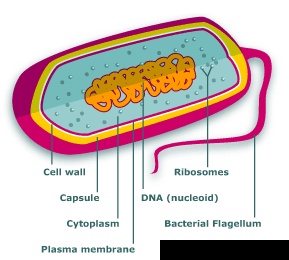
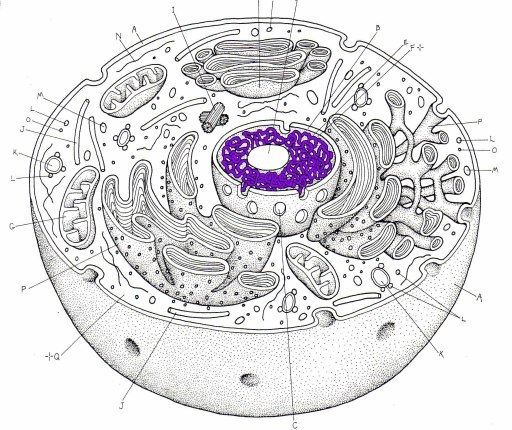
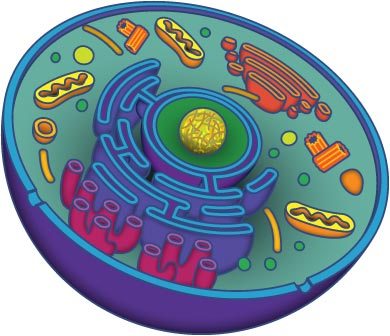
cells can have different numbers or organelles because of the cell's function.
What is different about prokaryotic and eukaryotic cells?
Prokaryotic cells make up all plants and eukaryotic cells make up all animals.
Eukaryotic cells have ribosomes and prokaryotic cells do not.
Prokaryotic cells don’t have a cell membrane and eukaryotic cells do.
Eukaryotic cells have a nucleus and prokaryotic cells do not.
A ________ is a living thing.
organelle
cell
organism
multicellular
Who coined the term "cell" by looking at cork?
Hooke
Leeuwenhooke
Schwann
Virchow
Which is NOT a part of the cell theory
All organisms are composed of one or more cells.
The cell is the basic unit of structure and organization in organisms.
All cells come from preexisting cells.
The invention of the microscope allowed scientist to investigate plant and animal cells.
An __________ is a tiny cell structure within a cell that carries out a specific function.
organism
organelle
unicellular
cell
Who is the scientist that studied plants under a microscope and realized all plants are made of cells?
Hooke
Virchow
Schwann
Schleiden
When an organism is made up of more than one cell it is called ____________.
unicellular
organelle
multicellular
organism
The basic unit that makes up all living things is called ____.
cells
unicellular
organelle
organism
What is the name of the scientist who studied animal cells and realized all animals are made of cells?
Leeuwenhooke
Schwann
Virchow
Hooke
_________ is an instrument that makes small objects look larger.
cell
organisms
microscope
bacteria
What is the name of the scientist who provided research proving cells come from other cells?
Hooke
Schleiden
Leeuwenhooke
Virchow
A single celled organism is called _____.
cell
unicellular
organelle
multicellular
___________ made his own microscope and discovered bacteria. He called them "animalcules".
Hooke
Leeuwenhooke
Schwann
Schleiden
How did the microscope influence the development of cell theory?
Let to them asking more questions and making more discoveries.
Allowed scientist to investigate plants and animals in their world.
Realized that living things are made of cells.
All of the above.



Robert Hooke
Matthias Schleiden

There are three parts to the cell theory. Which is NOT one of those parts?
All organisms are composed of one or more cells.
The cell is the basic unit of structure and organization in organisms.
Cells spontaneously arise from carbon and nutrients carried in the bloodstream.
All cells come from pre-existing cells.

A cell without a true nucleus
Prokaryotic
Eukaryotic
A cell that has a true nucleus
Prokaryotic
Eukaryotic
Bacteria is an example of a(n)
prokaryotic cell.
eukaryotic cell.
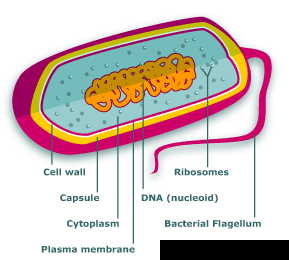
Plants and animal cells are examples of ___ cells
prokaryotic cells
eukaryotic cells
both eukaryotic and prokaryotic
neither


Prokaryote or Eukaryote?
Unicellular or Multicellular?
Orange Tree
Prokaryote
Unicellular
Eukaryote
Unicellular
Eukaryote
Multicellular

What is a variation within a population?
A change in the environment.
Differences in traits among individuals.
A type of food that animals eat.
A new species forming.

How can variations in arm length benefit a population of monkeys?
Longer arms can help reach food in tall trees.
Shorter arms make it easier to swim.
Arm length has no effect on survival.
Longer arms make it harder to climb.

Why might variations in the wing pattern of monarch butterflies be beneficial?
They help butterflies fly faster.
They make butterflies more attractive to predators.
They can help with camouflage.
They make butterflies heavier.

In a cold environment, which variation might be advantageous for a population of animals?
Thicker Fur
Longer Tails
Brightly Colored Skin
Shorter Legs

What is a disadvantage of having too much variation in a population?
It can lead to more diseases.
It can make it harder to adapt to a specific environment.
It can cause the population to grow too fast.
It can make individuals look too similar.

How can variations help a population survive a sudden change in the environment?
By making all individuals identical.
Providing different traits might be beneficial.
By reducing the number of individuals.
By making the environment change back.

Which of the following is an example of a variation in a plant population?
.Identical flower colors.
The same height for all plants.
Different leaf shapes
Uniform root length.

What is one advantage of having variations in a population living in a diverse environment?
It allows the population to exploit different resources.
It makes the population more vulnerable to predators.
It causes the population to become extinct.
It reduces the population's ability to reproduce.

In a desert environment, which variation might be beneficial for a population of animals?
Ability to store water.
Brightly colored fur.
Short, thin legs.
Large, flat feet.

How can variations in a population lead to the development of a new species?
By causing all individuals to become identical.
By reducing genetic diversity.
By making the population smaller.
By allowing some individuals to survive and reproduce in different environments.

What is a potential disadvantage of having little variation in a population?
Increased ability to adapt to changes.
Greater risk of disease affecting all individuals.
More opportunities for finding food.
Easier to find mates.

Which of the following is an example of a variation that might be disadvantageous in a forest environment?
Camouflaged Skin
Brightly Colored Feathers
Ability to climb trees.
Sharp Claws

How can variations in a population affect its ability to compete for resources?
Variations can make competition more intense.
Variations can reduce the need for resources.
Variations can allow individuals to use different resources.
Variations have no effect on competition.

What is one way that variations can be introduced into a population?
Through genetic mutations.
By all individuals becoming identical.
By reducing the population size.
Through environmental changes alone.

In a population of fish, what variation might help some individuals survive in a polluted river?
Smaller Eyes
Brightly Colored Scales
Larger Fins
Ability to tolerate pollutants.

