
NEW
Font size
 Worksheets
Unit 1 States and Properties of Matter
Total questions: 78
Worksheet time: 1hrs 2mins

liquid
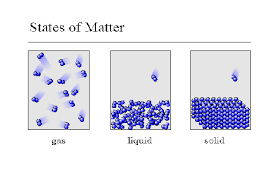
Matter is made up of particles. Which of the following statements is true about these particles?
The particles that make up solids do not move
The particles that make up liquids do not move
The particles that make up all matter are constantly in motion
Only the particles that make up gases are constantly in motion
A compound consists of two or more ____________.
Molecules
Atoms
Elements
Pieces of matter
How many total hydrogen atoms are found in 2H2O?
5
4
2
0
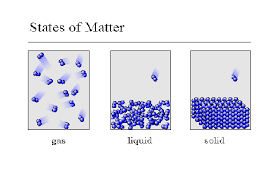

Freezing
Solid to gas
Liquid to solid
Gas to solid

Boiling
liquid to gas
gas to solid
gas to liquid

Particles in a ______________________ move quickly and are far apart.
gas
solid
liquid

Particles of a liquid
are tightly packed together and stay in a fixed position.
are free to move around one another but still touch.
Solid to Gas
Deposition
Sublimation
Evaporation
What is condensation?
gas to solid
gas to liquid
liquid to solid
The slower the particles in a substance move,
the colder it is.
the warmer it is.
the more energy it has.

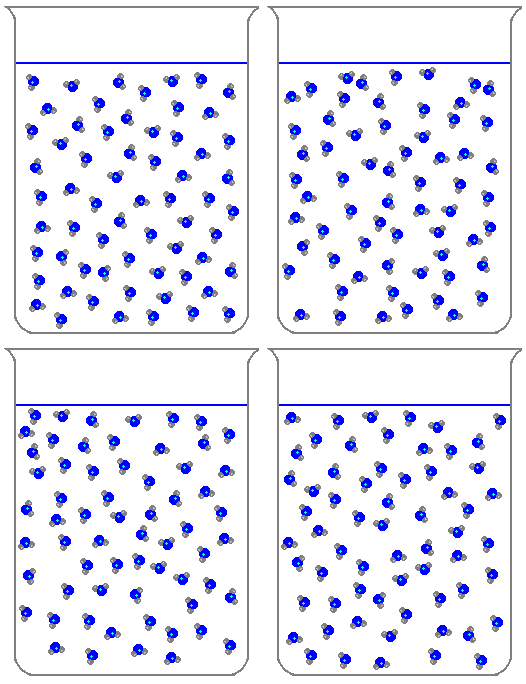
Is this a picture of something hot or cold?
Hot
Cold

Is this a picture of something hot or cold?
Hot
Cold


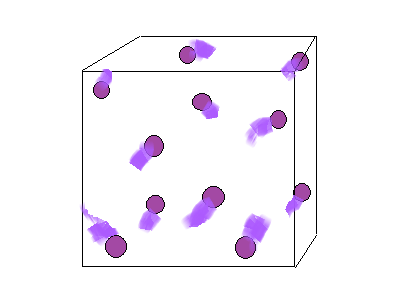


How do particles move if in a solid?
Not at all.
Quickly
Slow
They don't move they vibrate
When the temperature increases, the pressure ____.
Decreases
Stays the Same
Increases
Need more information
Why does food coloring diffuse faster in hot water vs cold water?
Molecules are more dense allowing them to move faster
Molecules have more energy allowing them to move faster
The food coloring attaches to water molecules, slowing them down
Molecules have more weight with more food coloring

What state of matter is number 3?
Solid
Liquid
Gas
Not enough information

Which number has the particles moving the fastest?
1
2
5
4
3

The word malleable means
light reflects on surface
allows electricity to flow through easily
attracted to magnet
can be pounded or rolled into sheets

What should be the expected outcome of the experiment for both student groups completing this experiment? Provide a rationale for your answer.
There should be a greater change in mass because matter was destroyed.
The change in mass should be zero because matter cannot be created or destroyed.
The final mass should have been greater than the initial mass because matter was created.

Which observation indicates a chemical property?
slowly dissolves
turns cloudy
turns black
gritty

Where should plasma be placed in the States of Matter Model?
Space 1 because as plasma is heated it changes into a solid.
Space 2 because as a solid is heated it changes into plasma.
Space 3 because as a liquid is heated it changes into plasma.
Space 4 because as a gas is heated it changes into plasma.
Penny placed a tablet of baking soda in a cup of water. The tablet immediately began to bubble, fizz, and eventually dissolve.
Did a physical or chemical change occur and how do you know?
chemical; the tablet gave off a gas in the form of bubbles
chemical; the fizzing sound indicates a new substance was formed
physical; the tablet only dissolved in the water and formed a mixture
physical; the water can be boiled off and the tablet residue would be left

Which terms should Jimmy use in boxes 1-4 to accurately complete his model?
1-Heterogeneous; 2: Homogeneous; 3-Elements; 4-Compounds
1-Elements; 2-Compounds; 3-Heterogeneous; 4-Homogeneous
1-Heterogeneous; 2-Elements; 3-Homogeneous; 4-Compounds
1-Compounds; 2-Heterogeneous; 3-Homogeneous; 4-Elements

You concluded that a physical change had occurred when the soda expanded as it froze.
What evidence BEST supports your conclusion?
The frozen soda tasted the same as liquid soda.
The can of soda was stuck to the freezer.
The soda formed no new substances.
The soda had come out of the can.
Chase buys a helium balloon for a friend’s birthday. As he walks out of the store, it starts snowing.
What do you predict will happen to the balloon, and why?
The balloon will expand and burst because helium is less dense
than cold outdoor air.
The balloon will shrink because the cold causes the helium atoms to slow down and move closer together.
The balloon will expand and burst because the rapid temperature change causes the helium atoms to move faster, increasing the pressure.
The balloon will shrink because the high humidity of the air outside the store exerts a greater pressure than the dry air inside the store.

Which of the following statements describes how mass was conserved in this chemical reaction?
There are two reactant molecules and three product molecules.
There are three reactant molecules and two product molecules.
The reactants have four hydrogen atoms and two oxygen atoms, and the products have the same atoms in two molecules of H2O.
The products have four hydrogen atoms and two oxygen atoms, and the reactants have the same atoms in two molecules of H2O.

Does this chemical reaction explain conservation of matter and why?
Yes, because atoms are the same in the reactants and products.
No, because atoms are not the same in the reactants and
products.
Yes, because molecules are the same in the reactants and
products.
No, because molecules are not the same in the reactants and
products.

Which BEST explains how pizza differs from milk?
Pizza is a mixture, and milk is a compound.
Pizza is a suspension, and milk is a solution.
Both are mixtures; pizza is heterogeneous, and milk is
homogeneous.
Both are solutions; pizza’s components can be seen, and milk’s
components cannot be seen.
Which of the processes represents a chemical change?
Boiling sugar maple sap to make maple syrup.
Rusting of a bicycle when it is left out in the rain.
A table is covered with dust at your house.
Ice melting when it is covered with salt.
Corn syrup 1.37 g/mL
Vegetable oil 0.91 g/mL
Honey 1.42 g/mL
Lamp oil 0.81 g/mL


the smallest particle that still can be considered an element
proton
neutron
electron
atom
the dense center of an atom
proton
nuetron
nucleus
election
a positively-charged particle in the atoms nucleus
proton
neutron
electron
a particle with no charge in the nucleus of the atom
proton
neutron
electron
a chart showing all of the elements arranged according to their properties
atomic mass
proton
neutron
periodic table
a one or two letter abbreviation for the element
chemical symbol
atomic number
atomic mass

