wayground logo

Free Printable Worksheets

Font size

S
M
L
XL
Worksheets

Chemistry Test Part 2 Review

Total questions: 84

Worksheet time: 2hrs 44mins

Name
Class
Date
1.
Tastes Sour
a)
Acids
b)
Bases
c)
Salts
d)
All
2.

Is this object acidic or basic?

a)

Acidic

b)

Basic

c)

neither

d)

neutral

3.
Values from 0-14 that determine the acidity of a solution
a)
Molarity
b)
Electronegativity
c)
pH scale
d)
Solubility
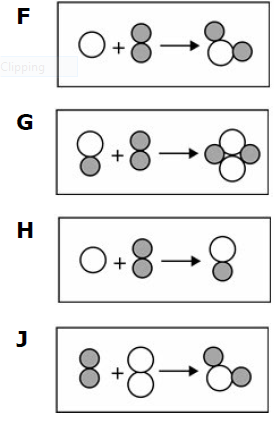
4.
Which of the following word pairs correctly completes the sentence below?
_______ are corrosive substances characterized as having a strong smell, a sour taste, and a _______.
a)
Acids; pH less than 7
b)
Acids; pH greater than 7
c)
Bases; pH greater than 7
d)
Bases; pH less than 7
5.
If an acid is combined with a base of equal strength, the result will most likely be
a)
salt and water.
b)
a stronger acid.
c)
impossible to tell without testing the pH.
d)
a stronger base
6.
Holly has an unknown substance in a beaker. She wants to determine the relative pH of the unknown substance. She places a piece of blue litmus paper into the substance, and the litmus paper stays blue.
The substance in the beaker
a)
is a base.
b)
has a neutral pH.
c)
is an acid.
d)
does not have a pH.
7.
Which of the following statements is correct?
a)
Blue litmus paper turns red when placed in a base.
b)
Red litmus paper turns blue when placed in a base.
c)
Blue litmus paper stays blue when placed in an acid.
d)
Red litmus paper stays red when placed in a base.
8.
Carrie's teacher hands out test tubes filled with different chemicals and tells the students to identify their liquid as an acid, base, or neutral chemical. Carrie's test tube contains a clear chemical. She adds phenolphthalein to her test tube and gently moves the tube from side to side. A few moments later, the chemical in the test tube turns bright pink.
What type of chemical does Carrie have?
a)
Carrie has a neutral chemical.
b)
Carrie has an acid.
c)
Carrie has a base.
d)
The type of chemical Carrie has cannot be determined.
9.
The process of combining acid and base is known as _______________
a)
precipitate
b)
neutralization
c)
phenolphthalein
d)
mixture
10.
 Which of the following is an acid?
a)
shampoo
b)
baking soda
c)
coke
d)
water
11.
The pH of a solution is tested, and it is found to be a basic solution. Of the following choices, what could the pH have been?
a)
3
b)
9
c)
7
d)
5
12.
Which of the following word pairs correctly completes the sentence below?
_______ are slippery substances , have a bitter taste, and a _______.
a)
Acids; pH less than 7
b)
Acids; pH greater than 7
c)
Bases; pH greater than 7
d)
Bases; pH less than 7
13.
When using pH paper, the pH of a solution can be determined by looking at the _______ of the paper.
a)
texture
b)
color
c)
length
d)
mass
14.
What would be considered the weakest base? 
a)
8
b)
14
c)
7.8
d)
11.6
15.
Human blood has a pH between 7.35 and 7.45. Which of the following best describes human blood?
a)
strong acid
b)
week acid
c)
strong base
d)
weak base
16.
What methods can you use to measure the pH of a solution?
a)
Observing color or clarity
b)
Measuring mass or volume
c)
Measuring density or electrical conductivity
d)
Using acid-base indicators or pH meters
17.
Tastes bitter.
a)
Acids
b)
Bases
c)
Salts
d)
All
18.
What is the range of pH values in an acidic solution?
a)
0-6
b)
8-14
c)
15-239058204958
d)
pH = 7
19.
Most of food items in the picture are:
a)
acidic
b)
basic
c)
neutral
d)
can not be determined
20.
Which is the stronger acid?
a)
pH 1
b)
pH 4
c)
pH 9
d)
pH 13
21.
A solution with a pH of 7 is________
a)
increasing
b)
neutral
c)
decreasing
d)
apple juice
22.
What term describes solid that forms when two liquids are combined?
a)
salt and water
b)
base
c)
acid
d)
precipitate
23.
An ionic compound that can be formed by the neutralization reaction of an acid and a base (ex. NaCl, KCl)
a)
water
b)
salt
c)
acid
d)
base
24.
pH of water is 7. Water is __________
a)
acid
b)
neutral
c)
base
d)
sour
25.
What is the weaker acid, tomato or lemon?
a)
they are the same
b)
lemon
c)
tomato
d)
coffee
26.
When Lavoisier broke water apart into hydrogen and oxygen he was most pleased that the mass of the water was equal to the mass of the two gases created in his reaction.  The results of his experiment laid the foundation for what principle?
a)
law of thermal dynamics
b)
law of conservation of energy
c)
law of conservation of mass
d)
the principle of gases
27.
When Lavoisier broke water apart into hydrogen and oxygen he was most pleased that the mass of the water was equal to the mass of the two gases created in his reaction.  The results of his experiment laid the foundation for what principle?
a)
law of thermal dynamics
b)
law of conservation of energy
c)
law of conservation of mass
d)
the principle of gases
28.
Each substance written to the left of the arrow in a chemical equation is a ____.
a)
reactant
b)
product
c)
precipitate
d)
catalyst 
29.
According to the law of conservation of mass, how does the mass of the products in a chemical reaction compare to the mass of the reactants?
a)
There is no relationship.
b)
The mass of products is sometimes greater.
c)
The mass of reactants is greater.
d)
The masses are always equal.
30.
CH4  +  2O2   →    CO2  +  2H2O
This equation models the combustion of methane.  What products result?
a)
CH4  +  2O2
b)
CO2  +  2H2O
c)
carbon dioxide
d)
methane and water
31.

The combination of symbols that represent the elements in a compound and numbers makes up the _______.

a)

chemical formula

b)

chemical equation

c)

chemical symbol

d)

chemical product

32.
If you count the number of atoms in the reactants in the chemical reaction  
CH+ 2O2  →  CO2  +  2H2O   there are _______________.
a)
4 carbon atoms, 4 hydrogen atoms, and 2 oxygen atoms 
b)
1 carbon atoms, 4 hydrogen atoms, and 2 oxygen atoms 
c)
1 carbon atoms, 4 hydrogen atoms, and 4 oxygen atoms 
d)
4 carbon atoms, 4 hydrogen atoms, and 4 oxygen atoms 
33.
How many atoms of calcium are in a molecule of calcium phosphate whose formula is Ca3(PO4)2?
a)
one
b)
two
c)
three
d)
four
34.
Which chemical equation is balanced?
a)
Na + O2  → Na2O
b)
2Na2 + O2  → 2Na2O
c)
2Na + 2O2  → 2Na2O
d)
3Na + O2  → 2Na2O
35.
Aspartame is an artificial sweetener; its formula is C13H16N2O5. Which element in the formula has the largest number of atoms
a)
carbon
b)
hydrogen
c)
nitrogen
d)
oxygen
36.
A balanced chemical equation must have the same number of which of these on both sides of the equation?
a)
molecules
b)
reactants
c)
compounds
d)
atoms
37.
Which set of diagrams shows a balanced chemical equation?
a)
A
b)
B
c)
C
d)
D
38.
2NaOH  + 3HCl   → 2H2O + 2NaCl
How many sodium atoms are present on the reactant side?
a)
one
b)
two
c)
three
d)
four
39.
2NaOH  + 3HCl   → 2H2O + 2NaCl
How many hydrogen atoms are present on the reactant side of the equation?
a)
five
b)
two
c)
three
d)
four
40.
2NaOH  + 3HCl   → 2H2O + 2NaCl
How many sodium atoms are present on the product side of the equation?
a)
five
b)
two
c)
three
d)
four
41.
2NaOH  + 3HCl   → 2H2O + 2NaCl
How many hydrigen atoms are present on the product side of the equation?
a)
five
b)
two
c)
three
d)
four
42.

2NaOH + 3HCl → 2H2O + 2NaCl

Is this equation balanced or not?

a)

yes

b)

no

43.
In a chemical equation, is it true that -
a)
the reactant side and product side can have different numbers of atoms for each element
b)
there can be different elements on the reactant side and the product side
c)
an element or compound must be accompanied by a phase change
d)
the coefficients indicate the number of molecules of each reactant used and the number of molecules of each product made
44.
Which of the following models best demonstrates a balanced chemical equation?
a)
F
b)
G
c)
H
d)
J
45.
Two clear colorless solutions were combined.
The student observed that the temperature changed from 25 •C to 23 •C when the solutions were combined and that a white substance rapidly formed and settled to the bottom of the container. What most likely happened to produce these results?
a)
One of the original compounds came out of solution
b)
The solutions reacted chemically
c)
Some of the water froze into ice crystals
d)
Rapid evaporation of water occurred, leaving a solid
46.
Coal contains carbon and other elements. Carbon dioxide forms when coal burns in the presence of oxygen. Which of these is the best evidence that a chemical reaction occurs when coal burns?
a)
The shape of the coal changes
b)
Oxygen is present
c)
A new substance is produced
d)
Coal is made up of more than one element
47.

In a ___________change, a substance changes into a different substance.

a)

Physical

b)

Chemical

48.

a copper penny turning greenish after a few years.

a)

Physical change

b)

Chemical change

49.

An gel ice pack getting cold after you put it in the freezer for an hour.

a)

Chemical change

b)

Physical change

50.

Which of the following is a physical change?

a)

Getting a haircut

b)

Rusty metal

c)

sour milk

d)

A compound

51.
Is burning wood a chemical or physical change?
a)
chemical
b)
physical
52.
Which of the following is NOT an example of a physical change?
a)
crumpled paper
b)
pencil sharpening
c)
shrunken clothing
d)
sour milk
53.
Photosynthesis is an example of a
a)
physical change
b)
chemical change
54.
Adding baking soda and vinegar together and it fizzes and creates carbon dioxide.
a)
Chemical
b)
Physical
55.

Which of the following describes a precipitate?

a)

a liquid forms when a block of metal is heated

b)

a solid forms when one liquid is poured into another liquid

c)

a gas forms when a solid is placed in a liquid

d)

bubbles form when an acid is poured on a rock

56.
What causes a chemical reaction when you prepare scrambled eggs?
a)
cracking the eggs in a pan
b)
heating the eggs in a pan
c)
putting pepper on the eggs
d)
putting the eggs on a plate
57.
A white baking soda solution was combined with white calcium chloride. Once combined the temperature increased, the substances bubbled, and were white in color. What indicators of a chemical change were shown?
a)
Temperature increase
b)
Color change
c)
Bubbling/fizzing
d)
Temperature increase and bubbling/fizzing
58.

Jenna stirs salt into water. What type of change occurred?

a)

Chemical--she cannot separate the substances

b)

She made a heterogeneous mixture (physical change)

c)

She made a homogeneous mixture (physical change)

d)

She made a homogeneous mixture (chemical change)

59.

Bread is toasted. How do you know a chemical change happened?

a)

The temperature increased

b)

The color changed

c)

It bubbled/fizzed

d)

A solid formed

60.
this is an example of?
a)
physical property
b)
chemical property
61.
What is the formula for density?
a)
density = mass x volume
b)
density = mass / volume
c)
density = mass + volume
d)
density = mass - volume
62.
Which box has a higher density?  
a)
Box A
b)
Box B
c)
cannot be determined
d)
they are the same
63.
What is the volume of the liquid in the cylinder?
a)
40 mL
b)
4.0 mL
c)
44 mL
d)
50 mL
64.
Chemical Property
a)
A state that can flow from one place to another and will settle to the bottom of a container
b)
A property of how matter behaves when it is brought into contact with other matter.
c)
Extremely small particles; the smallest unit of matter.
d)
A property that can be measured or observed without changing what it is
65.
Density
a)
The increase in the volume of matter with increasing temperature.
b)
The decrease in the volume of matter with decreasing temperature
c)
A change that occurs when one or more substances are changed into entirely new substances with different properties.
d)
A measure of how much stuff is crammed into a certain volume of space
66.
Density: Chemical or Physical Property
a)
Chemical Property
b)
Physical Property
67.
Boiling Point: Chemical or Physical Property
a)
Chemical Property
b)
Physical Property
68.
What is a solid substance with a density of 19.32g/cm^3
a)
mercury
b)
gold
c)
nickel
d)
oak
69.
What kind of properties can only be observed when a substance changes into a different substance?
a)
physical properties
b)
chemical properties
c)
liquid properties
d)
real properties
70.

Which is not a chemical property?

a)

rusting

b)

flammibility

c)

color

d)

oxidization

71.

A wall that was once white is painted black. Which of the following is definitely true of the painted wall?

a)

Its chemical properties have changed.

b)

Its physical properties have changed.

c)

Both its physical properties and chemical properties have changed.

d)

None of its characteristic properties have changed.

72.
Ability to be drawn into wire
a)
ductile
b)
brittle
c)
malleable
d)
dull
73.
Having a shiny surface or reflecting light brightly
a)
luster
b)
malleable
c)
ductile
d)
brittle
74.
Ability to be hammered into different shapes
a)
ductile
b)
malleable
c)
brittle
d)
dull
75.

Can be observed and measured without changing the kind of matter being studied (melting point, boiling point, density, and color)

a)

conductors

b)

malleable

c)

physical properties

d)

chemical properties

76.
Not shiny
a)
brittle
b)
ductile
c)
dull
d)
malleable
77.
Breaks easily
a)
ductile
b)
malleable
c)
dull
d)
brittle
78.
Which of the following is not a chemical property? 
a)
rusting 
b)
boiling 
c)
rotting 
d)
burning 
79.
Which is an example of a physical property?
a)
ability to react with acid
b)
 state of matter
c)
flammability
d)
ability to react with oxygen
80.
Which of the following is a physical property?
a)
melting point
b)
flammability
c)
ability to rust
81.
Which of the following is a chemical property?
a)
ability to rust
b)
ability to conduct heat
c)
volume
d)
magnetic
82.
Which of the following is a chemical property of water?
a)
Reacts with pure sodium
b)
Boils at 100 oC
c)
Is liquid at room temperature
d)
Has a density of 1 gm/mL
83.
Which type of property is the ability to conduct electricity?
a)
physical property
b)
chemical property
84.

Which of the following properties is a physical property?

a)

magnetism

b)

ability to react

c)

flammability

d)

combustion