
NEW
Font size
 Worksheets
Ecology Final
Total questions: 55
Worksheet time: 43mins
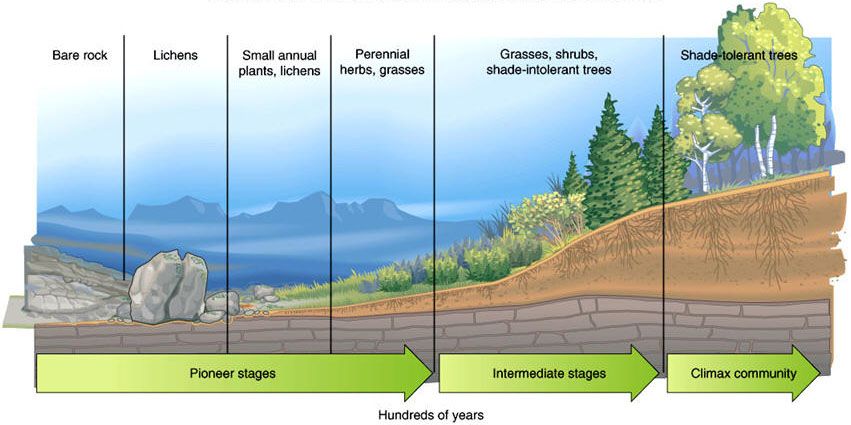
The picture shows what type of succession?
primary
secondary
tertiary
quadanary

Succession type?
primary succession
secondary succession
tertiary succession
variable succession
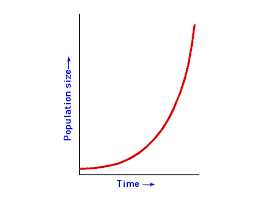
What type of growth does invasive species show and why?
Logistic growth because there is large competition with native species
Exponential growth because there is no natural predators and competition in the new environment
Predator/ Prey because the invasive species begins to prey on native species
Exponential growth because the native species outcompete with the invasive ones and cause a limit on their population growth



Which of the following limiting factors is NOT a Density-dependent factor?
Food
A Forest Fire
Water
Space to live

Which of the labeled processes in the picture of the Nitrogen Cycle is the process of turning Nitrogen from the atmosphere into usable nitrogen for plants to use to grow?
Ammonification
Nitrogen Fixation
Denitrification
Assimilation

What organisms recycle Carbon back into the atmosphere through the process of respiration?
Animals
Plants
Boats and Cars
Plants and Animals
Which of the following biomes has the highest precipitation?
desert
rainforest
savanna
temperate forest
This biome receives a lot of rainfall during some seasons and is dry during others. There are fires that occur here and lots of grazing animals.
temperate forest
savanna
taiga
tundra
This biome has bears, wolves and moose and animals that migrate during the long winters.
taiga
tropical rainforest
desert
savanna
this biome has cacti and other plants with long roots to survive the dry climate and sharp spines to protect it from predators
desert
taiga
temperate forest
tropical rainforest
this biome has very little rain and is very cold. a layer of permafrost covers the soil. there are no trees found here - mostly mosses and lichens.
temperate forest
desert
taiga
tundra
in this biome, you would find trees with leaves that change color and fall of when temperatures get too cold (deciduous trees)
taiga
desert
tundra
temperate forest
this is known as a relationship in which one organism benefits, while the other is unaffected
parasitism
mutualism
predation
commensalism
a clownfish uses a sea anemone as a safe place to live. while the clownfish is benefitting from the sea anemone for protection, it is also luring in food for the anemone to eat. what type of relationship is this?
mutualism
commensalism
predation
parasitism
a mosquito feeds off of the blood of different organisms. this usually causes discomfort to the organism and sometimes even death by disease. this is an example of....
commensalism
parasitism
competition
mutualism
this type of relationship occurs when two organisms are "fighting" over a common resource (ex. mates, food, water, shelter)
competition
predation
commensalism
mutualism
the nonliving components of an environment are considered the:
biotic factors
abiotic factors
the living components of an environment are considered the:
biotic factors
abiotic factors
what is an omnivore?
an organism that eats only plants for energy
an organism that eats both plants and animals for energy
an organism that eats animals for energy
what is an herbivore?
an organism that eats only plants for energy
an organism that eats both plants and animals for energy
an organism that eats only animals for energy
grass: producer, consumer or decomposer?
producer
decomposer
consumer
mushroom: producer, consumer or decomposer?
producer
consumer
decomposer
which organism always starts a food chain or food web?
producer
herbivore
carnivore
scavenger

which of the following organisms in the this image are NOT an herbivore?
grasshopper
rat
butterfly
fruit fly
which of the following shows the levels of ecological organization in order from smallest to largest?
organism, population, community, ecosystem, biome
biome, ecosystem, community, population, organism
organism, community, ecosystem, biome, population
population, organism, community, ecosystem, biome

the relationship between which two organisms shows competition?
grasshopper and frog
lavender and butterfly
frog and dragonfly
fruit fly and thrush

which organism gets its energy from an abiotic factor?
thrush
rat
grasshopper
lavender
What is the order that plants grow to repopulate the area in primary succession, such as a glacier receding or a volcano covering land with lava?
Lichens → Shrubs → Grasses → Trees
Lichens → tree → shrubs→Grasses
Grasses → Lichens → Shrubs → Trees
Lichens → Grasses → Shrubs → Trees
How much energy is lost as heat between the trophic level of the producers and the primary consumers?
10%
50%
70%
90%
Which of these are examples of combustion?
Burning fossil fuels and trees
Decomposition
Diffusion
Cellular respiration
Why is nitrogen limited when the atmosphere is 78% nitrogen?
It isn't limited
Not many organisms can fix nitrogen, which means turn it into a useful form
Nitrogen is so light that it floats above the rest of the gases in the atmosphere and most organisms can reach it
What type of large scale winds blow constantly, predictably, and over long distances?
land breezes
mountain breezes
global winds
land breezes
Which statement correctly defines wind?
The movement of air from areas of low pressure to areas of high pressure
The movement of air to a colder area in the atmosphere.
The movement of air from areas of high pressure to areas of low pressure.
The movement of air pushed around and bouncing off Earth's surface.
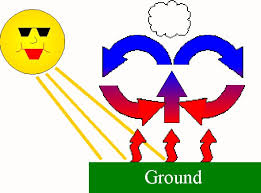
What is the initial source for global winds and convection in the atmosphere?
heat from the Earth's core
the rotation of the Earth
Moon's gravity
unequal heating of the Earth by the sun

Warm, rising air near the equator creates an area of very little wind called the:
Doldrums
Trade Winds
Polar Easterlies
Westerlies

Identify the tool used to measure wind speed
Wind Vane
Anenometer
Thermometer
Rain Guage

Identify the tool used to measure wind direction
Wind Vane
Anenometer
Thermometer
Rain Guage

