Wayground logo

Free Printable Worksheets

Font size

S
M
L
XL
Worksheets

Unit 1 CUA Study Guide

Total questions: 70

Worksheet time: 1hrs 16mins

Name
Class
Date
1.
Which of the following is not a chemical property? 
a)

reactivity

b)
boiling 
c)

combustibility

d)
burning 
2.
What is reactivity?
a)

Chemical Property

b)

Physical Property

3.
Which one of these is a chemical property?
a)
melting point
b)
boiling point
c)
color
d)

flammability/ Combustiblilty

4.
Which is an example of a physical property?
a)
ability to react with acid
b)

Density

c)
flammability
d)
ability to react with oxygen
5.
What kind of properties can only be observed when a substance changes into a different substance?
a)
physical properties
b)
chemical properties
c)
liquid properties
d)
real properties
6.

Properties that can be observed without trying to change the identity of the substance. No new substance was formed.

a)
Physical
b)
Chemical
7.

Solubility, the ability to dissolve, is a --- property.

a)

Chemical

b)

Physical

8.

Reactivity (bubbling, fizzing) is a --- property.

a)

Chemical

b)

Physical

9.
Evidence of Chemical Change.
a)

Heat involved to create a New Substance 

b)
Size change
c)
State change
d)
Mixture 
10.
Evidence of a physical change.
a)
New substance
b)
Shape Change
c)
Light produced
d)
Gas released.
11.
Sodium Hydroxide dissolves in water
a)
Chemical Change
b)
Physical Change
12.
Iron rusts.
a)
Chemical change
b)
Physical Change
13.
Ice Melting
a)
Chemical Change
b)
Physical Change
14.
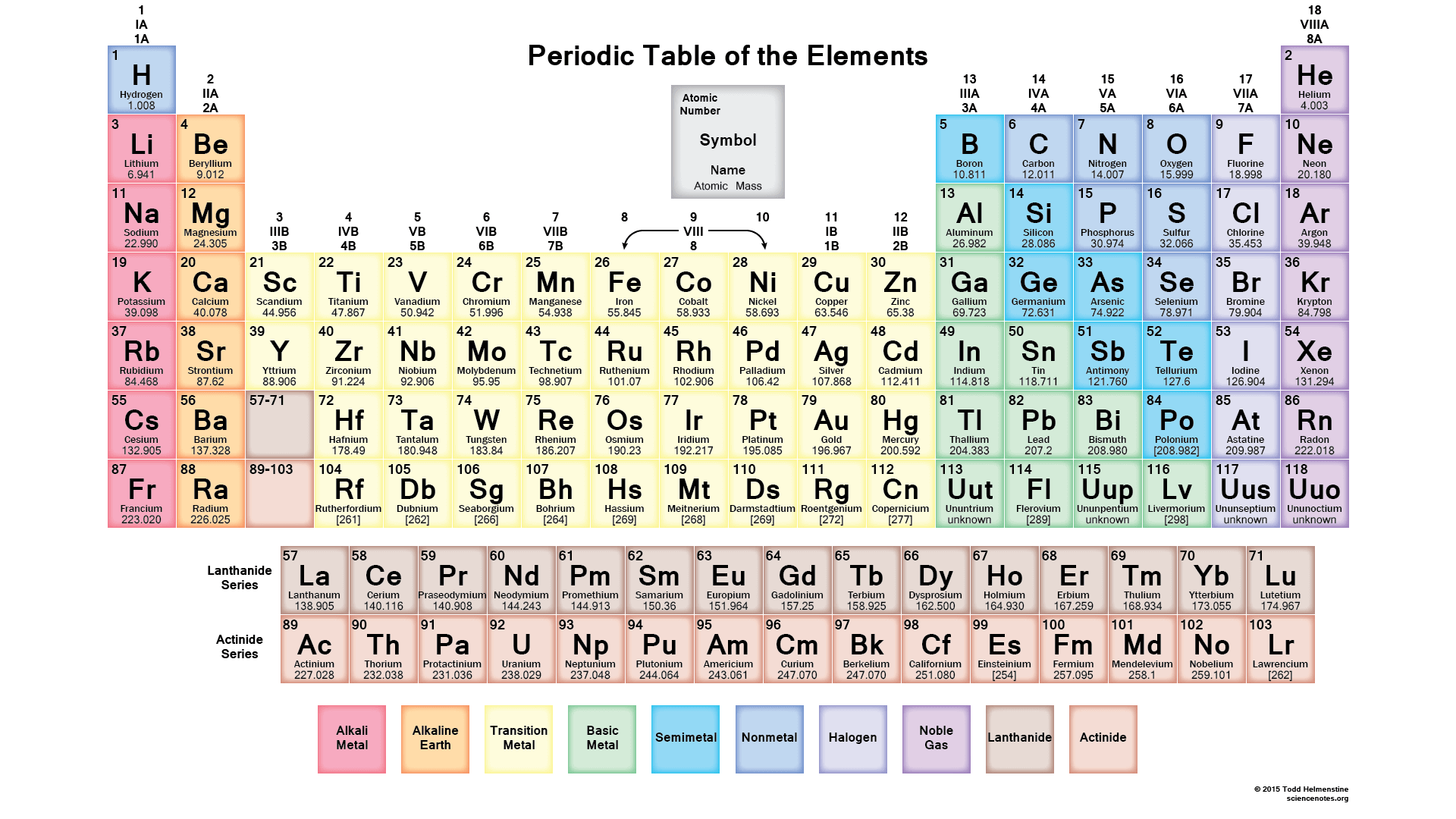
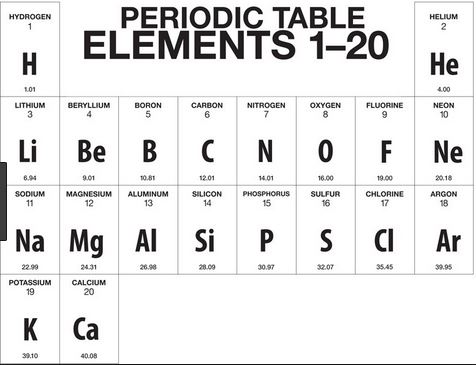
Beryllium has how many protons?
a)
4
b)
9.0122
c)
2
d)
13.0122
15.
What are the 3 subatomic particles that make-up the atom?
a)
protons, neutrons, and isotopes
b)
neutrons, isotopes, and electrons
c)
positives, negatives, and electrons
d)
protons, neutrons, and electrons
16.
What is the atomic number?
a)
the number of protons
b)
the number of protons and neutrons
c)
the number of neutrons
d)
the number of protons and electrons
17.
What does the nucleus consist of?
a)
Protons + Electrons
b)
Neutrons + Electrons
c)
Atoms
d)
Protons + Neutrons
18.
In the modern periodic table elements are arranged by:
a)
atomic mass
b)
atomic number
c)
valence electrons
d)
number of isotopes
19.
Sodium (Na) is found in group 
a)
1
b)
2
c)
3
d)
4
20.
What does the atomic mass tell you? 
a)
Basically,the number of electrons and protons
b)
The number of neutrons
c)
Basically, the number of protons and neutrons
d)
The number of protons.
21.
Can matter be created or destroyed?
a)
Yes, it can be created.
b)
Yes, it can be destroyed.
c)
No, matter is always conserved
d)
None of these
22.
The total amount of matter (atoms) before and after a chemical reaction (change), remains the same.
a)
True
b)
False
23.

What happens to molecules when the temperature drops or lowers?

a)

The molecules get closer together

b)

The molecules start moving faster.

c)

The molecules stop moving.

d)

The molecules become smaller.

24.
What will weigh more when a chemical change is complete?  The reactants before the chemical reaction, or the product after the reaction is complete?
a)
They both will weigh the same
b)
The product always weighs more than the reactant
c)
The reactant will weigh more than the product
d)
They both will loose mass after the reaction
25.
At higher temperatures
a)
particles in an object have less energy
b)
particles in an object move faster
c)
a gas contracts
26.
When the temperature of matter increases the particles...
a)
speed up and move closer
b)
speed up and move farther apart
c)
slow down and move closer together
d)
slow down and move farther apart
27.
This diagram represents a _____.
a)
pure substance that is a compound
b)
mixture of elements
c)
pure substance that is an element
d)
mixture of compounds
28.
This diagram represents a _____.
a)
pure substance that is a compound
b)
mixture of elements
c)
pure substance that is an element
d)
mixture of compounds
29.
a)
Element
b)
Compound
c)
Mixture of compound and element
d)
Mixture of two elements
30.
a)
Element
b)
Compound
c)
Mixture of compound and element
d)
Mixture of elements
31.
a)
2
b)
8
c)
3
d)
13
32.

What are valence electrons?

a)

The total number of electrons in an atom

b)

The number of electrons in the outermost shell

c)

The number of electrons in the second shell

d)

The number of protons in the outermost shell

33.

What is this?

a)

Element

b)

Compound

c)

Homogeneous Mixture

d)

Heterogeneous MIxture

34.

What is this?

a)

Element

b)

Compound

c)

Homogeneous Mixture

d)

Heterogeneous Mixture

35.
What is the left part of a chemical equation called?
H2 + O → H2O
a)
Reactants
b)
Products 
c)
Yields 
d)
Chemical Equation 
36.

What are the products of the chemical reaction pictured?

a)

CH4 and CO2

b)

CH4 and O2

c)

CO2 and H2O

d)

O2 and H2O

37.
How much does a 5 gram Hershey's kiss weigh after it is melted in the microwave?
a)
5 grams
b)
3 grams
c)
7 grams
38.
In a reaction A + B ----> C,  reactant A has 5g and product  C has 9g. How many grams does reactant B should have? 
a)
4g
b)
5g
c)
9g
d)
14g
39.

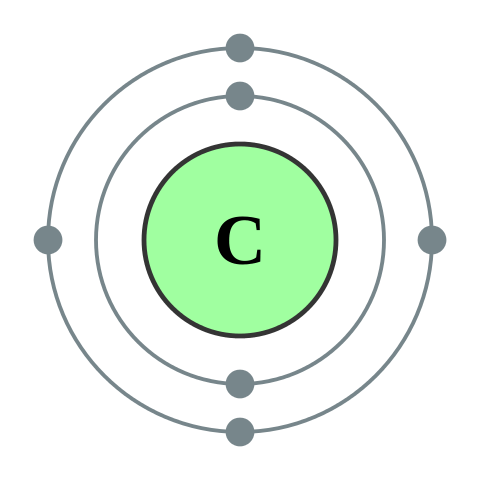
How many valence electrons does carbon have?

a)

4

b)

5

c)

6

d)

7

40.

The group number tells you the number of

a)

protons

b)

valence electrons

c)

energy levels

41.

Which two elements have properties in common?

a)

Nitrogen and Phosphorous

b)

Oxygen and Nitrogen

c)

Sulfur and Nitrogen

42.

Do these elements have properties in common?

a)

yes

b)

no

43.
What is the Law of Conservation of mass?
a)
Mass is created in a chemical reaction
b)
Mass is created in a physical change
c)
New chemicals formed from a chemical reaction have a larger overall mass than the original reactants
d)
Mass is never created or destroyed
44.
Suppose a reaction were to happen in an open container in a lab.  During the reaction, the scientist observes the chemicals bubble, and produce a gas.   During the analysis the scientist notices that the reactants weighed 20 g when he started, and the product weighed 18 g.  Explain what happened.  
a)
His chemical reaction defied the law of conservation of mass
b)
The product destroyed mass during the reaction
c)
The reactants created matter during the reaction
d)
The gas that was produced was not able to be weighed since the container was open.  
45.
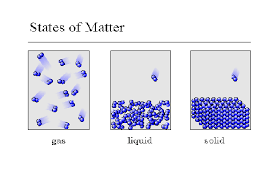
What does this picture represent? 
a)
solid
b)
liquid
c)
gas
d)
plasma
46.
What two types of measurements make up DENSITY? 
a)
Mass and Volume
b)
Temperature and Mass
c)
Grams and Centimeters
d)
Volume and Weight
47.
Jack has a rock. The rock has a mass of 14g and a volume of 2cm3. What is the density of the rock?
a)
7 mL
b)
7 g/cm3
c)
28 g/cm3
d)
1/7 g/cm3
48.

As you move left to right on a row or period what happens?

a)

Atomic number increases by 1

b)

Electrons decrease

c)

Number of shells decrease

d)

Nothing

49.
In the modern periodic table elements are arranged by:
a)
atomic mass
b)
atomic number
c)
valence electrons
d)
number of isotopes
50.
The number at the top of each square on the periodic table is the ...
a)
atomic number
b)
atomic mass
c)
Chemical Symbol
d)
Element Name
51.
Valence electrons are the...
a)
Innermost electrons
b)
Middle electrons
c)
Outermost electrons
d)
Any electrons
52.
How many valence electrons are found in atoms of group 14?
a)
4
b)
3
c)
14
d)
16
53.

How many valence electrons does Silicon Have?

a)

1 Valence electron

b)

2 Valence electron

c)

3 Valence electron

d)

4 Valence electron

e)

5 Valence electron

54.

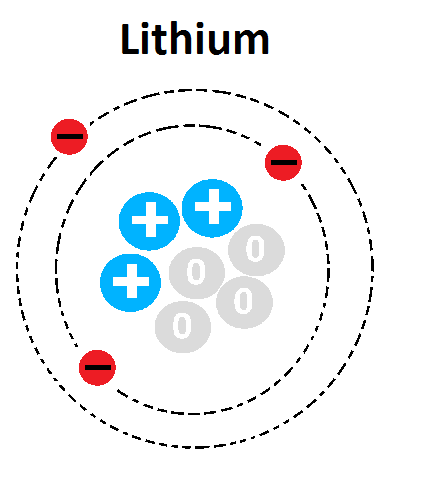
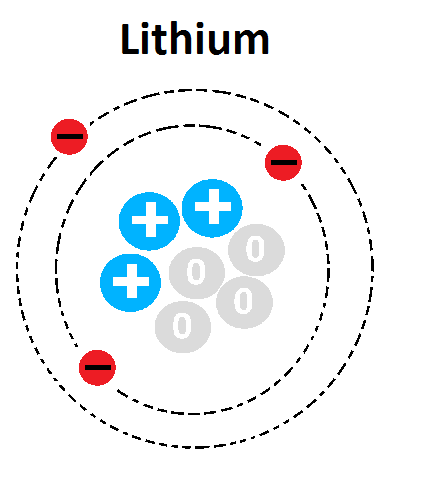
What is the atomic number of this atom?

a)

1

b)

3

c)

4

d)

7

55.

What is the mass number of this atom?

a)

1

b)

3

c)

4

d)

7

56.
What is the atomic number of the atom pictured? 
a)
9
b)
10
c)
18
d)
19
57.

What is the correct number of subatomic particles of a phosphorous atom with a mass of 31?

a)

p# - 15, n# = 15, e# = 15

b)

p# - 15, n# = 16, e# = 15

c)

p# - 15, n# = 15, e# = 16

d)

p# - 16, n# = 15, e# = 15

58.
Which of the following is a pure substance? 
a)
Water
b)
Salad
c)
Chocolate milk
d)
All of them 
59.
A pure substance CAN'T BE separated physically. 
a)
True
b)
False
60.

A _________________ mixture is one where the substances are evenly spread throughout.

a)

heterogeneous

b)

homogeneous

c)

pure substance

61.

A ______________ mixture is one that does not have a uniform composition.

a)

heterogeneous

b)

homogenous

c)

pure substance

62.
A mixture that is uniform and well mixed is _____.
a)
homogeneous
b)
hetergeneous
c)
pure substance
d)
compoud
63.
cake batter
a)
heterogeneous mixture
b)
homogeneous mixture
64.
Chicken noodle soup
a)
heterogeneous mixture
b)
homogeneous mixture
65.

Molecules in a liquid look like:

a)
b)
c)
d)
66.

When temperature is decreased, these molecules will become:

a)

solid

b)

liquid

c)

gas

67.

Which Chemical Equation is Balanced?

a)

Fe4+O2------4FeO2+O2

b)

2H2+O2-----2H2O

c)

3Cr+4O₂-----2Cr₂O₃

68.

How many oxygen atoms are in this chemical formula?

a)

6 oxygen atoms

b)

2 oxygen atoms

c)

3 oxygen atoms

d)

4 oxygen atoms

69.

A student mixes 125 grams of sugar, 250 grams of water and 5 grams of flavoring. The solution weighs...

a)

250 grams

b)

375 grams

c)

380 grams

d)

400 grams

70.

Stuart measures 10 grams of water into a pan and then freezes it. A day later, he takes the ice cube out of the pan and notices that it is larger than before. What will its mass be?

a)

10 grams

b)

11 grams

c)

20 grams

d)

impossible to know