
NEW
Font size
 Worksheets
Rocks and the Rock Cycle
Total questions: 40
Worksheet time: 53mins
What type of rock is created by weathering, erosion, deposition, compaction and cementation?
igneous
metamorphic
sedimentary
the sea floor rock
Where do extrusive rocks form?
inside of earth
on the Earth's surface
in the mantle
in the lithosphere

What determines the crystal size in a rock?
heat from the sun
age
weathering
the rate at which it cooled

What causes foliation of a rock?
extreme pressure causes the minerals to line up
cooling and hardening of magma
Weathering, erosion, deposition, compaction, cementation
melting in magma
Which of the following is a characteristic of metamorphic rock?
grainy, gritty texture
light and full of holes
very dense for its size
has visible shells in it
What kind of igneous rock usually contains large crystals?
clastic
extrusive
organic
intrusive

You find a deposit of limestone. In what type of rock setting did it probably form?
the ocean
a volcano
a mountain range
sand dunes
A rock that has a grainy, gritty texture with grains that you can scrape off is which type of rock?
igneous rock
metamorphic rock
sedimentary rock
extrusive rock

This rock formed when bits of other rocks became pressed into a solid. What type of rock is it?
Sedimentary Rock
Metamorphic Rock
Igneous Rock
What is the most common extrusive igneous rock?
Basalt
Granite
Limestone
obsidian
True or False: Once a rock is metamorphic, it cannot become another kind of rock.
True
False
The process by which igneous rocks are formed...
heat and pressure
melting into magma, cooling and crystallizing
weathering and erosion
compaction and cementation
The process by which metamorphic rocks are formed...
extreme heat and pressure
erosion and deposition
melting and cooling
compaction and cementation
Sedimentary rocks are the only type of rocks that can contain fossils.
True
False
A metamorphic rock in which the grains line up in parallel bands is a
pumice
obsidian
Nonfoliated Rock
Foliated Rock
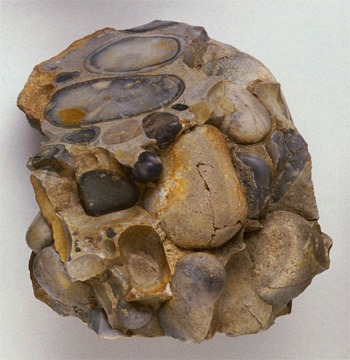
This rock was created along a riverbed when different sizes of rocks became compacted and cemented together. What type of rock is it?
Sedimentary
Igneous
Metamorphic

This rock was found near the mouth of a volcano. What type of rock is this?
Sedimentary
Igneous
Metamorphic
Slow cooling produces
large crystals
small crystals
no crystals

This rock was formed when magma cooled very slowly inside the Earth. What specific type of rock is it?
Intrusive Igneous Rock
Extrusive Igneous Rock
Foliated Metamorphic Rock
Non-foliated metamorphic Rock

This rock formed when lava cooled very quickly on Earth's surface. What specific type of rock is it?
Extrusive Igneous Rock
Intrusive Igneous Rock
Non-Foliated Metamorphic Rock
Foliated Metamorphic Rock
The individual particles that make up a rock are known as _____
Crystals or Grains
Textures
Metamorphs
Lava
Two ways to describe types of igneous rocks are _____
Extrusive and Intrusive
Foliated and Non-Foliated
dense and less dense
Black and Gray
Which is the most common intrusive igneous rock?
basalt
limestone
granite
pumice


what is the rock cycle.
molten rock that is stored underground.
rock material that forms where rocks are broken down into smaller pieces.
a process that changes one type of rock into another type of rock.
Can metamorphic rocks contain fossils? why?
yes, because the fossils can be preserved
yes, because that is the only kind of rock that can contain a fossil
no, because the fossils are destroyed by weathering
no, the fossils are destroyed by extreme heat and pressure
Why do some rocks have grains or crystals that look like pieces of glass?
the sand they contain was heated and turned to glass
they are diamonds that are too small to be of use
they were made by the pressure squeezing out the color
they were made by getting bleached by the sun
What causes holes to form in pumice?
it gets bounced around and damaged by other rocks
they are left by escaping gases during cooling
they are really sponges like coral
water weathers them making holes
A rock with a very grainy, gritty texture is probably _____ rock.
igneous
sedimentary
metamorphic
lava rock

Look at the chart and answer the next 6 questions. What has to happen before magma can become an igneous rock?
it has to cool and solidify
it has to weather and erode
it has to undergo extreme heat and pressure
it has to be compacted and cemented

What has to happen before sedimentary rock can become a metamorphic rock?
it has to melt
it has to weather and erode
it has to be compacted and cemented
it has to undergo extreme heat and pressure
What has to occur before sedimentary rock can become igneous rock?
it has to weather and erode
it has to melt and then cool & solidify
it has to undergo extreme heat and pressure
it has to compact and cement together

What has to occur before an igneous rock can become a sedimentary rock?
it has to weather and erode, compact and cement
it has to melt, cool and solidify
it has to undergo extreme hear and pressure
it has to morph

What has to occur before a metamorphic rock can become an igneous rock?
it has to weather, erode, deposit, compact and cement
it has to melt, cool and solidify
has to undergo extreme heat and pressure
it has to morph

What has to occur before an igneous rock can become a metamorphic rock?
it has to weather, erode, deposit, compact and cement together
it has to undergo extreme heat and pressure
it has to melt, cool and solidify
it has to get broken down into sediments
Which of the following factors drive the rock cycle?
weather
plate movement
magma
all of the above

