Worksheets
Biomolecules and Enzymes Test Review
Total questions: 47
Worksheet time: 59mins
Which organic molecule would a long-distance runner most likely choose to eat two hours before a race?
A protein, because it builds muscle mass.
A lipid because it provides long term energy storage.
A carbohydrate because it releases energy quickly.
A protein, because it transports oxygen into the blood stream.
How are the functions of a carbohydrate and a lipid similar?
Both are a source of energy.
Both are replicated during meiosis.
Both lower the activation energy of reactions.
Both dissolve nutrients in the digestive system.
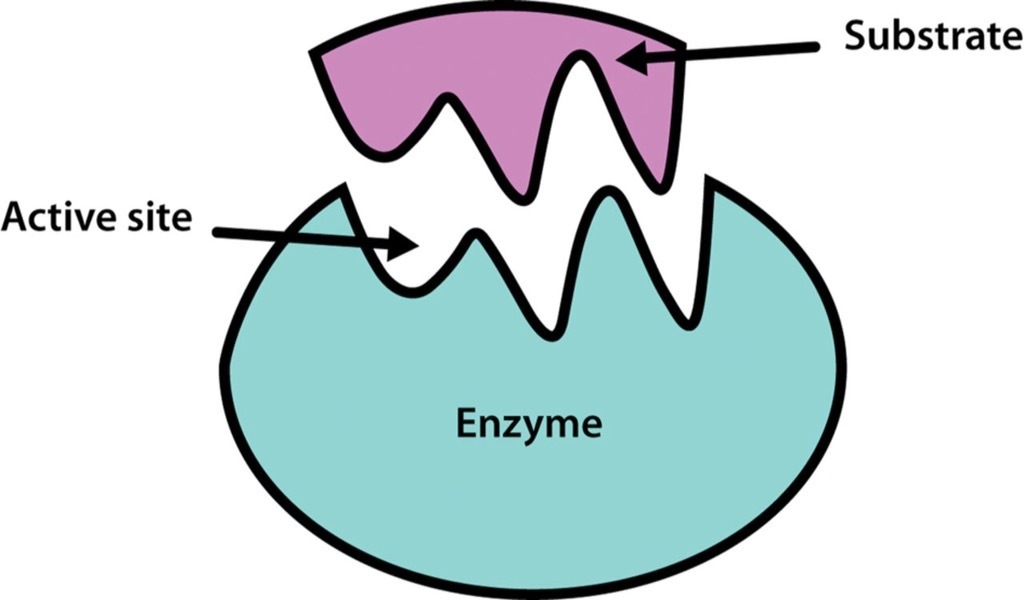
Why is the “lock and key” analogy often used to describe enzyme function?
Each enzyme is the same as its substrate.
Each enzyme will fit with only one specific kind of substrate.
Each enzyme can only be used once in a reaction and cannot be used again.
Each enzyme has its own active site that will not fit with other active sites.
Some individuals are unable to digest the lactose found in the milk of cows. The digestive systems of these individuals MOST likely lack which?
a lipid that coats lactose molecules
an ability to produce lactose internally
an enzyme that catalyzes lactose breakdown
a tolerance to lactose developed during childhood
Why are proteins important to the survival of animals?
Proteins provide the body with quick-energy.
Proteins provide insulation.
Proteins provide genetic information to cells.
Proteins provide muscle fiber for the body
What are the monomers of a lipid?
fat cubes and glycogen
glycerol and amino acids
fatty acids and glycerol
amino acids
What are the monomers of a carbohydrate?
carbs
celluose
amino acids
monosaccharide
Nucleotides are a monomer of which biomolecule?
Nucleic acids
Proteins
Carbohydrates
Lipids
What are the two factors that would cause an enzyme to denature?
Substrates and products
Proteins and fats
Extreme pH and temperatures
Lemons and Kiwis


Which enzyme would most likely function well in the stomach?
Chymotrypsin
Cholinesterase
Pepsin
Papain
What is a biomolecule?
The dissolved particle in a solution
One of the by-products of respiration
Large molecule that is present in living organisms
None of the above
Which of the following are biomolecules?
RNA, DNA, proteins, lipids
Proteins, lipids, carbohydrates, polymers
Nucleic acid, lipids, carbohydrates, monomers
Proteins, lipids, carbohydrates, nucleic acids
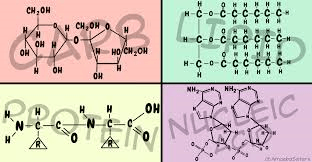

Which biomolecule helps form muscles?
Nucleic Acid
Carbohydrate
Protein
Lipids
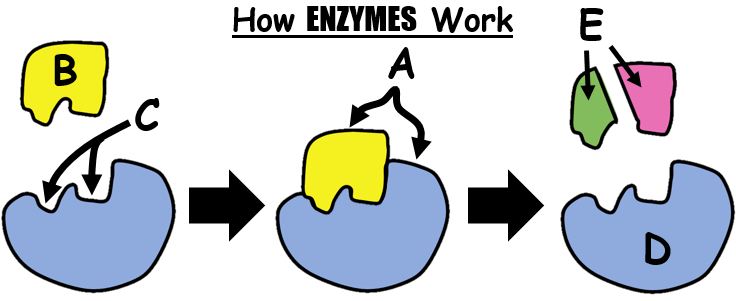
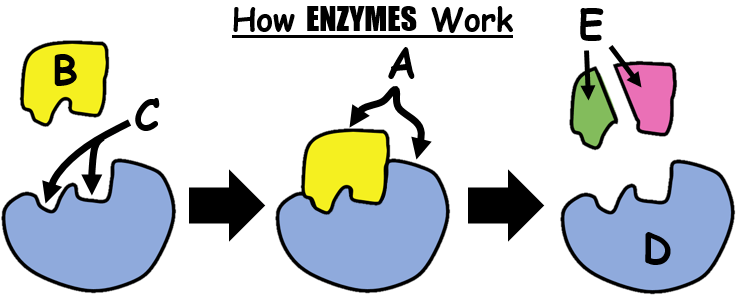
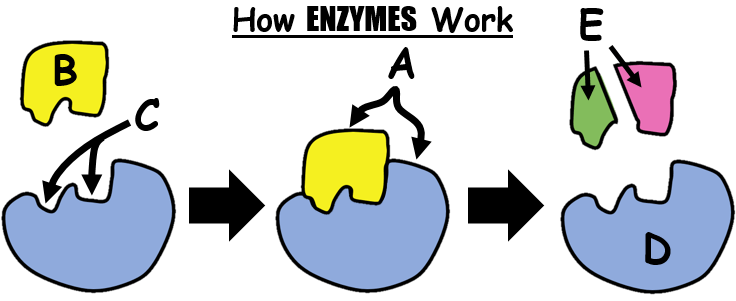
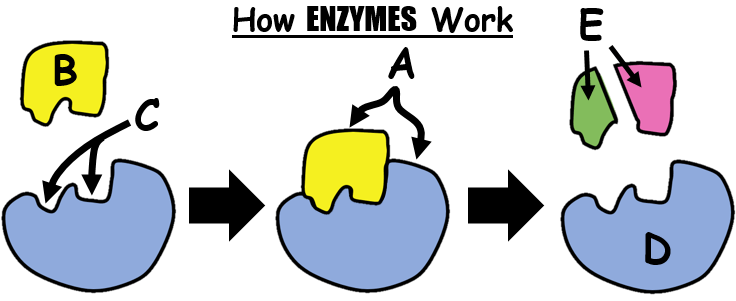
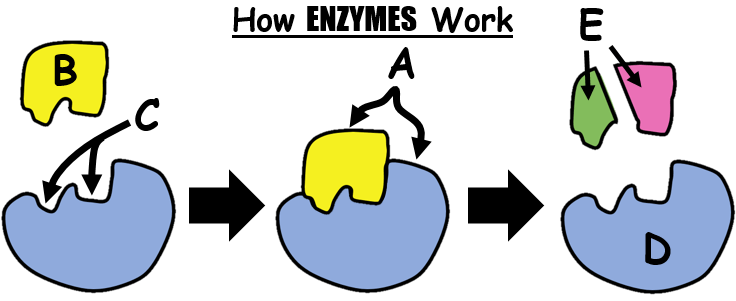
In a chemical reaction, ________ are what you have at the end
Products
Molecules
Reactants
Substances