
 Worksheets
Inflammation
Total questions: 34
Worksheet time: 39mins
The following describe inflammation
Response of vascularized tissue to injury
A specific response of tissue
Lead to the accumulation of transudate
A non-linear response
The followings are functional response following leukocyte activation after chemotaxis events EXCEPT
Eicosanoids production
Degranulation
Cytockines secretion
Accumulation of leucocytes at the periphery of
blood flow
Which of the followings is not general feature of chronic
inflammation?
Tissue destruction
Fibrosis
Angiogenesis
Neutrophils infiltration.
Which of the following histologic features is expected in chronic inflammation tissues?
Destruction of parenchyma
Collection of neutrophils
Congested blood vessels
Normal parenchyma
The followings are cell derived mediators except
Histamine
Bradykinin
Prostaglandin
Interleukin-1
During the early stages of the inflammatory response, histamine induced
increased vascular permeability is most likely to occur in
Arteries
Pre-capillary arterioles
Capillaries
Post-capillary venules
Which one of the listed statements best describes the process called
Chemotaxis?
Abnormal fusion of phagosomes to primary lysosomes
Movement of cells toward a certain site or source
Attachment of chemicals to extracellular material to increase phagocytosis
Dilation of blood vessels by
chemotherapeutic drugs
During acute inflammation, histamine-induced increased vascular permeability causes the formation of exudates (inflammatory edema). Which one of the listed cell types is the most likely source of the histamine that causes the increased vascular permeability?
Mast cells
Endothelial cells
Neutrophils
Fibroblasts
What type of leukocyte actively participates in acute inflammatory processes and contains myeloperoxidase within its primary (azurophilic) granules and alkaline phosphatase in its secondary (specific) granules?
Eosinophils
Neutrophils
Monocytes
Lymphocytes
By definition, granulomas are composed of
Cholesterol clefts
Collagen
Epithelioid cells
Hemosiderin-laden macrophages
Which of the followings is the possible outcomes for chronic inflammation?
Slow resolution
Abscess formation
Exudate formation
Pus formation
A woman who is allergic to cats visits a neighbour who has several cats. During the visit, she inhales cat dander, and within minutes, she develops nasal congestion with abundant nasal secretions. Which of the following substances is most likely to produce these findings?
Bradykinin
Complement C5a
Histamine
Interleukin-1
A 10-year-old child developed a sore throat and fever over 24 hours. Physical examination shows pharyngeal erythema and swelling. Laboratory findings include leukocytosis. The child is given acetylsalicylic acid (aspirin). Which of the following features of the inflammatory response is most affected by this drug?
Vasodilation
Chemotaxis
Phagocytosis
Release of leukocytes from bone marrow
A 53-year-old woman has had a high fever and cough productive of yellowish sputum for the past 2 days. She was diagnosed to have acute bacterial pneumonia. Which of the following inflammatory cell types is most likely to be seen in greatly increased numbers in a sputum specimen?
Macrophages
Neutrophils
Mast cells
Langhans giant cells
An experiment introduces bacteria into a perfused tissue preparation. Leukocytes leave the vasculature and migrate to the site of bacterial inoculation. The movement of these leukocytes is most likely to be mediated by which of the following substances?
Bradykinin
Chemokines
Histamine
Prostaglandins
A 63-year-old man develops worsening congestive heart failure 2 weeks after an acute myocardial infarction. He dies 1 day later. At autopsy, a section of the infarct shows that the necrotic myocardium has largely been replaced by capillaries, fibroblasts, and collagen. Various inflammatory cells are present. Which of the following inflammatory cell types in this lesion plays the most important role in the healing process?
Macrophages
Plasma cells
Lymphocytes
Neutrophils
A 32-year-old woman has had cough with fever for the past month. On physical examination, she has a temperature of 37.5°C, and on auscultation of the chest, crackles are heard in all lung fields. A chest radiograph shows many small, ill-defined nodular opacities in all lung fields. A transbronchial biopsy specimen shows interstitial infiltrates with lymphocytes, plasma cells, and epithelioid macrophages. Which of the following infectious agents is the most likely cause of this appearance?
Staphylococcus aureus
Plasmodium falciparum
Candida albicans
Mycobacterium tuberculosis
A 36-year-old man has had midepigastric abdominal pain for the past 3 months. An upper gastrointestinal endoscopy shows a 2-cm ulceration of the gastric antrum. A biopsy specimen of the ulcer base shows angiogenesis, fibrosis, and mononuclear cell infiltrates with lymphocytes, macrophages, and plasma cells. Which of the following terms best describes this pathologic process?
Acute inflammation
Serous inflammation
Granulomatous
inflammation
Chronic inflammation
A 9-year-old boy has had cough and fever for the past month. A chest radiograph shows enlargement of hilar lymph nodes and bilateral pulmonary nodular interstitial infiltrates. A transbronchial biopsy specimen shows granulomatous inflammation within the lung, marked by the presence of Langhans giant cells. Which of the following mediators is most likely to contribute to giant cell formation?
Interferon-γ
Leukotriene B4
Complement
C3b
Tumor
necrosis factor

This picture shows an open gallbladder with gallstones inside. What was the pathologic process occured in this organ?
Inflammation
Acute inflammation
Chronic Inflammation
Abscess formation
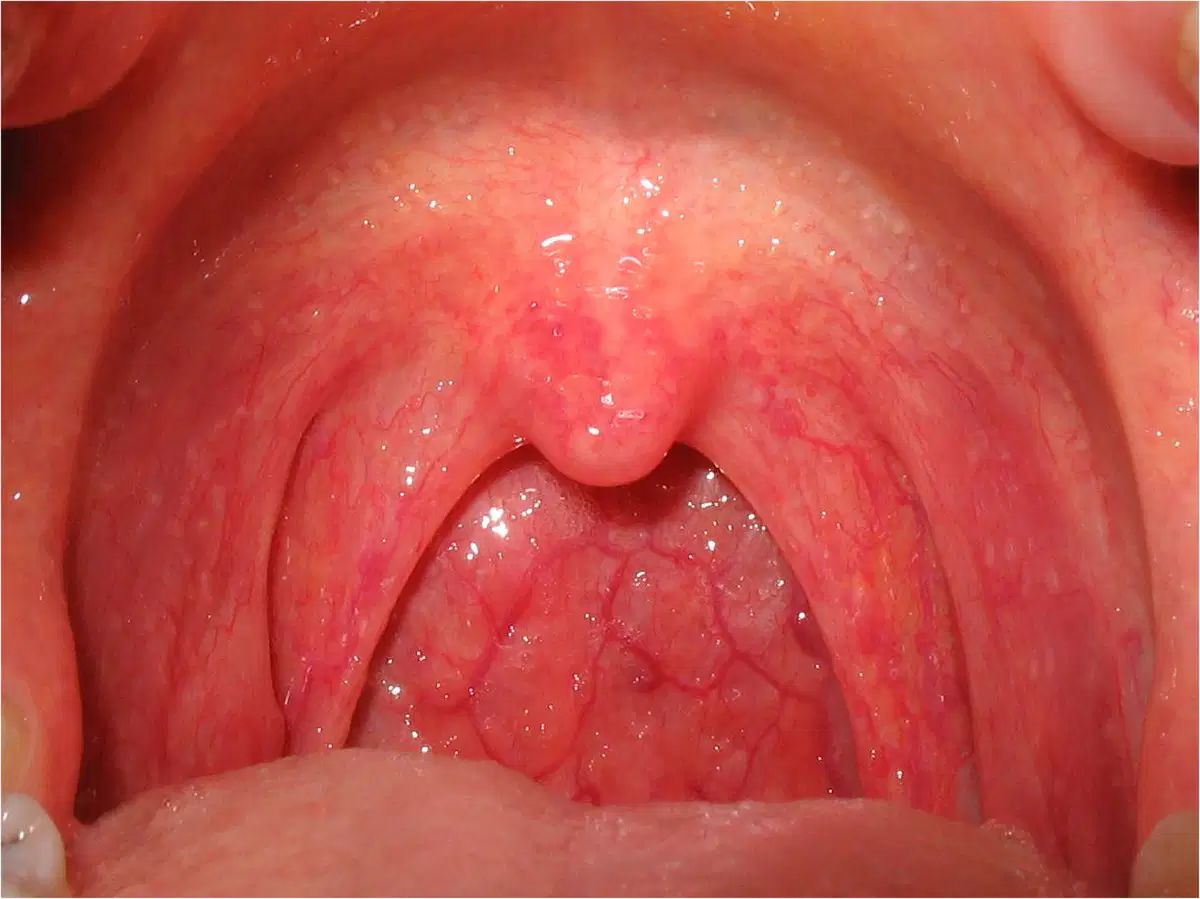
Select the type of this inflammation.
Serous
Catarrhal
Fibrinous
Allergic
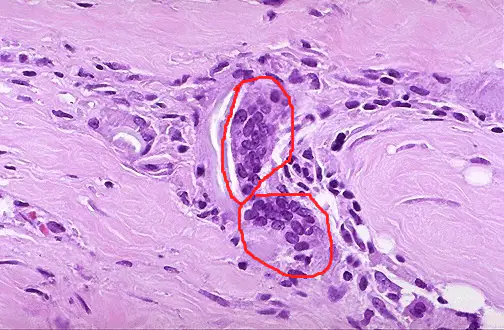
This tissue showed TWO multinucleated giant cells. What is the most possible aetiology of this reaction?
Mycobacterium tuberculosis
Sutures
Aspergillus fumigatus
Talc
Which of the followings is a disease of chronic inflammation?
allergic rhinitis
common cold
syphilis
pharingitis
Function of inflammation
develop fibrous tissue
induce fever
destroy or wall off the aetiology
destroy the affected tissue
A patient came to the Emergency Department with blunt trauma in her head. What type of pathology occurred to her?
Necrosis
Degenerative
Acute inflammation
Chronic inflammation
A 30-year-old male has a small cut on his forearm from two days ago. The area around the cut is red, swollen, and warm. He feels some pain. The redness is spreading slightly around the wound. What causes the redness?
Leakage of plasma proteins from the blood vessels
Vasoconstriction of blood vessels at the injury site
Increased vascular permeability allowing fluid buildup in tissues
Vasodilation of blood vessels increasing blood flow to the area
A 25-year-old female twisted her ankle while jogging two days ago. The ankle is swollen, slightly painful, and warm to the touch. She also noticed that the skin around the ankle felt tight due to the swelling. What is the main cause of the swelling?
Blood vessels narrowing
Increased leakage of fluid from blood vessels
Overproduction of white blood cells
Breakdown of tissue proteins
A 40-year-old male presents to the emergency department with sharp chest pain and difficulty breathing. A chest X-ray reveals fluid buildup in the pleural cavity. The physician performs a thoracentesis. The fluid sample appears cloudy. Which are the most likely lab findings in the fluid sample?
Low protein content
High leukocyte count and high protein content
Low leukocyte count and low glucose levels
Absence of bacteria in the fluid
A 5-year-old child presents to the clinic with a sore throat, difficulty swallowing, and a low-grade fever. Upon examination, the doctor observes a thick, grayish-white membrane covering the tonsils and parts of the throat. The throat swab result showed positive for Corynebacterium diphtheria. The child is having
suppurative inflammation
membranous inflammation
fibrinous inflammation
catarrhal inflammation
A 45-year-old female presents to the emergency department with chest pain, fever, and shortness of breath. She has a history of pneumonia and is currently experiencing a cough-producing rusty sputum. Upon examination, the doctor suspects inflammation based on the patient's clinical presentation and history. A thoracentesis is performed to analyze pleural fluid, which reveals a thick, fibrous exudate. What type of inflammation is she having?
classic
serous
allergic
fibrinous
A 50-year-old male presents to the clinic with severe abdominal pain, fever, and malaise. The doctor suspects an acute inflammatory response due to possible appendicitis. Blood tests are ordered to assess the inflammatory response. What is the most likely finding?
elevated CRP & ESR
decreased in CRP & ESR
decreased in IL-6 & IL-1
elevated IL-6 & IL-1
A 30-year-old female sustained a cut on her arm from a kitchen accident. Initially, the wound was red, swollen, and painful. After 2 weeks receiving treatment, including cleaning the wound and applying an antibiotic ointment, the wound healed, and there was no redness or swelling. Select the outcome of her inflammation
resolution
abscess formation
healing by fibrosis
chronic inflammation
A 55-year-old male presents to the clinic with a non-healing skin lesion on his forearm that has been present for several months. The lesion is firm and raised, and there is some surrounding redness. A biopsy of the lesion reveals the presence of Touton giant cells. The biopsy indicate
The inflammation is acute and resolving
There is a chronic inflammation
The lesion is likely cancerous
The inflammation is due to a bacterial infection
A 30-year-old male presents to the clinic with multiple skin nodules on his arms and legs. He reports a history of intravenous drug use. Upon examination, the nodules are firm and painful, with surrounding redness. A biopsy will reveal the presence of
Immune granuloma
Caseating granuloma
Gumma
Foreign body granuloma

