Wayground logo

Free Printable Worksheets

Font size

S
M
L
XL
Worksheets

Matter questions to use for the quiz

Total questions: 59

Worksheet time: 39mins

Name
Class
Date
1.
Iron + oxygen = rust is an example of a ___________.
a)
physical property/change
b)
chemical property/change
c)
mass
d)
volume
2.
Physical or Chemical?  Water is nonflammable
a)
Physical
b)
Chemical
c)
Neither
3.
Which statement about atoms is true?
a)
They are all the same
b)
All substances are made of just one kind
c)
You can see them with your eyes
d)
They are too small to be seen with an ordinary microscope
4.
Which physical property is measured in liters?
a)
color
b)
length
c)
mass
d)
volume
5.
Which liquid has the greatest density?
a)
lamp oil
b)
karo syrup
c)
water
d)
honey
6.
Shape is a ____ that helps identify an object.
a)
physical property
b)
chemical property
c)
mass
d)
matter
7.
Matter has to main properties mass and volume
a)
True
b)
False
8.
Solids have a definite _______________.
a)
smell
b)
shape
c)
picture
d)
sound
9.
Liquid matter takes the shape of _______.
a)
a gas
b)
water
c)
a pet
d)
Its container
10.
A description of objects that can be measured and observed.
a)
gas
b)
mustangs
c)
physical properties
d)
melting point
11.
What are the states of matter?
a)
solid, liquid, and juice
b)
solid and liquid
c)
solid and gas
d)
solid, liquid, and gas
12.
a type of matter that can be found on earth as a solid, liquid, and gas
a)
gold
b)
water
c)
oxygen
d)
rock
13.
Cutting an orange is a physical change.
a)
True
b)
False
14.
What causes a change in the state of matter?
a)
physical properties
b)
chemical energy
c)
temperature
15.
Which change can occur when  you add heat energy to water?
a)
The water can change from a liquid to a solid
b)
The water can change from a gas to a liquid
c)
The water can change from a liquid to a gas
d)
The water can change from a solid to a liquid
16.
Burning wood to ash is an example of a:
a)
Physical change
b)
Chemical change
17.
Adding HEAT to matter causes its particles to:
a)
move faster and farther apart
b)
Move slower and farther apart
c)
Move faster and closer together
d)
Move slower and closer together
18.
What kind of properties can only be observed when a substance changes into a different substance?
a)
physical properties
b)
chemical properties
19.
Example of a physical property
a)
magnetism
b)
reactivity with oxygen
c)
flammability
d)
non-reactive
20.
Example for chemical property
a)
color
b)
hardness
c)
toxicity
d)
solubility
21.
Example for physical property
a)
reacts with an acid
b)
explodes
c)
flammibility
d)
taste
22.
Example for physical property
a)
melting point
b)
flammability
c)
reactivity 
d)
combustion
23.
Example for chemical property
a)
malleability
b)
texture
c)
combustion
d)
sour taste
24.
Which of the following is a sign that a chemical reaction has occurred?
a)
change in shape
b)
melting
c)
formation of a gas
d)
dissolving
25.
Which of the following is NOT an example of a physical change?
a)
crumpled paper
b)
pencil sharpening
c)
shrunken clothing
d)
rust
26.
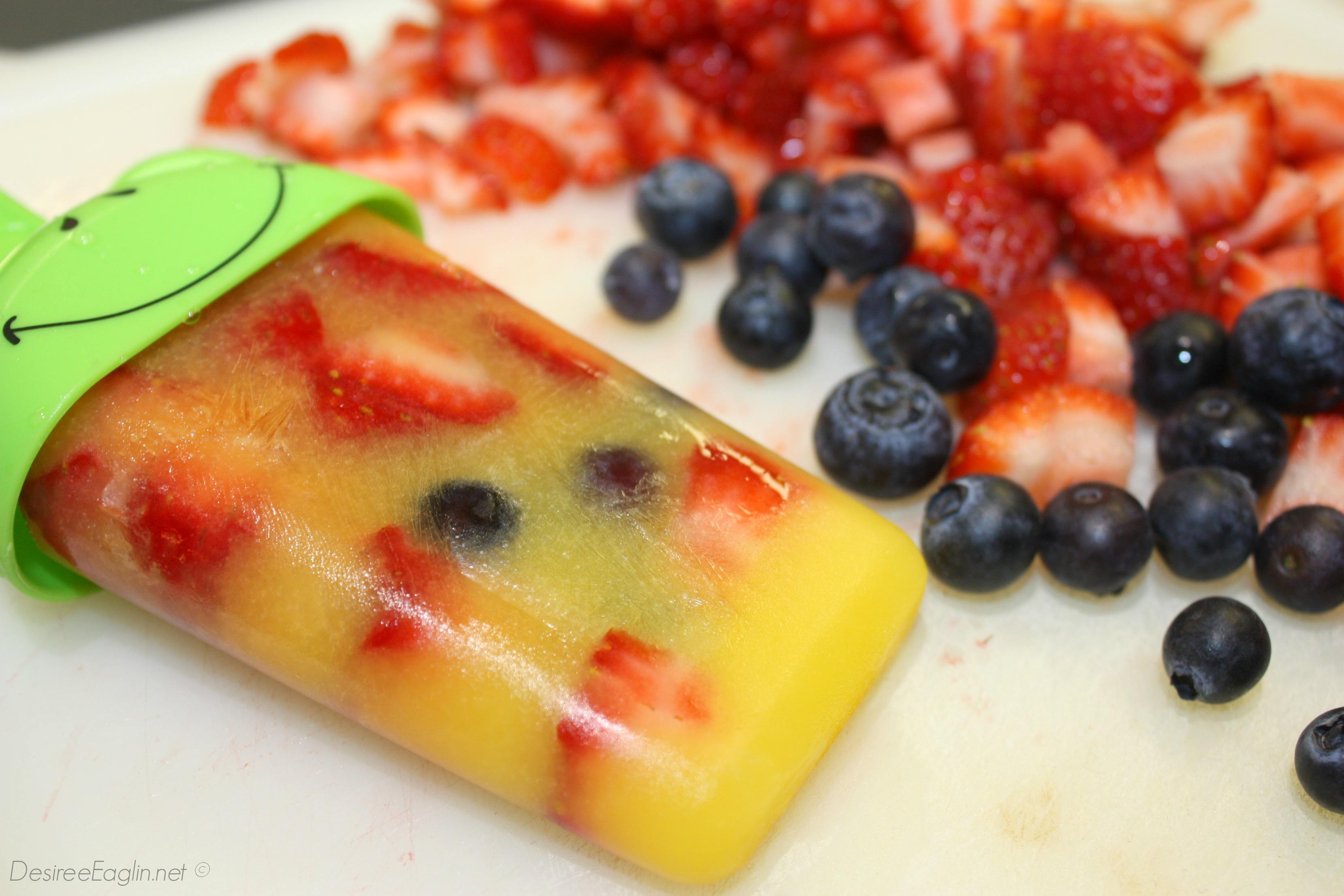
Freezing Juice?
a)
Physical Change
b)
Chemical Change
27.
A change where one or more new substances are created.
a)
Physical Change 
b)
Chemical Change 
28.
Change in color is a physical change.
a)
True
b)
False
29.

What kind of physical property is this? Color

a)

intensive

b)

extensive

30.

Which set of properties, intensive or extensive, are based on the size of a sample?

a)

intensive

b)

extensive

31.

What kind of physical property is this? Temperature

a)

intensive

b)

extensive

32.

What kind of physical property is this? Hardness

a)

intensive

b)

extensive

33.

What kind of physical property is this? Density

a)

intensive

b)

extensive

34.

What kind of physical property is this? Boiling Point

a)

intensive

b)

extensive

35.

What kind of physical property is this? Length

a)

intensive

b)

extensive

36.
When a substance melts, the kinetic energy _____________.
a)
decreases
b)
stays the same
c)
increases
d)
decreases then increases
37.
When molecules flow around each other, they are in this phase
a)
solid
b)
liquid
c)
gas
d)
plasma
38.
What takes place when a solid changes to a liquid?
a)
condensation
b)
melting
c)
evaporation
d)
freezing
39.
What is sublimation?
a)
phase change between solid and liquid
b)
pahse change from gas to solid
c)
phase change from solid to gas
d)
phase change from solid to solid
40.
7. All phase changes (changing states) requires energy to be added or taken away.
a)
True
b)
False
41.
Substance that consists of one type of atom.  It is a pure substance. Found on the Periodic Table. 
a)
Element
b)
Compound
c)
Mixture
d)
I don't know
42.
Combinations of 2 or more substances (elements and compounds) that are physically blended together. 
a)
Compound
b)
Mixture
c)
Element
d)
Substance
43.
Pure oxygen (O) is an example of...
a)
an element
b)
a mixture
c)
a compound
44.
An example of ...
a)
A mixture
b)
A compound
c)
An element 
45.
Italian Salad Dressing
a)
heterogeneous mixture
b)
homogeneous mixture
46.
What is Kool-aid?
a)
element
b)
Heterogeneous Mixture
c)
Homogeneous Mixture
d)
Compound
47.
What is the term for combining 2 or more DIFFERENT atoms together?
a)
atoms
b)
elements
c)
molecules
d)
compounds
48.

A Mixture is defined as

a)

A combination of two or more substances that are not chemically combined

b)

A combination of compounds that are chemically bonded

c)

2 or more elements chemically bonded

49.

The three most common states or phases of matter are solid, liquid, and gas. Fill in the blank with the state of matter, then the characteristics of that matter.


The first beaker shows a _________ has a _________ shape and ________ volume

(a)  

50.

Which of the following are physical properties? Mark all that apply

a)

Corrosion

b)

Boiling Point

c)

Radioactivity

d)

Color

e)

Mass

51.

You are complete a lab in your chemistry class. You are given a sample of metal to observe and test. You observe the following. Check the chemical properties you observe

a)

The metal is shiny gray color

b)

It is hard but can be flattened with a hammer

c)

You left it outside for several days in water, and a reddish-orange color formed on the metal

d)

Bubbles form when you dropped some acid on it

e)

You calculated the density to be 8.0 g/mL

52.

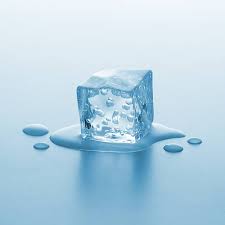
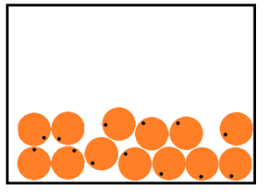
State of Matter?

a)

Solid

b)

Liquid

c)

Gas

53.

Which picture best represents compounds?

a)

A

b)

B

c)

C

d)

D

54.

Which picture best represents a homogeneous solution?

a)

A

b)

E

c)

D

d)

F

55.

Some statements appear below describing the properties of mixtures. Some are valid, and some are not. Select ALL that are correct or valid

a)

Mixtures CAN appear to be a single pure substance

b)

Mixtures have their own unique set of chemical and physical properties

c)

The physical properties of mixtures are just a combination of the properties of the substances that make it up.

d)

All mixtures can be separated by filtration

56.

Examine the sketch. Copper (II) chloride is a solid substance that dissolves in water.

Check the statements that are true according to the sketch.

a)

At least two of the substances shown are pure substances

b)

A chemical change has occurred

c)

The substance in the beaker with the question mark (?) is homogeneous

d)

The substance in the beaker with the question mark (?) is a pure substance

57.

Use the words: More, Less, Higher, Lower to fill in the blanks.


Particles in liquids generally have ______ motion than the particles in gas. The average kinetic energy in gas tends to be ____ than liquids

(a)  

58.

Pressure and temperature can affect the phase that matter is in. Although intermolecular forces have a strong influence on phase, one can induce (cause) phase changes by adjusting pressure and temperature.

How could one MOST easily change a Solid to a Liquid.

a)

Increase pressure

b)

Decrease pressure

c)

Increase temperature

d)

Decrease temperature

59.

Water has a density of 1.0g/ml. If you have a 105.43 g sample, what is the volume?

4 lines