wayground logo

Free Printable Worksheets

Font size

S
M
L
XL
Worksheets

Quarter 1 Review

Total questions: 92

Worksheet time: 47mins

Name
Class
Date
1.

the belief that the right to rule comes from the gods

a)

Mandate of Heaven

b)

philosophy

c)

aristocrats

d)

ancestors

2.

What is the name for the system of rise and fall of Chinese ruling families?

a)

Dynastic Cycle

b)

Mandate of Heaven

c)

Dynastic Change

d)

Mandate of Dynasties

3.

How did geography affect the development of Chinese culture? (7.19)

a)

Long coastlines made access to trade possible.

b)

Flat land made travel easy.

c)

Great Wall of China made travel along the top easier for traders.

d)

Tall mountains and deserts isolated China from other nations.

4.
A barren, arid region with less than 10 inches of rain per year.
a)
plateau
b)
dessert
c)
plain
d)
desert
5.
 a high flat area of land
a)
plateau
b)
peninsula
c)
plain
d)
subcontinent
6.

The _____ system was a strict division of social classes in ancient India

a)

a. Caste

b)

b. Citidel

c)

c. Avatar

d)

d. Dharma

7.
On what continent did the earliest humans live?
a)
Africa
b)
North America 
c)
Europe
d)
Asia
8.
Which of the following describes how the earliest humans (paleolithic) lived? 
a)
by hunting and gathering food
b)
by herding sheep and other live stock
c)
alone or in pairs
d)
in farming villages along streams and rivers
9.
Why is it difficult to study the origins of humankind?
a)
There are no written records.
b)
There is not enough money
c)
No one wants to study them.
10.

Early man led a _________________________ life.

a)

nomadic

b)

settled

c)

boring

11.

What did the landbridge pictured here allow the hunter-gatherers to do?

a)

establish permanent settlements

b)

set up farms

c)

migrate across continents

d)

have protections from enemies

12.

Who digs up bones?

a)

archaeologists

b)

anthropologists

c)

biologists

13.

A journal written by a solider would be what?

a)

primary source

b)

secondary source

14.
What is the highest peak in the Himalayan Mountains? 
a)
Mt. McKinley 
b)
Mt. Everest 
c)
Mt. Kilimanjaro 
d)
K2
15.

What is the Caste system?

a)

The Indian system of social classes

b)

The actors in a movie

c)

People with broken arms

d)

Unknown

16.
What are the two major rivers of Ancient India?
a)
Tigris & Euphrates
b)
Nile & Blue Nile
c)
Indus & Ganges
d)
Huang He & Yangtze
17.
wind bringing heavy rains to Asia in summer
a)
hurricane
b)
monsoon
c)
tornado
d)
tsunami
18.

Why did Emperor Qin want to build the wall?

a)

Protect China from invaders

b)

Keep his citizens busy

c)

Punish criminals

d)

To amaze people

19.
Who led the Hebrews out of Egypt?
a)
David
b)
Solomon
c)
Moses
d)
Abraham
20.
The Torah is the name given to the __________________.
a)
Jewish Bible
b)
laws given to Moses
c)
the first 5 books of the Jewish Bible
d)
a set of prayers
21.
An agreement or a promise made is called a __________________________________.
a)
commandment
b)
sacrifice
c)
plague
d)
covenant
22.
How many years did the Exodus journey take?
a)
10 years
b)
100 years
c)
6 months
d)
40 years
23.
What is the name of the Hebrew religion?
a)
Buddhism
b)
Christianity
c)
Judaism
d)
Hinduism
24.
Abraham settles in ____, but after a while the Hebrews have to move to Egypt because of a _____.
a)
Canaan; famine
b)
Mesopotamia; flood
c)
Egypt; famine
d)
Canaan; war
25.
Who does God call to lead the Hebrews from Egypt to freedom?
a)
Abraham
b)
Moses
c)
Pharaoh
d)
Hebrews
26.
During their wandering, they began to complain & gripe to Moses. God then gives Moses the ____ to govern his chosen.
a)
Ten Commandments
b)
Ten Codes
c)
Code of Order
d)
Torah
27.
Who was the father of the Hebrew and Arab people?
a)
Moses
b)
King David
c)
Solomon
d)
Abraham
28.
What modern country is there now in the promised land?
a)
Babylon
b)
Iraq
c)
Canaan
d)
Israel
29.
What does Monotheism mean?
a)
Belief in many gods
b)
belief in one god
c)
a set of moral codes or laws
d)
a calling by God
30.
Name the three religions that came from Abraham.
a)
Judaism, Christianity, Catholicism
b)
Judaism, Christianity, Islam
c)
Judaism, Islam, Buddhism
d)
Judaism, Islam, Hinduism
31.
Which law comes from the Ten Commandments?
a)
Thou shalt not poke out thy neighbor's eye.
b)
Thou shalt not spread gossip.
c)
Thou shalt not worship other gods.
d)
Thou shalt not disobey your teacher.
32.

An extreme shortage of food

a)

Feast

b)

Famine

c)

Flock

d)

Fearful

33.

The build where a Jewish assembly or congregation meets for religious worship and instruction.

a)

Synagogue

b)

Church

c)

Barn

d)

School

34.

A group of related families

a)

Cluster

b)

Group

c)

Tribe

d)

Flock

35.

The escape of the Hebrews from Egyptian slavery

a)

Marathon

b)

Leave

c)

Exodus

d)

Party

36.

A religion with a belief in on god. It originated with Abraham and the Hebrew people.

a)

Christianity

b)

Buddhism

c)

Judaism

d)

Hinduism

37.
The two major rivers of China include, the Yangtze and the
a)
Nile
b)
Yellow
c)
Indus
d)
Euphrates
38.
Raiders from ____ caused the Chines to fortify and extend the Great Wall.
a)
Russia
b)
India
c)
Cambodia
d)
Mongolia
39.
What major geographical feature served as the southern border of Ancient China? 
a)
Yellow River
b)
Himalayan Mountains
c)
India Ocean
d)
Andes Mountains
40.
What resource did the rivers provide to the early settlers of China? 
a)
Fresh Water
b)
Fertile Soil
c)
Transportation
d)
All of the above
41.

Which ocean is on the eastern border of China?

a)

Atlantic Ocean

b)

Artic Ocean

c)

Indian Ocean

d)

Pacific Ocean

42.

Name China's 1st dynasty

a)

Zhou

b)

Shang

c)

Ming

d)

Song

43.

used to communicate with the gods

a)

Mandate of Heaven

b)

Oracle Bones

c)

Dynastic Cycle

d)

Pictographs

44.

pattern of the rise and fall of Chinese ruling families

a)

Dynastic Cycle

b)

Mandate of Heaven

c)

Dynasties

d)

Philosophy

45.

respect for one's parents and ancestors

a)

Philosophy

b)

Confucianism

c)

Filial Piety

d)

Legalism

46.

How the Chinese explain the rise and fall of dynasties, the divine right to rule.

a)

Legalism

b)

filial piety

c)

The Mandate of Heaven

d)

Oracle bones

47.
The Harappan civilization developed in which river valley?
a)
the Nile River
b)
the Indus River
c)
the Tigris River
48.
What are the seasonal wind patterns called that cause India's wet and dry seasons?
a)
monsoons
b)
typhoons 
c)
hurricanes
49.
Hinduism believes in __________ which is the process of birth, life, death, and rebirth.
a)
Karma
b)
Reincarnation
c)
heaven
d)
the afterlife
50.

India is a large landmass that is like a continent, only smaller. Which term best describes the region of India?

a)

Subcontinent

b)

Monsoon

c)

Natural Barrier

d)

Island

51.

Which number on the map represents the location of the Indus River in India?

a)

1

b)

2

c)

3

d)

4

e)

5

52.

The Hindu-Kush and Himalaya Mountains make migration into and out of India difficult, isolating the subcontinent from the rest of Asia. Which term best describes these mountain ranges in terms of human migration?

a)

Natural Barriers

b)

Political Factors

c)

Economic Factors

d)

Subcontinents

53.
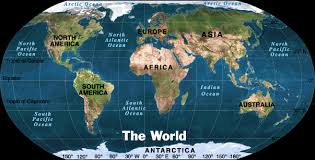
Which continent do we live on?
a)
North America
b)
South America
c)
Europe 
d)
Asia 
54.
What is the continent that is yellow?
a)
Africa
b)
Australia
c)
Asia
d)
Antarctica
55.

Land surrounded by water on three sides is called?

a)

Ocean

b)

Peninsula

c)

Island

d)

Lake

56.

Open flat land suitable for farming is called?

a)

Plain

b)

Desert

c)

Valley

d)

Peninsula

57.
What is a synonym for (fertile) soil?
a)
cool
b)
poor
c)
dark
d)
rich
58.
What is another name for agriculture?
a)
living
b)
sewing
c)
farming
d)
hunting
59.

Which of the following is NOT a continent?

a)

North America

b)

Australia

c)

Greenland

d)

Africa

60.
In which continent is Egypt a part of?
a)
Australia
b)
Asia
c)
Europe
d)
Africa
61.
Philippines, China, Japan are located in which continent?
a)
Europe
b)
Asia
c)
Africa
d)
Antarctica
62.
The Harappan civilization developed in which river valley?
a)
the Nile River
b)
the Indus River
c)
the Tigris River
63.
Entering India from the north was difficult because of which mountain range?
a)
the Himalayas
b)
the Andes
c)
the Appalachian
64.
Which word describes a large landmass that is smaller than a continent?
a)
country
b)
subcontinent
c)
state
65.
India's monsoons are seasonal. What does this reveal about monsoons?
a)
The monsoons occur on a daily basis.
b)
The monsoons only occasionally take place.
c)
The monsoons occur in a regular pattern.
66.

The Indian subcontinent is part of Europe.

a)

True

b)

False

67.

Early settlements were usually located near _______________.

a)

Oil

b)

Water

c)

Gold

d)

Lumber

e)

Mountains

68.

The development of farming led to _______________________.

a)

The building of permanent settlements

b)

A return to a nomadic lifestyle

c)

The rise of hunting as an important job

d)

A greater need for oil

69.

Name the River Valley Civilization shaded in purple on the map

a)

Egypt

b)

Mesopotamia/

Sumer

c)

India

d)

China

70.
Name the River Valley Civilization shaded in orange on the map
a)
Egypt
b)
Mesopotamia/
Sumer
c)
India
d)
China
71.
Name the River Valley Civilization shaded in pink on the map
a)
Egypt
b)
Mesopotamia/
Sumer
c)
India
d)
China
72.
Name the River Valley Civilization shaded in yellow on the map
a)
Egypt
b)
Mesopotamia/
Sumer
c)
India
d)
China
73.
Name the civilization: 
- Tigris and Euphrates
- Cuneiform
- City-States
a)
Egypt
b)
Mesopotamia/
Sumer
c)
India
d)
China
74.
Name the civilization: 
- Huang He (Yellow) River
- Calligraphy writing
- Paper and Silk
a)
Egypt
b)
Mesopotamia/
Sumer
c)
India
d)
China
75.
Most early religious traditions can be categorized as -
a)
Monotheistic
b)
Polytheistic
c)
Atheistic
d)
Agnostic
76.
What made Hammurabi famous?
a)
He was a powerful king who built an empire.
b)
He had some harsh laws.
c)
He conquered and enslaved the Jewish people.
d)
He created the first written laws.
77.

True or False: Early humans settled far away from rivers.

a)

True

b)

False

78.
What Mountain Range is located in the Northern part of India
a)
Himalayas
b)
Alps
c)
Cacuses
d)
Rocky 
79.

In what country do you find the Ganges River?

a)

Pakistan

b)

Nepal

c)

India

d)

Bangla

80.

Which religion is the Caste System associated with?

a)

Hinduism

b)

Buddhism

c)

Islam

d)

Christianity

81.

How were people placed in the Caste System?

a)

They applied to join a caste.

b)

By birth or occupation

c)

They married into a caste.

d)

They were voted into a caste.

82.

Which of the following is a challenge for modern India?

a)

Pollution

b)

Overpopulation

c)

Poverty

d)

All of the above

83.
What was most likely the reason ziggurats were tall?
a)
To display the work of architects
b)
So they could be easily found
c)
To honor the gods
d)
To mark the center of the city
84.

Slavery in Sumer was

a)

the result of capture during war or the in ability to pay off a debt.

b)

uncommon and very seldom practiced.

c)

based on race.

d)

strictly forbidden by the Code of Hammurabi.

85.

Why do they call it the Fertile Crescent?

a)

because the women had a lot of babies

b)

because the animals had a lot of babies

c)

because the moon was in a crescent form all of the time

d)

The land was fertile and shaped like a crescent moon.

86.

What is cuneiform?

a)

the first writing system

b)

a game made with cubes

c)

the first written law

d)

a seal

87.

What is a ziggurat?

a)

a tomb for the king

b)

a temple where the priests worshiped their gods

c)

a temple where the priests performed human sacrifices

d)

a Mesopotamian cigarett.

88.

What is an epic?

a)

tax records

b)

farming records

c)

a short story that tells a story of the gods

d)

a long poem that tells a story of heroes

89.
This picture shows an area known as the..
a)
Farming Curve
b)
Fertile Crescent
c)
Green C
d)
Fertile Curve
90.
Which of the following were members of the upper class?
a)
kings and priests
b)
artisans
c)
merchants and traders
d)
scribes
91.
Babylonian leader who created the first written code of 282 laws that dealt with almost every part of daily life
a)
Gilgamesh
b)
Sargon
c)
Hammurabi 
d)
Sumer
92.
What modern day country is Mesopotamia mostly in?
a)
India
b)
Egypt
c)
China
d)
Iraq