
 Worksheets
8th Grade SS Unit 2 Review
Total questions: 89
Worksheet time: 1hrs 19mins


What did the Louisiana Purchase do?
Nothing really
Doubled the size of America
Tripled the size of America
Quadrupled the size of America
Under the Articles of Confederation, the government could
sign treaties and create taxes
declare war and create taxes
sign treaties and declare war
none of the above
One of the major issues debated at the Constitutional Convention in Philadelphia was -
proposing a new strategy to proceed with the abolition of slavery
creating a plan for representation of both large and small states
whether or not to remain neutral in the French Revolution
if Missouri should be allowed to join the country as a free state
The founding fathers combined the ideas of the Virginia Plan and the New Jersey Plan to come up with -
Compromise of 1820
Three-fifths compromise
Great Compromise
Constitutional Convention
During the Constitutional Convention, James Wilson and Roger Sherman proposed the Three-Fifths Compromise which dealt with how
the government would pass protective tariffs in order to help northern businesses prosper
Maine and Missouri would be crated as slave and free states to keep the balance of power
slaves would be counted as population for representation and taxation purposes
women would be represented in the newly created legislative branch
Which of the following best explains why the Anti-Federalists were opposed to ratification of the US Constitution?
the federal government wouldn't become too powerful because it would share power with the states and individuals
the system of checks and balances would keep one branch of government from becoming too strong
the new central government would take too much power away from the states and people
under the new government slaves would only count at three-fifths of a person for representation
Anti-Federalist, such as George Mason, refused to ratify the new Constitution, but after much debate they agreed to approve it with the addition of the -
Declaration of Independence
Bill of Rights
Emancipation Proclamation
Declaration of Sentiments

What is a precedent?
something done or said that becomes an example for others to follow
a tax on imported goods
a political party that believes in a strong central government
a settlement of a dispute where each side gives up some demands
Decisions that President Washington made that would influence the decision making of future Presidents are known as:
Precedents
Antecedents
Amendments
Predicates
What did George Washington consider to be a grave danger to the new nation?
France's influence
growth of political parties
national taxes
settlers moving west
President George Washington began the custom of consulting with his principal department heads, such as Secretary of State and Secretary of the Treasury, as a group. What did this practice eventually lead to?
the creation of the Supreme Court
the creation of the Cabinet
the creation of the Senate
the creation of the House of Representatives
In what way did President George Washington set an important precedent?
by recognizing Washington, DC, as the nation's capital
by issuing the first pocket veto
by stepping down after two terms
by establishing the State of the Union address
Which of the following best paraphrases the foreign policy advice given by George Washington in his Farewell Address?
The United States should avoid permanent alliances with any portion of the foreign world.
The United States should give economic aid to needy countries anywhere in the world, but not military aid.
The United States must work to prevent the growth of tyranny by any means necessary.
The United States should take over other countries to help them become more like us.
Which one of these is NOT a precedent of George Washington?
serving only two terms
creating a cabinet
neutrality in foreign affairs
abolishing slavery
In his farewell speech, George Washington warned about the dangers of:
political parties and foreign alliances
The Presidency becoming too powerful
Cold War with the Soviet Union
Accumulating too much debt
The Marbury v. Madison ruling is considered a landmark (important) case because it established the power of judicial review meaning that
the Supreme Court can interpret the Constitution and decide what it means
the Supreme Court can decide who gets federal commissions and who doesn't
the Supreme Court can fire federal judges

Which persident bought the Lousiana Territory
George Washington
James Madison
John Adams
Thomas Jefferson

How much did the USA pay for the Louisiana Territory
100 million
55 million
25 million
15 million

Lewis and Clark were famous because
They bought Louisiana for the USA
The explored the Louisiana Territory
They fought for Napoleon's army
The saved Washington from the British army
What is the definition of representative government?
state sponsored settlement of people to new territories
political system where policies are created by representatives selected by the people
refusal to obey laws as a form of protest
policy of separating and not participation in international relationships
What is the definition of ratification?
political system in which representatives are responsible for governing
approval of a document or policy
political system in which power is shared between a national government and a state government
privileges and liberties given to citizens
What is the definition of constitution?
membership in a society that comes with rights and duties
a tract of land with a home on it
forcing someone into service for an organization or government
document outlining the fundamental principles and structures of a government
What is the definition of amendment?
an addition to a document
government actions in relations to other countries
creating new ideas, products or methods
an agreement in which both sides give up some demands
What is the definition of bicameral?
remaining independent and not taking sides in an issue
the withdrawal of a state from a union
the practice of public officials given jobs or favors to supporters
having, consisting of, or based on two legislative chambers comprised of the House of Representatives and the Senate.
What is the definition of limited government?
Government can do anything it wants without
Government based on all leaders have to obey the laws.
forcing someone into service for an organization or government
What is the definition of individual rights?
the first ten amendments to the US Constitution,
rights to certain freedoms without interference from the government or other individuals.
basic rights people are born with
What was the goal of the Kentucky and Virginia Resolutions
To declare the Alien and Sedition Acts unconstitutional
To get Adams kicked out of office
To get Adams deported
According to Jefferson and Madison, which amendment right did the Alien and Sedition Acts violate?
The 2nd Amendment
The 10th Amendment
The 22nd Amendment
The 1st Amendment
What was the major foreign policy event that took place during Adam's presidency?
The XYZ Affair
A war with Spain
Trying to move into Canada
Trying to buy Hawaii
True or false: The real goal of the Alien and Sedition Acts was to strengthen the Federalists and weaken the Democratic Republicans
True
False
Which of the following was not part of the Alien Acts
Gave Congress the ability to deport males from countries that the US is at war with
Extended the time needed for citizenship
Gave Adams the ability to declare war
Gave Adams the ability to deport non-citizens who were thought to be plotting against the US


The Alien and Sedition Act allowed the government stronger abilities to _________ foreigners.
recruit
allow
deport
jail
This law made it possible for the President to deport immigrants out of the country.
Alien Act
Sedition Act
Neutrality Act
Jay's Treaty


Why did Daniel Shays and other farmers rebel and start a fight in 1786?
they were angry that the country didn't write a better Constitution
they were in debt, their land was being taken and they were being thrown in prison
they were angry that George Washington was leading the Congress
None of the above
Under the "Articles of Confederation" the state governments were __________ and the federal government was ___________.
weak, strong
closed, strong
not allowed, weak
strong, weak
The Virginia Plan wanted representation based on _______.
population of each state.
number of state delegates.
one state, one vote
delegates appointed by the president.
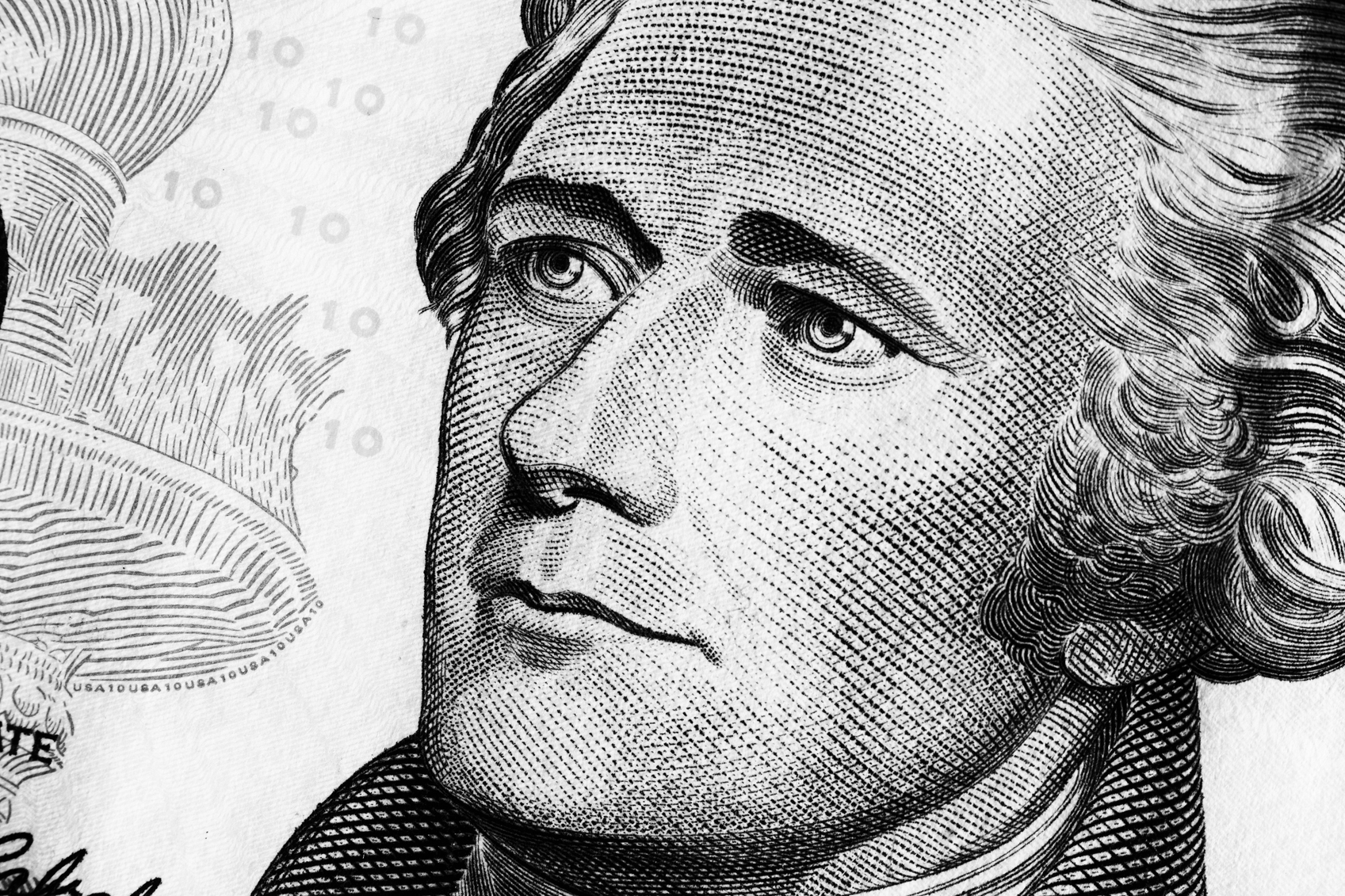
Who is known as the leader of the Federalists?
Alexander Hamilton
John Adams
Patrick Henry
Benjamin Franklin
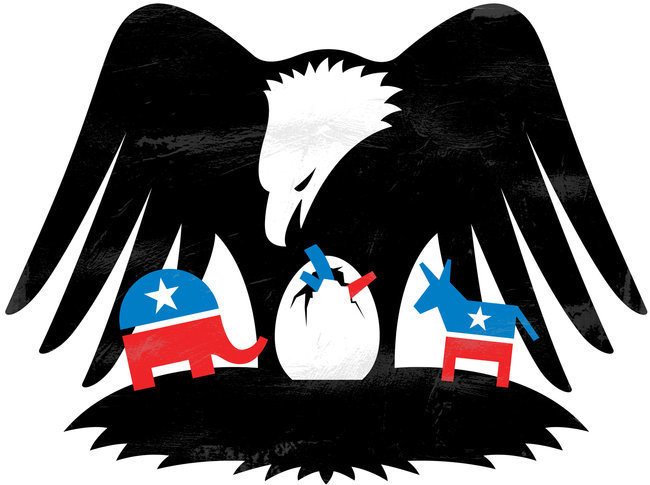
The Federalist and Anti-Federalists groups are known as _______________.
Governing Groups.
Political Parties.
Militia's.
Delegates.
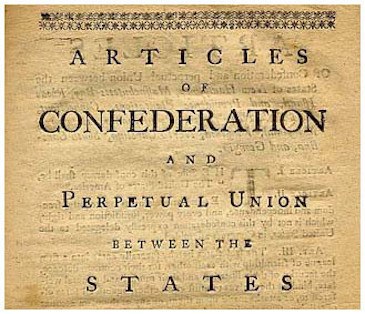
Federalists believed that the Articles of Confederation were a ________ and set up a ________ National Government.
Success, Strong.
Success, Weak.
Failure, Weak.
Failure, Strong.

The ___________ are for the ratification (approval) of the U.S Constitution.
Federalists
Anti-Federalists
Whiggs
Representatives
The ___________ are NOT for the ratification (approval) of the U.S Constitution.
Anti-Federalists.
Federalists.
Whiggs.
Supreme Court Justices.
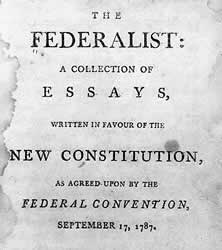
The "Federalist Papers" were written to:
Explain and convince the people into supporting the new U.S Constitution.
spark a new revolution among the American people against their government.
oppose a strong centralized government.
create a new monarchy.

Anti-Federalists were in favor of:
States Rights and the protection of individual rights.
A strong Central Government.
A Monarchy (King & Queen) to rule over the country.
a powerful National Government
How did the Federalists and Anti-Federalists "compromise" to ratify (approve) the U.S Constitution?
The added the Bill of Rights (First 10 Amendments)
They outlawed cruel and unusual punishment.
Ensured due process of the law.
The Federalists threatened the Anti-Federalists to war.
Popular sovereignty requires ________.
Who was Washington's Secretary of the Treasury?
Alexander Hamilton
Thomas Jefferson
Henry Knox
Edmund Randolph
This person was in favor of the Federal government taking on the debts of the states.
Jefferson
Hamilton
Jefferson believed the Bank of the United States was _______________.
a good idea
necessary and proper
unconstitutional
Hamilton believed the Bank of the United States was constitutional due to the _______________________.
Washington told him it was ok.
Necessary and Proper Clause
The Constitution specifically stated the bank should be created
What were the main arguments of the Federalists in favor of a loose interpretation of the Constitution?
Flexibility and adaptability to changing circumstances
Resistance to change
Rigidity and inflexibility
Adherence to the original text
What were the main arguments of the Anti-Federalists in favor of a strict interpretation of the Constitution?
To increase taxes and reduce representation for the people
To limit the power of the federal government and protect individual rights
To expand the power of the federal government and limit individual rights
To promote a monarchy and suppress states' rights
What is the significance of the Necessary and Proper Clause in the interpretation of the Constitution?
It grants the President the power to veto any law passed by Congress
It has no significance in the interpretation of the Constitution
It grants Congress the power to make laws necessary and proper for carrying into execution the powers enumerated in the Constitution.
It limits the power of Congress to make laws
How does the Necessary and Proper Clause impact the balance of power between the federal and state governments?
It has no impact on the balance of power between federal and state governments
It gives the state governments more power than the federal government
It allows Congress to make laws necessary for carrying out its enumerated powers.
It limits the power of Congress to make laws
What is the importance of the Bill of Rights in the interpretation of the Constitution?
It is outdated and irrelevant in modern society
It only applies to certain groups of people
It outlines the fundamental rights and freedoms of the people, which must be upheld and protected by the government.
It has no importance in the interpretation of the Constitution
How do loose constructionists interpret the Bill of Rights?
Loose constructionists interpret the Bill of Rights as outdated and irrelevant.
Loose constructionists interpret the Bill of Rights narrowly and strictly.
Loose constructionists interpret the Bill of Rights as unconstitutional.
Loose constructionists interpret the Bill of Rights broadly and flexibly.

