
 Worksheets
Respiratory System
Total questions: 50
Worksheet time: 48mins

How does oxygen move from the lungs into the blood?
Through the process of cellular respiration
Through the process of diffusion
By magical powers
It doesn't

When you breathe, your lungs take in ___ and remove ___.
air/oxygen
oxygen/carbon dioxide
carbon dioxide/waste
waste/air


1. larynx
2. nasal cavity
3. pharynx
4. trachea
Which of the following is the correct order that air would flow during inhalation.
They are....
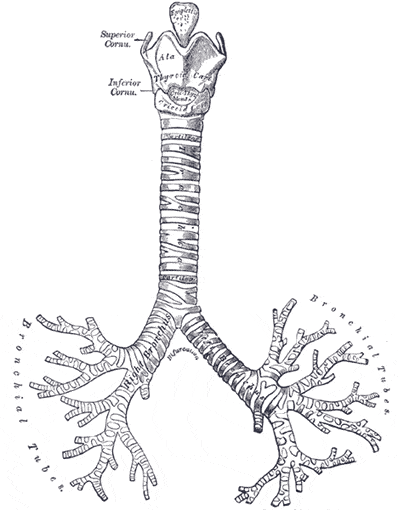
When the diaphragm contracts and causes a decrease in pressure in the thoracic cavity, what happens?
Nothing happens. That is always occurring.
The animal gets hiccups.
The animal inhales.
The animal exhales.
What component of the respiratory system is used by both the digestive and the respiratory system?
Trachea
Larynx
Pharynx
Vestibular folds
What common mammal is unable to breathe through its mouth on a normal basis?
Goat
Cow
Horse
Pig
What helps to increase the rate of diffusion?
Cold temperatures
Decreased surface area in the alveoli
Breathing more quickly
Taking shorter breaths
When diffusion takes place in the alveoli, the oxygen has to do what?
Pass through holes in the alveoli
Be bonded to hydrogen molecules to pass through the alveoli
Pass through a selectively permeable membrane
Be large enough for the body to recognize it, so that a port opens up which allows it to pass through the membrane
One of the ways to prevent respiratory disease is to do what?
Vaccinate animals.
Keep animals inside as much as possible.
Give animals additional oxygen.
Check each animal’s respiratory rate daily.
Fluid buildup in the airways and lungs is called what?
Tracheitis
Rhinitis
Pulmonary edema
Pneumonia
The external openings to the respiratory system are called...
nostrils
cloaca
ossicles
foramen
The voice box is also called the...
larynx
pharynx
uvula
arytenoid

Structures A and C separate the nasal cavity from the oral cavity
(a)
The singular of nares is _______
nostril
nose
nare
nasal
The ____ separates the left and right nasal passages
nasal septum
nasal separator
frenulum
hard palate

Name the lacey structures
Nasal cochlea
nasal turbinate
nasal folds
nares
The functions of the nasal passage is to
smell and taste
provide resonance to the voice
hold the nares open
warm, filter and humidify air
Brachycephalics are prone to
narrow tracheas
everted arytenoid cartilages
elongated soft palate
all of the above
Laryngeal paralysis is most common in
small breed dogs
large breed dogs
cats
horses
Tracheal collapse is more common in
cats
horses
small breed dogs
large breed dos
The cough reflex is located at the
carotid
carina
cricoid
crux
If something goes "down the wrong way", typically it means it slipped past this structure
pharynx
larynx
epiglottis
uvula
Animals that are prone to laryngeal spasms when being intubated are
rabbits
horses
ferrets
cats
During an asthma attack the autonomic nervous system will cause
bronchodilation
bronchoconstriction
excessive mucous production
a hacking cough
The area between the lungs is called
the middle space
the mediastinum
thorax
pleural
The hilus is
the primary location of gas exchange
helps to expand the lungs
where vessels and nerves go in and out
covers the lungs
Deoxygenated blood enters the lungs through the
aorta
pulmonary veins
cranial vena cava
pulmonary arteries

Name the structure under the yellow line
heart
lung
diaphragm
hilus
Inspiration means
a romantic moment
a sigh
breathing out
breathing in
The total volume of air inspired and expired in one breath
minute volume
tidal volume
residual volume
first breath
Gas exchange in the alveoli takes place by
diffusion along a concentration gradient
active transport along an impermeable barrier
passive transport and ionization
partial pressure and depolarization
Increased CO2 in the blood and decreased blood pH trigger the respiratory center to _____ the rate and depth of respiration
increase
decrease
stabilize
normalize
Hypoxia means
increased O2 levels in the blood
decrease in blood O2 levels
increase in blood pH
decrease in blood pH
This helps to reduce fluid surface tension and prevent alveoli collapse
mucous
surfactant
pH
semi-permeation

