
 Worksheets
axial/appendicular/spinal cord injuries
Total questions: 103
Worksheet time: 53mins
The following is an example of what type of impact that a spinal cord injury patient may have? Dependent on others for grooming
Physical
Emotional
activities of Daily Living
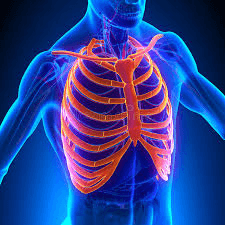
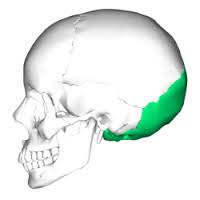
What bone is highlighted?
Ribs
Cranium
Clavicle
Femur

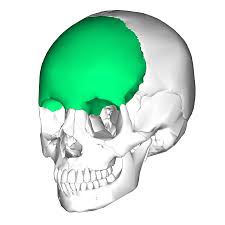
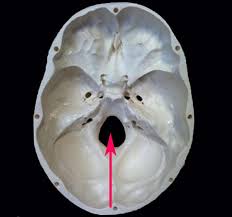
What bone is highlighted?
Vertebrae
Femur
Cranium
Ribs

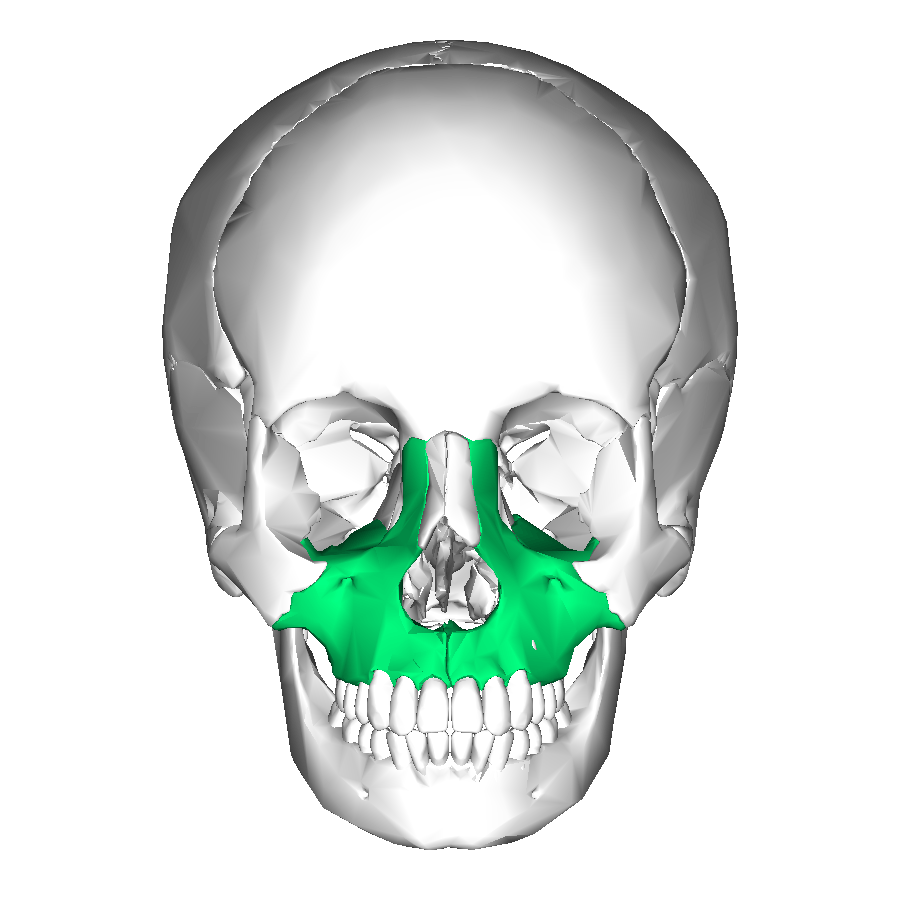
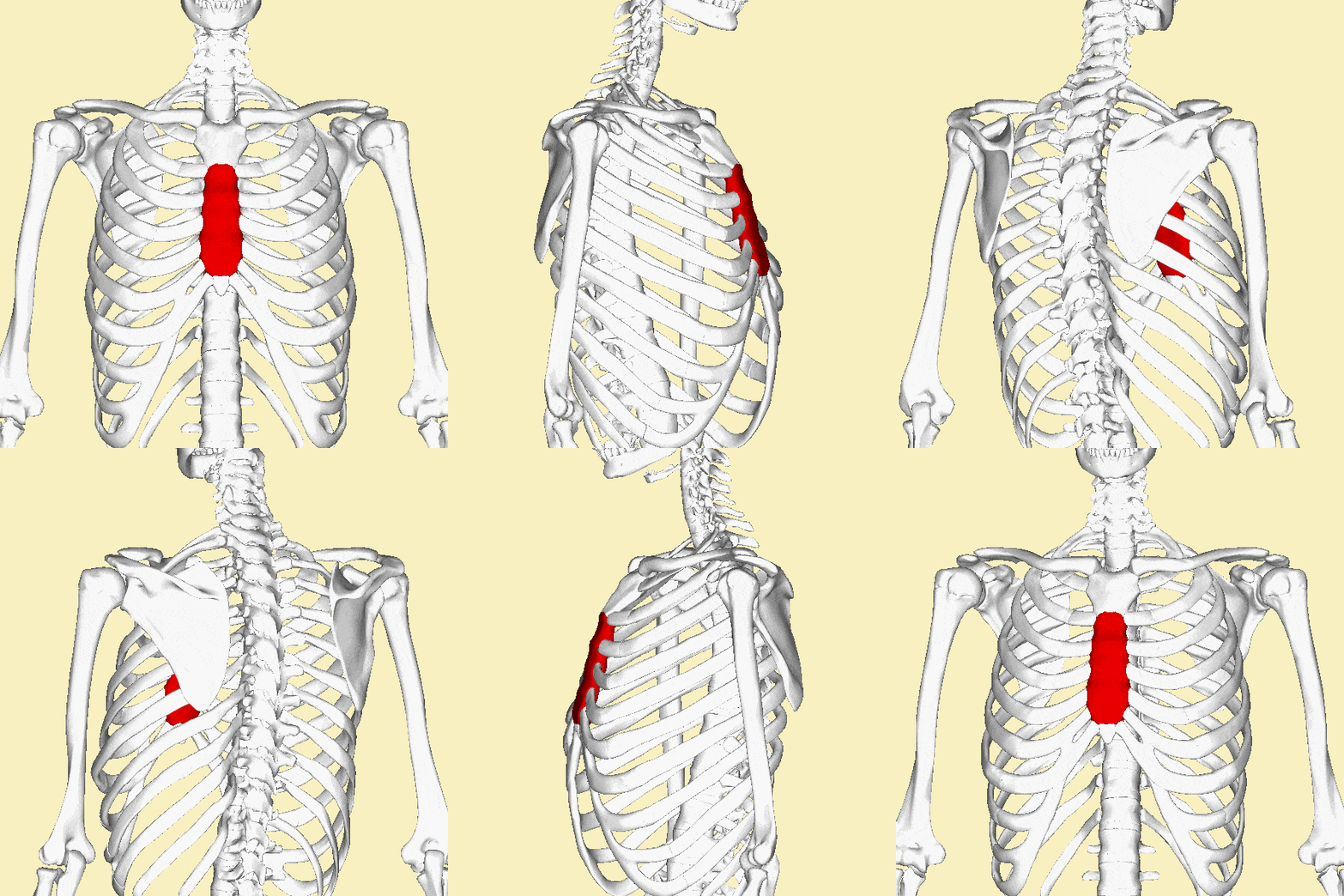
What bone is highlighted?
Femur
Cranium
Ribs
Skull

What is the place where two bones meet?
bones
tendons
ligament
joint

What is the name for the connector that attaches bone to bone?
ligament
tendon
joint
cartilage
The _________________ gives the body its shape and supports and protects the internal organs.
nervous system
skeletal system
muscular system
body system

What do the bones make?
veins
cartilage
red blood cells
bone marrow
What is the cranium?
spine
skull
thigh
arm
What does the cranium protect?
heart
eyes
brain
lungs
What is the largest and strongest bone in the body?
skull
vertebrae
femur
ribs
What is a flexible connective tissue that is found in your nose and ears?
cartilage
joints
ligaments
cranium
What is the purpose of the rib cage?
Helps us to think
make blood for the body
Protects our brain
Protects our vital organs like heart and lungs
What connects bones together?
ligaments
joints
tendons
cartilage
What connects bones to muscles?
joints
cartilage
tendons
ligaments
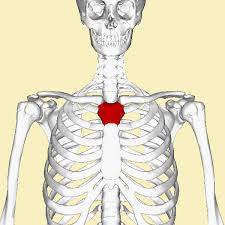
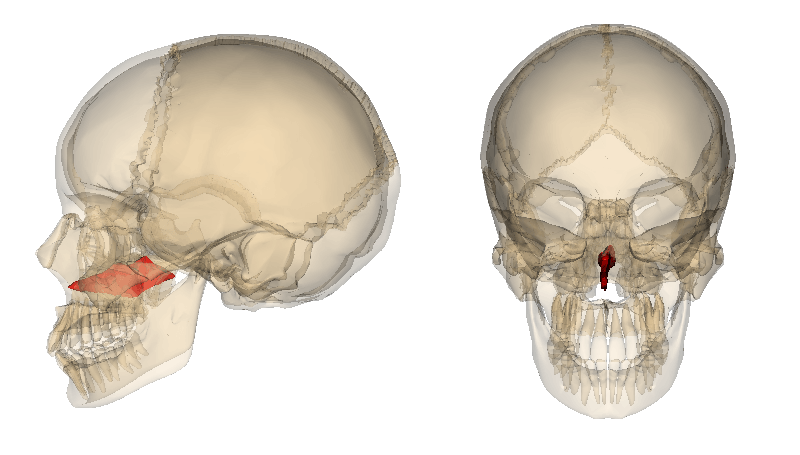
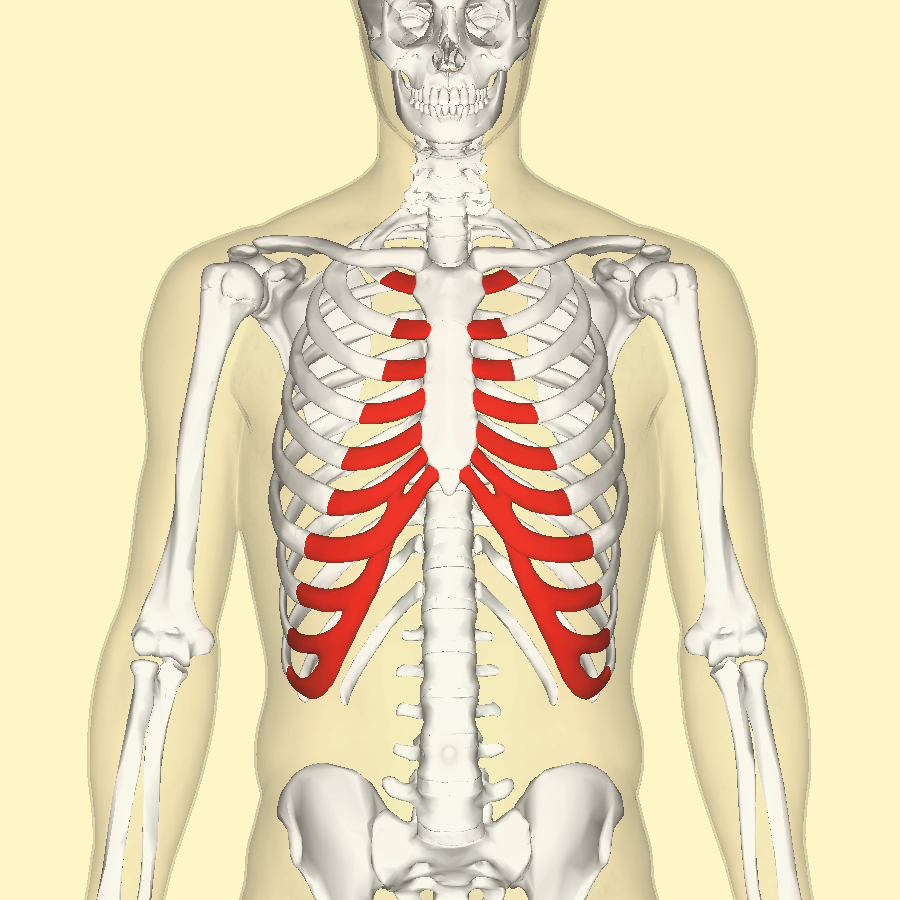
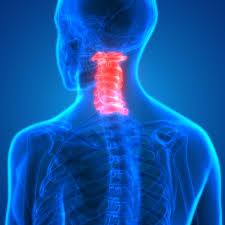
Which section of the vertebrae is highlighted
thoracic
cervical
lumbar
sacral
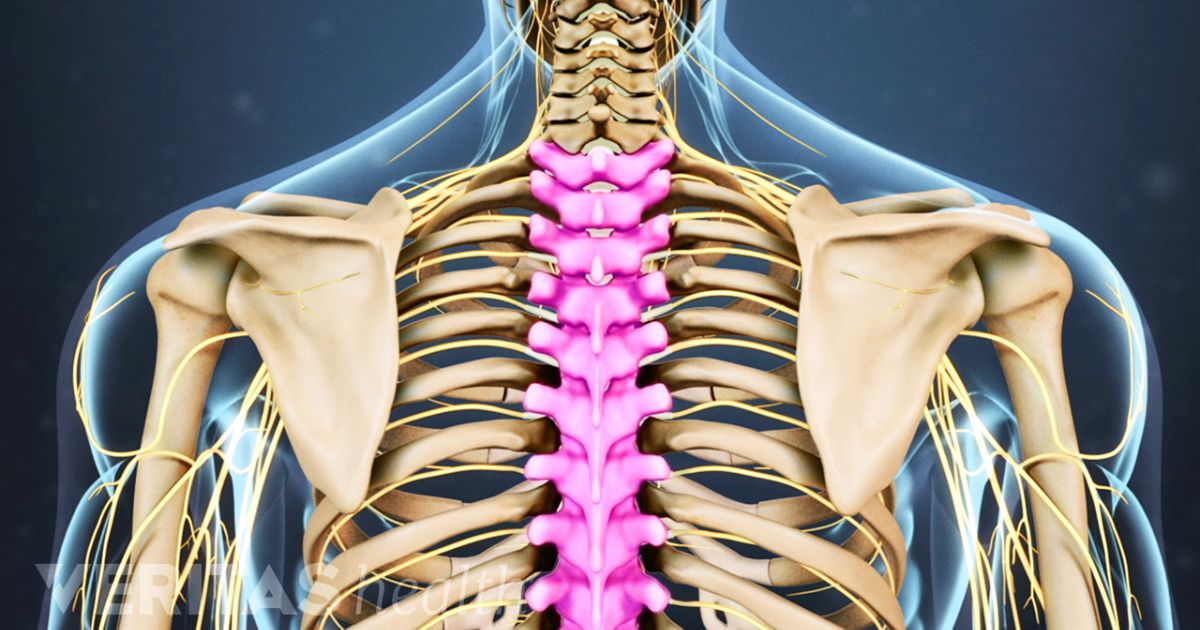
Which section of the vertebral column is highlighted
cervical
lumbar
thoracic
coccyx
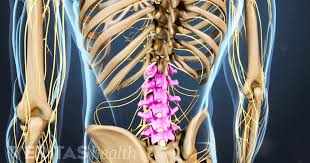
Which section of the vertebral column is shown?
cervical
lumbar
thoracic
sacral
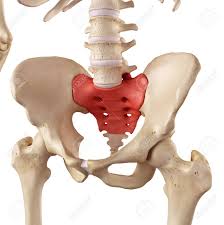
Which section of the vertebral column is highlighted
lumbar
cervical
coccyx
sacrum
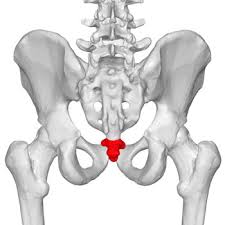
Which section of the vertebral column is highlighted
lumbar
sacrum
coccyx
cervical
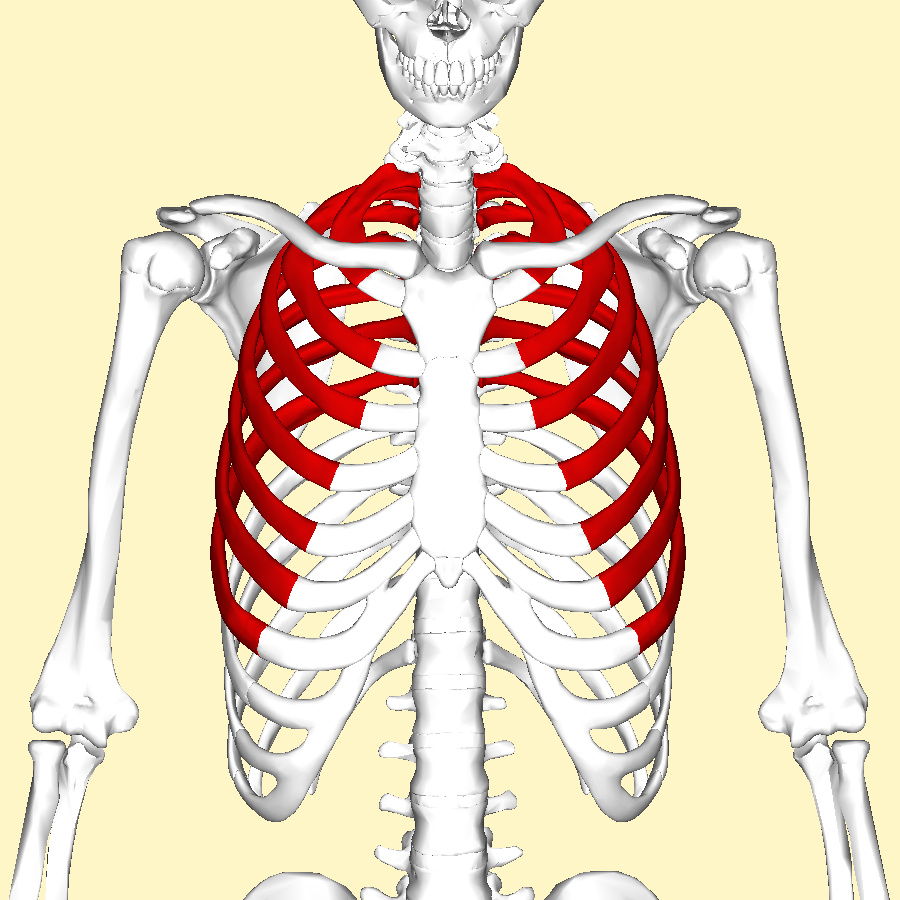
Which ribs are highlighted
true ribs
false ribs
floating ribs
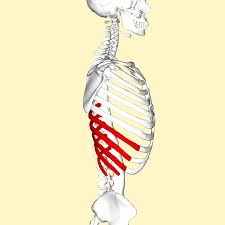
Which ribs are highlighted
true ribs
false ribs
floating ribs
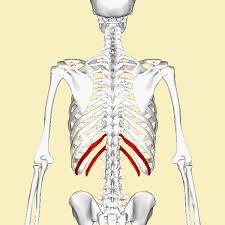
Which section of the rib cage is highlighted
true ribs
false ribs
floating ribs
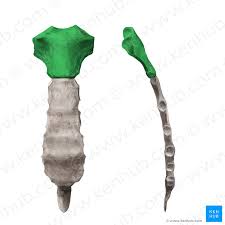
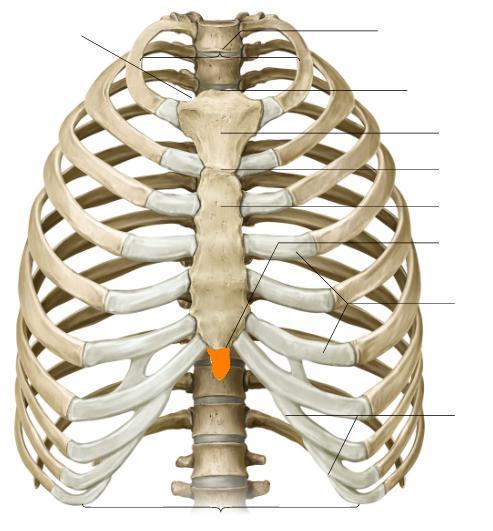
Which part of the sternum is highlighted
xiphoid procces
body
manubrium
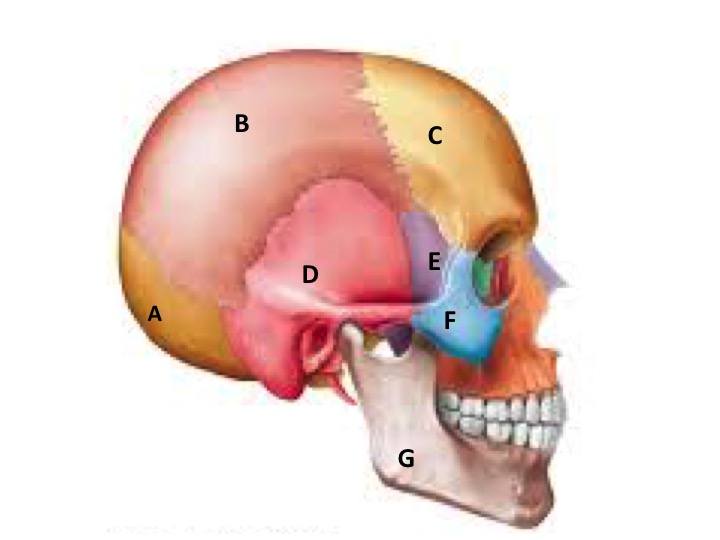
Which bone is labeled A
frontal
parietal
occipital
temporal
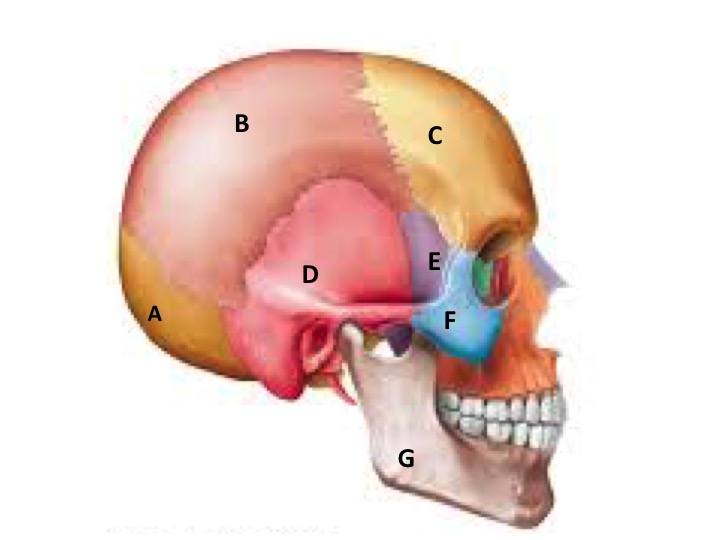
Which bone is labeled B
occipital
parietal
frontal
temporal
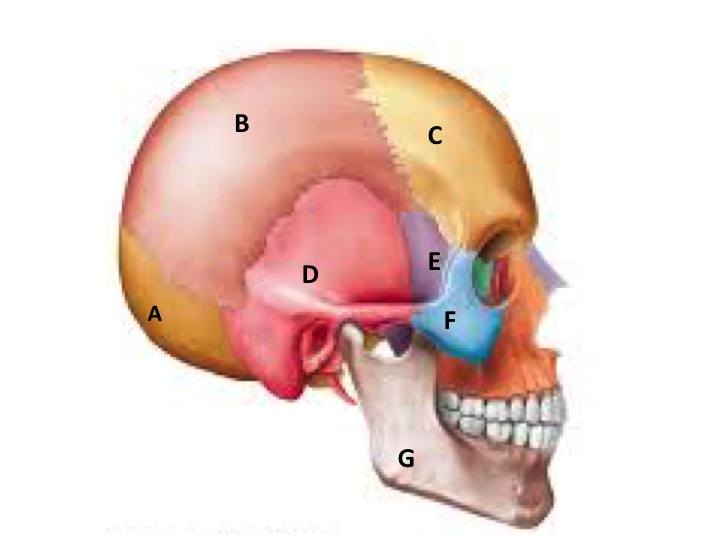
Which bone is labeled C
occipital
sphenoid
frontal
parietal
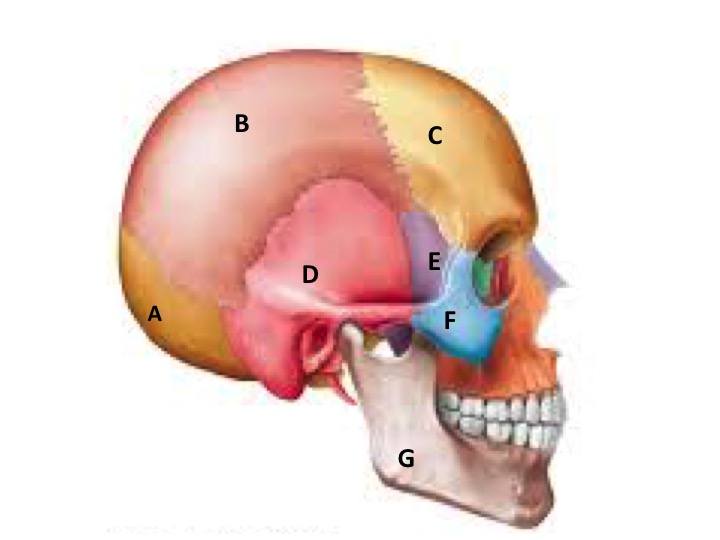
Which bone is labeled D
sphenoid
temporal
parietal
occipital
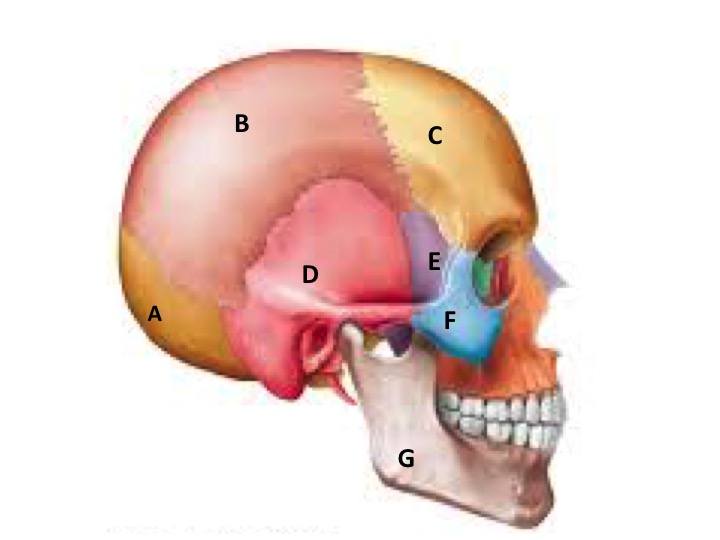
Which bone is labeled E
temporal
sphenoid
frontal
zygomatic
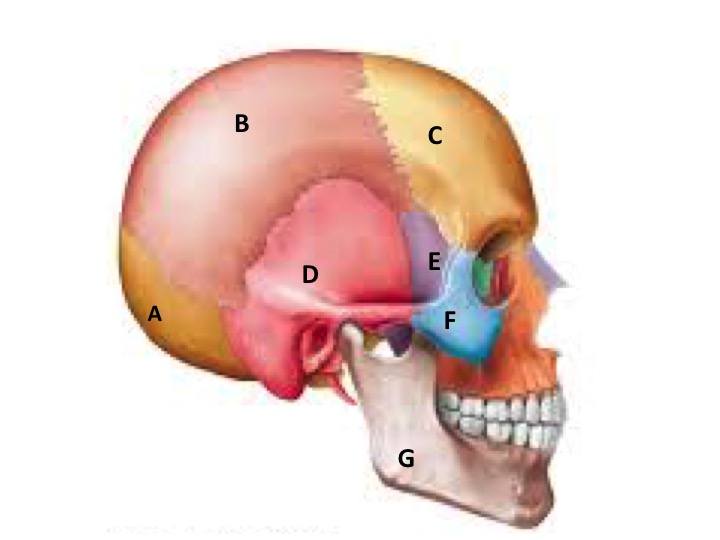
Which bone is labeled F
zygomatic
temporal
sphenoid
occipital
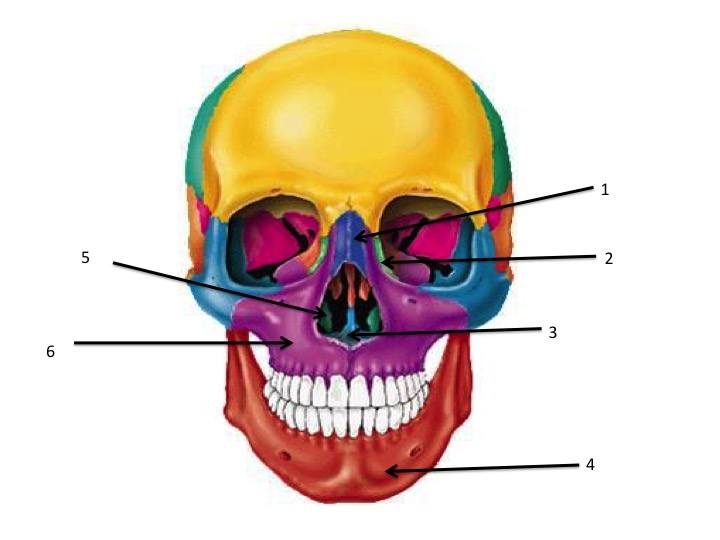
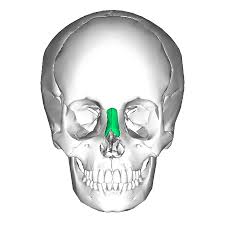
Which bone is bone 1
zygomatic
nasal
vomer
inferior nasal conche
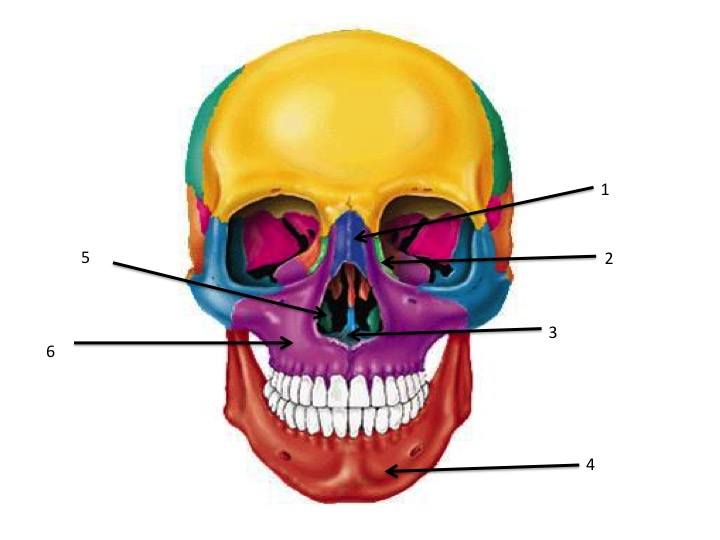
Which is bone 4
maxilla
mandible
zygomatic
nasal
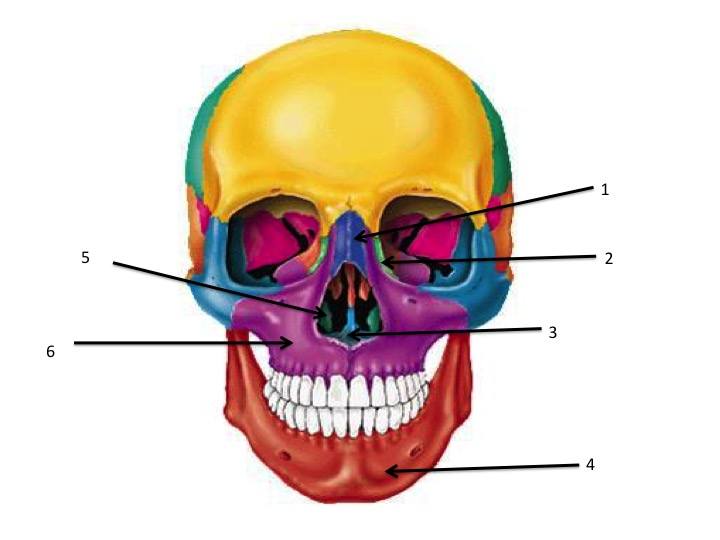
Which is bone 6
mandible
maxilla
sphenoid
nasal
Which section of the vertebrae is highlighted
thoracic
cervical
lumbar
sacral
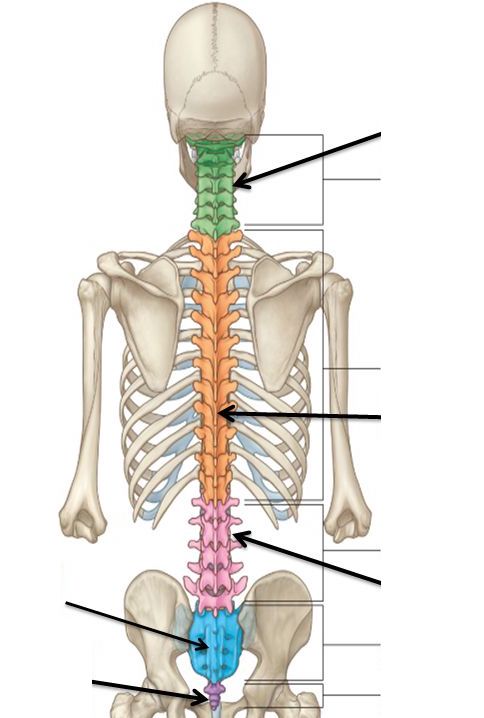
Identify vertebrae in green
Cervical Vertebrae
Thoracic Vertebrae
Lumbar Vertebrae
Sacrum
Coccyx
Identify vertebrae in orange
Cervical Vertebrae
Thoracic Vertebrae
Lumbar Vertebrae
Sacrum
Coccyx
Identify vertebrae in pink
Cervical Vertebrae
Thoracic Vertebrae
Lumbar Vertebrae
Sacrum
Coccyx
Identify vertebrae in blue
Cervical Vertebrae
Thoracic Vertebrae
Lumbar Vertebrae
Sacrum
Coccyx
Identify vertebrae in purple
Cervical Vertebrae
Thoracic Vertebrae
Lumbar Vertebrae
Sacrum
Coccyx
How do true ribs differ from false ribs?
True ribs are attached directly to the sternum but the false ribs are not directly attached.
True ribs are not directly attached to the sternum but the false ribs are attached directly to the sternum
True ribs are not directly attached to the sternum but the false ribs are completely detached.
How many true ribs, false ribs, and floating ribs do humans have?
7, 5, 2
5, 7, 2
2, 5, 7
10, 2
How many cervical, thoracic, lumbar, and sacral vertebrae do humans have?
7, 12, 5, 5
12, 7, 5, 5
5, 12, 7, 5
5, 5, 12, 7
The axial skeleton is made up of.... (Select all that apply)
Bony Thorax
Limbs
Vertebral Column
Skull
Hip Girdle
Each shoulder girdle, or pectoral girdle consists of two bones, a clavicle and a ___.
tibia
scapula
sternum
carpal
Two bones, the ___ and the ulna, form the skeleton of the forearm.
radius
tibia
fibula
femur
The skeleton of the hand consists of the ___, the metacarpals, and the phalanges.
tarsals
metatarsals
carpals
fibula
The ___, or thigh bone, is the only bone in the thigh.
humerous
femur
radius
ulna
The tibia and ___, form the skeleton of the leg.
femur
fibula
radius
ulna
The ___ is also known as the shin bone.
femur
fibula
radius
tibia
The foot, composed of the ___, metatarsals, and phalanges
tarsals
carpals
metacarpals
The bones of the fingers and toes are called ___.
carpals
phalanges
tarsals
metacarpals
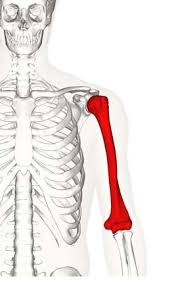
Which bone is highlighted
humerus
fibula
radius
ulna
tibia
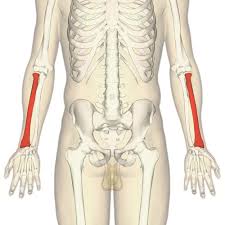
Which bone is highlighted
humerus
radius
ulna
femur
fibula
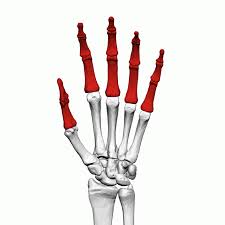
Which bones are highlighted
phalanges
carpals
metatarsals
metacarpals
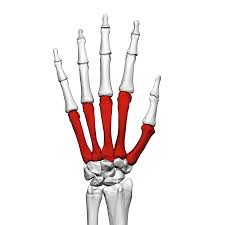
Which bones are highlighted
metacarpals
metatarsals
carpals
tarsals
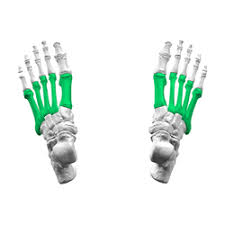
Which bones are highlighted
metatarsals
metacarpals
tarsals
carpals
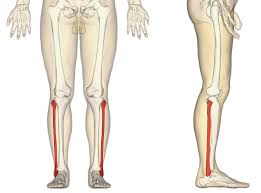
Which bone is highlighted
femur
radius
tibia
fibula
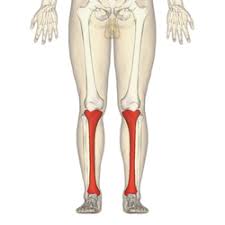
Which bone is highlighted
fibula
tibia
ulna
radius
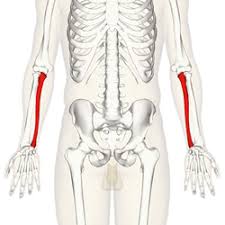
Which bones are highlighted
humerus
radius
ulna
fibula
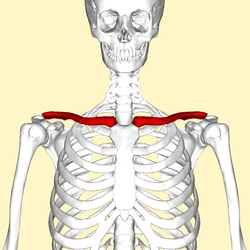
Which bone is a part of the appendicular skeleton?
Cranium
Spinal Cord
Ethmoid
Patella
Which bone(s) is proximal in the elbow joint?
Humerus and patella
humerus and radius
humerus
ulna and radius
In the shoulder joint, which bone(s) is distal?
Clavicle
Scapula
Scalpel
humerus
Which bones are grouped incorrectly?
femur, ulna, radius
femur, patella, tibia, fibula
radius, ulna, humerus
clavicle, humerus

What bone of the pelvic girdle is colored purple (#1)?
ilium
ischium
pubis
sacrum
coccyx
What bone of the pelvic girdle is colored beige (#2)?
ilium
ischium
pubis
sacrum
coccyx
What bone of the pelvic girdle is colored pink (#3)?
ilium
ischium
pubis
sacrum
coccyx
What bone of the pelvic girdle is colored blue (#4)?
ilium
ischium
pubis
sacrum
coccyx
What bone of the pelvic girdle is colored blue (#5)?
ilium
ischium
pubis
sacrum
coccyx

Identify #16? It is the deep socket of the hip bone. It receives the head of the femur to form the ball and socket joint.
acetabulum
obturator foramen
iliac crest
greater sciatic notch
ischial spine
Identify #21? This is the largest "bone hole" in the human body. This huge hole allows for the passage of the ______artery, vein and nerve. The ______ muscles also attach near this region.
acetabulum
obturator foramen
iliac crest
greater sciatic notch
ischial spine
Identify #2? If you feel your sides with your hand, you'll probably feel the top of that wing-like portion of the ilium, this is #2. It allows for the attachment of various muscles.
acetabulum
obturator foramen
iliac crest
greater sciatic notch
ischial spine
Identify #9? This projection is located on the posterior region. It allows for the attachment of various muscles and ligaments.
acetabulum
obturator foramen
iliac crest
greater sciatic notch
ischial spine

Identify the structure marked with the X: This cartilaginous joint joins the two pubic bones together.
pubic symphysis
obturator foramen
iliac crest
acetabulum

Which pelvis in the illustration is the male pelvis?
Pelvis A
Pelvis B
The pelvic brim (also called pelvic inlet) is oval-shaped in men.
true
false
Which statement is true for the female pelvis?
The female pelvis is narrower than the male pelvis.
The female pelvis is taller than the male pelvis.
The female pelvis has smaller acetabula, which are also farther apart.
Which statement is true for the male pelvis?
The male pelvis is taller but narrower than the female pelvis.
The male pelvis is lighter than the female pelvis.
The male pelvis has a subpubic angle closer to 90 degrees.
The male pelvis has smaller acetabula.
Which pelvis is generally heavier?
The female pelvis is heavier.
The male pelvis is heavier.


