
 Worksheets
US History EOC Practice
Total questions: 75
Worksheet time: 6hrs 6mins
How did the creation of the Federal Deposit Insurance Corporation change the nature of banking in the United States?
The government began to guarantee bank deposits.
Depositors could transfer investments without penalties.
Depositors were guaranteed minimum interest rates on savings accounts.
The government required taxpayers to open savings accounts.


This time period consisted of social activism and political reform across the United States, and lasted from 1901-1914.
Imperialism
The Gilded Age
The Roaring Twenties
The Progressive Era
This time period in U.S History consisted of the struggle to end racism in the United States.
Civil Rights Era
Civil War Era
Progressive Era
Reconstruction Era
Which of the following was a goal of the Dawes Act of 1877?
Push Native Americans to adopt an agricultural lifestyle
Lure Native Americans to migrate to the frontier
Entice Native Americans to move to urban areas
Give Native Americans jobs in the federal bureaucracy
One major goal of President Woodrow Wilson’s Fourteen Points (1918) was to
collect war reparations for the United States
maintain United States naval superiority
punish the nations that started World War I
create a League of Nations to prevent future wars
What did the 13 amendment do
Give citizens the right to vote
Remove the federal troops
Free slaves
Give freedman the rights to vote
The case of Brown v. Board of Education of Topeka (1954) overturned what previous case that established "separate but equal"?
Dred Scott vs Sanford
Roe vs Wade
Plessy vs Ferguson
Marbury vs Madison
How did the US respond when the Soviet Union blockaded the city of Berlin in 1949?
Berlin Airlift
Economic sanctions
Threatened to invade the city
Built the Berlin Wall
As part of the Nixon administration’s policy of Vietnamization, the U.S. military
trained South Vietnamese forces to take over combat responsibilities from U.S. troops
shared military technology with North Vietnam
installed a puppet government in South Vietnam
imposed martial law in North Vietnam

President Eisenhower exercised his federal authority in an effort to —
ensure the safety of protesters at lunch counter sit-ins
end the violence directed against the Freedom Riders
enforce a ruling to desegregate public schools
protect citizens from rioting spurred by Ku Klux Klan rallies

Which Amendment gave all women the right to vote?
15th
19th
17th
16th

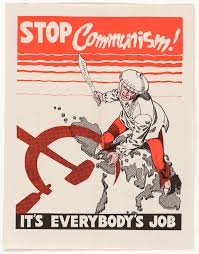
During the Cold War, what policy did the U.S. follow to stop the spread of communism?
Open Door Policy
Big Stick Policy
Containment Policy
Dollar Diplomacy

Love
What does the NAACP stand for?
Never Allow Anger to Conquer Peace
North America Appreciates Common People
National Association for the Advancement of Colored People
No African Americans Can Proceed
The case Brown v. Board of Education was famous because the court ruled that it is illegal to...
Segregate schools
Allow children to attend white schools
Allow children to work on schools
Keep schools equal

The country that launched the first satellite and astronaut into orbit caused their rival to believe that
there would be teamwork in the space race.
exploring space was a nearly impossible challenge.
most countries would soon develop a space program.
there was a sizable tech gap between the two countries.

The president whose goal it became to send humans to the moon and returning them to earth was
Dwight Eisenhower
John F. Kennedy
Lyndon B. Johnson
Richard Nixon
This law made it illegal to prevent citizens from voting because of their race or ethnicity.
Voting Rights Act of 1965
Supreme Court Ruling of 1955
Civil Rights Act 1970
Segregation Act of 1980
While Kennedy was president the U.S. entered the space race. This was between what two countries?
Germany and United States
United States and China
United States and Soviet Union
North Korea and South Korea
In 1957, Martin Luther King, Jr., and other ministers founded the ____.
Southern Christian Leadership Conference (SCLC)
Civil Rights Act of 1964
Voting Rights of 1965
Congress of Racial Equality (CORE)
The Gulf of Tonkin Resolution...
placed limits on U.S. involvement in Vietnam
authorized secret commando raids against North Vietnamese targets
provided President Johnson with broad authority to escalate the war in Vietnam
passed unanimously in the U.S. Senate

The ability for African Americans to be able to vote without barrier's like poll tests was fought for by Dr. Martin Luther King, Jr. Which act or amendment finally put this right into law?
The 15th Amendment
The 19th Amendment
The 23rd Amendment
The Voting Rights Act of 1965
Which can we infer about the Black Panthers?
They reacted to oppression and racial injustices
They were militant and only sought to cause harm
They only used non-violence
They were created by MLK jr.
What was a main goal of the Black Panthers?
Push for equal pay
Challenge police brutality in African American communities
Push for equal education opportunities
All of the above
One common complaint by those who oppose affirmative action is that
it results in reverse discrimination against white people and males
in unfairly targets minorities over women
it excludes Asian Americans
none of the above
One long-term implication of Affirmative Action is that
White males will be left out of a lot of work and educational opportunities
it will divide the nation
more and more people will be working with a diverse group of people
all of the above
What was the issue in Tinker v. Des Moines (1969)?
The students and parents sued the school district claiming a violation of their first Amendment right of freedom of speech.
The school district wanted to search the bags of the students.
The parents did not want their children wearing black arm bands in school.
The students felt that their freedom of religion was violated.
What amendment set the national voting age at 18?
26th Amendment
25th Amendment
23rd Amendment
19th Amendment


During what event did the U.S. bypass a Soviet blockade without provoking a military conflict?
Berlin Airlift
Cuban Missile Crisis
Korean War
Vietnam War

How did the G.I. Bill contribute to the economic prosperity of the 1950s?
It decreased consumer spending.
It allowed Veterans to get an education and buy homes in suburbs.
It offered incentives under the Bracero Program to temporary laborers.
It created federal domestic programs as part of the Great Society.
The 14th Amendment was proposed by Congress in response to which of the following?
the emergence of white resistance to the civil rights movement
the passage of the Black Codes in the South
the rise of violence against emancipated slaves
the attempts of Democrats to limit the voting rights of African Americans
The Temperance Movement, Women’s Suffrage Movement, and outlawing child labor were reform movements that took place during this era-
Gilded Age
Imperialism
Progressive Era
Roaring 20's


In January 1918, President Wilson spoke to Congress about the war aims of the nation. His plan ultimately became known as the _______________________ and was designed to create a lasting peace in the world.
Fourteen Points
Treaty of Versailles
Wilson's suggestions
League of Nations
Hernandez v. Texas determined that...
Mexican Americans had equal protection under the law
Mexican Americans could have a jury of their peers
Schools had to change financing policies.
Segregation was illegal.
What does NAFTA stand for?
North American Federation Trading Act
North America Fur Trade Agreement
North America Free Trade Agreement
Northern Africa Free Trade Act
Which countries are included in the NAFTA deal? (Select all that apply)
Mexico
USA
Alaska
Canada
Greenland

The 2000 election was so close, the votes had to be recounted in the state of
California
New York
Florida
Texas
These were the candidates for the 2000 US Presidential Election
Al Gore
Bill Clinton
George W. Bush
George H.W. Bush


A constitutional right to an abortion is established, though the court laid down a trimester criteria in determining whether states can impose restrictions
Regents of California v. Bakke,
Roe v. Wade, 1973
Tinker v. Des Moines School District, 1969
Texas v. Johnson, 1991
The court declared that "student rights do not stop at the schoolhouse gates." The wearing of black armbands was protected by the Constitution. Students enjoy protection of the Bill of Rights unless their actions materially disrupt the educational environment.
Regents of California v. Bakke,1978
Roe v. Wade, 1973
Tinker v. Des Moines School District, 1969
Texas v. Johnson, 1991
What is a Political Machine?
A ballot box
A political group with an authoritative boss who keeps power through corruption
A political group who seek to expose the corruption in politics
A polling machine which counts votes

A suffragist is a person who fights for:
Gender equality
Abolition
Voting rights
An end to all suffer.

Which two cities were attacked with atomic bombs by the United States?
Nagasaki & Hiroshima
Tokyo & Kyoto
Tokyo & Yokohama
Osaka & Kyoto

Extension of the Monroe Doctrine in 1904 in which the U.S. claimed the right to protect its economic interests by means of military intervention in the affairs of Western Hemisphere nations
Dollar Diplomacy
Open Door Policy
Roosevelt Corollary
Moral Diplomacy

