wayground logo

Free Printable Worksheets

Font size

S
M
L
XL
Worksheets

Midterm Review

Total questions: 70

Worksheet time: 45mins

Name
Class
Date
1.
Passed in 1882, the Chinese Exclusion Act did what?
a)
closed America to Chinese immigrants for the next ten years
b)
welcomed more Chinese immigrants to America to perform hard work
c)
allowed Chinese immigrants, but only under a very strict set of rules
d)
closed America to Chinese immigrants for three years then allowed a few at a time
2.

The Dawes Act...

a)

Allowed the Plains indians to continue their tribal traditions of following the buffalo herds

b)

divided the plains Indians tribal lands into family plots as a way to encourage assimilation and threaten their communal lifestyle.

c)

provided 160 acres of free land to white settlers

d)

established the route for the Transcontinental railroad

3.

This pair of photographs suggests that the major purpose of the Carlisle Indian School was to

a)

train future leaders in tribal traditions

b)

prepare children for life on the reservation

c)

teach skills needed for working in factories

d)

promote cultural assimilation

4.

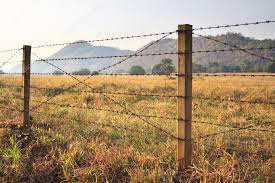
Identify the invention in the image. This invention helped to close off the open range making cattle drives more difficult and dangerous.

a)

Barbed Wire

b)

Wooden Fence

c)

Metal Fence

d)

Wooden Post

5.
What famous phrase came out of the Plessy case?
a)
"Separate but equal"
b)
"Give me liberty or give me death."
c)
"May the force be with you."
d)
"I'll be back."
6.
What people group is most abused in the American movement to the West? 
a)
African Americans
b)
Mexicans
c)
Native Americans
d)
Irish Imigrants
7.
What was the famous speech by William Jennings Bryan called?
a)
The Cross Speech
b)
The Cross of Gold Speech
c)
Gold Standard
8.
Main topic of William Jennings Bryan's 1896 Cross of Gold Speech?
a)
Fighting growing influence of business trusts
b)
Changing government's monetary policy
c)
Ending tax-free status of religious institutions
d)
Providing federal aid to poor families
9.
________________ is the term used to describe the wealthy that used ruthless business practices. 
a)
Industrial Giants
b)
Captains of Industry
c)
Robber Barons
d)
Union Leaders
10.

Who was the oil tycoon who created the Standard Oil Company

a)

Carnegie

b)

Morgan

c)

Rockefeller

d)

Vanderbilt

11.
Cornelius Vanderbilt made his fortune in...
a)
flight
b)
oil
c)
railroads
d)
automobiles
12.

Andrew Carnegie's idea that the wealthy had a moral obligation to improve society for everyone.

a)

Gospel of Wealth

b)

Social Darwinism

c)

American Dream

d)

Principles of Scientific Management

13.
A less expensive and easier way to make steel.  It increased production and lowered the price of steel in the US dramatically. Allowed skyscrapers to be built.
a)
Industrial Revolution
b)
Bessemer Process
c)
JP Morgan
d)
Hull House
14.
Owned every step of the steel making process
a)
Rockefeller
b)
Morgan
c)
Carnegie
d)
All of them
15.

What was the main reason for the rise of political machines?

a)

They bribed police officers to ignore crimes

b)

Nativists rigged elections in their favor

c)

Forced unions to keep factories open to low skilled workers

d)

Cities were overcrowded and couldn't get basic services needed for immigrants

16.

How did political machines get the support of immigrants?

a)

they promised to stop illegal immigration from Latin America

b)

They wasted money on military spending

c)

They helped them find homes and jobs in exchange for votes

d)

They developed a system to make becoming a citizen easier

17.

Journalists who exposed practices of corrupt government, big business, and social issues were

a)

Gump Mushers

b)

Muckrakers

c)

Scalawags

d)

Dirt Diggers

18.
The total or complete control of a service, product or industry that prevents competition
a)
Union
b)
Robber Barron
c)
Monopoly
d)
Captain of Industry
19.

This method of producing steel made production cheaper and more efficient.

a)

Bessemer Process

b)

Assembly Line

c)

Blast Furnace

d)

Vertical Integration

20.

Which image is an example of vertical integration?

a)
b)
21.

Term that means the government will not regulate or interfere in industry.

a)

Laissez Faire

b)

Open Door Policy

c)

Regulatory Restraint

d)

Socialism

22.

Which image is an example of horizontal integration?

a)
b)
23.
Which of the following best explains the impact of railroads during the Industrial Revolution?
a)
Railroads were so slow and expensive that automobiles quickly replaced them.
b)
Railroads increased transportation costs led to a decline in factory output.
c)
Railroads were expensive and cost factory owners more money.
d)
Railroads increased the need for coal, steel, and steam engine production.
24.

Which group preferred silver money?

a)

Lawyers

b)

Politicians

c)

Bankers

d)

Farmers

25.

What amendment created the direct election of US Senators by the people?

a)

13th

b)

15th

c)

17th

d)

14th

26.

Members of this party were mainly business owners and bankers from industrialized areas

a)

William Jennings Bryan

b)

Populist Party

c)

Republican Party

d)

William McKinley

e)

Bimetallism

27.

Who wanted the gold standard?

a)

William Jennings Bryan

b)

Populist Party

c)

Republican Party

d)

William McKinley

e)

Bimetallism

28.

Most strikes by unions in the late 1800s were unsuccessful mainly because

a)

unions were unconstitutional

b)

strikes had never been used before to settle labor issues

c)

government supported business instead of workers

d)

strikers failed to use militant tactics

29.
Conditions that drive people from their native lands (homes) to go to another country.
a)
Pull Factors
b)
Push Factors
30.
Conditions that attract people to move (go to live) in another country.
a)
Pull Factors
b)
Push Factors
31.
The new immigrants were from ____________.
a)
Northern and Western Europe
b)
Africa and Asia
c)
Southern and Eastern Europe
d)
Australia and Africa
32.

What were the immigrants searching for when they came to America?

a)

Education for their children

b)

All the choices are correct

c)

Owning their own home

d)

Jobs

33.

In the late 1800s and early 1900s, what was the difference between "new" immigration and "old" immigration?

a)

"Old" immigrants were from South America, and "new" immigrants were from Africa.

b)

Old" immigrants were from Asia, and "new" immigrants liked pie

c)

"Old" immigrants were from western Europe, and "new" immigrants were from eastern and southern Europe.

d)

"Old" immigrants preferred Pepsi while "New" immigrants liked Coke

34.
Which of the following was NOT something that new immigrants often found when they moved to the U.S. in the late 19th century?
a)
More political freedom
b)
Better living conditions
c)
More religious freedom
d)
More economic opportunities
35.
1906- Wrote The Jungle which exposed the conditions in the U.S. meat packing industry. (Helped pass the Pure Food and Drug Act) 
a)
Upton Sinclair 
b)
Lincoln Steffens 
c)
Jacob Riis 
d)
Frank Norris 
36.
Which of the following BEST explains the social impact of child labor
a)
America had a booming economy
b)
America had little racial issues
c)
America had people making good money in good labor conditions
d)
America had a generation(s) of people unable to read and write
37.

What was the effect of Compulsory education laws?

a)

funds for unemployed workers, increased teacher’s salary

b)

Ended child labor

c)

increased work hours to 18 hours, decreased women’s wages

d)

increased male wages, increased vacation pay

38.

The Social Gospel Movement strove to

a)

force the government to help the poor

b)

improve conditions in the city using biblical ideals of charity and justice

c)

keep immigrants from coming to the U.S.

d)

give immigrants jobs

39.
This was created to regulate railroads
a)
Sherman Anti-Trust Act
b)
Interstate Commerce Commision
c)
Railway Regulation Firm
d)
Clayton Anti-Trust Act
40.

Which strike ended violently and with the use of militia?

a)

the Great Railroad Strike

b)

the Haymarket Square Riot

c)

the Homestead Strike

d)

the Pullman strike

41.

Under leader Terrence Powderly, this grew rapidly during the 1880's

a)

Knights of Labor

b)

American Federation of Labor

42.

Who was the first labor union to promote the idea of an eight-hour workday and equal pay for women?

a)

American Federation of Labor

b)

Congress of Industrial Organizations

c)

International Brotherhood of Railroad Workers

d)

Knights of Labor

43.
Wealthy monopolists believed that God's will gave them wealth and power so they could serve society.
a)
Social Gospel
b)
Gospel of Wealth
c)
Social Darwinism
d)
Gospel of Trusts
44.
All of these examples reflect the Gospel of Wealth EXCEPT:
a)
Each man had a duty to try to become rich
b)
money should be distributed to the poor and homeless as gov't handouts
c)
the wealthy had a responsibility to use their wealth for the good of society
d)
welath was God's reward for alife of virtue and hard work
45.

The negotiation of wages and other conditions of employment by an organized body of employees

a)

Labor Unions

b)

Workers Rights

c)

Worker Strikes

d)

Collective Bargaining

46.

An organization of workers dedicated to protecting members' interests and improving wages, hours and working conditions for all.

a)

Labor Union

b)

Workers Rights

c)

Worker Strikes

d)

Collective Bargaining

47.

What were the major historical influences and factors that were present during the life of Jane Addams?

a)

Enlightenment

b)

Industrialism

c)

Immigration

d)

Urbanization

e)

Protestant Reformation

48.

settlement house

a)

a house for settlers to live in while they are building their own home

b)

a development of houses that serves as a community

c)

an area of poverty that is a problem

d)

a center in an underprivileged area that provides community services

49.
Which statement best represents the events in the picture?
a)
Women wanted the president to support equal rights and the right to vote for females.
b)
Women wanted the U.S. president to back labor unions.
c)
Women did not like the president’s approach to civil rights.
d)
Women protested for homeless women and demanded equal job opportunities.
50.
Which amendment allowed for the direct election of US Senators?
a)
16
b)
17
c)
18
d)
19
51.
Which amendment created a national income tax?
a)
16
b)
17
c)
18
d)
19
52.
True or False
Teddy Roosevelt had respect for the environment.
a)
True
b)
False
53.
What does the Federal Reserve do?
a)
Regulates monopolies
b)
Regulates the money supply
c)
Regulates trusts
d)
Regulates Prohibition
54.

laissez-faire

a)

opposed to government regulation of business

b)

government should control major industries

c)

government should be eliminated

d)

nations should avoid trade

55.

An economic practice where the government does NOT try to control the economy.

a)

Gospel of Wealth

b)

laissez faire

c)

Social Darwinism

d)

horizontal integration

56.

Created a graduated income TAX

a)

16th amendment

b)

17th amendment

c)

18th amendment

d)

19th amendment

57.

granted WOMEN'S suffrage (right to vote)

a)

16th amendment

b)

17th amendment

c)

18th amendment

d)

19th amendment

58.

direct election of SENATORS

a)

16th amendment

b)

17th amendment

c)

18th amendment

d)

19th amendment

59.

prohibition of ALCOHOL

a)

16th amendment

b)

17th amendment

c)

18th amendment

d)

19th amendment

60.

The 16th amendment created

a)

an income tax to pay for reform programs

b)

women's suffrage

c)

direct election of senators

d)

prohibition of alcohol

61.

The 17th amendment created

a)

an income tax to pay for reform programs

b)

women's suffrage

c)

direct election of senators

d)

prohibition of alcohol

62.

The 18th amendment created

a)

an income tax to pay for reform programs

b)

women's suffrage

c)

direct election of senators

d)

prohibition of alcohol

63.

The 19th amendment granted

a)

an income tax to pay for reform programs

b)

women's suffrage (right to vote)

c)

direct election of senators

d)

prohibition of alcohol

64.

The Progressive Era gave PEOPLE a VOICE in GOVERNMENT

a)

True

b)

False

65.
Which reform allows voters to choose who will run for office for each party?
a)
primary
b)
initiative
c)
referendum
d)
reform
66.
Which reform allows voters to remove a corrupt office holder?
a)
primary
b)
recall
c)
17th amendment
d)
initiative
67.
Which reform allows voters to vote on an issue on election day. 
a)
referendum
b)
recall
c)
primary
d)
16th amendment
68.
This reform allows voters in a state to introduce an idea to the state legislature to be voted on. 
a)
initiative
b)
referendum
c)
primary
d)
recall
69.
During the Progressive Era, one goal of state-level political reformers was to - 
a)
prevent party leaders from amending campaign platforms
b)
increase the influence of business owners on regulatory legislation
c)
promote the principle of direct democracy
d)
limit the use of the judicial review by circuit courts
70.
The creation of initiative, referendum, and recall procedures during the Progressive Era resulted in - 
a)
a system of separate schools for new immigrants
b)
the expansion of citizens' direct participation in the democratic process
c)
a redistribution of the tax burden among citizens
d)
mopre sources of revenue for state governments