wayground logo

Free Printable Worksheets

NEW

Font size

S
M
L
XL
Worksheets

Atomic Theory and Structure Quiz Review

Total questions: 50

Worksheet time: 34mins

Name
Class
Date
1.

First person to propose the concept of an atom, a word which comes from the Greek word "atomos"

a)

Rutherford

b)

Democritus

c)

Dalton

d)

Bohr

2.

These particles are found in the nucleus

a)

protons and electrons

b)

nucleus and neutrons

c)

protons and neutrons

d)

electrons and neutrons

3.

Which of the following shows the correct order of Atomic Theory Timeline?

a)

Rutherford, Bohr, Dalton, Democritus, Thomson

b)

Bohr, Democritus, Thomson, Rutherford, Dalton

c)

Dalton, Thomson, Rutherford, Bohr, Democritus

d)

Democritus, Dalton, Thomson, Rutherford, Bohr

4.

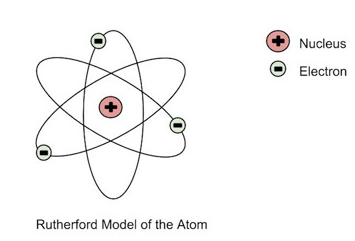
Which scientist is credited with creating this model?

a)

Democritus

b)

Chadwick

c)

Bohr

d)

Rutherford

5.
In an atom, electrons move in definite orbits around the nucleus.
a)
Thomson
b)
Rutherford
c)
Bohr
d)
Democritus
6.

What scientist is best known for his "Plum Pudding" (or "chocolate chip cookie") model of the atom?

a)

J.J. Thomson

b)

Ernest Rutherford

c)

John Dalton

d)

Democritus

7.
What contribution did John Dalton make to atomic theory? 
a)
He discovered that every atom was positively charged. 
b)
He discovered that every element consisted of one type of atom that couldn't be divided. 
c)
He discovered that atoms had nuclei. 
d)
He discovered that atoms could be divided into smaller parts. 
8.
Rutherford's gold foil experiment provided evidence that...
a)
negative and positive charges are spread evenly throughout the atom.
b)
alpha particles have a positive charge.
c)
gold is not a dense as previously thought.
d)
there is a dense positively charged nucleus at the center of an atom.
9.
Value representing the number of protons in an element
a)
Atomic Mass
b)
Mass Number
c)
Valence Electrons
d)
Atomic Number
10.
The smallest particle of an element that shows all the properties of that element.
a)
Subatomic Particles
b)
Atom
c)
Quarks
d)
Gluons
11.

Where electrons are likely to be found as they travel around the nucleus

a)

Nucleus

b)

Electron Cloud

c)

Within a Proton

d)

Within a Neutron

12.

The Billiard Ball is the nickname for ________ theory.

a)

Dalton's

b)

Bohr's

c)

Thomson's

d)

Rutherford's

13.

What subatomic particle has a negative charge and is found outside of the nucleus?

a)

Electron

b)

Proton

c)

Nucleus

d)

Neutron

14.

Which subatomic particle has a positive charge and is found inside the nucleus?

a)

Electron

b)

Proton

c)

Neutron

d)

Nucleus

15.

Which subatomic particle has a neutral charge and is found inside the nucleus?

a)

Electrons

b)

Protons

c)

Neutrons

d)

Nucleus

16.
An atom's overall charge is ________.
a)
positive 
b)
depends
c)
neutral 
d)
negative 
17.
What is the amu of a neutron?
a)
almost zero
b)
1
c)
2
18.

What is the relative mass of an electron (in amu)?

a)

Almost zero

b)

1

c)

2

d)

3

19.
Which word would closely define the term "atomos"?
a)
Incredible
b)
Indivisible
c)
Indelible
d)
Independent
20.
If two atoms have the same atomic number but different numbers of neutrons, they are
a)
Ions of that element
b)
Different elements
c)
Isotopes of the same atom
d)
Isotopes of different elements
21.
The atomic number for Oxygen is 8, so
a)
there are 8 protons in the atom
b)
the atomic mass is less than 8
c)
the mass of the atom is 8
d)
the atom is decaying
22.
How many neutrons does the isotope of lithium have?
a)
8
b)
3
c)
4
d)
5
23.
J.J. Thomson provided evidence that an atom...
a)
is the smallest particle of matter
b)
contains negatively charged particles
c)
has an overall negative charge
d)
has an overall positive charge
24.

How many neutrons does uranium-239 have (the atomic number of uranium is 92)

a)

92

b)

147

c)

239

d)

331

25.
How many neutrons will an atom have it has an atomic number of 26, an atomic mass of 58 and a charge of +3?
a)
26
b)
58
c)
32
d)
3
26.
How many electrons are in an atom that has an atomic number of 34, an atomic mass of 74 and a charge of -2?
a)
34
b)
36
c)
2
d)
40
27.
How many protons are in an atom with an atomic number of 20, an atomic mass of 45, and a charge of +2?
a)
20
b)
10
c)
2
d)
18
28.
In a correctly written symbol what would be located in the "A" position?
a)
number of neutrons
b)
atomic number
c)
number of electrons 
d)
mass number
29.
Because atoms are neutral, the number of protons will be equal to the number of __________ in an atom.
a)
Positrons
b)
Neutrons
c)
Electrons
d)
Nuclei
30.
Most of the volume an atom is made of this
a)
the nucleus
b)
the protons
c)
the neutrons
d)
empty space
31.
All atoms of a particular element have the same number of these
a)
electrons
b)
neutrons
c)
protons
32.

Look at this picture of Argon off the periodic table. Which of the following is true for this element when it is neutral?

a)

18 electrons

b)

40 electrons

c)

22 electrons

d)

21.9 electrons

33.
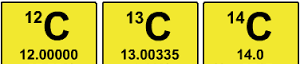
What do these isotopes of carbon all have in common?
a)
neutrons & mass number
b)
atomic number and neutrons
c)
atomic number and electrons
d)
protons, atomic number, and mass number
34.
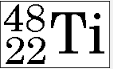
How many protons does this isotope of titanium have?
a)
48
b)
22
c)
26
d)
70
35.
Ions are: 
a)
atoms with a positive or negative charge
b)
atoms with no charge
c)
atoms with ONLY a positive charge
d)
atoms with ONLY a negative charge
36.
How many electrons are in an atom that has an atomic number of 34, an atomic mass of 74 and a charge of -2?
a)
34
b)
36
c)
2
d)
40
37.

How do you calculate mass number?

a)

Mass x percent

b)

Protons + Electrons

c)

Protons + Neutrons

d)

Neutrons + Protons + Electrons

38.

How is carbon-12 different from carbon-14?

a)

they have a different number of protons

b)

they have a different number of electrons

c)

they have a different number of neutrons

d)

they are different elements

39.
What is the charge of an atom that has lost one electron?
a)
-1
b)
-2
c)
+1
d)
+2
40.

An atom with 2 protons, 3 neutrons, and 4 electrons has a charge of ____.

a)

+2

b)

-2

c)

+3

d)

0

41.

If X is the symbol for an element, which of the following two symbols represent isotopes of the same element?

a)

I and II

b)

III and IV

c)

I and IV

d)

I and III

42.

How many protons, neutrons, and electrons?

a)

proton = 6, neutron = 4, electron = 1

b)

proton = 4, neutron = 4, electron = 5

c)

proton = 1, neutron = 6, electron = 10

d)

proton = 4, neutron = 2, electron = 3

43.

How many protons, neutrons, and electrons?

a)

proton = 16, neutron = 8, electron = 10

b)

proton = 8, neutron = 16, electron = 8

c)

proton = 8, neutron = 8, electron = 10

d)

proton = 6, neutron = 2, electron = 6

44.
What is the number of neutrons?
a)
34
b)
79
c)
45
d)
35
45.

How many neutrons are found in Potassium-39? The atomic number of potassium is 19.

a)

19

b)

20

c)

24

d)

39

46.

An element has 29 protons, 35 neutrons, and 29 electrons. What is the mass number of this element?

a)

29

b)

35

c)

64

d)

93

47.

What is the difference between Sulfur-23 and Sulfur-25?

a)

Sulfur-25 has two more neutrons than Sulfur-23

b)

Sulfur-25 has two more protons than Sulfur-23

c)

Sulfur-25 has two more electrons than Sulfur-23

d)

There is no difference at all

48.

What is the name of the pictured isotope?

a)

Chlorine-18

b)

Chlorine-17

c)

Chlorine-35

49.

How many electrons will an atom have it has an atomic number of 26, an atomic mass of 58 and a charge of +3?

a)

23

b)

26

c)

32

d)

3

50.

In a correctly written symbol what would be located in the "Z" position?

a)

number of neutrons

b)

atomic number

c)

number of electrons

d)

mass number