wayground logo

Free Printable Worksheets

Font size

S
M
L
XL
Worksheets

Anatomy tissue review

Total questions: 65

Worksheet time: 34mins

Name
Class
Date
1.
Which of the following is not one of the four tissue types? 
a)
Blood
b)
Connective
c)
Epithelial
d)
Nervous 
2.
Where is epithelial tissue found?
a)
glands
b)
covering body surfaces
c)
lines organs
d)
all of the above
3.
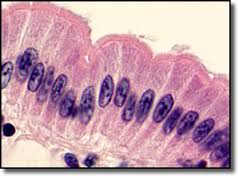
Which tissue is this?
a)
Simple Squamous
b)
Stratified Squamous
c)
Simple cuboidal
d)
Pseudostratified columnar
4.
Identify:
a)
Columnar
b)
Cuboidal
c)
Pseudostratified
d)
Transitional
5.
Identify:
a)
Pseudostratified
b)
Smooth Muscle
c)
Transitional
d)
Stratified Squamous
6.
Identify:
a)
Smooth Muscle
b)
Columnar
c)
Transitional
d)
Pseudostratified
7.
This type of epithelium has only one layer of cells
a)
Stratified epithelium
b)
Simple epithelium
8.
Which tissue is this?
a)
Simple squamous
b)
simple columnar
c)
transitional
d)
simple cuboidal
9.
What are the four main tissues found in the body?
a)
Epithelial, Connective, Bone, Blood
b)
Muscle, Connective, Blood, Epithelial
c)
Nervous, Muscle, Connective, Epithelial
d)
Nervous, Muscle, Connective, Bone
10.

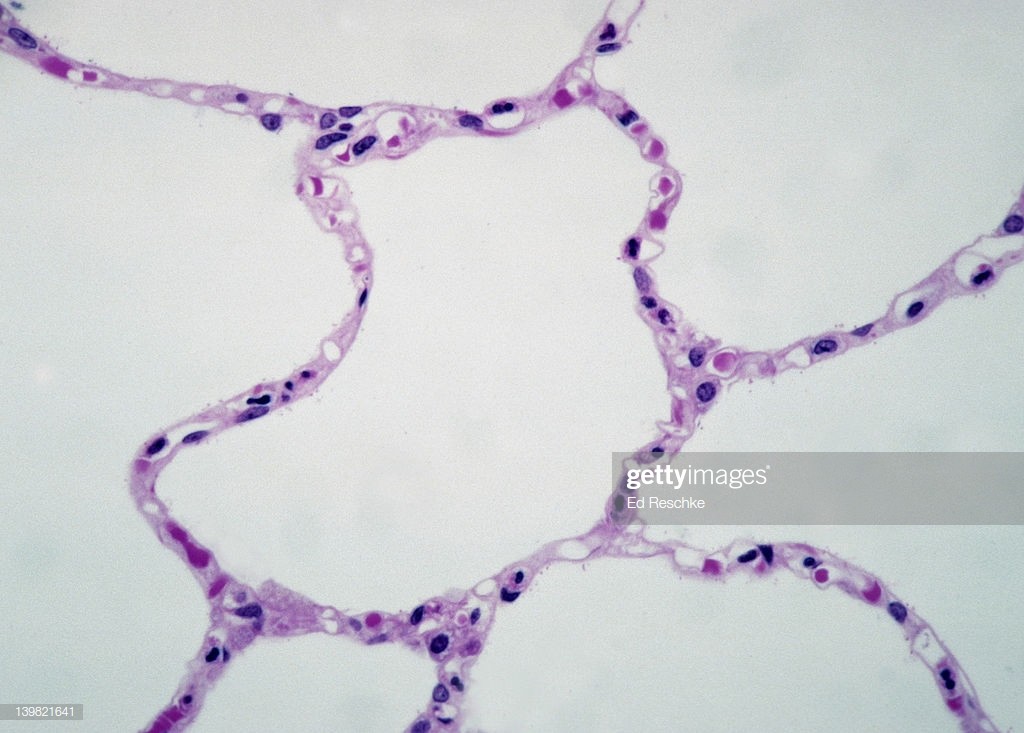
What type of epithelium lines the air sacs in this slide of lung tissue?

a)

simple cuboidal

b)

simple columnar

c)

simple squamous

d)

pseudostratified columnar

11.
Name the tissue
a)
Simple squamous
b)
Simple columnar
c)
Simple cuboidal
d)
Pseudo stratified columnar
12.
Name the tissue
a)
Simple squamous
b)
Simple cuboidal
c)
Simple columnar 
d)
Pseudo stratified columnar
13.

What type of epithelial tissue is this?

a)

Stratified squamous

b)

Simple squamous

c)

Stratified columnar

d)

Simple columnar

14.

What type of connective tissue is this?

a)

Blood

b)

Adipose

c)

Bone

d)

Muscle

15.

What type of connective tissue is this?

a)

Blood

b)

Adipose

c)

Bone

d)

Muscle

16.

What type of connective tissue is this?

a)

Bone

b)

Blood

c)

Cartilage

d)

Dense connective tissue (tendon)

17.

What type of connective tissue is this?

a)

Cartilage

b)

Tendon

c)

Bone

d)

Fat

18.
Connective tissue is
a)
The tissue that protects, supports, binds together, stores fat, produces blood cells
b)
Tissue that is the lining, covering, and glandular tissue of the body
c)
Tissue that contracts and shortens to produce movement
19.
What is the most common fixed cell that produces the matrix in loose connective tissue? 
a)
Mast Cell
b)
Blast Cell
c)
Fibroblast
20.
This tissue provides support and protection.
a)
Blood
b)
Bone
c)
Adipose
d)
Hyaline
21.
This type of connective tissue forms strong rope like structures such as tendons and ligaments.
a)
Areolar
b)
Dense fibrous 
c)
Cartilage 
d)
Bone
22.
What tissue is this
a)
Transitional epithelium
b)
Cartilage
c)
Dense Fibrous
d)
Areolar
23.
Commonly known as fat. Forms the subcutaneous layer beneath skin.
a)
Blood
b)
Bone
c)
Cartilage
d)
Adipose
24.
This tissue carries nutrients, waste, respiratory gases, and many other substances throughout the body.
a)
Bone
b)
Cartilage
c)
Blood
d)
Adipose
25.
Which connective tissue contains a gel-like matrix and is found in the nose, ear, and at the end of bones.
a)
Bone
b)
Cartilage
c)
Blood
d)
Adipose
26.
Attach muscles to bones
a)
Tendons
b)
Ligaments
27.

This cell synthesizes the extracellular matrix and collagen.

a)

collagen fibers

b)

reticular fibers

c)

elastic fibers

d)

fibroblasts

28.

Loose connective tissue is also known as ____?

a)

areolar connective tissue

b)

hyaline

c)

macrophages

d)

adipocytes

29.

These are cells that stores lipids as droplet that fill most of the cytoplasm.

a)

Adipose

b)

Adipocytes

c)

Adpocytes

d)

Adicytes

30.

What type of cells are found in the cartilage?

a)

fibroblasts

b)

macrophages

c)

osteocytes

d)

chondrocytes

31.

What tissue is in this picture?

a)

Dense regular connective tissue

b)

Elastic tissue

c)

Adipose tissue

d)

Dense irregular connective tissue

32.

What are the general components to connective tissue? Check ALL that apply?

a)

Cells

b)

Platelets

c)

Fibers

d)

Ground substance

33.

What type of tissue is this?

a)

Adipose tissue

b)

Hyaline cartilage

c)

Elastic cartilage

d)

Fibrocartilage

34.

a)

nervous tissue

b)

blood

c)

simple squamous tissue

d)

adipose tissue

35.

a)

cardiac muscle tissue

b)

skeletal muscle tissue

c)

stratified squamous tissue

d)

dense fibrous connective tissue

36.

Chrondroblasts are

a)

Minor breaks in the cartilage

b)

Reactions that occur in the cartilage

c)

Cartilage cells

d)

None of these

37.

Does cartilage also contain lacunae, same as bone?

a)

Yes

b)

No

c)

Only certain types of cartilage

d)

Very rarely

38.

Does cartilage contain blood vessels?

a)

No

b)

Yes

c)

Only in hyaline cartilage

d)

Only in elastic cartilage

39.

Hyaline cartilage exists in ...

a)

our ears

b)

our nose

c)

our trachea

d)

our spine

40.

WHat type of tissue is this

a)

transitional

b)

simple cuboidal

c)

simple squamous

d)

complex squamous

41.

What is the structure of a simple squamous epithelial tissue?

a)

multilayered, scale-like cells

b)

multilayered, cube cells

c)

single layer, scale-like cells

d)

single layer, cube cells

42.

What is the structure of a simple columnar epithelial tissue?

a)

single layer of tall cells only

b)

single layer of tall cells with goblet cells and microvilli

c)

single layer of tall cells with microvilli only

d)

multilayered, tall cells

43.

What is the structure of a glandular epithelial tissue?

a)

single layer of scale-like cells

b)

specialized cells for secretion

c)

multilayer columnar cells

d)

single layer cube cells

44.

These short hairlike projections are responsible for moving objects along the body.

a)

villi

b)

micro villi

c)

cilia

d)

cillia

45.

What type of tissue is this?

a)

Connective - Hyaline Cartilage

b)

Connective - Blood Tissue

c)

Epithelial - Simple Squamous

d)

Muscle - Skeletal

e)

Nervous - Neuron

46.

What type of tissue is this?

a)

Nervous - Spinal Chord

b)

Connective - Loose

c)

Epithelium - Stratified Squamous

d)

Epithelial - Glandular

e)

Nervous - Neuron

47.

Histology is

a)

anatomy at the microscopic level

b)

the study of blood

c)

historical anatomy

d)

act of using microscopes

48.

Which of the following tissues lines the bladder, urethra, and the uterus?

a)

transitional epithelium

b)

stratified squamous epithelium

c)

stratified columnar epithelium

d)

stratified cuboidal epithelium

49.

Most glands are made up of which tissue?

a)

epithelial

b)

connective

c)

muscle

d)

nervous

50.

Which type of gland secretes product into the bloodstream?

a)

endocrine glands

b)

exocrine glands

51.

Alveolar/acinar forms of exocrine glands

a)

the diameter of the duct and secretory portion are similar

b)

the secretory portion of the gland forms like a sac

52.
 Loose connective tissue (areolar) is mainly located
a)
In the brain
b)
In the spinal chord 
c)
In the dermis of the skin
d)
In bones
53.
What is a tissue?
a)
Cells that look alike
b)
Similar cells with different functions
c)
Similar cells with the same function
d)
Cells that reproduce quickly
54.
Which type of muscle is striated?
a)
Skeletal 
b)
Muscles in your throat 
c)
Nervous tissue 
d)
Smooth
55.
Which of the following lists of body organization terms is in the correct order?
a)
cells-tissues-organs-organ system
b)
tissues-cells-organs-organ systems
c)
cells-tissues-organ system-organs
d)
tissues-organs-organ system-cells
56.
Which of the following is the main function of adipose tissue?
a)
Energy 
b)
Padding/protection
c)
Insulation 
d)
All of the above
57.
Dense connective tissue is mainly located in
a)
Bones      
b)
In the brain
c)
Ligaments/tendons
d)
None of the above
58.
Simple columnar epithelium is mainly located
a)
In the lining of muscles
b)
Near the heart
c)
Lining of digestive tract
d)
Near nervous tissue 
59.
 Dense connective tissue gets its strength from its matrix.  What is the composition of this matrix?
a)
 Plasma 
b)
Collagen, phosphorous, and calcium 
c)
Collagen, elastin, and fibrocartilage
d)
Parallel collagen fibers
60.
 Ciliated epithelium functions to...
a)
Protect from injury 
b)
Move mucus or eggs
c)
Pad/protect
d)
Move nervous impulses around the body. 
61.
The matrix for blood is
a)
Collagen 
b)
Collagen and elastin 
c)
Plasma 
d)
Lacunae 
62.
The intestines consist of which type of muscle?   
a)
Smooth
b)
Skeletal 
c)
Cardiac 
d)
Heart muscle
63.
What tissue is this?
a)
adipose tissue 
b)
fibrocartilage
c)
elastic cartilage
d)
nervous tissue
64.
What tissue is this?
a)
adipose tissue
b)
fibrocartilage
c)
elastic cartilage
d)
nervous tissue
65.
What tissue is this?
a)
adipose tissue
b)
nervous tissue 
c)
glandular epithelium
d)
osseous tissue