
 Worksheets
Kelly - Astronomy Review
Total questions: 45
Worksheet time: 42mins
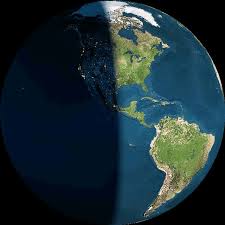
Day and night is caused by the -
orbit of Earth around the Sun
orbit of Earth around the Moon
rotation of Earth on its axis.
rotation of the Moon on its axis
Which of the following is NOT a gas giant?
Jupiter
Saturn
Venus
Neptune
Which of the following is NOT a terrestrial planet?
Mercury
Venus
Uranus
Mars
The force that holds the planets in orbit around the sun is called?
Rotation
Gravity
Friction
Pressure
The time it takes the Moon to revolve around the Earth is approximately one
Hour
Day
Week
Month
A __________ is the movement of Earth when it travels around the sun.
revolution
rotation
A __________ is the spinning of Earth on its axis. It takes 24 hours.
Rotation
Revolution
Which of the following is NOT a galaxy shape used for classification?
irregular
spiral
squiggle
elliptical
The change in seasons is a result of what?
rotation
ravioli
revolution
Earth's tilt on its axis as it revolves around the sun
About 90 percent of the stars in the universe, including the sun, are main sequence stars. What do all main sequence stars have in common?
All main sequence stars are yellow like our sun.
All main sequence stars are as bright as our sun.
They are all undergoing fusion of helium into carbon within their cores
They are undergoing fusion of hydrogen into helium within their cores
Which of the following correctly ranks astronomical objects by size, starting with the smallest?
earth, sun, solar system, galaxy, universe
sun, solar system, earth, universe, galaxy
universe, galaxy, solar system, earth, sun
solar system, earth, sun, universe, galaxy

On an HR diagram, stars at the same temperature are found...
aligned horizontally (next to each other)
aligned vertically (one above the other)
along the main sequence
spread through the diagram

White dwarfs stars are
hot and dim
cool and dim
hot and bright
cool and bright

What is the north star called?
Dubhe
Ursa
Polaris
Sun
A(n) _____ is the curved path of an object around a point/object in space.
orbit
rotation
revolution
phase

The Earth is moving fastest in its orbit when it is
when it is farthest away
at its perihelion
at its aphelion

During the winter months of the Northern hemisphere the Earth is ______.
tilted closer toward the Sun
tilted farther away from the Sun
spinning slower than in Summer
spinning faster than in Summer
Evidence that the universe is expanding is best supported by the observation that the wavelengths of light from distant galaxies are shifted toward the
blue end of the spectrum because they are lengthened
red end of the spectrum because they are lengthened
red end of the spectrum because they are shortened
blue end of the spectrum because they are shortened
Which event occurred approximately 4.6 billion years ago?
evolution of the earliest fish
evolution of stromatolites
formation of the oldest known Earth rocks
formation of Earth and our solar system
Energy is produced within a star's core by the process of
nuclear fusion
insolation
conduction
radioactive decay
Planets that are closest to the Sun are identified as
low-density Jovian
low-density terrestrial
high-density terrestrial
high-density Jovian

The model below shows the apparent path of the Sun
as seen by an observer in New York State on the first
day of one of the four seasons.
This apparent path of the Sun was observed on the first day of
fall
winter
summer
spring
What is a person's latitude if the angle of Polaris is 40o North?
50
40
60
70


An eccentricity that is closer to 1 means which two things (choose two answers):
the orbit is more eccentric
the orbit is very round
the orbit is more like an oval
there is no orbit
The eccentricity formula is:
change in value/distance
mass/volume
distance between foci/length of major axis
change in value/time

What is the BEST definition of apparent motion?
movement that actually happens across the sky
movement that appears to happen across the sky caused by Earth's REVOLUTION
movement that appears to happen across the sky caused by Earth's ROTATION
Motion's mother and father

The tool that provided evidence that the earth is rotating is called
Sundial
Stellar Parallax
Foucault Pendulum
Time Zone

