
 Worksheets
Evolution Review
Total questions: 55
Worksheet time: 48mins

Which best explains why the birds evolved with differently shaped beaks?
They interbred with each other.
Some birds had defective gene pools.
All of the birds ate the same type of food.
They adapted to eating different types of food.
Human arms, whale fins, and bat wings share the same number of bones in each place. Why?
They all need to be able to do the same thing with their limbs.
There is only one number of bones that all animals have in their limbs.
They share a common ancestor and diverged over time.
They lived in the same place and slowly developed the same number of bones.
What does the Law of Superposition tell us?
That the animal in the front will always have longer arms.
That the fossils with better position will survive better.
That the deeper fossil layers are older, unless something has disrupted them.
That radiation decays over time.

Which rock layer is the oldest?
R
I
F
B
Which is the main cause of the variation in traits within a population of organisms?
genetic mutations
common ancestors
reduction of habitats
environmental conditions
A bird in a forest ecosystem has a sharper beak than many other birds. Which best explains how this adaptation may help the bird survive?
It enables the bird to dig for water.
It increases the likelihood for the bird to obtain food.
It increases the likelihood of the bird finding a suitable mate.
It enables the bird to sing louder than birds with shorter beaks.
Adaptations can be:
camouflage
ability to survive cold weather
hunting skills
all of the above
Natural selection occurs during the lifetime of a single organism.
True
False

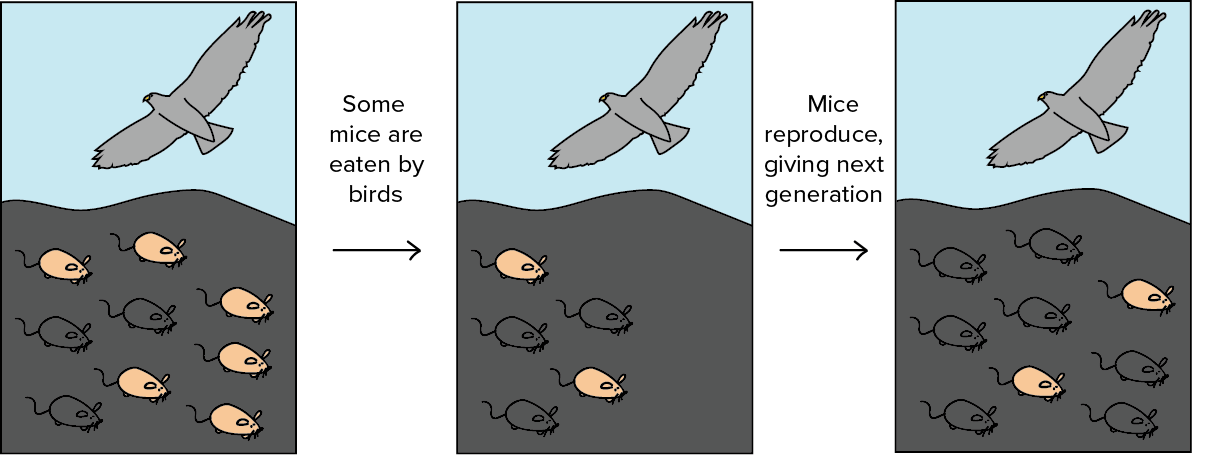
What is most likely to happen to moth populations in the picture shown?
Light moths--hunted easily, dark moths--population increase
Dark moths--hunted easily, dark moths--population increase
Light moths--hunted easily, light moths--population increase
Lights moths will change their color to match dark moths.
How do you "win" at natural selection?
survive
go extinct
survive & reproduce

Due to pollution, a pond becomes darker over time. Which trait variation became more common?
light fish
dark fish

individuals with alleles for an extreme type are more likely to survive and reproduce
stabilizing selection
directional selection
disruptive selection
genetic drift

the selection pressure favors the extreme phenotypes, dividing the population into 2 distinct groups
directional selection
stabilizing selection
geographic selection
disruptive selection

Individuals with intermediate traits are more likely to survive and reproduce
stabilizing selection
directional selection
adaptive radiation
disruptive selection
Tall kelp have a distinct advantage over shorter kelp in receiving needed sunlight in their ocean environment
directional selection
disruptive selection
stabilizing selection
sexual selection
artificial selection
Aspen trees that are over 25 m tend to blow over in high winds; aspen that are under 15 m don't get enough sun
directional selection
stabilizing selection
disruptive selection
artificial selection
sexual selection

snails with a forward spiral and snails with a backward spiral have an advantage in their environment
directional selection
stabilizing selection
disruptive selection
artificial selection
sexual selection
1. The process of choosing parent organisms for desired characteristics is called
natural selection
Artificial selection
random selection
genetic manipulation
What is an example of artificial selection?
Letting dogs choose their own mate
Letting plants pollinate on their own
Crossing a labrador and a poodle to create a labradoodle
The following is a similarity between artificial selection and natural selection
Takes hundreds of years
Humans determine traits
Nature determines traits
Offspring are produced
Artificial selection takes
a shorter period of time than natural selection
a longer period of time than natural selection
the same amount of time as natural selection
Artificial selection is also known as
natural selection
selective hearing
genetic manipulation
selective breeding


An antibiotic is...
A chemical that kills a bug / insect
A substance that kills bacteria
A chemical that destroys any toxins in the stomach
A substance created by biotechnology to induce mutations in bacteria
Why is it important to finish ALL of an antibiotic, even if you feel better?
If all of the infectious bacteria are not killed, the bacteria may continue to multiply. Some of these bacteria may have a mutation that makes them resistant to the antibiotic. This could cause resistant bacteria to spread.
If all of the antibiotic is not used, the surviving bacteria may learn how to fight off the antibiotic, causing the sickness to get even worse.
If all of the antibiotic is not used, the bacteria may begin ingesting your skin cells, causing a new sickness to arise.
If all of the antibiotic is not used, the surviving bacteria may cooperate with other infectious bacteria, resulting in two separate infections at the same time.


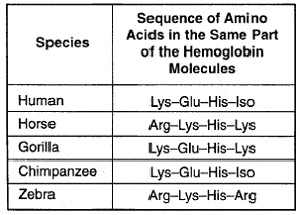

Who is most closely related to Taxidea taxus?
Lutra lutra
Panthera pardus
Canis latrans
Canis lupus

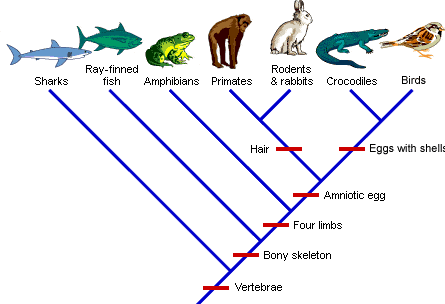
Which group of animals on this tree are most closely related to birds?
Saurischian dinosaurs
Ornithischian dinosaurs
Crocodiles
None of these are related to birds

What number is the common ancestor of C and D
1
2
3
4

What is the common ancestor of Letters A, B, C, D, E?
1
2
3
4


Which of the following is the collection of life's remains found in sedimentary rock?
natural selection
homologous structures
Charles Darwin
the fossil record
Similar structures with different purposes found in different species are known as _____
vestigial structures
DNA
homologous structures
the fossil record

The picture shows a/an ___________
homologous structure
vestigial structure
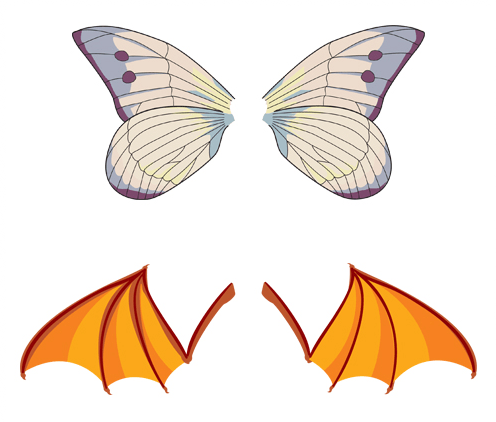
What is this an example of?
Homologous structure
Analogous structure
Vestigial organs
Functional adaption
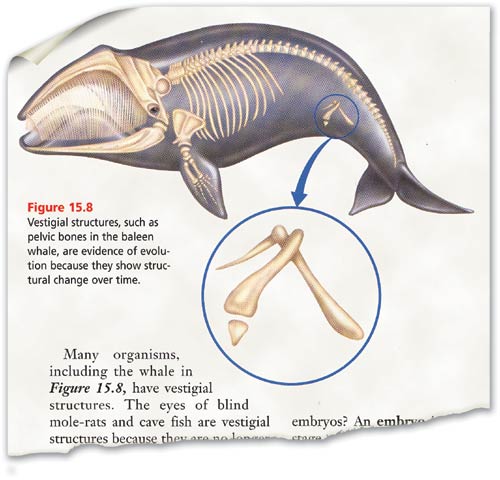
The appendix, which is not needed to survive, is conisdered to be a
Homologous Structure
Analagous Structure
Vestigial Structure
Homology

Similarities in bone arrangements, like those in the picture, support the hypothesis that...
these organisms are not well adapted
these organisms share a common ancestor
these organisms all share the same DNA sequences
these organisms are members of the same species

