wayground logo

Free Printable Worksheets

Font size

S
M
L
XL
Worksheets

The Geosphere

Total questions: 30

Worksheet time: 25mins

Name
Class
Date
1.

Which is the only planet with water in all three states?

a)

Mars

b)

Uranus

c)

The Earth

d)

Mercury

2.

What is the name of the LIQUID part of the Earth?

a)

hydrosphere

b)

atmosphere

c)

geosphere

d)

biosphere

3.
The layers of the Geosphere are
a)
Core, Mantle and crust
b)
Minerales, rocks and magma
c)
Nucleum, cortezum and rocks
d)
Troposphere and Estratosphere
4.

The part of the Earth formed by living beings "seres vivos" is

a)

the Hydrosphere

b)

The Geosphere

c)

The Atmosphere

d)

The Biosphere

5.
The part of the Earth formed by gases  is
a)
the Hydrosphere
b)
The Geosphere
c)
The Atmosphere
d)
The Biosphere
6.
The part of the Earth formed by rocks  is
a)
the Hydrosphere
b)
The Geosphere
c)
The Atmosphere
d)
The Biosphere
7.

When magma does not reach the surface and solidifies inside the crust...

a)

Volcanic rocks are formed.

b)

Plutonic rocks are formed.

c)

Metamorphic rocks are formed

8.

What types of rocks can contain fossils?

a)

Sedimentary rocks.

b)

Igneous rocks.

c)

Metamorphic rocks.

d)

None of the above.

9.

Depending on the origin of the sediment, sedimentary rocks can be...

a)

None of the above

b)

Foliated or non-foliated

c)

Volcanic or plutonic.

d)

Detrital or non-detrital.

10.

Which of these are caracteristics of a MINERAL?

a)

Solid

b)

Organic

c)

Natural

d)

Definite chemical composition

11.
Of the three major types of rocks which one forms layers?
a)
metamophic
b)
sedimentary
c)
igneous
12.
What is one of the most common extrusive rocks?
a)
Granite
b)
Obsidian
c)
Basalt
d)
Porphyry
13.
Slowly cooling magma forms...
a)
Intrusive rocks
b)
Extrusive rocks
14.
Major type of rock that forms from either lava or magma?
a)
sedimentary
b)
metamorphic
c)
igneous
15.
Which major type of rock forms from the remains of living things, bones, pieces of rock.
a)
sedimentary
b)
igneous
c)
metamorphic
16.
Which major type of rock ALWAYS forms as a result of heat and pressure?
a)
igneous
b)
metamorphic
c)
sedimentary
17.
Two ways to describe types of igneous rocks are _____
a)
Extrusive and Intrusive
b)
Foliated and Non-Foliated
c)
Clastic and Biochemical
d)
Black and Gray
18.
Which of the words below describe mud, sand, and tiny bits of rocks that cement together to form a type of rock?
a)
stalactites
b)
magmas
c)
metamorphs
d)
sediments
19.
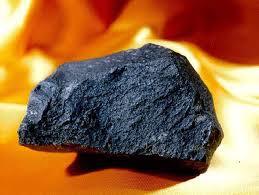
This rock was found near the mouth of a volcano. What type of rock is this?
a)
Sedimentary
b)
Igneous
c)
Metamorphic
20.
What is sedimentary?
a)
Formed by heat and pressure
b)
Formed by heat and cooling
c)
Layered rock formed by compaction
d)
All of the above
21.
When sediments are pressed together tightly, this is called ____________.
a)
Compaction
b)
Cementation
c)
Weathering
d)
Erosion
22.
The process in which dissolved minerals crystallize and glue sediment together.
a)
compaction
b)
deposition
c)
organic rock
d)
cementation
23.
Fossils are only found in
a)
Sedimentary rocks
b)
Foliated Metamorphic rocks
c)
Igneous Rocks
d)
Nonfoliated Metamorphic rocks
24.
Extreme Heat and Pressure creates a _________ rock.
a)
Igneous
b)
Metamorphic
c)
Sedimentary
d)
Mineral
25.
True or False: Once a rock is sedimentary, it cannot become an igneous rock.
a)
True
b)
False
26.
This rock started as lava that cooled and then was heated and put under pressure over time. What type of rock is this?
a)
Sedimentar
b)
Igneous
c)
Metamorphic
27.
This rock was molten magma that slowly cooled under the ground. What type of rock is this?
a)
Sedimentary
b)
Igneous
c)
Metamorphic
28.
What two processes make sediment?
a)
Weathering
b)
Erosion
c)
Weathering & Erosion
29.
Each rock type can follow only one pathway of the rock cycle.
a)
True
b)
False
30.
Obsidian and pumice are extrusive igneous rocks and lack crystals. Why is it that these rocks do not have crystals?
a)
There are no minerals in magma.
b)
The lava cooled slowly, deep inside the Earth.
c)
The lava cooled too quickly above the Earth to allow for the formation of crystals.
d)
The pressure was too great to make any crystals.