
 Worksheets
Unit 3: Atoms & Elements
Total questions: 58
Worksheet time: 50mins
The proton is one kind of particle that makes up the atom and has a ___________ charge. The neutron has a neutral charge. The third kind of particle, an electron, has a ___________ charge and has almost no mass.
Positive, positive
Positive, negative
Negative, negative
Negative, positive
Isotopes are atoms with the same atomic number but a different number
protons
electrons
neutrons
Elements that have the same number of electrons in their valence shell:
Contain similar amounts of energy
Are in the same column on the periodic table
Have the same number of isotopes
The number of neutrons is equal to
Mass number – electrons
Mass number – protons
Mass number x protons
Atoms typically have a neutral charge overall, meaning
They have the same number of protons & electrons.
They have different numbers of protons & electrons.
They have the same number of protons & neutrons.
The majority of the elements on the periodic table are reactive. Which group of element are non-reactive
metals
non metals
Noble gases
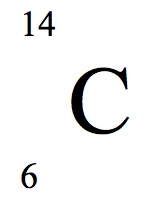
A common isotope of carbon has a mass number of 14. What is the number of neutrons in this isotope?
6
8
12
Find on the periodic table the element nitrogen (N). An atom of nitrogen has how many electrons?
7
8
14
Chlorine (Cl) is located in Period 3 and Group 7 (or group 17) on the periodic table. How many valence electrons does Cl have?
1
7
17
Which energy level is the valence shell in an atom of Krypton?
3rd
4th
5th
8th
The number of this subatomic particle results in the unique identity for each element.
protons
neutrons
electrons
Which of the following best describes an atom?
protons and neutrons grouped together
protons and electrons grouped together surrounded by a cloud of neutrons
a core (center) of protons and neutrons surrounded by a cloud of space where electrons are located
a core of electrons and neutrons surrounded by protons
The nobles gases are stable/unreactive because
They are usually large atoms.
They have completely filled valence shells.
They are man-made elements.
How are the number of electrons in a neutral atom is determined?
it is the same as the number of protons
it is the mass # - atomic number
atomic # - the charge
Most elements on the periodic table are ___________ and are typically found on the _____________ side of the table.
Metals / right
Metals / left
Non-metals / right
Non-metals / left
How many valence electrons does Potassium have?
1
2
19
39
How many valence electrons does Argon have?
2
8
18
40
The smallest unit of matter is a(n)
molecule
atom
covalent bond
electron
Elements in a vertical column on the Periodic Table have similar properties and are all members of the same ____ of elements.
molecule
phase
atom
group
The 3 main subatomic particles that make up an atom are _____.
neutrons, protons & molecules
electrons, neutrons and protons
neutrons, protons & ions
ions, electrons & newtons
The number of protons in an atom is known as its atomic _____.
number
mass
phase
bond
When 2 or more elements are combined, the substance produced is a _____.
suspension
transitional metal
compound
noble gas
What 2 types of particles exist within an atomic nucleus
protons & neutrons
neutrons & electrons
protons & neutrinos
positrons & neutrons
Oxygen has an atomic number of 8. What can you conclude from this fact?
An atom of oxygen weighs 8 grams
An atom of oxygen has 4 protons & 4 electrons
An atom of oxygen has 8 positrons
An atom of oxygen has 8 protons
What can you conclude from the fact that electrons orbit far away from atomic nuclei?
Electrons are extremely small
Atoms are comprised mostly of empty space
Protons have a positive charge
Atoms consist of subatomic particles
Which particle has a negative charge?
dust
star
electron
neutron
Which particle has a very low mass?
proton
grass
electron
water
List the element on the periodic table that has a mass of 1
(a)

Order the atomic models below from the oldest to the most recent.
2, 1, 3, and 4
1, 2, 4, and 3
3, 2, 4, and 1
3, 1, 2, and 4

Which symbol is associated with structure C?
-
+
x
no symbol
An element's periodic table identity is defined by its number of —
electrons
isotopes
neutrons
protons
He claimed that matter was made of small, hard particles that he called “atomos.”
Democritis
Dalton
Moseley
Einstein
John Dalton stated:
Atoms are tiny, invisible particles.
Atoms of one element are all the same.
Atoms of different elements are different.
Compounds form by combining atoms.
All of the statements listed.


Rutherford, Dalton, Bohr, Thomson





The atomic mass of an element is the ___.
average of the mass number and the atomic number for the element
weighted average of the masses of the isotopes of the element
total mass of the isotopes of the element
total number of subatomic particles in the nucleus

