
 Worksheets
U3: Homeostasis
Total questions: 78
Worksheet time: 1hrs 10mins
The difference in the solute concentration inside of and outside of a cell is called...
diffusion
osmosis
a concentration gradient
passive transport

When looking at the lipid bilayer, which part repels water?
the inner part of the bilayer
the outer part of the bilayer
the tips of the bilayer
the ends of the bilayer
What is diffusion?
Process by which molecules move from areas of lower concentration to areas of Higher concentration
Process by which molecules move from areas of lower concentration to areas of higher concentration with the help of a membrane.
Process by which molecules move from areas of higher concentration to areas of lower concentration.
Process by which molecules move from areas of higher concentration to areas of lower concentration with the help of a membrane

Which part of the phospholipid is hydrophobic?
Phosphate Head
Glycerol
Fatty Acid Tail
All of it

What type of membrane protein is shown here?
Transport
Recognition
Receptor
Pump

An onion cell was placed in freshwater, 100% water. What will happen?
Water will leave the onion cell
Water will neither go out nor into the cell
Water will enter the onion cell
Water will go out and into the cell at the same rate
Most of the cell membrane is made of...
Phospholipids
Carbohydrates
Proteins
Nucleic acids

Here is the chemical formula for glucose: C6H12O6. How many atoms of oxygen are in one molecule of glucose?
O
6
12
24
Identify the solvent

How much water is inside the cell?
1%
3%
97%
99%
100%
Salt cannot permeate the membrane, but water can. What will happen to this cell?
It will shrink in size due to water leaving the cell.
It will increase in size due to water entering the cell.
There will be no change in cell size since water will enter and exit the cell at the same rate.
It will increase in size due to salt entering the cell.

What is the evidence from the image to support the claim that the membrane is semipermeable?
There are two different molecules present in both the image on the left and the image on the right.
The red molecules diffused across the membrane but the pink molecules did not.
Both types of molecules are on the left side of the membrane in the first image.
There are little breaks or pores in the membrane in the image on the right.
What does permeable mean?
it allows stuff to move through the membrane
it does not allows stuff to move through the membrane
it stays the same shape
stays the same color
What does impermeable mean?
it allows stuff to move through the membrane
it does not allow stuff to move through the membrane
stays the same shape
stays the same color
According to the lab. The baggie was___________ to iodine
permeable
impermeable
polar
non polar
When looking at the cell membrane, where are the phospholipid heads located?
Floating between bilayer levels
Outer part of the bilayer
Inner part of the bilayer
Located at different parts throughout the bilayer
The function of the cell membrane is....
to regulate what enters and leaves the cell.
fight bacteria and viruses that enter the cell.
provide rigid support and protection to the cell.
make sure each cell can move

Which of the following correctly describes hydrophobic and hydrophilic regions of the cellular membrane?
The hydrophobic region is made of phosphates, and the hydrophilic region is made of lipids.
The hydrophobic region is 'water-loving', and the hydrophilic region is 'water-fearing'.
The hydrophobic region is polar, and the hydrophilic region is non-polar.
The hydrophobic region faces inward in the interior of the membrane, the hydrophilic region faces outwards towards the aqueous environment.
Which of the following would need assistance moving through the plasma membrane?
Nitrogen gas (N2)
nonpolar
Oxygen gas (O2)
nonpolar
Carbon dioxide gas (CO2)
nonpolar
Water (H2O)
polar

What protects the PLANT CELL from the outside environment?
Cell Wall
Cyctoplasm
Mitochondria
Cell Membrane
What type of cell does chloroplast belong in?
Plant Only
Both Plant and Animal
Animal Only
What type of cell does a cell membrane belong in?
Plant Only
Animal Only
Both Plant and animal
What type of cell does the cytoplasm belong in?
Plant Cell Only
Animal Cell Only
Plant and Animal Cell
How does increasing temperature affect the rate of diffusion?
molecules move in orderly manner
Gives molecules more energy increasing the rate
Takes energy away from molecules slowing down the rate
collision of molecules slows down
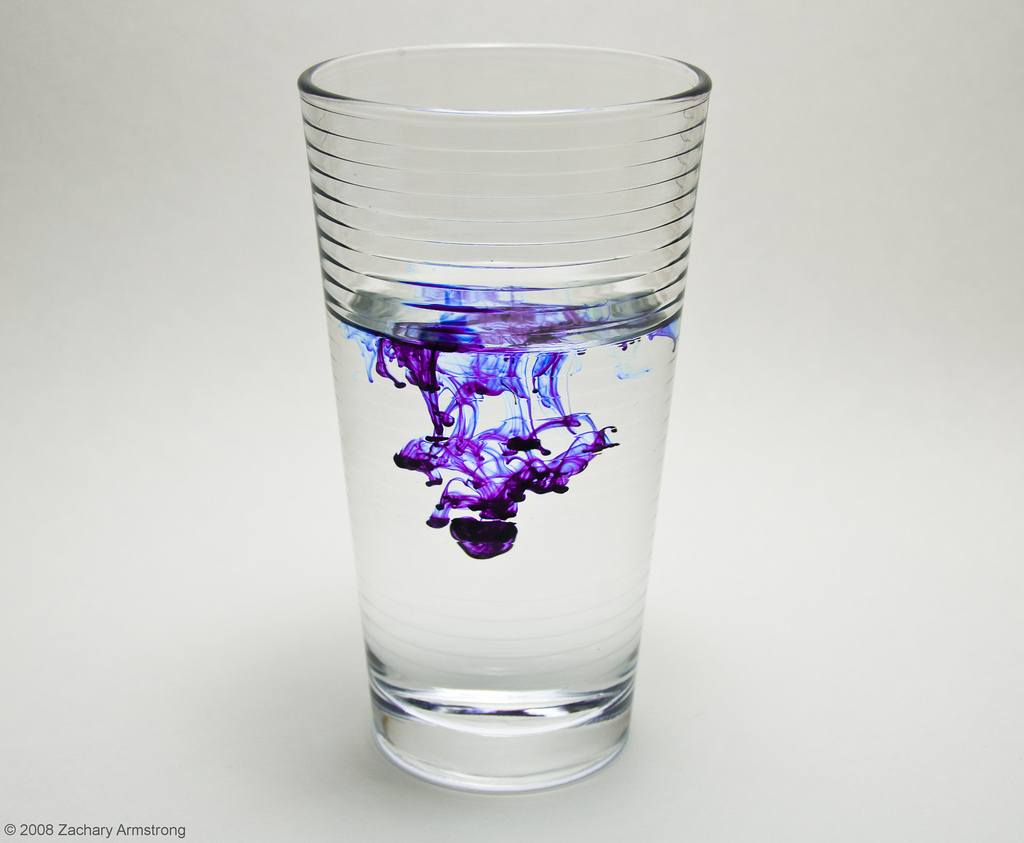
Where is there a low concentration of dye?
at the bottom of cup
in the color
at the top of cup
no concenteraion gradient
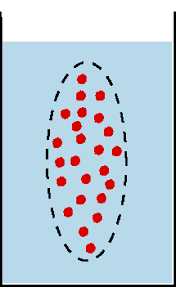
There are 24 molecules inside this cell. AFTER diffusion, how many molecules would be inside and how many would be outside?
There would be 12 inside and 12 outside
There would be 0 inside and 24 outside
The cell will stay the same with 24 inside
There will be 20 inside and 4 outside
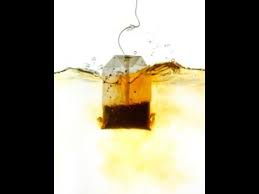
Why does the tea move out of the tea bag and into the water?
The warm water forces it out of the tea bag
There is equal concentration of water and tea
There is a higher concentration of tea in the bag and less in the water
There is a lower concentration of tea in the bag and more in the water
Diffusion can occur in solids, liquids and gaseous materials
True
False
Which of the following factors does NOT have a direct influence on the rate of diffusion?
Molecule size
Temperature
Color
Concentration
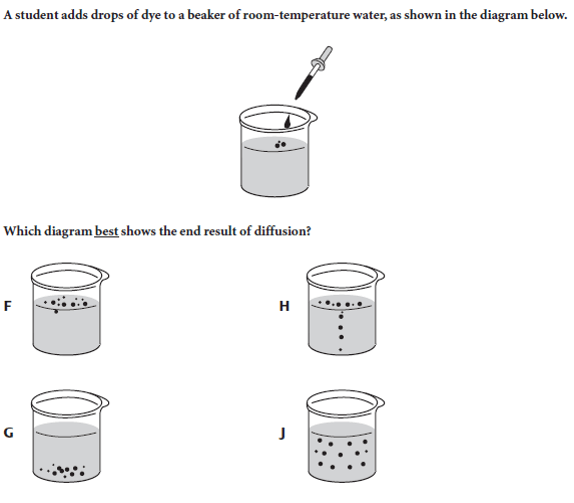

Diffusion occurs only in solids
True
False
What factors determine whether or not a molecule can diffuse across a semi-permeable membrane?
concentration gradient, size, charge
temperature, agitation, time
size of the cube, time, temperature
iodine, starch, water
How many atoms of carbon are there in a molecule of lysine? C6H14N2O2
(a)
How many atoms of carbon are there in a molecule of lysine? C6H14N2O2
(a)
Fish breathe oxygen, which is dissolved in water. Is the oxygen the fish breathe considered to be the solute or solvent?
Solute
Solvent
Vinegar is a solution that is made up of acetic acid dissolved in water. Which part of the solution is the solute?
water
acetic acid


Which comes first?
Put the prepared slide on the stage under the clips
Use the coarse focus knob to raise the stage
You are using a 12% iodine solution in class. How much solvent is in the solution?
12% iodine
12% water
100% iodine
88% water
A cell with a semi-permeable membrane contains a 6% glucose solution. The environment is a 12% glucose solution. What will happen to the cell?
The cell will increase in size because of glucose diffusing into the cell. (12% > 6%)
The cell will decrease in size because of water diffusing out of the cell. (94% > 88%)
The cell will not change in size because glucose cannot fit through the cell membrane.

which organ will balance the glucose level in the blood by releasing hormones like insulin or glucagon?
Stomach
Small intensine
large intestine
Pancreas

Which hormone is released when blood sugar gets too high?
glucose
glucagon
glycogen
insulin
Which of the following correctly pairs the hormone and the response that it causes
Glucagon - makes body cells take in glucose
Insulin - makes body cells take in glucose
Pancreas - makes liver release stored glucagon
Liver - makes pancreas take in stored insulin

This graph shows an example of...
Blood sugar regulation
Homeostasis
Negative feedback
Positive feedback

According to this graph, what is the person doing during the event (blue region)
Eating
Exercising
Type 1 Diabetes
Type 2 Diaibetes

What is true about the person this graph is about?
They are eating and healthy
They are exercising and healthy
They are eating and unhealthy
They are exercising and unhealthy
What is the difference between type 1 and type 2 diabetes?
People with Type 1 make more insulin than people with Type 2
People with Type 1 don't make insulin and people with Type 2 don't make glucagon
People with Type 1 make ineffective glucagon, people with Type 2 make ineffective insulin
People with Type 1 don't make insulin, people with Type 2 make ineffective insulin
When you are hot, your body sweats to cool you down. This means your temperature went above normal and your body sweats to counteract that change to bring you back to normal. What kind of feedback loop would this be?
Negative Feedback Loop
Positive Feedback Loop
Neutral Feedback Loop
Linear Feedback Loop
This is the name of the simple sugar that is found in your blood?
water
glucose
sodium
sugar
How many atoms are in this molecule: H2CO3
3
4
5
6
How many atoms are in this molecule? KMnO4
4
5
6
7
True or False: The dialysis tubing is selectively permeable because some glucose diffused into it but other glucose molecules did not and were still found in the beaker (tested positive with the Benedict's test.)
True
False
Claim: Iodine diffused into the baggie.
Which of the following is evidence to support this claim?
There was a concentration gradient so iodine diffused into the baggie.
The starch solution in the baggie was whitish, clear but turned blue-black when iodine diffused into the baggie.
Iodine is a small molecule and can fit through the tiny pores in the baggie.
Starch is a large molecule and didn't diffuse along the concentration gradient even though it was present.

