
 Worksheets
PBS 2.2.1-2.2.2
Total questions: 74
Worksheet time: 54mins


A _________ is DNA tightly coiled around proteins.
gene
chromosome
trait
mutation

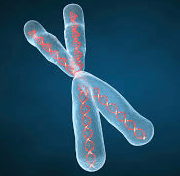

Structure (c) is a ____. Hint: It is one half of the X shape.
chromosome
chromatid
centromere

The 2 exact copies of DNA in a chromosome are called ________.
chromatids
genes
mutations
pathogens
Cancer is
not caught by cell cycle checkpoints
caused by mutations in genes.
uncontrolled cellular division.
all of the above.
Describe the characteristics of cancer cells that make them easy to culture in the laboratory.
Cancer cells grow quickly and can divide indefinitely
Cancer cells are difficult to culture in the laboratory
Cancer cells do not grow in the laboratory
Cancer cells require specialized conditions to grow in the laboratory
What are the characteristics of cancer cells that distinguish them from normal cells?
Uncontrolled growth, no changes in adherence, and contact inhibition
Uncontrolled growth, changes in adherence, and loss of contact inhibition
Controlled growth, changes in adherence, and loss of contact inhibition
Uncontrolled growth, changes in adherence, and contact inhibition


In which part of the cell does this process take place
at the ribosomes
in the nucleus
in food vacuoles
on the chromosome

What is structure V?
amino acid
codon
gene
DNA molecule

Which of the structures are composed of RNA?
II and IV
I and V
III and V
III and IV

A list of possible diseases of disorders based on an individual’s medical history, current symptoms, the results of physical exams, routine testing, and blood work is called a(n) ______ ______ (2 words).
(a)
Cancer can be defined as ___________ tumors that invade other tissues and spread to other parts of the body in a process called ____________.
benign; mitosis
malignant; metastasis
malignant; interphase
benign; replication
A(n) ___________ is a test which take a closer look at cells to see if they are cancerous.
MRI
blood test
biopsy
metastasis

Which sample of cells are cancerous?
A
B
A and B
neither - both A and B are samples of healthy cells

A feature of cancerous cells, shown in the figure here, is that cancerous cells
have larger (compared to the whole cell) and multiple nuclei.
have smaller (compared to the whole cell) and a single nucleus.
are arranged in an organized manner.
have kept their specialized structures.

Which of the followings describes a cancerous cells?
Atypical arrangement
maintains organization
specialized
Single nuclei
Which of the following best defines cancerous cells?
Unregulated cell growth
Incapable of creating new DNA
Lack of mitochondria
Slow cell replication
When diagnosing melanoma, which of the following does C stand for in ABCDE?
color change
cyanosis
cold to the touch
carotene present
When diagnosing melanoma, which of the following does B stand for in ABCDE?
bigger than dime
Border
blackish in color

On a scale of 1-10, 1 meaning 'don't worry about it' and 10 being 'go see a dermatologist immediately', how would you classify this image?
1
3
4
10
Apoptosis is
the process of programmed cell death
the process of programmed cell growth
the process of programmed cell birth
the process of programmed cell regulation

Which organelle is the location where protein is made?
Ribosome
Nucleus
Cytoplasm
Nucleotide
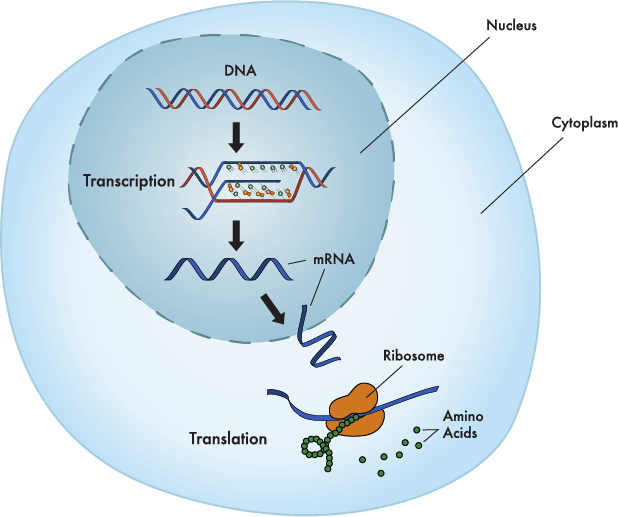
During transcription, this type of ribonucleic acid is responsible for copying the DNA and brining it out of the nucleus.
tRNA
mRNA
rRNA
dRNA

When these bond together, they form a protein
Amino Acids
Peptide Bonds
Ribose
Nucleotides

mRNA occurs during this process
Translation
Transcription
Replication
Delivery
Which of the following is the complementary mRNA sequence to this DNA strand: AACTGAA
UUGACUU
TTGACTT
AACTGAA
AACUGAA

In what process is mRNA synthesized?
Transcription
Translation
DNA Replication
Mitosis
Which organelle contains rRNA and reads the mRNA to synthesize a protein?
Ribosome
Nucleus
Cytoplasm
Nucleotide

What brings the amino acids to the ribosome to assemble a protein?
DNA
How many nucleotides code for 1 amino acid?
1
2
3
4

What is the location in the cell for translation?
Cytoplasm
Nucleus
Lysosome
Golgi apparatus
A mutation is defined as:
A change in the cell's structure
Anything that changes in an embryo
Any change in the physical features of a human
A change in the DNA sequence
A mutation can occur if a base pair is ____________, deleted or substituted for another.
modified
added
transferred
Another name for a point mutation is:
Substitution
Frameshift
Insertion
Deletion
ATTTGAGCC- Original
ATTGAGCC - Mutated
The example above is an example of a
Insertion
Point mutation
Deletion
Substitution
Mutations are random.
True
False
Mutations are SOMETIMES helpful to the organism.
True
False
This type of mutation involves inserting a piece of DNA where it does not belong. Known as a frameshift mutation.
Substitution Mutation
Deletion Mutation
Insertion Mutation
This type of mutation involves removing a piece of DNA where it belongs.
Known as a frameshift mutation.
Substitution Mutation
Insertion Mutation
Deletion Mutation
Possible negative consequences of mutations could be genetic ____________________ and cancer.
diversity
disorders
dominance
duplication
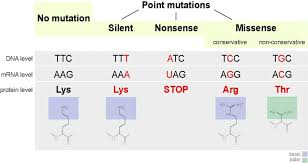
If a point mutation does not change the order of the amino acid sequence, this is called a:
nonsense mutation
silent mutation
missense mutation
frameshift mutation
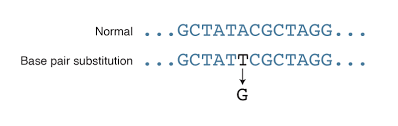
Mutations that change a single base pair, usually involving a substitution of one base for another:
chromosomal mutation
polyploidy
translocation
point mutation
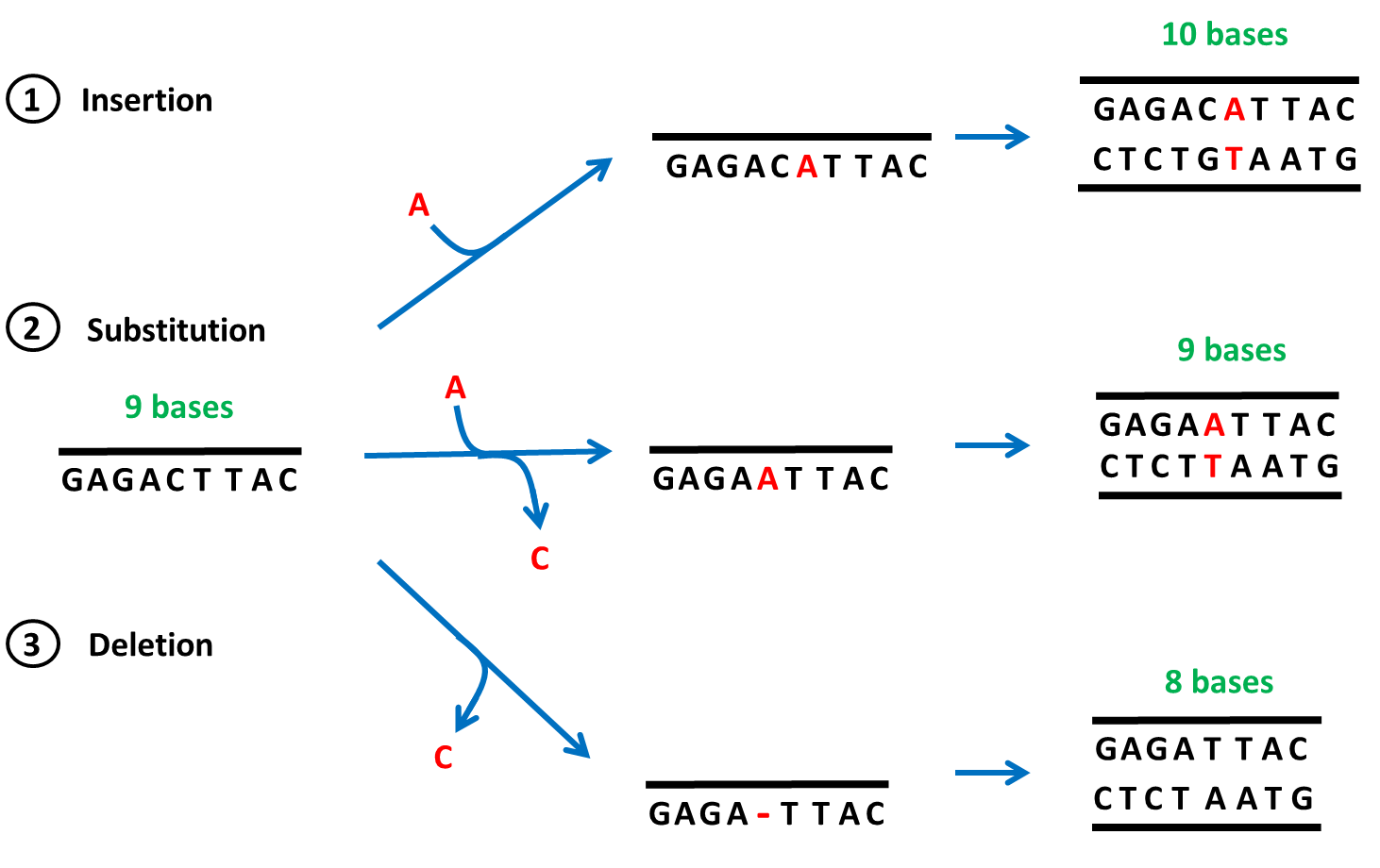
Insertions and deletions are also known as:
frameshift mutations
chromosomal mutations
silent mutations
polyploidy
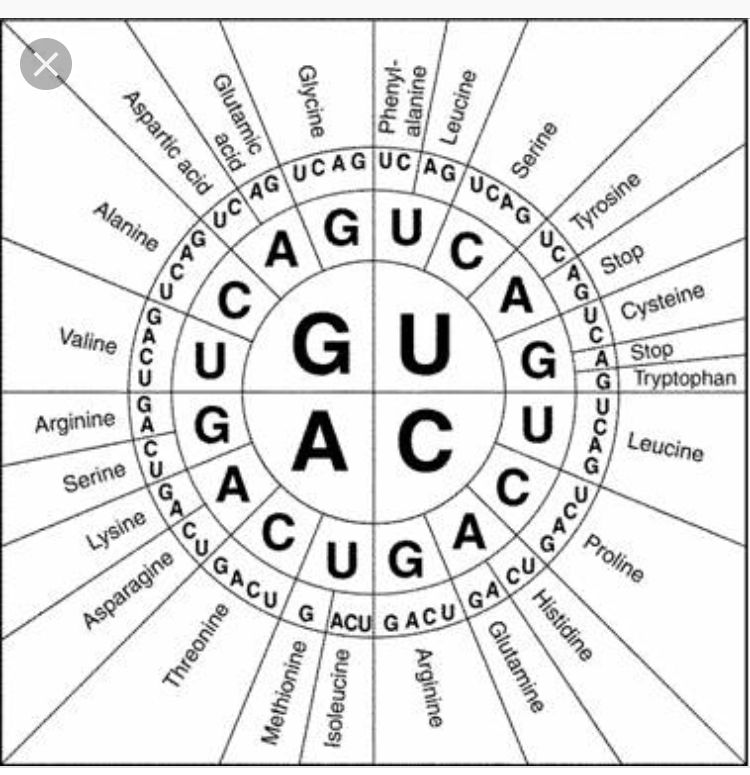
If a mutation codes for "stop" in the amino acid chain, this is called a:
nonsense mutation
missense mutation
silent mutation
frameshift mutation
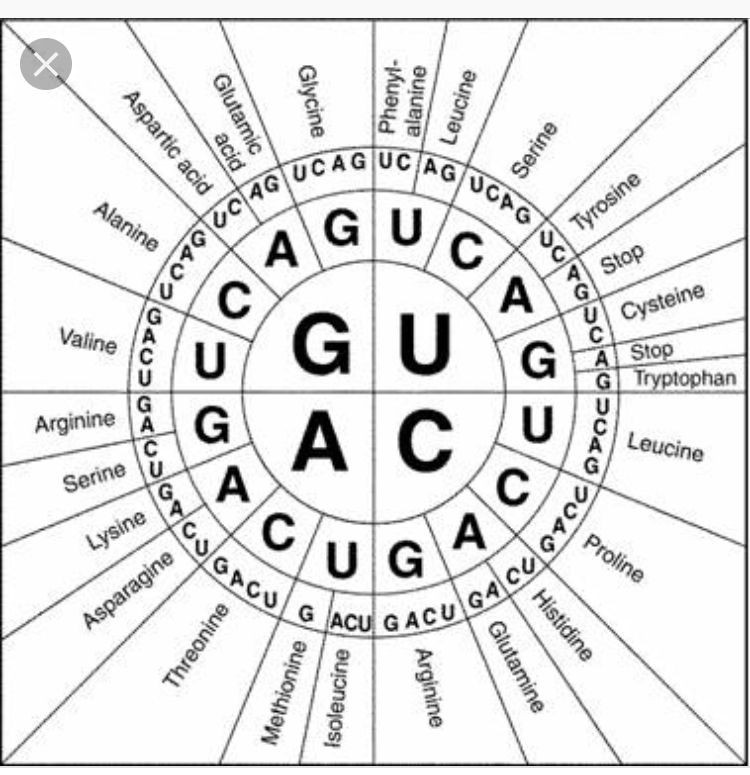
If UCU is changed to UCC, this is a _______________________________.
silent mutation
missense mutation
nonsense mutation
frameshift mutation
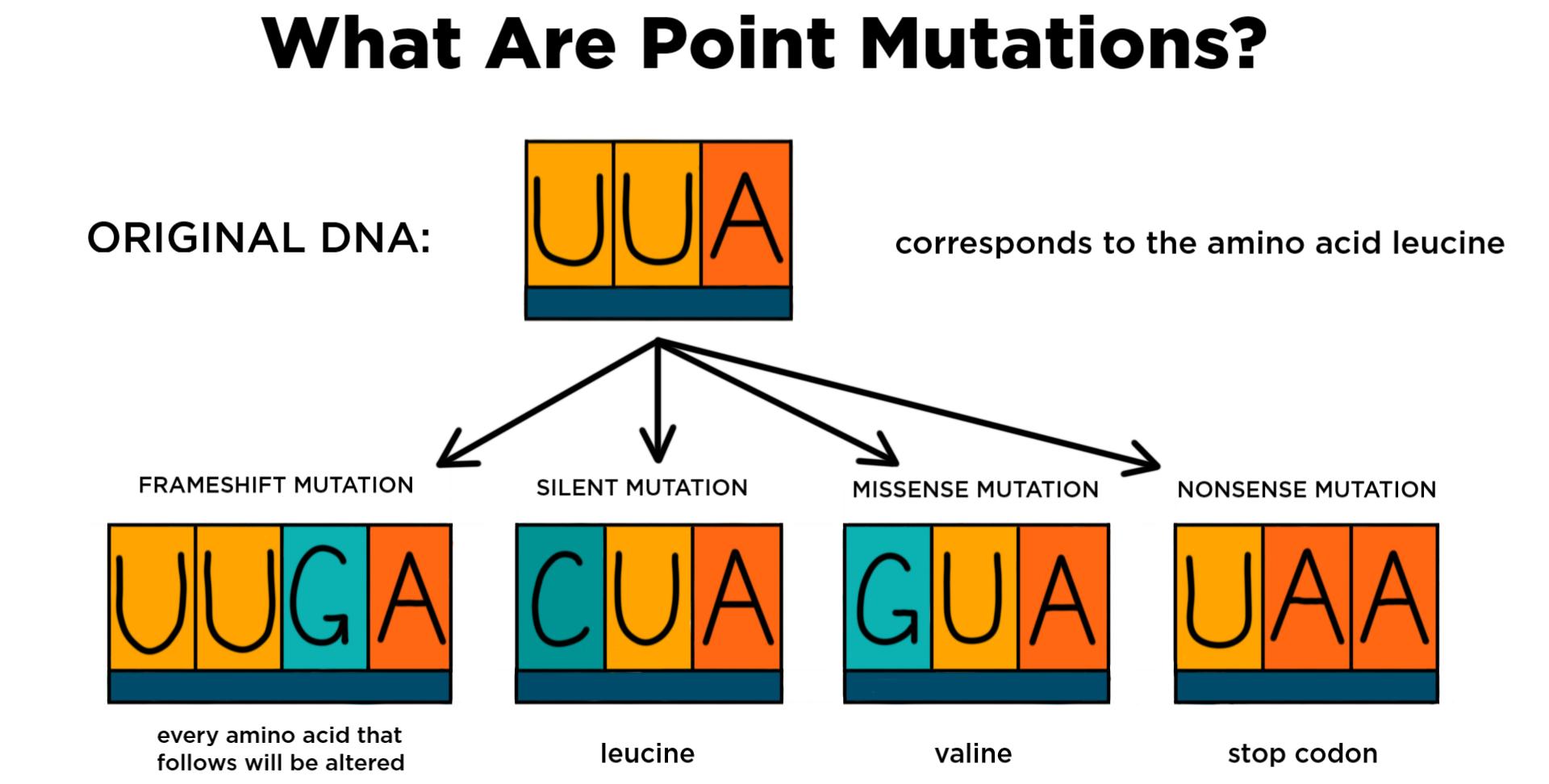
Mutations that change the amino acid specified by the codon, affecting the amino acid sequence, are called:
nonsense mutations
missense mutations
silent mutations
all of the above
Which of the following mutations would be the most likely to affect the resulting protein?
substitution
silent mutation
frameshift mutation
all mutations affect the resulting protein

