
 Worksheets
Char of Life/Levels of Organization
Total questions: 70
Worksheet time: 3575secs
Name
Class
Date
1.
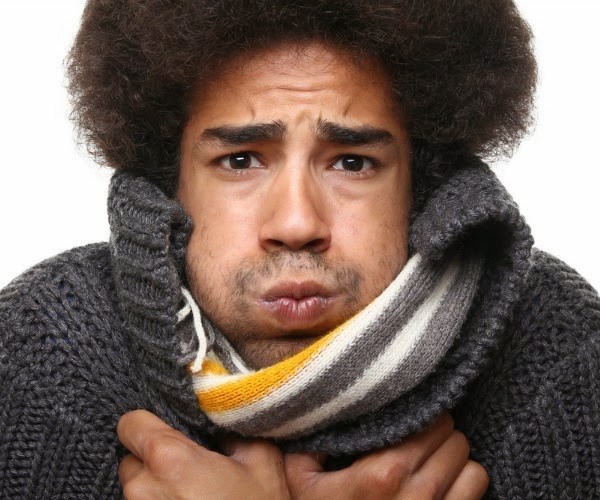
The image seen here is of a person shivering due to cold temperature. This is an example of an organism maintaining ________________!
a)
Homeostasis
b)
Adaptations
c)
Evolution
d)
Development
2.
Over three years, Tim's height has increased from 5'4" to 5'11".
a)
metabolism
b)
grow and develop
c)
reproduce
d)
homeostasis
3.
A tulip opens up in the morning at sunrise and closes up in the evening at sunset.
a)
metabolism
b)
grow and develop
c)
respond to stimulus
d)
homeostasis
4.
A tulip opens up in the morning at sunrise and closes up in the evening at sunset.
a)
metabolism
b)
grow and develop
c)
respond to stimulus
d)
homeostasis
5.
Chemical reactions that build up or break down materials.
a)
homeostasis
b)
metabolism
c)
asexual reproduction
d)
DNA
6.
Over three years, Tim's height has increased from 5'4" to 5'11".
a)
metabolism
b)
grow and develop
c)
reproduce
d)
homeostasis
7.
Rocks are not living because
a)
they never move
b)
they aren't needed for humans
c)
they are not made of cells
d)
they don't break down
8.
During ___________ conditions inside our body are kept stable (the same)
a)
homeopathic
b)
Homo sapian
c)
homeostasis
d)
homologous
9.
All living things are composed of cells.
a)
True
b)
False
10.
In order for something to be considered a living organism, it must display _____ of the eight characteristics of living things.
a)
all
b)
some
c)
one
d)
more than half
11.
During ___________ conditions inside our body are kept stable (the same)
a)
homeopathic
b)
Homo sapian
c)
homeostasis
d)
homologous
12.
Which of the following is NOT a characteristic shared by all living organisms?
a)
Ability to move
b)
Ability to grow and develop
c)
Made up of one or more cells
d)
Responds to stimuli
13.
An organism is another name for a(n) _____________ factor, or living thing.
a)
biotic
b)
abiotic
14.
A plant growing towards sunlight would be an example of which characteristic of life? Select the best answer.
a)
Response to a stimuli
b)
Capable of reproduction
c)
Made up of cells
d)
Growth and development
15.
Temperature and sunlight would be examples of ____________ factors within an environment.
a)
abiotic
b)
biotic
16.
Which of the following characteristics of living things best explains why your legs and arms get longer and stronger as you get older?
a)
You grow and develop.
b)
You maintain homeostasis.
c)
Your cells contain genetic information.
d)
You display organization.
17.
All living things ____ to make more living things.
a)
reproduce
b)
develop
c)
grow
d)
adapt
18.
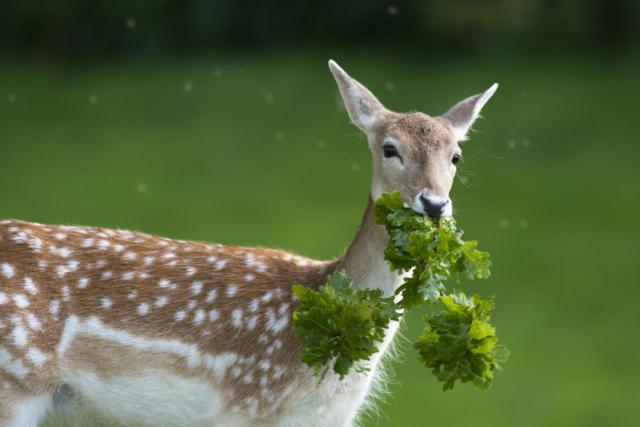
A plant using sunlight to make food to use or a deer eating leaves from a shrub are examples of
a)
universal genetic codes.
b)
organisms made of cells.
c)
responding to a stimulus.
d)
metabolism.
19.
All organisms contain instruction molecules that help determine which traits the organism will have is an example of
a)
universal genetic code (DNA/RNA)
b)
metabolism
c)
evolution
d)
growth and development
20.
A single organism that produces offspring identical to itself.
a)
DNA
b)
asexual reproduction
c)
sexual reproduction
d)
metabolism
21.
Cells from 2 parents unite to form a new individual.
a)
asexual reproduction
b)
sexual reproduction
c)
biosphere
d)
stimulus
22.
Signal that requires a response.
a)
metabolism
b)
bioshere
c)
stimulus
d)
DNA
23.
The basic unit of life is called a (n)
a)
atom
b)
compound
c)
cell
d)
energy
24.
Maintaining a stable internal environment.
a)
Homeostasis
b)
Metabolism
c)
Stimulus
d)
DNA
25.
The image seen here is of a person shivering due to cold temperature. This is an example of an organism maintaining ________________!
a)
Homeostasis
b)
Adaptations
c)
Evolution
d)
Development
26.
A tulip opens up in the morning at sunrise and closes up in the evening at sunset.
a)
metabolism
b)
grow and develop
c)
respond to stimulus
d)
homeostasis
27.
A single organism that produces offspring identical to itself.
a)
DNA
b)
asexual reproduction
c)
sexual reproduction
d)
metabolism
28.
Which of the following correctly describes ASEXUAL reproduction?
a)
One parent, genetically identical offspring
b)
One parent, genetically different offspring
c)
Two parents, genetically identical offspring
d)
Two parents, genetically different offspring
29.
A plant growing towards sunlight would be an example of which characteristic of life? Select the best answer.
a)
Response to a stimuli
b)
Capable of reproduction
c)
Made up of cells
d)
Growth and development
30.
Organs are composed of tissues, which are composed of cells. This is an example of which characteristic of life?
a)
Living things display organization.
b)
Living things reproduce.
c)
Living things maintain homeostasis.
d)
Living things contain genetic information.
31.

a)
evolution
b)
heredity
c)
homeostasis
d)
reproduction
32.
the smallest unit of life
a)
evolution
b)
cells
c)
metabolism
d)
reproduction
33.
All living things are made up of ___.
a)
evolution
b)
cells
c)
heredity
d)
reproduction
34.
Before a soccer game Charlie always eats a big dinner. Which characteristic of life does this face best describe?
a)
living things use energy
b)
living things reproduce
c)
living things grow and develop
d)
living things are based on a universal genetic code
35.
In all of our cells there is DNA. Which characteristic of life does this fact best describe?
a)
living things respond
b)
living things maintain internal balance
c)
living things are based on a universal genetic code
d)
living things grow and develop
36.
Organs and tissues that perform the same function is called _____________?
a)
cells
b)
tissues
c)
organs
d)
organ system
37.
A group of cells that have similar functions? Examples are nervous, epithelial, muscle and connective
a)
cell
b)
tissue
c)
Organ
d)
Organ system
38.
A group of tissues that perform a similar function is called_____. (Examples include the heart, lungs or stomach)
a)
cells
b)
tissues
c)
organs
d)
organ systems
39.
When many organ systems work together it can form...
a)
a cell
b)
an organ
c)
an organ system
d)
an organism
40.
What is the correct order of organization
a)
cells->tissue->organs->organ systems-> organism
b)
tissue->cells->organs->organ systems-> organism
c)
organs->organ systems-> organism->cells->tissue
d)
cells->tissue->organs->organism->organ system
41.
The basic unit of structure and function in the human body is the....
a)
organ
b)
organ system
c)
cell
d)
tissue
42.
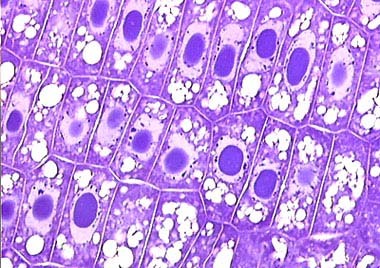
This is a example of ........
a)
cell
b)
tissue
c)
organ
d)
organ system
43.
Multiple organisms of the same species describes a
a)
organism
b)
population
c)
community
d)
ecosystem
44.
Which level of organization is more complex than a population and less complex than an ecosystem?
a)
organism
b)
population
c)
community
d)
ecosystem
45.
Which is an example of a population?
a)
different kinds of bacteria
b)
A group of fish and sharks
c)
deer, bear, and rabbits
d)
A herd of cattle
46.
which is the correct order of the levels of organization from simple to complex?
a)
organism, population, community, ecosystem
b)
ecosystem, community, population, organism
47.
Which is the definition of a community
a)
multiple organisms of the same species
b)
all the living and nonliving things in an area
c)
a living thing
d)
multiple organisms of different species
48.
A group of tissues that perform a similar function is called _____.
a)
a cell
b)
a tissue paper
c)
an organ
d)
a system
49.
This is a example of ........
a)
cell
b)
tissue
c)
organ
d)
organ system
50.
When many organ systems work together, they can form a(n) ____
a)
organ
b)
cells
c)
organ system
d)
organism
51.
Organs and tissues that perform the same function is called _____________?
a)
cells
b)
tissues
c)
organs
d)
organ system
52.
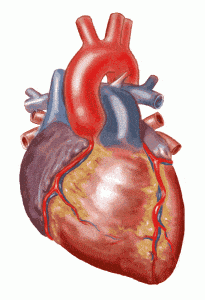
This is a example of ........
a)
cell
b)
organ system
c)
organ
d)
tissue
53.
What is the smallest unit of an element that has the properties of that element
a)
atom
b)
compound
c)
homogeneous mixture
d)
heterogeneous mixture
54.
Certain tasks of cells
a)
Organ System
b)
Structure
c)
Specialization
d)
Biotic
55.
A ecosystem is both biotic and abiotic parts in an ecosystem.
a)
True
b)
False
56.
A community is ___________ types of species living together.
a)
Same
b)
Alternating
c)
All
d)
Different
57.
A population is all the ______ species?
a)
Same
b)
Different
c)
Other
d)
Alternating
58.
What is the smallest unit of an element that has the properties of that element
a)
atom
b)
compound
c)
homogeneous mixture
d)
heterogeneous mixture
59.
The basic unit of structure and function in the human body is the....
a)
organ
b)
organ system
c)
cell
d)
tissue
60.
If you see cardinals, blue jays and owls in your back yard, this is an example of a
a)
community
b)
population
c)
ecosystem
d)
species
61.
A group of the same species living together is a(n)
a)
population
b)
community
c)
ecosystem
d)
biome
62.
All the living things on earth make up the
a)
geosphere
b)
hydrosphere
c)
biosphere
d)
atmosphere
63.
Water temperature would be an example of ...
a)
a biotic factor.
b)
an abiotic factor.
64.

What are the abiotic factors in this image?
a)
water, sunlight, dirt, air
b)
birds and plants
c)
water, plants, and birds
65.

What are the biotic factors in this image?
a)
sunlight, elephants, and grasses
b)
sunlight, water, and air
c)
elephants, plants, trees
66.
A collection of organisms that make up a community as well as all of the nonliving aspects of the environment.
a)
Population
b)
Community
c)
Habitat
d)
Ecosystem
67.
Which of the following lists the Levels of Organization of an ecosystem correctly from smallest to largest?
a)
community -> population -> ecosystem -> biosphere
b)
population -> ecosystem -> community -> biosphere
c)
organism -> community -> population -> ecosystem
d)
organism -> population -> community -> ecosystem -> biosphere
68.
All the organisms in a given group, along with abiotic factors within which they interact
a)
symbiosis
b)
species
c)
ecology
d)
ecosystem
69.
A group of tissues that perform a similar function is called_____. (Examples include the heart, lungs or stomach)
a)
cells
b)
tissues
c)
organs
d)
organ system
70.
What is the correct order of organization
a)
tissues-cells-organs-organ systems-organism
b)
cell-tissue-organs-organ systems-organism
c)
organism-cells-tissues-organ systems-organism
d)
tissues-cells-organs-organ sytems-organism
100 %

