wayground logo

Free Printable Worksheets

NEW

Font size

S
M
L
XL
Worksheets

HBS 2.1 (new)

Total questions: 72

Worksheet time: 1hrs 11mins

Name
Class
Date
1.
Which lobe is shown in red-
a)
Frontal
b)
Parietal
c)
Occipital
d)
Temporal
2.
Which lobe is shown in blue-
a)
Frontal
b)
Parietal 
c)
Occipital
d)
Temporal
3.
Which lobe is shown in yellow-
a)
Frontal
b)
Parietal 
c)
Occipital
d)
Temporal
4.
Which lobe is shown in green-
a)
Frontal
b)
Parietal 
c)
Occipital
d)
Temporal
5.
Which lobe is not visible from the top
a)
Frontal
b)
Parietal 
c)
Occipital
d)
Temporal
6.
Which structure is shown by number 1
a)
Cerebellum
b)
Cerebrum
c)
Pons
d)
Medulla Oblongata
7.
Which structure is shown by number 2
a)
Cerebellum
b)
Cerebrum
c)
Pons
d)
Medulla Oblongata
8.
Which structure is shown by number 3
a)
Cerebellum
b)
Cerebrum
c)
Pons
d)
Medulla Oblongata
9.
Easy way to remember the order of the lobes.
a)
Flower P.O.T
b)
Flower T.O.P
c)
Flower O.P.
10.
The pons and medulla oblongata make up the- 
a)
brain stem
b)
cerebrum
c)
frontal lobe
d)
cerebellum
11.
The PONS is shown in which color
a)
purple
b)
blue
c)
green
d)
brown
12.
The MEDULLA OBLONGATA is shown in which color
a)
purple
b)
blue
c)
green
d)
brown
13.

Which lobe is shown in red?

a)

Frontal

b)

Parietal

c)

Occipital

d)

Temperal

14.
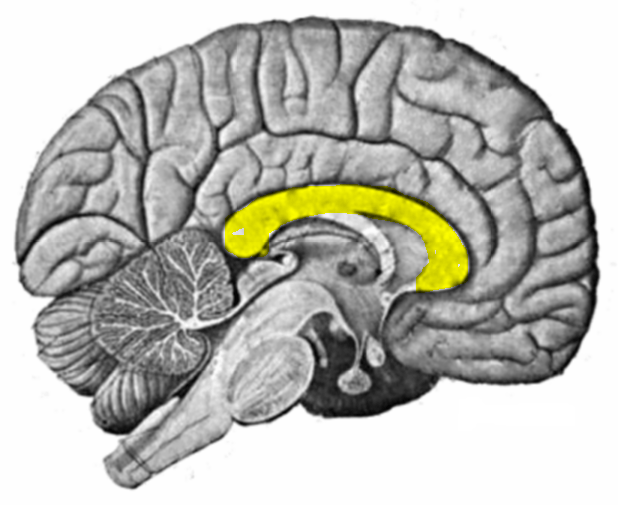
What is this?
a)
Cerebrum
b)
Cerebellum
c)
Brain Stem
d)
Diencephalon
15.
a)
Corpus Callosum
b)
Amygdala
c)
Thalamus
d)
Hypothalamus
16.
Breathing
a)
Brain stem
b)
cerebellum
c)
occipital lobe
d)
parietal lobe
17.
vision
a)
temporal lobe
b)
parietal lobe
c)
occipital lobe
d)
brain stem
18.
language
a)
temporal 
b)
parietal 
c)
occipital
d)
cerebellum
19.
judgement
a)
temporal lobe
b)
parietal lobe
c)
frontal lobe
d)
brain stem
20.
balance
a)
cerebellum
b)
temporal
c)
occipital
d)
frontal
21.
attention
a)
brain stem
b)
frontal
c)
occipital
d)
temporal
22.
goal setting
a)
frontal 
b)
cerebellum
c)
parietal
d)
temporal
23.
touch perception
a)
occipital
b)
temporal
c)
parietal
d)
brain stem
24.
coordination
a)
brain stem
b)
cerebellum
c)
occipital
d)
temporal
25.
memory aquisition
a)
frontal
b)
cerebellum
c)
parietal
d)
occipital
26.
sensory integration
a)
parietal
b)
occipital
c)
temporal
d)
frontal
27.
time perception
a)
cerebellum
b)
brain stem
c)
frontal
d)
temporal
28.
swallowing
a)
brain stem
b)
cerebellum
c)
frontal
d)
temporal
29.
recognition of written words
a)
occipital
b)
temporal
c)
brain stem
d)
frontal
30.
control of emotional response
a)
temporal
b)
frontal
c)
occipital
d)
brain stem
31.
hearing ability
a)
parietal
b)
temporal
c)
occipital
d)
frontal
32.
inhibition
a)
parietal
b)
frontal
c)
temporal
d)
occipital
33.
initiation
a)
frontal
b)
temporal
c)
occipital
d)
brain stem
34.
startle response
a)
cerebellum
b)
frontal
c)
occipital
d)
brain stem
35.
categorizing of objects
a)
occipital
b)
cerebellum
c)
temporal
d)
frontal
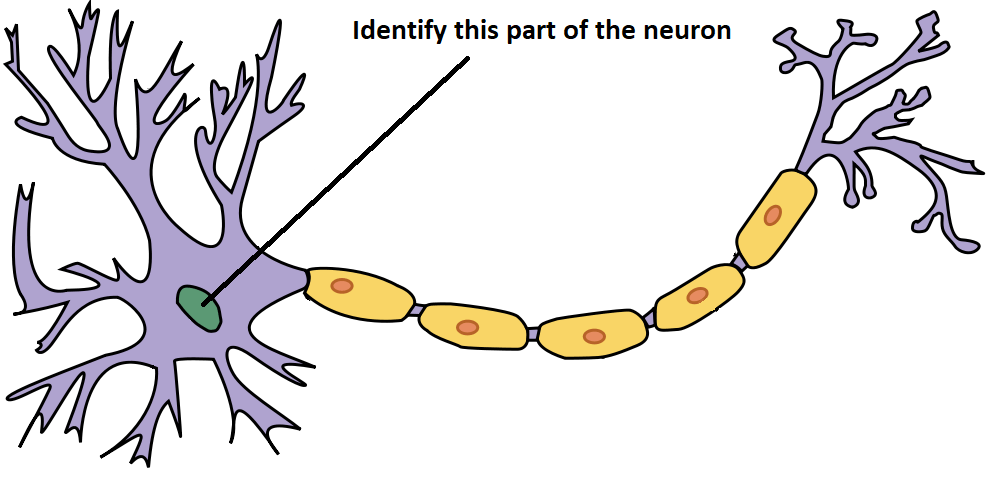
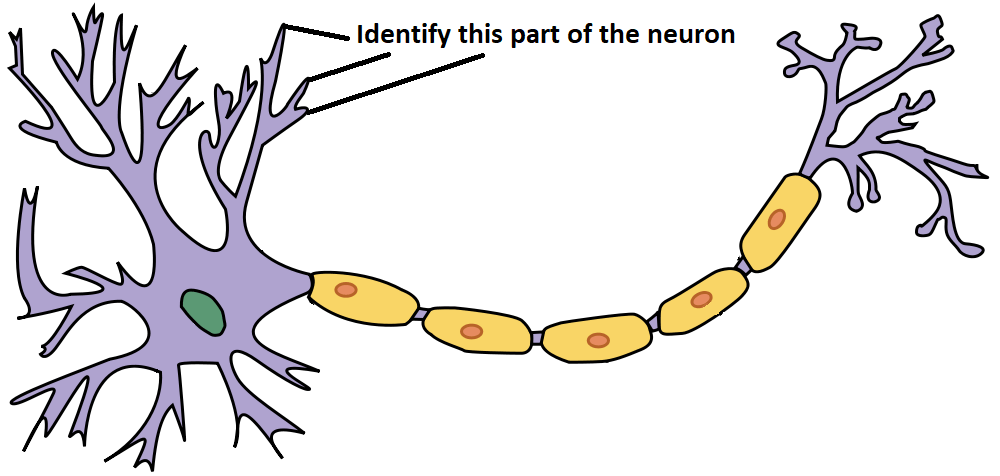
36.
a)

Nucleus

b)

Cell Body

c)

Axon

d)

Node of Ranvier

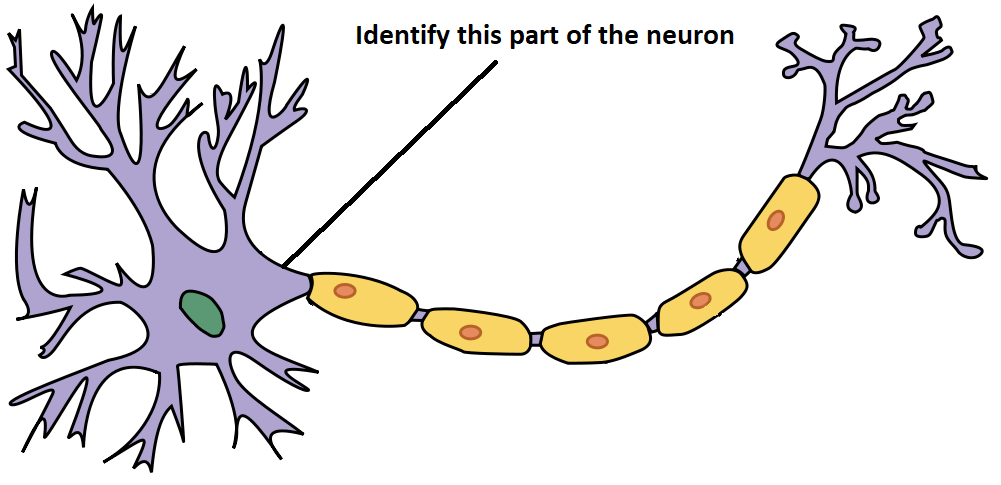
37.
a)

Nucleus

b)

Cell Body

c)

Axon

d)

Node of Ranvier

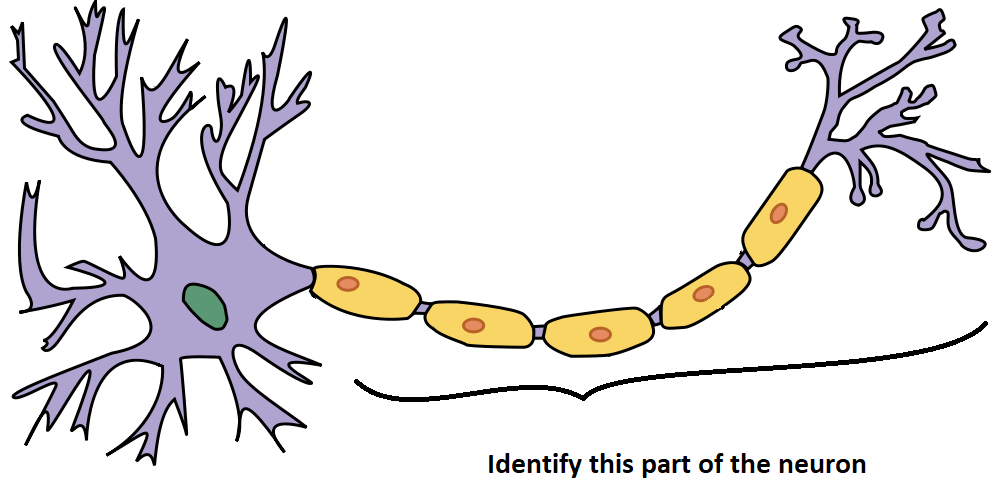
38.
a)

Nucleus

b)

Cell Body

c)

Axon

d)

Node of Ranvier

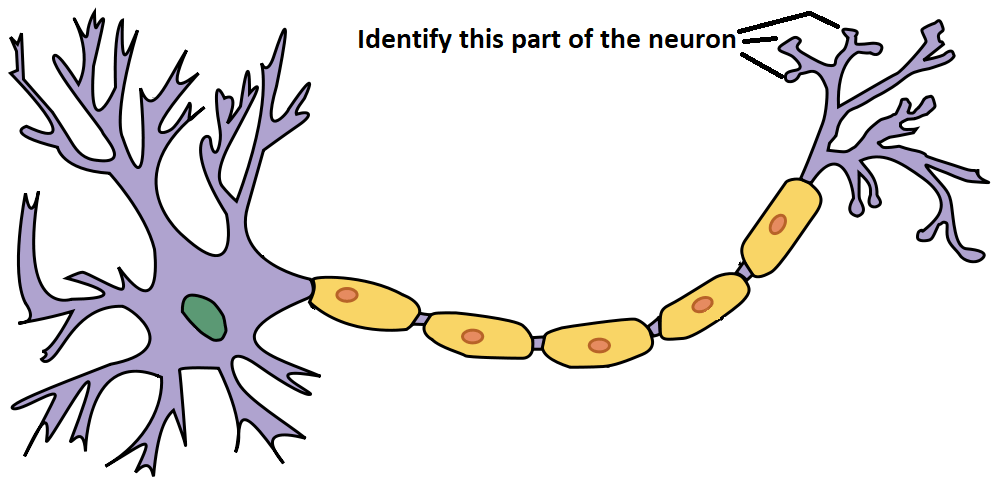
39.
a)

Dendrites

b)

Axon Terminals

c)

Myelin Sheath

d)

Schwann Cells

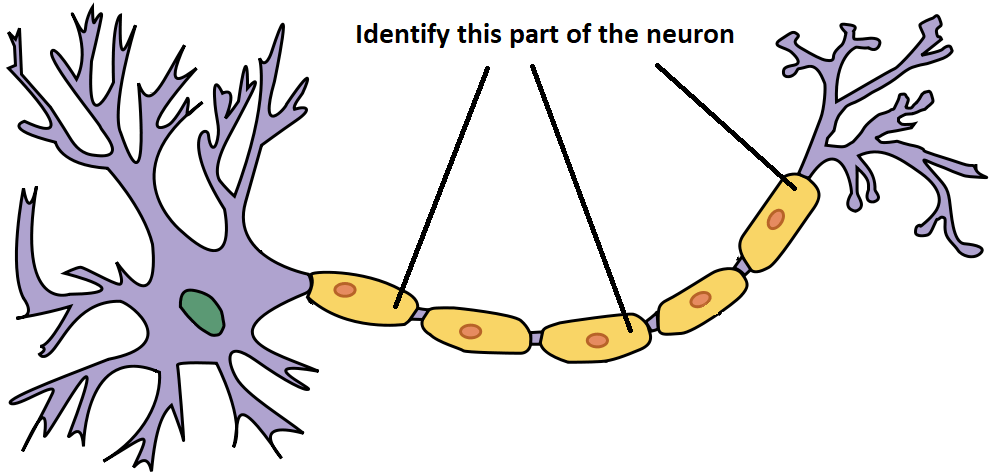
40.
a)

Dendrites

b)

Axon Terminals

c)

Myelin Sheath

d)

Schwann Cells

41.
a)

Dendrites

b)

Axon Terminals

c)

Myelin Sheath

d)

nuclei

42.

What does the neuron's Myelin Sheath do?

a)

Controls the actions of the neuron

b)

Produces food for the neuron

c)

Carries information from the cell body to other neurons

d)

Surrounds and insulates the axon

43.

What do Dendrites do?

a)

Receives information from other neurons via neurotransmitters

b)

Produces fatty tissue for the Myelin Sheath

c)

Sends information to the next cell

d)

Controls the speed of electrical signal through the axon

44.

What do Axon Terminals do?

a)

Receives information from other neurons

b)

Produces fatty tissue for the Myelin Sheath

c)

Sends information to the next cell

d)

Controls the speed of electrical signal through the axon

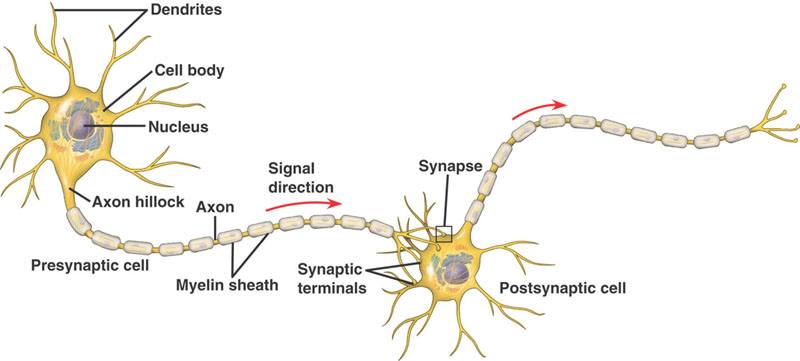
45.

The space between the axon terminal of the sending neuron and the dendrite or cell body of the receiving neuron.

a)

axon

b)

synapse

c)

dendrite

d)

cell body

46.
Part of a neuron that receives information from other neurons
a)
axon
b)
dendrites
c)
myelin sheath
d)
synapse
47.
a junction at which a neuron meets another cell
a)
axon
b)
dendrites
c)
myelin sheath
d)
synapse
48.

When an action potential starts, what are the first channels to open?

a)
Sodium
b)
Potassium
c)
Calcium
d)

Sodium/Potassium Pumps

49.
When a neuron is resting, the inside of the axon has a ____________ charge.
a)

positive

b)

negative

50.
When a neuron is not engaged in an impulse.
a)
Resting potential
b)
Action potential
c)
Neural potential
d)
Synaptic potential
51.
Which ions are involved in the electrical nerve impulse?
a)
Iodine and Sodium
b)
Potassium and Sodium
c)
Iron and Sodium
d)
Calcium and Iodine
52.

In a reflex action, the __________ bypasses the ___________

a)

Motor neuron, brain

b)

Sensory neuron, brain

c)

Sensory neuron, spinal cord

d)

Motor neuron, spinal cord

53.

An example of a reflex action includes

a)

Touching a butterfly

b)

Brushing your hand against the side of your body

c)

Touching a hot stove

d)

Your legs moving as you walk

54.

In a reflex arc, the sensory neuron leads to the ___________ and the motor neuron leads to the __________

a)

Spinal cord, CNS

b)

CNS, muscle

c)

Spinal cord, muscle

d)

Muscle, CNS

55.

Reflex actions are important because

a)

They provide a quick, involuntary response

b)

They prevent injury

c)

They are essential to the survival of organisms

d)

All of the above

56.

What type of neuron is A?

a)

Sensory

b)

Inter

c)

Motor

57.

What type of neuron is B?

a)

Sensory

b)

Interneuron

c)

Motor

58.

What type of neuron is C?

a)

Sensory

b)

Inter

c)

Motor

59.

True or False: Interneurons are found throughout the body.

a)

True

b)

False

60.

Which is central nervous system

a)

muscle and gland

b)

brain and spinal cord

c)

spinal nerve and cranial nerve

d)

nose and mouth

61.

Voluntary actions are controlled by the ____________.

a)

cranial nerve

b)

spinal nerve

c)

spinal cord

d)

brain

62.

What is voluntary action?

a)

action that we are aware

b)

action that are automatic

c)

occur immediately

d)

unconscious control

63.

Which response is voluntary action?

a)

eating

b)

peristalsis in aesophagus

c)

withdraw hand from hot pan

d)

sneeze

64.

Voluntary actions are taken under _________________ control.

a)

conscious

b)

unconscious

c)

semi-conscious

d)

caution

65.

Example of involuntary action is ____________________.

a)

reading

b)

talking

c)

breathing

d)

writing

66.

The human nervous system is able to detect ______________.

a)

responses

b)

stimuli

c)

impulses

d)

information

67.

Motor neurons carry impulses __________ the brain

a)

towards

b)

away from

c)

within

68.

The dendrites of a neuron carry a stimulus

a)

Towards the cell body

b)

Away from the cell body

c)

Through the cell body

69.

Neurotransmitters are stored in which structure of the neuron?

a)

Cell body

b)

Dendrite

c)

Axon terminals

70.

Neurotransmitters bind to complementary sites on a cell called

a)

receptors

b)

axon terminals

c)

cell bodies

71.

Reaction time is ___________________ than reflex time.

a)

faster

b)

slower

c)

same

72.

The spaces between myelin on an axon are called

a)

axon gaps

b)

nodes of ranvier

c)

dendrite dents