
 Worksheets
Biology Semester 2 Final Exam for CK12
Total questions: 65
Worksheet time: 42mins
Which of the following is a macromolecule? (4)
protein
vitamin
carbohydrate
nucleic acid
lipid
Which of the following contains the instructions for making proteins? (2)
cell membrane
mitochondria
DNA
nucleus
Which of the following statements are true regarding cells? (3)
cells are the basic unit of structure and function in all living things
organisms can be unicellular or multicellular
cells are a larger unit than a tissue
cells are specialized to do a particular job in a unicellular organism
animal and plant cells are eukaryotic
Which organelles or cell parts are in all cells? (3)
DNA
vacuole
cell membrane
cytoplasm
cell wall
Proteins are made on which of the following organelles? (1)
Nucleus
Golgi Apparatus
DNA
Ribosome
Mitochondria
The basic needs of all cells include which of the following? (3)
Obtain matter and energy from their environment
Respond to their environment
Use sunlight for energy
Maintain Homeostasis
Move from place to place
Which of the following statements are true in regard to viruses? (3)
Viruses evolve but do not mutate
Viruses can contain DNA or RNA
Viruses are made up of cells
Viruses have a protein capsid made of a head, a collar, and a tail
Viruses by numbers are the largest biological entity on Earth
Which type of organic compound is DNA? (1)
Protein
Lipid
Nucleic Acid
Carbohydrate
Which of the following statements are true when trying to limit the spread of disease? (3)
Masks are worn to protect us from breathing in viruses
Cleaning surfaces with alcohol or bleach helps to kill viruses on those surfaces
Maintaining a healthy immune system by diet and exercise will not help us fight disease
Hand washing with soap helps us to kill viruses on our skin
Masks are worn to stop particles containing viruses from being put into the air.
Which of the following is a life function that all cells must be able to maintain in order to survive? (3)
Moving from one place to another
Metabolism
Obtaining matter and energy
Homeostasis
Breathing
Interphase is the first and longest stage in the cell cycle. What steps does it contain? (3)
DNA replication
Cytokinesis
M Phase
Gap 1
Gap 2
_____ is the division of the cytoplasm that results in 2 daughter cells. (1)
Cytokinesis
Mitosis
Meiosis
DNA Replication
The formation of gametes, an organism's reproductive cells, is the result of another form of cell division called _____. (1)
Mitosis
Meiosis
Cytokinesis
Interphase
The cell cycle is made up of which of the following events? (3)
Meiosis
Cytokinesis
Binary Fission
M phase or Mitosis
Interphase
_____ is a cell division process that results in the creation of two identical daughter cells. (2)
Meiosis
M Phase
Cytokinesis
Mitosis
DNA Replication
Which of the following describes the cell cycle event where the DNA condenses, the Nucleolus disappears, and the nuclear membrane breaks down. (1)
Metaphase
Prophase
Anaphase
Interphase
Telophase
Which of the following describes the cell cycle event where two new nuclei form, the chromosomes relax and unwind, and the spindle disappears? (1)
Prophase
Anaphase
Interphase
Telophase
Metaphase
Which of the following describes the cell cycle event where the chromatids are pulled apart and moved to opposite ends of the cell? (1)
Telophase
Metaphase
Interphase
Prophase
Anaphase
Which of the following describes the cell cycle event where it is the time between cell divisions where the cell spends most of its life cycle? (1)
Prophase
Metaphase
Interphase
Telophase
Anaphase
Which of the following describes the cell cycle event where the chromosomes line up across the middle of the cell attached to spindle fibers? (1)
Telophase
Anaphase
Interphase
Metaphase
Prophase
Which allele will mask the other when it is present? (2)
The allele represented by a capital letter
The recessive allele
The allele expressed 25% of the time
The allele represented by a lowercase letter
The dominant allele
Which of the following statements are correct for alleles? (3)
We inherit one from our mom and one from our dad
It takes two alleles to represent a trait
They are represented by lowercase letters when they are dominant
They can be dominant or recessive
They are represented by a capital letter when recessive
_____ is represented by the alleles you inherited from each parent. (1)
Heterozygous
Homozygous
Genotype
Phenotype
A genotype containing both a dominant and recessive alleles is called _____. (1)
Recessive
Heterozygous
Dominant
Homozygous
_____ is the way we look due to the alleles We inherited from our parents. (1)
Genotype
Phenotype
Dominant
Recessive
Different versions of a gene are called _____. (1)
Alleles
Homologous
Chromosomes
Traits
A box in a monohybrid cross represents _____. (2)
6.25%
25%
Multiple offspring
A single offspring
Organisms who have a pair of identical alleles are said to be _____. (2)
Homozygous
Homozygotes
Heterozygous
Heterozygotes
Which of the following statements are true of dihybrid crosses? (3)
Each box represents 6.25%
Each box represents 25%
The parents alleles require factoring to determine their gametes
Four alleles will be placed in each box
Two alleles will be placed in each box
Which of the following statements are true regarding Mendelian genetics? (3)
It involves both dominant and recessive alleles
It uses Punnett squares to show how math can be applied to biology
His pea plants showed codominance and incomplete dominance for certain traits
It involves only single Gene traits
He knew it would apply to things like skin color, hair color, and human height
The best way to determine the genotype of an unknown parent in the parent generation is to do a _____ where the parent is crossed with a homozygous recessive. (1)
Pedigree
Test Cross
Dihybrid Cross
Heterozygous Cross
The haploid male and female sex cells are called _____. (1)
Genes
Gametes
Traits
Somatic Cells
_____ is/are the genetic representation of a family tree tracking the inheritance of a trait across multiple generations. (1)
Homologous Crosses
Monohybrid Crosses
Dihybrid Crosses
Pedigrees
_____ are the offspring of the first cross in Mendel's experiments where the recessive trait disappeared. (1)
P generation
F2 generation
F1 generation
F3 generation
A segment of a chromosome that codes for a particular trait or protein and has a specific loci is called a _____. (1)
Gamete
Gene
Allele
Chromatin
If a DNA strand has the sequence ATCGGTAC, then its compliment will have which of the following? (1)
ATCGGTAC
TAGCGATC
TAGCCATG
ATCCCATG
Which of the following is/are true about DNA? (3)
It contains deoxyribose and ribose sugars
It is a double stranded helix in structure
The bases that make it up are A, T, C, and G
It exists in two forms
It can leave the nucleus
Which of the following statements are true about nucleotides? (3)
They are purines and pyrimidines
It is the monomer that makes up DNA
They are made of a phosphate, sugar, and a nitrogen base
They are bound together by hydrogen bonds
Their sequence is always random
Which of the following statements are true in regard to DNA? (3)
It is made of a polymer
The sequence of the nitrogen bases determines the protein being made
Nitrogen bases used include adenine, thymine, guanine, and uracil
It is composed of nucleotides
The structure of the protein coded for will determine the function of that protein
Which of the following are correct for DNA structure? (3)
A purine binds with other purines to maintain parallel sides
Strong covalent bonds hold the base pairs together
Purines bind with pyrimidines to maintain parallel sides
Strands run antiparallel of each other
An alternating sequence of sugar and phosphate exists on the outer edges
Humans are unique in that: (3)
We have the ability to change our environment
We are the major cause of the loss of biodiversity on Earth
We consume our resources at a rate in balance with what the environment can produce
We have the ability to influence evolution in organisms
When Earth's history is shown in a cosmological day, it shows we have been around for longer than most species on the Earth
Which of the following statements are true about fossils and the fossil record? (3)
Remains of organisms left where oxygen is not present have a better chance of being fossilized
Mineralization can be part of the fossilization process
Oxygen helps the fossilization process take place by adding minerals from the soil
Fossils can help us determine a rock layers age
Freezing and drying are not methods of fossilization
Which of the following statements are true of the geologic record? (2)
Relative age helps us to know how old a fossil is in years
Rock layers nearer to the surface are younger than rock layers that are deeper down
Carbon dating allows us to calculate the age of a rock
Absolute age is calculated using Half Life of a element going through radioactive decay
Fossils found in rock layers are not the same age as the rock layer they are found in
The means by which changes in an organisms happen over long periods of time is/are _____. (3)
A desire to change to make life easier
Random mutations in genetic code over many generations leading to new adaptations that can be passed on
Changes in climate and food types over the life span of an organism
Natural Selection
Evolution
Gaining adaptations by random mutations and surviving long enough to pass on those advantages on to the next generation is called _____. (1)
Evolution
Spontaneous evolution
Adaptation
Natural Selection
Which of the following statements are true of biogeography? (3)
Separation of species on different land masses led to the formation of new species
Living things Cluster where they originated
Latitude has an effect on plant and animal distribution
Continental drift resulted in plate tectonics
Living things move to where they have the most available resources
Which of the following statements are true in regard to evolution? (3)
It happens by means of natural selection
It is a change in organisms over a long period of time due to random genetic mutations creating adaptations
It happens by means of artificial selection
It shows that we need to control all aspects of nature
It shows a relationship between all life on Earth by using the same DNA structure
Which of the following statements are true about classification? (3)
From most inclusive to least inclusive it will read domain, kingdom, phylum, class, order, family, genus, species.
It was started by Darwin
Each classification group is called a taxon
From most inclusive to least inclusive it will read species, genus, family, order, class, phylum, Kingdom, domain.
It is based on structural similarities and differences
Which of the following statements are true about populations and nature? (3)
More offspring are born than the environment can support
Ideal conditions and unlimited resources are common in nature
Variation among species helps protect them from going extinct
Available environmental resources are limited
Gradual accumulation of adaptations over many generations does not help an organism survive
If two organisms are in the same class what other taxes do they have in common? (3)
Species
Phylum
Kingdom
Order
Domain
Enzymes speed up biochemical reactions by lowering activation energy. To what does this refer? (1)
less energy is needed to initiate the reaction
the reaction must be endothermic
less energy is produced by the reaction
the products have less energy
In a chemical reaction, _____ are changed into _____. (1)
atoms / elements
reactants / products
products / reactants
other substances / a substance
Which of the following statements are true for RNA? (4)
Is made with Deoxyribose Sugar.
Is single stranded.
Can leave the nucleus.
Has 4 different varieties that all have different functions
Is made with Ribose sugar.
Which statements are correct for Protein Synthesis? (3)
It starts in the nucleus and goes to the ribosome.
Translation takes place in the nucleus.
Translation is the second step.
Transcription takes place at the ribosome.
Transcription is the first step.
Humans are unique in that: (3)
We have the ability to change our environment.
We are the major cause of the loss of biodiversity.
We consume our resources at a rate in balance with what the environment can produce.
Earth's history in a cosmological day shows we have been around longer than most other species.
We have the ability to influence evolution in organisms.
Mutations can be positive, negative, or neutral. The mutations that make us better able to survive are called _____. (1)
Survival Resources
Natural Selection
Cancers
Adaptations
All the ways animals interact with members of their own kind, other animals, and the environment... (1)
animal behavior
group behavior
innate behavior
cooperative behavior
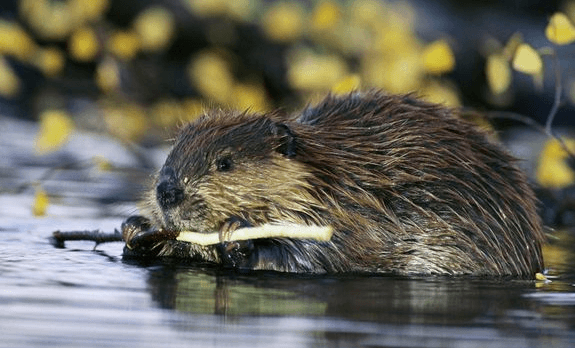
What is the term for a characteristic that increases an organisms chance to survive in its environment? (1)
adaptation
variation
homologous structure
vestigial structure

Individuals that are well adapted to their environment will survive and produce _____. (1)
better traits
stronger genes
more offspring
fewer mutations
Which term refers to the process by which individuals that are better suited to the environment survive and reproduce therefore passing down their genes to their offspring? (1)
Evolution
Variation
Adaptation
Natural Selection
The ability of an organism to survive and reproduce in its specific environment. (1)
diversity.
evolution
adaptation
fitness
A (an) ____ is an environmental change that directly influences the activity of an organism. (1)
stimulus
behavior
innate response
fixed action pattern
Studies show what 2 factors influence an animal’s behavior? (1)
food & space
genetics & experience
experience & food
genetics & food
Phylogeny is... (1)
The study of classification of different species
The study of the evolutionary history of a species
The study of prehistoric life
The study of the distribution of different species
What is a species? (1)
A group of organisms that can mate with each other and produce fertile offspring.
A group of organisms that genetically are very different from each other.
A group of organisms that can mate and produce offspring even if those offspring are infertile.
Indivual organisms that live in the same environment.

